

Europe Furniture Market Research Report: Trends, Forecast & Opportunities (2026-2032)
By Product Type (Home Furniture (Living Room Sofas, Home Beds, Wardrobes & Home Closets, Residential Dining Tables & Chairs, TV Units / Entertainment Units, Dressers & Vanity Table ... s, Shoe Racks, Home Coffee Tables & Side Tables, Bookshelves (Residential Grade), Recliners, Kitchen Furniture (Cabinets, Countertops, Pantry Units, Dining Benches, Others)), Office Furniture (Ergonomic Office Chairs, Office Desks, Conference / Meeting Tables, Modular Workstations / Cubicles, Filing Cabinets, Reception Desks, Office Storage Units, Office Partition Systems, Visitor Chairs, Office Lounge Seating), Hospitality Furniture (Restaurant Dining Tables & Chairs, Bar Stools & Bar Counters, Hotel Beds & Headboards, Banquet Chairs & Folding Event Tables, Buffet Counters & Service Stations, Lobby Furniture, Reception Counters, Service Trolleys, Café Seating Sets, Poolside Loungers), Outdoor Furniture (Garden Chairs & Tables, Patio Furniture Sets, Weatherproof Outdoor Sofas, Sun Loungers, Hammocks & Swings, Gazebos & Pergolas, Picnic Tables, Outdoor Benches, Patio Umbrellas, Balcony Outdoor Sets)), By Material (Wood, Metal, Plastic, Glass, Others), By Application (Homes, Corporate Offices, HoReCa, Retail Malls, Healthcare Centers, Educational Institutes, Libraries, Museums & Galleries, Sports Centers, Community Centers, Government, Others), By Distribution Channel (Offline, Online), By Price Range (Economy, Mid-Range, Premium), and others Read more
- FMCG
- Apr 2026
- Pages 200
- Report Format: PDF, Excel, PPT
Europe Furniture Market
Projected 4.5% CAGR from 2026 to 2032
Study Period
2026-2032
Market Size (2026)
USD 273.58 Billion
Market Size (2032)
USD 356.27 Billion
Base Year
2025
Projected CAGR
4.5%
Leading Segments
By Product Type: Home Furniture
Europe Furniture Market Report Key Takeaways:
- The Europe Furniture Market size was valued at around USD 261.8 billion in 2025 and is projected grow from USD 273.58 billion in 2026 to USD 356.27 billion by 2032, exhibiting a CAGR of 4.5% during the forecast period.
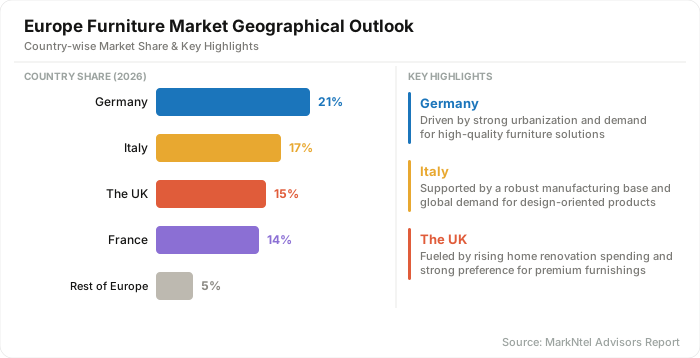
- Germany holds the largest market share of about 21% in the Europe Furniture Market in 2026.
- By Product Type, the Home Furniture segment represented a significant share of about 63% in the Europe Furniture Market in 2026.
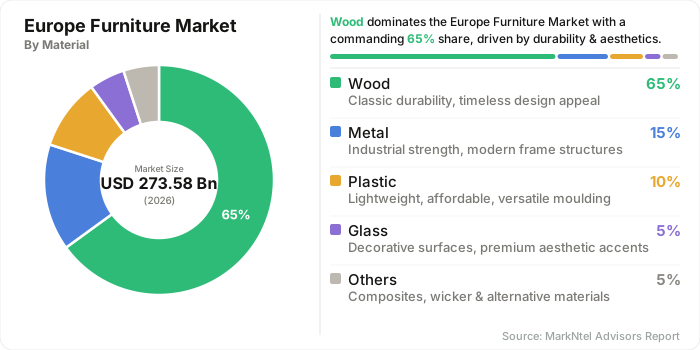
- By Material, the Wood segment presented a significant share of about 65% in the Europe Furniture Market in 2026.
Market Insights & Analysis: Europe Furniture Market (2026-32):
The Europe Furniture Market size was valued at around USD 261.8 billion in 2025 and is projected grow from USD 273.58 billion in 2026 to USD 356.27 billion by 2032, exhibiting a CAGR of 4.5% during the forecast period, i.e., 2026-32.
The Europe furniture market has demonstrated stable historical growth, supported by strong household consumption and a well-established manufacturing base across countries such as Germany, Italy, and France. According to the European Commission, the sector comprises approximately 130,000 companies and employs nearly 1 million people, generating about USD 104 billion in turnover. This industrial depth has historically enabled consistent supply, product innovation, and export strength. As a result, the market has evolved as a mature yet resilient ecosystem supported by both domestic demand and international trade.
Current market conditions are shaped by steady residential demand and gradual recovery in commercial segments, with households remaining the primary end users. Replacement cycles and refurbishment activities continue to drive purchasing behavior, particularly in urban housing markets. The European Commission’s Renovation Wave initiative, targeting 35 million building renovations by 2030, is significantly accelerating upgrades across residential and commercial infrastructure . This policy-driven renovation activity directly increases demand for furniture, reinforcing stable consumption patterns across Europe. Additionally, easing inflationary pressures is supporting a gradual improvement in consumer spending.
From an end-user perspective, residential demand dominates, while commercial and hospitality segments are gaining momentum due to economic normalization. The UN World Tourism Organization reported that European tourism reached approximately 95% of pre-pandemic levels in 2025, prompting increased refurbishment in hotels, restaurants, and leisure facilities . This resurgence is directly contributing to higher demand for hospitality furniture and interior upgrades. Concurrently, office redesign and hybrid work models are sustaining demand for ergonomic and modular furniture solutions within the commercial segment.
Looking ahead, the market outlook remains positive, supported by regulatory initiatives, demographic stability, and infrastructure investments. Government-led renovation programs, combined with strong industrial capabilities, are expected to sustain long-term demand across both residential and commercial segments. Increasing emphasis on sustainability and circular economy practices is further encouraging product innovation and replacement cycles. Moreover, rising urbanization and continued development in emerging European regions are likely to create additional growth opportunities. Collectively, these factors indicate a stable and forward-looking market trajectory with consistent expansion potential.
Europe Furniture Market Recent Developments:
- 2025 : IKEA introduced its STOCKHOLM 2025 collection, featuring 96 furniture and home décor pieces combining premium materials like oak, leather, and handwoven textiles. The launch emphasizes high-quality Scandinavian design at accessible pricing, targeting mid-to-premium consumers across Europe.
- 2025 : Søstrene Grene announced expansion plans, including new store openings in the UK and a target of 100 stores by 2027. The company already operates across 17 European countries, signaling continued investment in physical retail amid stable consumer demand.
Europe Furniture Market Scope:
| Category | Segments |
|---|---|
| By Product Type | (Home Furniture (Living Room Sofas, Home Beds, Wardrobes & Home Closets, Residential Dining Tables & Chairs, TV Units / Entertainment Units, Dressers & Vanity Tables, Shoe Racks, Home Coffee Tables & Side Tables, Bookshelves (Residential Grade), Recliners, Kitchen Furniture (Cabinets, Countertops, Pantry Units, Dining Benches, Others)), Office Furniture (Ergonomic Office Chairs, Office Desks, Conference / Meeting Tables, Modular Workstations / Cubicles, Filing Cabinets, Reception Desks, Office Storage Units, Office Partition Systems, Visitor Chairs, Office Lounge Seating), Hospitality Furniture (Restaurant Dining Tables & Chairs, Bar Stools & Bar Counters, Hotel Beds & Headboards, Banquet Chairs & Folding Event Tables, Buffet Counters & Service Stations, Lobby Furniture, Reception Counters, Service Trolleys, Café Seating Sets, Poolside Loungers), Outdoor Furniture (Garden Chairs & Tables, Patio Furniture Sets, Weatherproof Outdoor Sofas, Sun Loungers, Hammocks & Swings, Gazebos & Pergolas, Picnic Tables, Outdoor Benches, Patio Umbrellas, Balcony Outdoor Sets)), |
| By Material | (Wood, Metal, Plastic, Glass, Others), |
| By Application | (Homes, Corporate Offices, HoReCa, Retail Malls, Healthcare Centers, Educational Institutes, Libraries, Museums & Galleries, Sports Centers, Community Centers, Government, Others), |
| By Distribution Channel | (Offline, Online), |
| By Price Range | (Economy, Mid-Range, Premium), and others |
Europe Furniture Market Driver:
Growing Real Estate & Construction Sector
The expansion of the real estate and construction sector across Europe has emerged as a core structural driver of furniture market growth, directly generating sustained demand for residential and commercial furnishings. This driver has intensified due to persistent housing shortages across major EU economies, necessitating accelerated construction activity. According to the European Commission’s Joint Research Centre, the region requires over 2 million new homes annually to meet rising demand, reflecting a structural supply gap . This imbalance is prompting large-scale residential development and renovation initiatives, which in turn are driving consistent, volume-based demand for furniture across newly built and upgraded spaces.
The impact of this driver is clearly reflected in measurable construction and housing activity across the region. Eurostat reported that EU construction production grew by approximately 0.5% year-on-year in 2025, with signs of recovery toward the end of the year, indicating sustained building momentum . Additionally, according to Reuters, Germany approved around 238,500 residential units in 2025, marking a 10.8% increase compared to the previous year and highlighting strengthening housing supply efforts . Each newly constructed housing unit directly translates into incremental demand for essential furniture products, including kitchen installations, seating systems, and bedroom furnishings.
Furthermore, rising institutional investment and policy support are reinforcing construction-led demand expansion across Europe. According to Savills, European real estate investment reached approximately USD 233 billion in 2025, reflecting a 9% year-on-year increase and signaling renewed development activity . Alongside this, EU Green Deal initiatives and national housing policies introduced during 2025–2026 are accelerating both new construction and renovation of existing housing stock. These developments are structurally increasing furniture consumption volumes, ensuring long-term market expansion driven by continuous additions to residential and commercial infrastructure rather than short-term demand fluctuations.
Europe Furniture Market Trend:
Multifunctional & Space-Saving Furniture Gaining Traction
The shift toward multifunctional and space-saving furniture is emerging as a structural trend in Europe, driven by urban density and evolving housing patterns. This trend has accelerated as compact living becomes more prevalent across major cities. According to the European Commission, approximately 75% of the EU population resides in urban areas, reinforcing demand for efficient space utilization. As living spaces shrink, consumers are increasingly prioritizing furniture that delivers multiple functions within limited floor areas.
This shift is reshaping industry dynamics, with manufacturers and retailers reorienting product portfolios toward modular and adaptive designs. Companies such as IKEA and Castlery have introduced foldable tables, storage-integrated beds, and modular seating systems tailored for small apartments, as highlighted in 2025 product launches . These innovations reflect a transition from single-purpose furniture to utility-driven solutions. Retail strategies are also evolving, with increased emphasis on compact furniture collections and digital visualization tools to support space planning and product customization.
The persistence of this trend is supported by long-term urbanization and housing affordability challenges across Europe. Policy initiatives promoting energy-efficient and compact housing developments during 2025–2026 are further reinforcing this shift. As smaller residential units become more common, demand for multifunctional furniture is expected to grow consistently across both ownership and rental segments. This sustained transformation is structurally influencing product innovation, consumer expectations, and competitive positioning within the European furniture market.
Europe Furniture Market Opportunity:
Expanding Sustainable Furniture Segment
The expansion of the sustainable furniture segment represents a compelling market opportunity in Europe, driven by tightening environmental regulations and rising circular economy adoption. This opportunity has accelerated due to policy frameworks such as the EU Circular Economy Action Plan and Ecodesign regulations updated through 2025–2026. According to the European Commission, new measures emphasize durability, recyclability, and reduced lifecycle emissions across furniture product s. Additionally, recent EU-level Extended Producer Responsibility policies are mandating manufacturers to manage post-consumer waste, structurally transforming production and design requirements.
This regulatory push is translating into tangible demand for sustainable furniture across both consumer and institutional segments. Governments and public institutions are increasingly adopting green procurement standards, driving demand for certified and recyclable furniture products. At the same time, industry investment is accelerating, as seen in a USD 1.03 billion commitment by Ingka Group in 2025 to expand recycling infrastructure and circular production capabilities, signaling strong market confidence . These developments are expanding demand beyond niche eco-conscious buyers to mainstream adoption, creating scalable and recurring revenue opportunities.
The segment is particularly advantageous for new entrants, as sustainability-driven innovation reduces reliance on large-scale manufacturing advantages. Emerging players can differentiate through circular design, sustainable materials, and transparent sourcing without competing directly with incumbents on cost. Moreover, evolving regulations are reshaping competitive dynamics, allowing agile companies to align faster with compliance requirements. As sustainability becomes a regulatory and consumer imperative rather than a premium feature, this segment offers long-term, scalable growth potential for new and smaller market participants.
Europe Furniture Market Challenge:
Fluctuation in Raw Material Prices
Fluctuation in raw material prices remains a critical structural challenge in the Europe furniture market, driven by volatility in timber, metals, and energy inputs. This has intensified due to supply chain disruptions and geopolitical uncertainties affecting commodity flows. According to the Food and Agriculture Organization, global wood markets have experienced notable fluctuations, including a decline of approximately 12% in trade volumes, reflecting unstable supply-demand conditions . At the same time, Reuters reports continued energy price volatility across Europe in 2025, increasing manufacturing costs.
This volatility is directly impacting furniture manufacturers by increasing cost uncertainty and compressing margins. Reuters highlights that European industrial producers, particularly in wood-processing sectors, have faced persistent input cost pressures due to fluctuating energy and raw material prices. Rising electricity and gas costs are increasing processing expenses for timber and metal components. Smaller firms are especially vulnerable, as they lack long-term contracts and are forced to frequently adjust pricing.
The challenge restricts market expansion by reducing investment confidence and limiting scalability. Price instability complicates production planning, inventory management, and supplier negotiations, increasing operational risks. Additionally, EU sustainability regulations are adding compliance costs related to sourcing and emissions. This combination creates a structurally constrained environment, slowing capacity expansion and discouraging new entrants despite steady underlying demand.
Europe Furniture Market (2026-32) Segmentation Analysis:
The Europe Furniture market study of MarkNtel Advisors evaluates & highlights the major trends and influencing factors in each segment. It includes predictions for the period 2026–32 at the regional level. Based on the analysis, the market has been further classified as;
Based on Product Type:
- Home Furniture
- Office Furniture
- Hospitality Furniture
- Outdoor Furniture
Home furniture dominates the Europe Furniture Market, accounting for approximately 63% of total demand, primarily because residential consumption represents the largest and most consistent end-use segment. According to Eurostat, the EU population exceeds 449 million, with a majority living in urban households that require continuous furnishing across living rooms, bedrooms, and kitchens . Unlike commercial furniture, which is cyclical and project-based, home furniture demand is driven by everyday usage, household formation, and replacement needs. This creates a stable and high-volume consumption base across diverse product categories.
Housing development and renovation activity further reinforce the dominance of home furniture across Europe. The European Commission highlights that the region requires over 2 million new homes annually to meet structural housing demand, directly expanding the need for residential furnishings. Each newly constructed or renovated housing unit generates immediate demand for essential furniture such as beds, sofas, storage units, and dining sets. Additionally, rising renovation activity under EU energy-efficiency initiatives is increasing replacement demand for modern and space-optimized home furniture products across both owned and rental properties.
Consumer spending patterns also strongly favor home furniture due to lifestyle and behavioral shifts. Households prioritize comfort, aesthetics, and functionality, particularly with the rise of hybrid work models, increasing time spent at home. Moreover, home furniture benefits from shorter replacement cycles compared to institutional furniture, driven by design trends and lifestyle upgrades. This combination of great residential demand, continuous replacement cycles, and policy-supported housing expansion ensures that home furniture maintains its leading share within the Europe furniture market.
Based on Material:
- Wood
- Metal
- Plastic
- Glass
- Others
Wood dominates the Europe Furniture Market by material, accounting for approximately 65% of total demand, primarily due to its extensive use across core furniture categories such as seating, storage, and structural components. According to Eurostat, the EU’s large housing stock and ongoing residential activity sustain consistent demand for durable and versatile materials. Wood remains the preferred choice due to its strength, adaptability across design formats, and suitability for both mass-market and premium furniture applications, ensuring widespread adoption across residential and commercial segments.
Industrial scale and resource availability further reinforce wood’s dominance across Europe. According to the Food and Agriculture Organization, Europe is a major global hub for forest product production, supported by well-established industries producing sawnwood and wood-based panels. Additionally, international forestry statistics indicate that Europe accounts for over 20% of global wood-based panel consumption, reflecting strong processing capacity and end-use demand. Countries such as Germany and Poland host advanced wood-processing clusters, enabling efficient, large-scale manufacturing and stable raw material supply across the region.
Consumer preference and regulatory alignment also strengthen wood’s leading position. Wood is widely perceived as renewable and environmentally sustainable, aligning with circular economy initiatives promoted by the European Commission. Increasing demand for natural and recyclable materials, combined with policy support for sustainable forestry, enhances its attractiveness among environmentally conscious consumers. This combination of industrial strength, resource availability, and regulatory support ensures that wood continues to dominate as the primary material in the Europe furniture market.
Europe Furniture Market (2026-32): Regional Projection
Germany dominates the Europe Furniture Market, accounting for approximately 21% of total regional demand, primarily because it serves as the largest manufacturing and consumption hub within the European Union. According to Eurostat, Germany consistently records the highest industrial output in the EU, reflecting its position as Europe’s manufacturing backbone. This industrial strength directly supports large-scale furniture production across residential, office, and institutional segments. Additionally, strong household income levels and a large population base sustain continuous domestic demand for furniture products.
This dominance is reinforced by Germany’s well-developed furniture industry and export capabilities. According to the International Trade Administration, Germany’s furniture industry generated approximately USD 17 billion in revenue in 2024, with exports accounting for nearly 33% of total sales. This highlights Germany’s dual role as both a major producer and supplier across Europe. Its advanced manufacturing ecosystem, supported by skilled labor, automation, and efficient logistics, enables consistent, high-quality output and reliable supply across regional markets.
Germany’s leadership is further strengthened by its strong industrial recovery and trade performance. Reuters reports that German industrial orders rose by 7.8% in late 2025, signaling improving manufacturing momentum despite broader economic pressures . The country’s export-oriented economy, supported by well-established trade networks, allows furniture manufacturers to scale efficiently across borders. This combination of industrial scale, export strength, and resilient demand ensures that Germany maintains its leading position within the Europe furniture market.
The market is moderately fragmented, characterized by the presence of a mix of global premium furniture brands and large-scale retail players catering to diverse consumer segments.
Europe Furniture Market Competitive Landscape
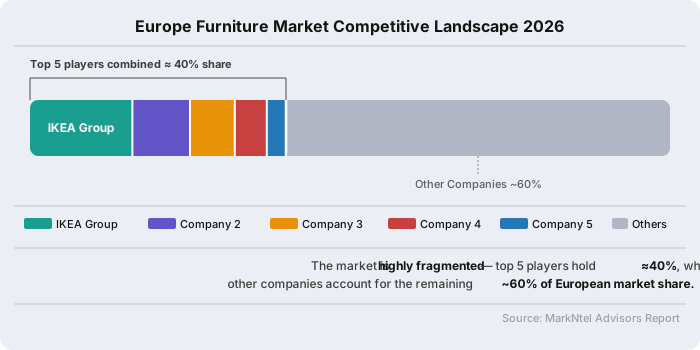
The market is moderately fragmented, with the top five players accounting for approximately 40% of the total market share. Leading companies include IKEA Group, Natuzzi S.p.A., Roche Bobois SA, Poltrona Frau Group, and BoConcept Holding A/S
Key Furniture Companies in Europe
- IKEA Group
- Natuzzi S.p.A.
- Poltrona Frau Group
- Roche Bobois SA
- BoConcept Holding A/S
- B&B Italia S.p.A.
- Calligaris S.p.A.
- Molteni & C S.p.A.
- Fritz Hansen A/S
- Ligne Roset
- Hülsta Werke Hüls GmbH & Co. KG
- JYSK Holding A/S
- Vitra International AG
- Nowy Styl Group
- Maisons du Monde
- Others
Gain a Competitive Edge with Our Europe Furniture Market Report:
- Europe Furniture Market Report by MarkNtel Advisors provides a detailed & thorough analysis of market size & share, growth rate, competitive landscape, and key players. This comprehensive analysis helps businesses gain a holistic understanding of the market dynamics & make informed decisions.
- This report also highlights current market trends & future projections, allowing businesses to identify emerging opportunities & potential challenges. By understanding market forecasts, companies can align their strategies & stay ahead of the competition.
- Europe Furniture Market Report aids in assessing & mitigating risks associated with entering or operating in the market. By understanding market dynamics, regulatory frameworks, and potential challenges, businesses can develop strategies to minimize risks & optimize their operations.
*Reports Delivery Format - Market research studies from MarkNtel Advisors are offered in PDF, Excel and PowerPoint formats. Within 24 hours of the payment being successfully received, the report will be sent to your email address.
Frequently Asked Questions
- Market Segmentation
- Introduction
- Product Definition
- Research Process
- Assumptions
- Executive Summary
- Impact of Geopolitical Conflicts on the European Furniture Market
- Russia- Ukraine War
- Israel- Iran War
- Europe Furniture Market Policies, Regulations, and Product Standards
- Europe Furniture Market Supply Chain Analysis
- Europe Furniture Market Trends & Developments
- Europe Furniture Market Import/Export
- Europe Furniture Market Pricing Analysis, 2022-2032
- Company’s SKU-Wise Price Points
- Raw Material Pricing Analysis
- Wood & Wood-Based Materials
- Solid Wood
- Engineered Wood
- Veneers
- Others
- Metals
- Steel
- Aluminum
- Iron
- Others
- Foam & Upholstery Materials
- Polyurethane Foam
- Memory Foam
- Fabric & Leather
- Furniture Chemicals
- Wood Finishes
- Varnishes
- Lacquers
- Shellac
- Wood Oils
- Stains & Dyes
- Metal Finishes
- Powder Coating
- Electroplating
- Paints
- Plastic & Composite Coatings
- Laminates
- UV Coatings
- Wood Finishes
- Wood & Wood-Based Materials
- Europe Furniture Market Production Capabilities
- Europe Furniture Market Dynamics
- Growth Drivers
- Challenges
- Europe Furniture Market Hotspot & Opportunities
- Europe Furniture Market Outlook, 2022–2032
- Market Size & Outlook
- By Revenues (USD Million)
- Market Share & Outlook
- By Product Type– Market Size & Forecast 2022–2032, USD Million
- Home Furniture
- Living Room Sofas
- Home Beds
- Wardrobes & Home Closets
- Residential Dining Tables & Chairs
- TV Units / Entertainment Units
- Dressers & Vanity Tables
- Shoe Racks
- Home Coffee Tables & Side Tables
- Bookshelves (Residential Grade)
- Recliners
- Kitchen Furniture
- Cabinets
- Countertops
- Pantry Units
- Dining Benches
- Others
- Office Furniture
- Ergonomic Office Chairs
- Office Desks
- Conference / Meeting Tables
- Modular Workstations / Cubicles
- Filing Cabinets
- Reception Desks
- Office Storage Units
- Office Partition Systems
- Visitor Chairs
- Office Lounge Seating
- Hospitality Furniture
- Restaurant Dining Tables & Chairs
- Bar Stools & Bar Counters
- Hotel Beds & Headboards
- Banquet Chairs & Folding Event Tables
- Buffet Counters & Service Stations
- Lobby Furniture
- Reception Counters
- Service Trolleys
- Café Seating Sets
- Poolside Loungers
- Outdoor Furniture
- Garden Chairs & Tables
- Patio Furniture Sets
- Weatherproof Outdoor Sofas
- Sun Loungers
- Hammocks & Swings
- Gazebos & Pergolas
- Picnic Tables
- Outdoor Benches
- Patio Umbrellas
- Balcony Outdoor Sets
- Home Furniture
- By Material– Market Size & Forecast 2022–2032, USD Million
- Wood
- Metal
- Plastic
- Glass
- Others
- By Application– Market Size & Forecast 2022–2032, USD Million
- Homes
- Corporate Offices
- HoReCa
- Retail Malls
- Healthcare Centers
- Educational Institutes
- Libraries
- Museums & Galleries
- Sports Centers
- Community Centers
- Government
- Others
- By Distribution Channel– Market Size & Forecast 2022–2032, USD Million
- Offline
- Online
- By Price Range– Market Size & Forecast 2022–2032, USD Million
- Economy
- Mid-Range
- Premium
- By Country
- Germany
- France
- Italy
- Spain
- United Kingdom
- BENELUX
- NORDICS
- Switzerland
- Poland
- Rest of Europe
- By Product Type– Market Size & Forecast 2022–2032, USD Million
- Market Size & Outlook
- Germany Furniture Market Outlook, 2022–2032
- Market Size & Outlook
- By Revenues (USD Million)
- Market Share & Outlook
- By Product Type -Market Size & Forecast 2022–2032, USD Million
- By Material -Market Size & Forecast 2022–2032, USD Million
- By Application -Market Size & Forecast 2022–2032, USD Million
- By Distribution Channel -Market Size & Forecast 2022–2032, USD Million
- By Price Range -Market Size & Forecast 2022–2032, USD Million
- Market Size & Outlook
- France Furniture Market Outlook, 2022–2032
- Market Size & Outlook
- By Revenues (USD Million)
- Market Share & Outlook
- By Product Type -Market Size & Forecast 2022–2032, USD Million
- By Material -Market Size & Forecast 2022–2032, USD Million
- By Application -Market Size & Forecast 2022–2032, USD Million
- By Distribution Channel -Market Size & Forecast 2022–2032, USD Million
- By Price Range -Market Size & Forecast 2022–2032, USD Million
- Market Size & Outlook
- Italy Furniture Market Outlook, 2022–2032
- Market Size & Outlook
- By Revenues (USD Million)
- Market Share & Outlook
- By Product Type -Market Size & Forecast 2022–2032, USD Million
- By Material -Market Size & Forecast 2022–2032, USD Million
- By Application -Market Size & Forecast 2022–2032, USD Million
- By Distribution Channel -Market Size & Forecast 2022–2032, USD Million
- By Price Range -Market Size & Forecast 2022–2032, USD Million
- Market Size & Outlook
- Spain Furniture Market Outlook, 2022–2032
- Market Size & Outlook
- By Revenues (USD Million)
- Market Share & Outlook
- By Product Type -Market Size & Forecast 2022–2032, USD Million
- By Material -Market Size & Forecast 2022–2032, USD Million
- By Application -Market Size & Forecast 2022–2032, USD Million
- By Distribution Channel -Market Size & Forecast 2022–2032, USD Million
- By Price Range -Market Size & Forecast 2022–2032, USD Million
- Market Size & Outlook
- United Kingdom Furniture Market Outlook, 2022–2032
- Market Size & Outlook
- By Revenues (USD Million)
- Market Share & Outlook
- By Product Type -Market Size & Forecast 2022–2032, USD Million
- By Material -Market Size & Forecast 2022–2032, USD Million
- By Application -Market Size & Forecast 2022–2032, USD Million
- By Distribution Channel -Market Size & Forecast 2022–2032, USD Million
- By Price Range -Market Size & Forecast 2022–2032, USD Million
- Market Size & Outlook
- BENELUX Furniture Market Outlook, 2022–2032
- Market Size & Outlook
- By Revenues (USD Million)
- Market Share & Outlook
- By Product Type -Market Size & Forecast 2022–2032, USD Million
- By Material -Market Size & Forecast 2022–2032, USD Million
- By Application -Market Size & Forecast 2022–2032, USD Million
- By Distribution Channel -Market Size & Forecast 2022–2032, USD Million
- By Price Range -Market Size & Forecast 2022–2032, USD Million
- Market Size & Outlook
- NORDICS Furniture Market Outlook, 2022–2032
- Market Size & Outlook
- By Revenues (USD Million)
- Market Share & Outlook
- By Product Type -Market Size & Forecast 2022–2032, USD Million
- By Material -Market Size & Forecast 2022–2032, USD Million
- By Application -Market Size & Forecast 2022–2032, USD Million
- By Distribution Channel -Market Size & Forecast 2022–2032, USD Million
- By Price Range -Market Size & Forecast 2022–2032, USD Million
- Market Size & Outlook
- Switzerland Furniture Market Outlook, 2022–2032
- Market Size & Outlook
- By Revenues (USD Million)
- Market Share & Outlook
- By Product Type -Market Size & Forecast 2022–2032, USD Million
- By Material -Market Size & Forecast 2022–2032, USD Million
- By Application -Market Size & Forecast 2022–2032, USD Million
- By Distribution Channel -Market Size & Forecast 2022–2032, USD Million
- By Price Range -Market Size & Forecast 2022–2032, USD Million
- Market Size & Outlook
- Poland Furniture Market Outlook, 2022–2032
- Market Size & Outlook
- By Revenues (USD Million)
- Market Share & Outlook
- By Product Type -Market Size & Forecast 2022–2032, USD Million
- By Material -Market Size & Forecast 2022–2032, USD Million
- By Application -Market Size & Forecast 2022–2032, USD Million
- By Distribution Channel -Market Size & Forecast 2022–2032, USD Million
- By Price Range -Market Size & Forecast 2022–2032, USD Million
- Market Size & Outlook
- Europe Furniture Market Key Strategic Imperatives for Success & Growth
- Competition Outlook
- Company Profiles
- IKEA Group
- Business Description
- Product Portfolio
- Strategic Alliances or Partnerships
- Recent Developments
- Financial Details
- Others
- Natuzzi S.p.A.
- Business Description
- Product Portfolio
- Strategic Alliances or Partnerships
- Recent Developments
- Financial Details
- Others
- Poltrona Frau Group
- Business Description
- Product Portfolio
- Strategic Alliances or Partnerships
- Recent Developments
- Financial Details
- Others
- Roche Bobois SA
- Business Description
- Product Portfolio
- Strategic Alliances or Partnerships
- Recent Developments
- Financial Details
- Others
- BoConcept Holding A/S
- Business Description
- Product Portfolio
- Strategic Alliances or Partnerships
- Recent Developments
- Financial Details
- Others
- B&B Italia S.p.A.
- Business Description
- Product Portfolio
- Strategic Alliances or Partnerships
- Recent Developments
- Financial Details
- Others
- Calligaris S.p.A.
- Business Description
- Product Portfolio
- Strategic Alliances or Partnerships
- Recent Developments
- Financial Details
- Others
- Molteni & C S.p.A.
- Business Description
- Product Portfolio
- Strategic Alliances or Partnerships
- Recent Developments
- Financial Details
- Others
- Fritz Hansen A/S
- Business Description
- Product Portfolio
- Strategic Alliances or Partnerships
- Recent Developments
- Financial Details
- Others
- Ligne Roset
- Business Description
- Product Portfolio
- Strategic Alliances or Partnerships
- Recent Developments
- Financial Details
- Others
- Nowy Styl Group
- Business Description
- Product Portfolio
- Strategic Alliances or Partnerships
- Recent Developments
- Financial Details
- Others
- Hülsta-Werke Hüls GmbH & Co. KG
- Business Description
- Product Portfolio
- Strategic Alliances or Partnerships
- Recent Developments
- Financial Details
- Others
- JYSK Holding A/S
- Business Description
- Product Portfolio
- Strategic Alliances or Partnerships
- Recent Developments
- Financial Details
- Others
- Vitra International AG
- Business Description
- Product Portfolio
- Strategic Alliances or Partnerships
- Recent Developments
- Financial Details
- Others
- Maisons du Monde
- Business Description
- Product Portfolio
- Strategic Alliances or Partnerships
- Recent Developments
- Financial Details
- Others
- Others
- IKEA Group
- Company Profiles
- Disclaimer
MarkNtel Advisors follows a robust and iterative research methodology designed to ensure maximum accuracy and minimize deviation in market estimates and forecasts. Our approach combines both bottom-up and top-down techniques to effectively segment and quantify various aspects of the market. A consistent feature across all our research reports is data triangulation, which examines the market from three distinct perspectives to validate findings. Key components of our research process include:
1. Scope & Research Design At the outset, MarkNtel Advisors define the research objectives and formulate pertinent questions. This phase involves determining the type of research—qualitative or quantitative—and designing a methodology that outlines data collection methods, target demographics, and analytical tools. They also establish timelines and budgets to ensure the research aligns with client goals.
2. Sample Selection and Data Collection In this stage, the firm identifies the target audience and determines the appropriate sample size to ensure representativeness. They employ various sampling methods, such as random or stratified sampling, based on the research objectives. Data collection is carried out using tools like surveys, interviews, and observations, ensuring the gathered data is reliable and relevant.
3. Data Analysis and Validation Once data is collected, MarkNtel Advisors undertake a rigorous analysis process. This includes cleaning the data to remove inconsistencies, employing statistical software for quantitative analysis, and thematic analysis for qualitative data. Validation steps are taken to ensure the accuracy and reliability of the findings, minimizing biases and errors.

4. Data Forecast and FinalizationThe final phase involves forecasting future market trends based on the analyzed data. MarkNtel Advisors utilize predictive modeling and time series analysis to anticipate market behaviors. The insights are then compiled into comprehensive reports, featuring visual aids like charts and graphs, and include strategic recommendations to inform client decision-making
We offer flexible licensing options to cater to varying organizational needs. Choose the pricing pack that best suits your requirements:
Buy Now Inquire Before Buying
 Request Customization
 Talk to our Consultant







