

Egypt Raw Coffee Beans Market Research Report: Trends & Forecast (2026-2032)
By Beans Type (Arabica, Robusta, Liberica), By Grade (Specialty Grade, Commercial Grade, Commodity Grade), By Processing Method (Wet/Washed process, Dry/Natural process, Honey proc ... ess), By Packaging Type (Bags, Bulk/Unpackaged, Retail Packs), By Price Segment (Premium / Specialty Range, Mid-Range, Value / Commodity Range), By Distribution Channel (Wholesale Distributors & Importers, E-commerce / Online Platforms, Retail Chains (Grocery/Supermarkets), Direct Supply to B2B), By End-User (Household, Commercial (Coffee Shops & Cafés, Restaurants & Hospitality)), and others Read more
- Food & Beverages
- Jul 2026
- Pages 140
- Report Format: PDF, Excel, PPT
Egypt Raw Coffee Beans Market
Projected 3.04% CAGR from 2026 to 2032
Study Period
2026-2032
Market Size (2026)
USD 330 Million
Market Size (2032)
USD 395 million
Base Year
2025
Projected CAGR
3.04%
Leading Segments
By Beans Type: Arabica
Egypt Raw Coffee Beans Market Key Takeaways
- Egypt raw coffee beans market size was valued at USD 321 million in 2025 and is projected to grow from USD 330 million in 2026 to USD 395 million by 2032.
- The industry is projected to reflect sustain growth at a steady CAGR of 3.04% during 2026-2032.
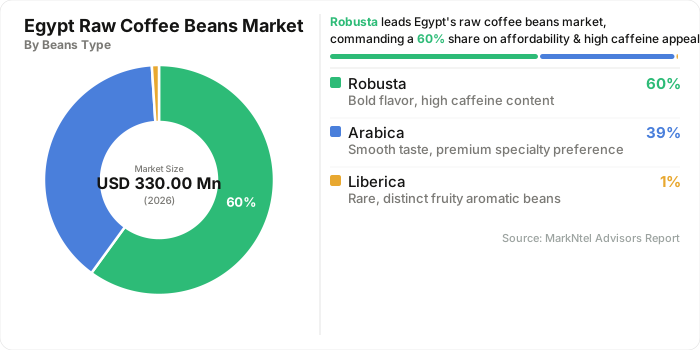
- By beans type, robusta holds a significant share of about 60% in 2026.
- By end user, household seized a significant share of about 55% in 2026.
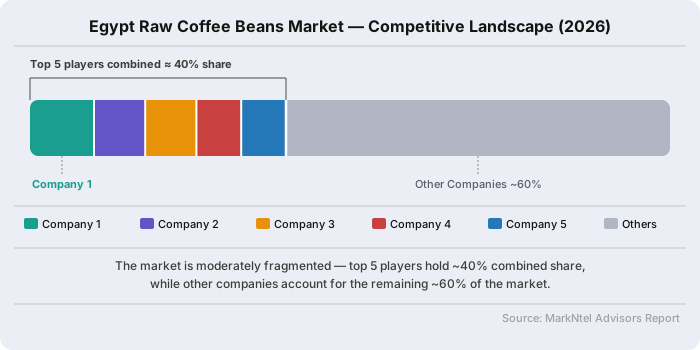
- The industry is moderately fragmented. However, the top five players collectively account for nearly 40% share.
Egypt Raw Coffee Beans Market Size and Outlook
Egypt raw coffee beans market size was valued at USD 321 million in 2025 and is projected to grow from USD 330 million in 2026 to USD 395 million by 2032. Along with this, the market is estimated to grow at a CAGR of around 3.04% during the forecast period, i.e., 2026-32.
The market is positioned for steady expansion as coffee remains deeply embedded in the country’s daily consumption habits and the beverage sector continues to broaden. Egypt relies heavily on imported green coffee beans because domestic coffee cultivation is limited, making international sourcing a critical part of the supply chain. In 2024, Egypt imported 309,474 kg of unroasted decaffeinated coffee worth USD 1.74 million, mainly from Ethiopia, Brazil, and India, highlighting the presence of differentiated and specialty-oriented demand alongside conventional coffee consumption.
Moreover, the expansion of branded and independent café businesses is strengthening demand for raw beans. Egypt was identified as the fifth-largest branded coffee shop market in the Middle East and North Africa, with approximately 580 branded outlets, while the segment was forecast to reach 831 outlets by 2027. This growth creates additional requirements for consistent supplies of imported green beans, particularly for café chains and professional roasters that depend on reliable quality and origin profiles.
Furthermore, Egypt’s coffee ecosystem is becoming more diversified, with international brands expanding their café presence and local businesses increasingly focusing on roasting and differentiated coffee offerings. The continued development of cafés, specialty beverage concepts, and roasting operations is expected to widen the customer base for imported raw beans beyond traditional coffeehouses. Consequently, demand growth is likely to remain closely linked to café expansion, premiumization, and the availability of diverse international origins.
Overall, Egypt’s raw coffee beans market offers long-term growth potential, supported by strong coffee-drinking habits, an expanding branded café network, and rising demand for differentiated products.
Egypt Raw Coffee Beans Market Key Indicators
- The number of cafés, coffee shops, restaurants, specialty roasters, and other coffee-serving outlets indicates the size of Egypt’s commercial coffee distribution network and directly influences demand for green beans. In November 2025, Coffee Lab announced a production facility in Egypt to support its network of 17 stores in the country. The development demonstrates continued investment in Egypt’s café and specialty-coffee ecosystem, which increases recurring B2B procurement of imported raw beans.
- Per-capita coffee consumption is an important measure of consumer demand in Egypt’s raw coffee beans market because it reflects the average quantity of coffee consumed by each person. According to FAOSTAT-sourced data, Egypt’s coffee consumption reached approximately 0.55 kg per person in 2023, representing a 7.84% increase compared with 2022. The increase indicates that coffee demand is expanding not only because of population growth but also through rising average consumption. Higher per-person consumption supports recurring demand from households, cafés, restaurants, and roasters, which require consistent supplies of green coffee beans.
Egypt Raw Coffee Beans Market Scope
| Category | Segments |
|---|---|
| By Beans Type | Arabica, Robusta, Liberica |
| By Grade | Specialty Grade, Commercial Grade, Commodity Grade |
| By Processing Method | Wet/Washed process, Dry/Natural process, Honey process |
| By Packaging Type | Bags, Bulk/Unpackaged, Retail Packs |
| By Price Segment | Premium / Specialty Range, Mid-Range, Value / Commodity Range |
| By Distribution Channel | Wholesale Distributors & Importers, E-commerce / Online Platforms, Retail Chains (Grocery/Supermarkets), Direct Supply to B2B |
| By End-User | Household, Commercial (Coffee Shops & Cafés, Restaurants & Hospitality |
Egypt Raw Coffee Beans Market Growth Drivers
Growing Coffee Consumption Strengthens Recurring Demand for Raw Coffee Beans
Growing coffee consumption is a major driver of Egypt’s raw coffee beans market because increasing daily consumption directly raises demand for green beans used by roasters, cafés, restaurants, and households. In 2025, Egypt’s Coffee Division estimated annual national coffee consumption at approximately 80,000 tons, highlighting the scale of recurring domestic demand. The same source identified coffee as Egypt’s second-most popular beverage after tea, demonstrating its established role in everyday consumption. As consumption continues to expand, roasters and foodservice operators require greater volumes of green beans to meet recurring demand, supporting the growth of Egypt’s raw coffee beans industry.
Moreover, continued investments in cafés, specialty coffee outlets, roasting facilities, and foodservice infrastructure are expected to support more frequent consumption and increase the need for green coffee beans. As coffee becomes more embedded in daily routines and businesses expand their beverage offerings, roasters and commercial buyers will require consistent volumes of raw beans. Consequently, rising consumption volumes and established daily consumption habits are expected to increase procurement demand, supporting sustained growth in Egypt’s raw coffee beans industry.
Recent Trends
Growing Specialty Coffee Culture Drives Demand for Premium and Differentiated Green Beans
The expansion of specialty and premium coffee is encouraging Egyptian roasters to source higher-quality, origin-specific, and differentiated green beans rather than relying only on standardized blends. In 2024, Egypt imported 37.28 million kg of unroasted coffee from Brazil, 31.48 million kg from Indonesia, and 5.77 million kg from India, demonstrating the scale and diversity of international bean sourcing available to local roasters. Moreover, Egypt exported 111,189 kg of roasted, non-decaffeinated coffee worth approximately USD 1.21 million in 2024, indicating growing domestic value addition through roasting and premium product development.
The Egyptian Real Estate Platform also documented local roasters offering specialty beans, single-origin coffees, direct-trade sourcing, and small-batch roasting in 2024. Additionally, continued growth of specialty cafés, boutique roasting facilities, premium brewing equipment, and origin-based sourcing is expected to increase demand for diverse Arabica and other high-quality green beans. As consumers become more interested in bean origin, roasting quality, and distinctive flavor profiles, roasters will increasingly procure premium raw materials.
Consequently, premiumization is shifting demand from standardized commodity beans toward differentiated, higher-value green coffee. This shift is expected to raise the value and variety of raw coffee bean procurement, supporting market growth in Egypt.
Egypt Raw Coffee Beans Market Opportunities and Challenges
Limited Processing Infrastructure Restricts Local Value Addition but Drives Investment in Domestic Coffee Production
Limited domestic processing capacity remains a key challenge for raw coffee beans market in Egypt because the country depends heavily on imported green coffee, while local roasting, grinding, packaging, and specialty-processing infrastructure is still developing. This limits the amount of value captured domestically and can restrict the availability of differentiated, premium, and private-label coffee products. It may also reduce the ability of local businesses to scale production and respond quickly to changing consumer preferences.
However, this gap is creating opportunities for investment across Egypt’s coffee-processing value chain. For instance, the El Wetedy coffee factory was inaugurated in Mit Ghamr, Dakahlia Province, in December 2025, demonstrating growing investment in domestic coffee-processing infrastructure. The facility can contribute to the local processing of imported green beans and strengthen domestic value addition. Further investment in commercial roasting plants, specialty roasting facilities, grinding equipment, packaging lines, and private-label production could increase demand for imported raw beans while expanding Egypt’s value-added coffee industry.
As processing infrastructure improves, local businesses can develop more diverse products, improve quality consistency, and reduce reliance on imported finished coffee products. Consequently, investment in domestic processing capacity can transform a structural challenge into a growth opportunity, supporting higher green-bean procurement and strengthening the long-term development of Egypt’s raw coffee beans industry.
Segmentation Insights
Robusta Holds Nearly 60% Share Due to Its Cost Advantage and Strong Blend Compatibility
Robusta holds nearly 60% share of Egypt’s raw coffee beans industry revenue due to its lower cost, strong flavor, higher caffeine content, and suitability for widely consumed coffee blends. Egypt depends heavily on imported coffee, making price competitiveness particularly important for importers, roasters, cafés, and foodservice operators facing international commodity-price volatility, freight expenses, and exchange-rate fluctuations. Robusta’s bold, bitter taste and high caffeine content also make it suitable for traditional coffee blends that require a strong and consistent flavor profile.
Furthermore, its higher crema-producing capability supports its use in espresso-based beverages served by cafés and commercial coffee outlets. The bean’s versatility allows roasters to combine it with Arabica to balance flavor, strength, and cost, supporting demand across mainstream and commercial coffee segments. Although the expansion of specialty cafés is increasing demand for premium Arabica and single-origin beans, Robusta remains attractive for high-volume consumption because of its affordability and dependable supply from major producing countries.
Consequently, its cost efficiency, strong sensory characteristics, and broad applicability are expected to sustain its leading position in Egypt’s raw coffee beans industry and support continued procurement by domestic roasters. Based on beans type, the scope has been segmented into
- Arabica
- Robusta
- Liberica
Household Segment Holds Nearly 55% Share Due to Strong At-Home Coffee Consumption
The household segment holds the dominant position in Egypt’s raw coffee beans market, accounting for an estimated 55% of total market revenue. This leadership is supported by the country’s established coffee-drinking culture and the regular consumption of coffee at home. In 2025, Egypt’s Coffee Division of the Cairo Chamber of Commerce estimated annual coffee consumption at approximately 80,000 tons, highlighting the scale of recurring domestic demand. Household consumers purchase coffee directly or through retail channels, creating consistent demand for beans used in traditional preparation methods and home brewing.
Moreover, rising interest in freshly roasted and premium coffee is encouraging some households to seek higher-quality and origin-specific beans. Although cafés and foodservice outlets are expanding, household consumption remains more widespread because it is embedded in daily routines and reaches a broader consumer base. Consequently, steady at-home consumption, a large population, and increasing interest in differentiated coffee products are expected to sustain the household segment’s leading position and continue supporting demand for raw coffee beans in Egypt. Based on end user, the market is categorized into
- Household
- Commercial
Egypt Raw Coffee Beans Market Competitive Analysis
The Egypt raw coffee beans market is moderately fragmented, with the top five international suppliers collectively accounting for approximately 40% of the market by value in 2024. Key participants include Cooxupé, Intimex Group, Simexco Daklak, Vietnam National Coffee Corporation (VINACAFE), and Allana Group.
Major Companies in Egypt Raw Coffee Beans Industry
- Cooxupé
- Intimex Group
- Simexco Daklak
- Vietnam National Coffee Corporation (VINACAFE)
- Allana Group
- UGACOF Ltd.
- Daterra Coffee
- METAD Agricultural Development Plc
- Ethio Coffee Exporters Plc
- Guji Highland Coffee Plantation
- Others
Egypt Raw Coffee Beans Industry News and Recent Developments:
November 2025: Coffee Lab Opens Production Facility in Egypt
Coffee Lab announced the installation of a new coffee production plant in Egypt in November 2025 through a partnership with a local operator. The facility was established to support the company’s growing network, which had reached 17 Egyptian stores, and strengthen its B2B and B2C operations. The investment is expected to support local roasting and increase demand for imported green beans.
Impact Analysis: The establishment of Coffee Lab’s production facility strengthens Egypt’s domestic coffee-processing infrastructure by expanding local roasting and production capacity. As the company grows its café and business-to-business operations, the facility is likely to increase recurring procurement of imported green coffee beans. The development may also encourage additional investment in local roasting, improve product customization, and support the growth of Egypt’s specialty and premium coffee supply chain.
August 2025: Socks Specialty Coffee Café Opens in Cairo
Socks Specialty Coffee opened in Cairo in August 2025 as Egypt’s first café operated entirely by young people with developmental differences. The launch reflects the continued diversification of Egypt’s specialty-coffee ecosystem and adds to the country’s expanding café base, supporting demand for roasted coffee and the green beans required by specialty roasters.
Impact Analysis: The opening of Socks Specialty Coffee expands Egypt’s specialty café ecosystem and demonstrates continued diversification in the country’s out-of-home coffee sector. Its launch can contribute to demand for higher-quality, differentiated roasted coffee and, consequently, specialty-grade green beans sourced by local roasters. The development also highlights the expansion of specialized café concepts in Cairo, supporting broader consumer exposure to premium coffee and potentially encouraging further specialty-coffee investments.
Frequently Asked Questions
- Market Segmentation
- Introduction
- Product Definition
- Research Process
- Assumptions
- Executive Summary
- Egypt Raw Coffee Beans Market Policies, Regulations, and Product Standards
- Egypt Raw Coffee Beans Market Supply Chain Analysis
- Egypt Raw Coffee Beans Market Trends & Developments
- Egypt Raw Coffee Beans Market Dynamics
- Growth Factors
- Challenges
- Egypt Raw Coffee Beans Market Hotspot & Opportunities
- Egypt Raw Coffee Beans Market Outlook, 2022-2032F
- Market Size & Outlook
- By Revenues (USD Million)
- By Quantity Sold (Thousand Tons)
- Market Segmentation & Outlook
- By Beans Type - Market Size & Forecast 2022-2032, USD Million & Thousand Tons
- Arabica
- Robusta
- Liberica
- By Grade- Market Size & Forecast 2022-2032, USD Million & Thousand Tons
- Specialty Grade
- Commercial Grade
- Commodity Grade
- By Processing Method- Market Size & Forecast 2022-2032, USD Million & Thousand Tons
- Wet/Washed process
- Dry/Natural process
- Honey process
- By Packaging Type- Market Size & Forecast 2022-2032, USD Million & Thousand Tons
- Bags
- Bulk/Unpackaged
- Retail Packs
- By Price Segment- Market Size & Forecast 2022-2032, USD Million & Thousand Tons
- Premium / Specialty Range
- Mid-Range
- Value / Commodity Range
- By Distribution Channel- Market Size & Forecast 2022-2032, USD Million & Thousand Tons
- Wholesale Distributors & Importers
- E-commerce / Online Platforms
- Retail Chains (Grocery/Supermarkets)
- Direct Supply to B2B
- By End-User- Market Size & Forecast 2022-2032, USD Million & Thousand Tons
- Household
- Commercial
- Coffee Shops & Cafés
- Restaurants & Hospitality
- By Region - Market Size & Forecast 2022-2032, USD Million & Thousand Tons
- North
- South
- East
- West
- By Company
- Competition Characteristics
- Market Share & Analysis
- By Beans Type - Market Size & Forecast 2022-2032, USD Million & Thousand Tons
- Market Size & Outlook
- Egypt Arabica Coffee Beans Market Outlook, 2022-2032
- Market Size & Outlook
- By Revenues (USD Million)
- By Quantity Sold (Thousand Tons)
- Market Segmentation & Outlook
- By Grade- Market Size & Forecast 2022-2032, USD Million & Thousand Tons
- By Processing Method- Market Size & Forecast 2022-2032, USD Million & Thousand Tons
- By Packaging Type- Market Size & Forecast 2022-2032, USD Million & Thousand Tons
- By Price Segment- Market Size & Forecast 2022-2032, USD Million & Thousand Tons
- By Distribution Channel- Market Size & Forecast 2022-2032, USD Million & Thousand Tons
- By End-User- Market Size & Forecast 2022-2032, USD Million & Thousand Tons
- By Region - Market Size & Forecast 2022-2032, USD Million & Thousand Tons
- Market Size & Outlook
- Egypt Robusta Coffee Beans Market Outlook, 2022-2032
- Market Size & Outlook
- By Revenues (USD Million)
- By Quantity Sold (Thousand Tons)
- Market Segmentation & Outlook
- By Grade- Market Size & Forecast 2022-2032, USD Million & Thousand Tons
- By Processing Method- Market Size & Forecast 2022-2032, USD Million & Thousand Tons
- By Packaging Type- Market Size & Forecast 2022-2032, USD Million & Thousand Tons
- By Price Segment- Market Size & Forecast 2022-2032, USD Million & Thousand Tons
- By Distribution Channel- Market Size & Forecast 2022-2032, USD Million & Thousand Tons
- By End-User- Market Size & Forecast 2022-2032, USD Million & Thousand Tons
- By Region - Market Size & Forecast 2022-2032, USD Million & Thousand Tons
- Market Size & Outlook
- Egypt Liberica Coffee Beans Market Outlook, 2022-2032
- Market Size & Outlook
- By Revenues (USD Million)
- By Quantity Sold (Thousand Tons)
- Market Segmentation & Outlook
- By Grade- Market Size & Forecast 2022-2032, USD Million & Thousand Tons
- By Processing Method- Market Size & Forecast 2022-2032, USD Million & Thousand Tons
- By Packaging Type- Market Size & Forecast 2022-2032, USD Million & Thousand Tons
- By Price Segment- Market Size & Forecast 2022-2032, USD Million & Thousand Tons
- By Distribution Channel- Market Size & Forecast 2022-2032, USD Million & Thousand Tons
- By End-User- Market Size & Forecast 2022-2032, USD Million & Thousand Tons
- By Region - Market Size & Forecast 2022-2032, USD Million & Thousand Tons
- Market Size & Outlook
- Egypt Raw Coffee Beans Market Key Strategic Imperatives for Success & Growth
- Competitive Outlook
- Company Profiles
- Cooxupé
- Business Description
- Product Portfolio
- Collaborations & Alliances
- Recent Developments
- Financial Details
- Others
- Cooxupé
- Intimex Group
- Business Description
- Product Portfolio
- Collaborations & Alliances
- Recent Developments
- Financial Details
- Others
- Company Profiles
- Simexco Daklak
- Business Description
- Product Portfolio
- Collaborations & Alliances
- Recent Developments
- Financial Details
- Others
- Vietnam National Coffee Corporation
- Business Description
- Product Portfolio
- Collaborations & Alliances
- Recent Developments
- Financial Details
- Others
- Allana Group
- Business Description
- Product Portfolio
- Collaborations & Alliances
- Recent Developments
- Financial Details
- Others
- UGACOF Ltd.
- Business Description
- Product Portfolio
- Collaborations & Alliances
- Recent Developments
- Financial Details
- Others
- Daterra Coffee
- Business Description
- Product Portfolio
- Collaborations & Alliances
- Recent Developments
- Financial Details
- Others
- METAD Agricultural Development Plc
- Business Description
- Product Portfolio
- Collaborations & Alliances
- Recent Developments
- Financial Details
- Others
- Ethio Coffee Exporters Plc
- Business Description
- Product Portfolio
- Collaborations & Alliances
- Recent Developments
- Financial Details
- Others
- Guji Highland Coffee Plantation
- Business Description
- Product Portfolio
- Collaborations & Alliances
- Recent Developments
- Financial Details
- Others
- Others
- Disclaimer
MarkNtel Advisors follows a robust and iterative research methodology designed to ensure maximum accuracy and minimize deviation in market estimates and forecasts. Our approach combines both bottom-up and top-down techniques to effectively segment and quantify various aspects of the market. A consistent feature across all our research reports is data triangulation, which examines the market from three distinct perspectives to validate findings. Key components of our research process include:
1. Scope & Research Design At the outset, MarkNtel Advisors define the research objectives and formulate pertinent questions. This phase involves determining the type of research—qualitative or quantitative—and designing a methodology that outlines data collection methods, target demographics, and analytical tools. They also establish timelines and budgets to ensure the research aligns with client goals.
2. Sample Selection and Data Collection In this stage, the firm identifies the target audience and determines the appropriate sample size to ensure representativeness. They employ various sampling methods, such as random or stratified sampling, based on the research objectives. Data collection is carried out using tools like surveys, interviews, and observations, ensuring the gathered data is reliable and relevant.
3. Data Analysis and Validation Once data is collected, MarkNtel Advisors undertake a rigorous analysis process. This includes cleaning the data to remove inconsistencies, employing statistical software for quantitative analysis, and thematic analysis for qualitative data. Validation steps are taken to ensure the accuracy and reliability of the findings, minimizing biases and errors.

4. Data Forecast and FinalizationThe final phase involves forecasting future market trends based on the analyzed data. MarkNtel Advisors utilize predictive modeling and time series analysis to anticipate market behaviors. The insights are then compiled into comprehensive reports, featuring visual aids like charts and graphs, and include strategic recommendations to inform client decision-making
We offer flexible licensing options to cater to varying organizational needs. Choose the pricing pack that best suits your requirements:
Buy Now Inquire Before Buying
 Request Customization
 Talk to our Consultant







