

China Veterinary Medicine Market Research Report: Forecast (2026–2032)
China Veterinary Medicine Market Strategy, Consumer Insights, Industry Analysis, Investment Trends, Growth Opportunities, Market Size and Share, Revenue Insights, Key Segments, Ma ... rket Value, Detailed Segmentation, Supply Chain Overview, Future Forecast, Market Restraints, Industry Outlook, Competitive Landscape, Market Drivers, Emerging Trends, Consumer Demand, Pricing Analysis, Strategic Insights, Leading Companies, and Market Challenges Read more
- Healthcare
- Jun 2026
- Pages 118
- Report Format: PDF, Excel, PPT
China Veterinary Medicine Market
Projected 10.48% CAGR from 2026 to 2032
Study Period
2026-2032
Market Size (2026)
USD 5.11 Billion
Market Size (2032)
USD 9.29 Billion
Base Year
2025
Projected CAGR
10.48%
Leading Segments
By Animal Type: Production Animals
China Veterinary Medicine Market Report Key Takeaways
- The China Veterinary Medicine Market is valued at USD 4.89 billion in 2025, rising to USD 5.11 billion in 2026, and projected to reach USD 9.29 billion by 2032.
- The industry is projected to witness steady growth at a 10.48% CAGR during the forecast period, i.e., 2026-32.
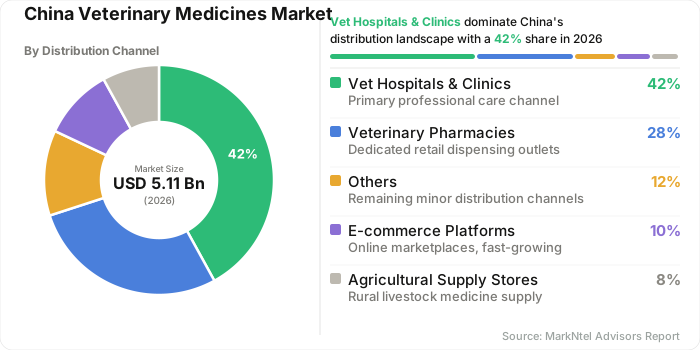
- Veterinary Hospitals & Clinics lead distribution channel with a 42% share in 2026.
- In 2026, vaccines dominate product demand with 52 % share.
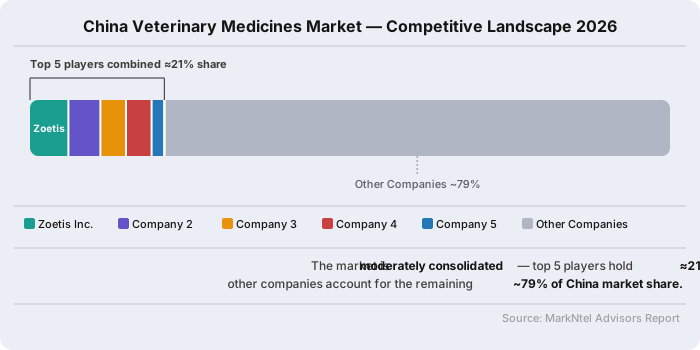
- The market is moderately consolidated; the top five players collectively hold approximately 21% share.
China Veterinary Medicine Market Size and Outlook
The veterinary medicine market in China was valued at USD 4.89 billion in 2025 and is projected to grow from USD 5.11 billion in 2026 to USD 9.29 billion by 2032, registering a CAGR of 10.48% during the forecast period.
The market comprises veterinary pharmaceuticals, veterinary biologics, antiparasitic drugs, medicated feed additives, and animal nutritional supplements used across both production animal and companion animal segments. China's strong domestic animal health ecosystem provides a solid foundation for market expansion. According to a presentation by the Ministry of Agriculture and Rural Affairs (MARA) at the WOAH Regional Seminar for Veterinary Products in October 2025, China had 1,681 registered veterinary drug manufacturers in 2024, with the total output value of veterinary drug manufacturers reaching approximately USD 10.5 billion. This substantial manufacturing base highlights the country's capacity to support growing demand for veterinary healthcare products.
The regulatory environment is also contributing to market development. In December 2024, MARA's Veterinary Drug Evaluation Center introduced the "Measures for Handling Non-compliant Veterinary Drug Registration Application Documents (Trial Implementation)," which became effective on January 1, 2025. The regulation strengthens documentation requirements while streamlining approvals for compliant manufacturers, supporting higher product quality standards and improved market efficiency.
Additionally, MARA's National Action Plan for Veterinary Antimicrobial Use Reduction (2021–2025) has accelerated the adoption of alternative animal health solutions. Under the program, 223 farms across swine, poultry, and ruminant sectors were certified for meeting antimicrobial reduction standards, encouraging greater utilization of veterinary biologics, vaccines, and targeted therapeutics.
Beyond livestock production, the growing companion animal segment is creating new growth opportunities. China's pet population is estimated at approximately 124 million animals, driving rising demand for preventive healthcare products, specialty medicines, nutritional supplements, and advanced veterinary treatments. The combination of large-scale livestock production, expanding pet ownership, robust domestic manufacturing capabilities, and increasingly stringent regulatory standards is expected to sustain the long-term growth trajectory of the China veterinary medicine market through 2032.
China Veterinary Medicine Market Key Indicators
- China's urban pet dog and cat population reached 126 million animals in 2025, including 53.43 million dogs and 72.89 million cats, up 1.8% YoY. A growing companion animal base directly increases demand for veterinary medicines, vaccines, diagnostics , and preventive healthcare products.
- The USDA FAS GAIN report (March 2025), citing NBS data, confirmed China's live pig inventory at 427.43 million head end-2024 with a sow inventory of 40.78 million head; this world-largest active swine population creates structural demand for swine-specific vaccines, antiparasitic drugs, and pharmaceuticals.
- A WOAH Regional Seminar country presentation (April 2024) confirmed China's cattle at 84.54 million head, goats at 132.24 million, and sheep at 194.03 million — a ruminant population exceeding, thus requiring FMD vaccines, reproductive health products, and antiparasitic treatments.
- The American Animal Hospital Association confirmed in June 2025 that China had 30,139 registered pet hospitals as of January 2024; each hospital is a formal dispensing channel for companion animal medicines, vaccines, and diagnostics.
China Veterinary Medicine Market Scope:
| Category | Segments |
|---|---|
| By Product | Biologics (Vaccines (Inactive Vaccines, Attenuated Vaccines, Recombinant Vaccines, Other Vaccines), Other Biologics), Pharmaceuticals (Parasiticides, Anti-infectives, Anti-inflammatory Drugs, Analgesics, Others)), Medicated Feed Additives |
| By Animal Type | Production Animals (Poultry, Pigs, Cattle, Sheep & Goats, Others), Companion Animals (Dogs, Cats, Horses, Others |
| By Route of Administration | Oral, Injectable, Topical, Other Routes of Administration |
| By Purpose | Infectious Diseases, Parasitic Diseases, Respiratory Diseases, Gastrointestinal Diseases, Reproductive Disorders, Pain & Inflammation Management, Others |
| By End User | Livestock Farms, Veterinary Hospitals & Clinics, Pet Care Centers, Research Institutes, Animal Owners, Others |
| By Distribution Channel | Veterinary Hospitals & Clinics, Veterinary Pharmacies, E-commerce Platforms, Agricultural Supply Stores, Others |
| By Prescription Type | Prescription Medicines, Over-the-Counter Medicines |
China Veterinary Medicine Industry Growth Drivers
Rising Prevalence of Complex and Emerging Animal Diseases Driving Demand for Advanced Veterinary Vaccines and Pharmaceuticals
The continuous emergence of mutating animal disease strains across China is intensifying demand for advanced veterinary vaccines and disease-management pharmaceuticals. As pathogens evolve, existing vaccine formulations lose effectiveness, compelling livestock producers to procure updated biologics and targeted therapeutics, making disease complexity a direct and sustained driver of veterinary medicine expenditure.
A clear illustration is African Swine Fever. According to WOAH disease monitoring data from October 2024, ASF in China now circulates as three co-existing variants: genotype I, genotype II, and a highly lethal genotype I/II recombinant strain, with current live-attenuated vaccines offering no cross-protection against recombinant variants, forcing continuous investment in next-generation disease-control protocols across China's swine sector.
Disease management requirements intensified in 2026 when China reported its first-ever Foot-and-Mouth Disease serotype SAT1 outbreak, initially affecting 142 cattle in Xinjiang, followed by a second outbreak in Gansu. According to the UK DEFRA Preliminary Outbreak Assessment April 2026, existing FMD vaccines in China do not protect against SAT1. The continued evolution of ASF and emergence of new FMD strains is expected to sustain demand for veterinary vaccines, biologics, and animal health pharmaceuticals, supporting long-term growth of the China veterinary medicine market through 2032.
Recent Trends
Accelerated Development and Commercialization of Next-Generation Veterinary Vaccines
China's veterinary biologics sector is undergoing a sustained shift toward the development and commercialization of next-generation companion animal vaccines driven by the rapid growth of China's pet population and historically low domestic vaccine penetration for pet diseases. For decades, the companion animal vaccine segment was dominated by a small number of imported products, leaving substantial gaps in disease coverage across China's expanding urban pet base.
MARA's regulatory updates introduced stricter dossier standards while simultaneously expanding the scope of veterinary drug regulation to formally include companion animal diagnostics and health products, directly accelerating the approval pipeline for domestically developed pet vaccines. In response, Pulike Biological Engineering obtained a New Veterinary Drug Registration Certificate from MARA on September 29, 2025, for its Canine Distemper and Parvovirus Bivalent Live Vaccine, jointly developed with Luoyang Huizhong Biotechnology, with cumulative R&D investment of USD 1.2 million, marking one of the first domestically developed canine core vaccines to achieve full registration in China.
As MARA continues to streamline companion animal product approvals, domestic veterinary vaccine manufacturers are expected to progressively displace imported products and expand coverage across China's pet healthcare market through 2032.
China Veterinary Medicine Market Opportunities and Challenges
Strict Antimicrobial Resistance Regulations Driving Demand for Preventive Biologics and Targeted Veterinary Vaccines
China's escalating anti-AMR regulatory framework presents a direct constraint for veterinary pharmaceutical manufacturers dependent on broad-spectrum antibiotic portfolios. MARA Announcement No. 194, enforced from July 2020, withdrew all antimicrobial growth-promoting feed additives from food-producing animal feed, eliminating a product category that previously underpinned significant veterinary medicine procurement across China's swine, poultry, and ruminant sectors.
The National Action Plan for Combating AMR (2022–2025) further set a binding target of prescription antibiotic sales exceeding 80 percent by 2025, restricting over-the-counter access. Together, these restrictions force livestock producers to restructure disease management protocols, raising transition costs and compressing revenues for manufacturers reliant on conventional anti-infective lines.
The same pressure creates a measurable commercial opening across biologics, preventive vaccines, and advanced feed alternatives. As broad-spectrum antibiotics are phased out, producers must replace them with preventive solutions driving substitution demand for veterinary vaccines, probiotics, and targeted therapeutics across production and companion animal segments.
For instance, Bimeda invested over USD 28.5 million to open a sterile injectable manufacturing facility in Shijiazhuang. Producing veterinary pharmaceuticals and parasite-control products locally for China's market. As anti-AMR restrictions tighten post-2025, manufacturers investing in preventive biologics and therapeutic alternatives are positioned to capture expanding substitution demand through 2032.
Segmentation Insights
Veterinary Hospitals & Clinics Lead Medicine Dispensing in China's Veterinary Medicine Market
Veterinary hospitals and clinics account for around 42% of distribution channel revenue in China’s veterinary medicines market, a dominance driven more by regulatory structure than consumer preference. Under the Ministry of Agriculture and Rural Affairs (MARA) framework, prescription veterinary medicine including antibiotics, antiparasitic, and biologics are strictly controlled and can only be dispensed through licensed veterinary institutions. This regulatory requirement effectively concentrates a large share of therapeutic drug distribution within clinical settings.
This dominance is further supported by China’s expanding companion animal base. According to the USDA GAIN Report (2024), the urban pet population reached 124.1 million in 2024, including 52.6 million dogs and 71.5 million cats, significantly increasing the frequency of veterinary visits and in-clinic medicine dispensing. Large hospital networks such as New Ruipeng Pet Healthcare Group, which operates over 1,000 facilities across more than 90 cities, act as key distribution hubs for vaccines, anti-infectives, and therapeutic products (source). As these hospital chains continue expanding into Tier-2 and Tier-3 cities, the dominance of the clinical channel is expected to remain structurally reinforced over the forecast period. Based on distribution channel, the market is bifurcated intoL
- Veterinary Hospitals & Clinics
- Veterinary Pharmacies
- E-commerce Platforms
- Agricultural Supply Stores
- others
Expanding Vaccination Programs and Livestock Disease Prevention Keep Vaccines at the Forefront of China's Veterinary Medicines Market
Vaccines account for approximately 52% of veterinary medicine demand by product type, making them the largest segment within the market. Their dominance stems from their preventive role in animal healthcare, as vaccines are designed to protect animals from infectious diseases before exposure occurs. As a result, they serve as a cornerstone of China's state-led animal health and biosecurity strategy.
As compared to pharmaceuticals, which respond to illness after onset, vaccines eliminate economic losses from outbreaks entirely, giving them irreplaceable value across China's high-density poultry, swine, and ruminant production systems. China's regulatory shift away from broad-spectrum antibiotics under MARA's feed additive ban further redirected procurement toward biologics, reinforcing vaccine dominance across categories that have contracted under AMR restrictions.
Reflecting sustained global investment in next-generation veterinary vaccines, Zoetis received a conditional license from the USDA in February, 2025, for its Avian Influenza Vaccine, H5N2 Subtype, Killed Virus, specifically designed to match currently circulating highly pathogenic H5 strains and differentiate vaccinated from naturally infected birds through the N2 designation. As China's animal disease environment grows more complex with new pathogen variants, manufacturers investing in strain-matched and multi-valent biologics are positioned to capture expanding demand through 2032. By product type, the market is further segmented into the following sub-categories:
- Biologics
- Vaccines
- Inactivated
- Attenuated
- Recombinant
- Others
- Other Biologics
- Vaccines
- Pharmaceuticals
- Anti-infectives
- Anti-inflammatory drugs
- Analgesics
- Parasiticides
- Others
- Medicated Feed Additives
- Amino acids
- Antibiotics & antimicrobials
- Others
China Veterinary Medicines Market Competitive Landscape
The China veterinary medicine market is characterized by a moderately consolidated market structure, with leading companies including Zoetis, Boehringer Ingelheim Animal Health, Merck Animal Health, Elanco Animal Health, and CAHIC collectively sharing 21% of the market share.
Major Companies in the Veterinary Medicines Market of China
- CAHIC
- Ringpu
- Qilu Animal Health
- Pulike
- Veyong
- Tairui
- Weierli
- Jinhe
- Shengli Bio
- Hisun Animal Health
- Zoetis
- Boehringer Ingelheim Animal Health
- Merck Animal Health
- Elanco Animal Health
- Ceva Santé Animale
China Veterinary Medicines Market News and Recent Developments
2024: Phibro Animal Health Acquires Zoetis' Medicated Feed Additive Portfolio Including China Manufacturing Facility
Phibro Animal Health Corporation completed the acquisition of Zoetis' medicated feed additive product portfolio and certain water-soluble products for USD 350 million on October 31, 2024. The acquired portfolio comprises more than 37 product lines sold across approximately 80 countries, generating approximately USD 400 million in revenue in 2023. Six manufacturing facilities transferred to Phibro, including a plant in Suzhou, China, along with more than 300 employees primarily supporting manufacturing and distribution. The portfolio covers cattle, swine, and poultry species across both domestic and export markets, significantly broadening Phibro's production animal health footprint.
Impact analysis: The transfer of Zoetis' Suzhou manufacturing facility to Phibro directly alters the competitive structure of China's medicated feed additive segment, shifting a portfolio previously managed under Zoetis' global infrastructure into a dedicated production animal health operator with a stated strategic focus on nutritional specialties and medicated feed additives. This transaction concentrates medicated feed additive supply in fewer, more specialised hands, raising competitive barriers for smaller domestic Chinese manufacturers while strengthening the distribution reach of the transferred product lines across China's swine, poultry, and ruminant sectors.
2024: MARA Classifies Pet Disease Antigen Screening Products as Veterinary Drugs in China
China's Ministry of Agriculture and Rural Affairs issued a formal classification directive on December 16, 2024, officially designating pet disease antigen screening products as veterinary drugs under the Regulations on Veterinary Drug Administration. The directive was issued in response to a formal request from the Hubei Provincial Department of Agriculture and Rural Affairs (Document No. [2024] 131), which sought clarification on the regulatory status of companion animal diagnostic products. Affected product categories include antigen screening tools used for detecting specific pet disease viruses.
Impact analysis: By formally bringing pet disease diagnostics under veterinary drug regulation, MARA has raised compliance standards and entry barriers for the companion animal diagnostics segment, directly stimulating demand for properly registered diagnostic products while accelerating the exit of non-compliant suppliers. This regulatory shift expands the addressable market for manufacturers with established veterinary drug registration capabilities and positions the companion animal diagnostics sub-segment as a new growth channel within China's broader veterinary medicine distribution network.
2025: Tianjin Ringpu Bio-Technology Completes Static Acceptance of Animal mRNA Vaccine Production Line in China
Tianjin Ringpu Bio-Technology (300119.SZ), China's largest domestic animal health product manufacturer, completed static acceptance of its dedicated animal mRNA vaccine production line in 2025, covering product development across livestock, companion animals, and ruminant health categories. As of the same period, Ringpu had accumulated 124 new veterinary drug registration certificates and 339 authorized patents, with R&D investment representing approximately 8.08 percent of revenue against reported 2024 revenue of CNY 3.07 billion, up 13.32 percent year-on-year.
Impact analysis: Completion of a dedicated animal mRNA vaccine production line by China's largest domestic veterinary biologics manufacturer establishes a new technology frontier within the China veterinary medicine market. As the first major domestic operator to commission mRNA manufacturing for veterinary applications, Ringpu strengthens its competitive positioning against both multinational importers and domestic biological product manufacturers, accelerating the pipeline from research to commercialisation across high-value vaccine categories and intensifying competition in the biologics segment through 2032.
2025: Virbac Launches First Locally Manufactured Veterinary Product in China Through Domestic Manufacturing Partnership
Virbac established a local manufacturing partnership in China specifically targeting the growing companion animal healthcare segment, with the first product from this collaboration a generic veterinary drug produced and launched in September 2025. The partnership covers the full value chain from research and development through commercial production, with agreements signed with rigorously selected local suppliers.
Impact analysis: By establishing local manufacturing in China, Virbac reduces its reliance on imported product registration pathways, which carry significantly longer approval timelines under MARA, directly strengthening its competitive positioning against domestic Chinese manufacturers in the companion animal pharmaceuticals segment. This localisation strategy lowers market entry barriers for Virbac's generic portfolio while simultaneously creating a platform for differentiated product development adapted to Chinese pet owner needs, intensifying competition in the companion animal veterinary medicine distribution channel.
Frequently Asked Questions
- Market Segmentation
- Introduction
- Product Definition
- Research Process
- Assumptions
- Executive Summary
- China Veterinary Medicine Market Policies, Regulations, and Product Standards
- China Veterinary Medicine Market Trends & Developments
- China Veterinary Medicine Market Dynamics
- Growth Factors
- Challenges
- China Veterinary Medicine Market Hotspot & Opportunities
- China Veterinary Medicine Market Outlook, 2022-2032F
- Market Size & Outlook
- By Revenues (USD Million)
- Market Share & Outlook
- By Product
- Biologics
- Vaccines
- Inactivated
- Attenuated
- Recombinant
- Others
- Other Biologics
- Vaccines
- Pharmaceuticals
- Anti-infectives
- Anti-inflammatory drugs
- Analgesics
- Parasiticides
- Others
- Medicated Feed Additives
- Amino acids
- Antibiotics & antimicrobials
- Others
- Biologics
- By Animal Type- Market Size & Forecast 2022-2032, USD Million
- Production Animals
- Poultry
- Pigs
- Cattle
- Sheep & Goats
- Others
- Companion Animals
- Dogs
- Cats
- Horses
- Others
- Production Animals
- By Route of Administration- Market Size & Forecast 2022-2032, USD Million
- Oral
- Injectable
- Topical
- Other Routes of Administration
- By Purpose - Market Size & Forecast 2022-2032, USD Million
- Infectious Diseases
- Parasitic Diseases
- Respiratory Diseases
- Gastrointestinal Diseases
- Reproductive Disorders
- Pain & Inflammation Management
- Others
- By End User- Market Size & Forecast 2022-2032, USD Million
- Livestock Farms
- Veterinary Hospitals & Clinics
- Pet Care Centers
- Research Institutes
- Animal Owners
- Others
- By Distribution Channel- Market Size & Forecast 2022-2032, USD Million
- Veterinary Hospitals & Clinics
- Veterinary Pharmacies
- E-commerce Platforms
- Agricultural Supply Stores
- Others
- By Prescription Type - Market Size & Forecast 2022-2032, USD Million
- Prescription Medicines
- Over-the-Counter Medicines
- By Region- Market Size & Forecast 2022-2032, USD Million
- North
- North West
- North East
- South
- South West
- East
- Central
- By Company
- Competition Characteristics
- Market Share & Analysis
- By Product
- Market Size & Outlook
- China Production Animals Veterinary Medicines Market Outlook, 2022-2032
- Market Size & Outlook
- By Revenues (USD Million)
- Market Share & Outlook
- By Product- Market Size & Forecast 2022-2032, USD Million
- By Animal Type- Market Size & Forecast 2022-2032, USD Million
- By Route of Administration- Market Size & Forecast 2022-2032, USD Million
- By Purpose - Market Size & Forecast 2022-2032, USD Million
- By End User- Market Size & Forecast 2022-2032, USD Million
- By Distribution Channel- Market Size & Forecast 2022-2032, USD Million
- By Prescription Type - Market Size & Forecast 2022-2032, USD Million
- By Region- Market Size & Forecast 2022-2032, USD Million
- Market Size & Outlook
- China Companion Animals Veterinary Medicines Market Outlook, 2022-2032
- Market Size & Outlook
- By Revenues (USD Million)
- Market Share & Outlook
- By Product- Market Size & Forecast 2022-2032, USD Million
- By Animal Type- Market Size & Forecast 2022-2032, USD Million
- By Route of Administration- Market Size & Forecast 2022-2032, USD Million
- By Purpose - Market Size & Forecast 2022-2032, USD Million
- By End User- Market Size & Forecast 2022-2032, USD Million
- By Distribution Channel- Market Size & Forecast 2022-2032, USD Million
- By Prescription Type - Market Size & Forecast 2022-2032, USD Million
- By Region- Market Size & Forecast 2022-2032, USD Million
- Market Size & Outlook
- China Veterinary Medicine Market Key Strategic Imperatives for Success & Growth
- Competitive Outlook
- Company Profiles
- CAHIC
- Business Description
- Product Portfolio
- Collaborations & Alliances
- Recent Developments
- Financial Details
- Others
- Ringpu
- Business Description
- Product Portfolio
- Collaborations & Alliances
- Recent Developments
- Financial Details
- Others
- Qilu Animal Health
- Business Description
- Product Portfolio
- Collaborations & Alliances
- Recent Developments
- Financial Details
- Others
- Pulike
- Business Description
- Product Portfolio
- Collaborations & Alliances
- Recent Developments
- Financial Details
- Others
- Veyong
- Business Description
- Product Portfolio
- Collaborations & Alliances
- Recent Developments
- Financial Details
- Others
- Tairui
- Business Description
- Product Portfolio
- Collaborations & Alliances
- Recent Developments
- Financial Details
- Others
- Weierli
- Business Description
- Product Portfolio
- Collaborations & Alliances
- Recent Developments
- Financial Details
- Others
- Jinhe
- Business Description
- Product Portfolio
- Collaborations & Alliances
- Recent Developments
- Financial Details
- Others
- Shengli Bio
- Business Description
- Product Portfolio
- Collaborations & Alliances
- Recent Developments
- Financial Details
- Others
- Hisun Animal Health
- Business Description
- Product Portfolio
- Collaborations & Alliances
- Recent Developments
- Financial Details
- Others
- Zoetis
- Business Description
- Product Portfolio
- Collaborations & Alliances
- Recent Developments
- Financial Details
- Others
- Boehringer Ingelheim Animal Health
- Business Description
- Product Portfolio
- Collaborations & Alliances
- Recent Developments
- Financial Details
- Others
- Merck Animal Health
- Business Description
- Product Portfolio
- Collaborations & Alliances
- Recent Developments
- Financial Details
- Others
- Elanco Animal Health
- Business Description
- Product Portfolio
- Collaborations & Alliances
- Recent Developments
- Financial Details
- Others
- Ceva Santé Animale
- Business Description
- Product Portfolio
- Collaborations & Alliances
- Recent Developments
- Financial Details
- Others
- CAHIC
- Company Profiles
- Disclaimer
MarkNtel Advisors follows a robust and iterative research methodology designed to ensure maximum accuracy and minimize deviation in market estimates and forecasts. Our approach combines both bottom-up and top-down techniques to effectively segment and quantify various aspects of the market. A consistent feature across all our research reports is data triangulation, which examines the market from three distinct perspectives to validate findings. Key components of our research process include:
1. Scope & Research Design At the outset, MarkNtel Advisors define the research objectives and formulate pertinent questions. This phase involves determining the type of research—qualitative or quantitative—and designing a methodology that outlines data collection methods, target demographics, and analytical tools. They also establish timelines and budgets to ensure the research aligns with client goals.
2. Sample Selection and Data Collection In this stage, the firm identifies the target audience and determines the appropriate sample size to ensure representativeness. They employ various sampling methods, such as random or stratified sampling, based on the research objectives. Data collection is carried out using tools like surveys, interviews, and observations, ensuring the gathered data is reliable and relevant.
3. Data Analysis and Validation Once data is collected, MarkNtel Advisors undertake a rigorous analysis process. This includes cleaning the data to remove inconsistencies, employing statistical software for quantitative analysis, and thematic analysis for qualitative data. Validation steps are taken to ensure the accuracy and reliability of the findings, minimizing biases and errors.

4. Data Forecast and FinalizationThe final phase involves forecasting future market trends based on the analyzed data. MarkNtel Advisors utilize predictive modeling and time series analysis to anticipate market behaviors. The insights are then compiled into comprehensive reports, featuring visual aids like charts and graphs, and include strategic recommendations to inform client decision-making
We offer flexible licensing options to cater to varying organizational needs. Choose the pricing pack that best suits your requirements:
Buy Now Inquire Before Buying
 Request Customization
 Talk to our Consultant







