

By Product Category (Multi-Surface Cleaners, Floor Cleaners, Glass & Window Cleaners, Kitchen Surface Cleaners, Bathroom & Toilet Surface Cleaners, Disinfectant Surface Cleaners, Degreasers, Furniture... ... egreasers, Furniture & Specialty Surface Cleaners, Metal Surface Cleaners, Surface Cleaners), By Chemistry Type (Chlorine-Based, Quaternary Ammonium Compound (Quat)-Based, Alcohol-Based, Hydrogen Peroxide-Based, Solvent-Based, Bio-Based, Enzyme-Based, pH-Neutral Formulations), By Form (Liquid, Spray, Wipes, Foam, Powder & Granules, Concentrates, Tablets & Pods), By Packaging Type (Bottles, Trigger Sprays, Refill Packs, Bulk Drums & Containers, Sachets, Canisters), By Distribution Channel (Supermarkets & Hypermarkets, Convenience Stores, Specialty Stores, Wholesale & Cash-and-Carry, Direct/B2B Sales, E-commerce), By End User (Residential, Commercial, Healthcare Facilities, Industrial & Manufacturing Facilities, Food Service & Food Processing, Transportation & Logistics Facilities), and others Read more
- Chemicals
- May 2026
- 170
- PDF, Excel, PPT
The US Surface Cleaner Market Key Takeaways
- The US surface cleaner market was valued at USD 4.32 billion in 2025, rising to USD 4.58 billion in 2026, and USD 7.34 billion by 2032.
- The industry is projected to witness sustained growth at a steady CAGR of 8.18%, during the forecast period.
- Multi-surface cleaners lead product demand, capturing approximately 30% share in 2026.
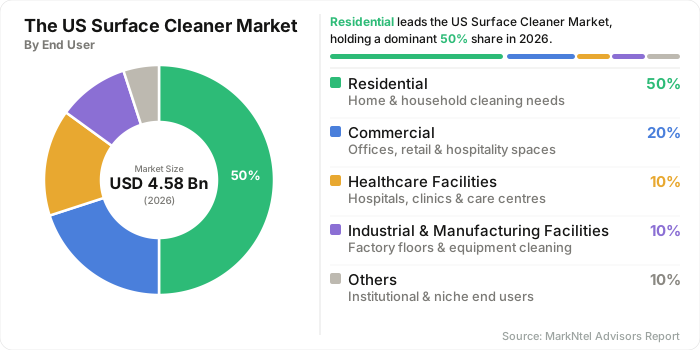
- Residential end-users dominate consumption patterns, contributing nearly 50% share in 2026.
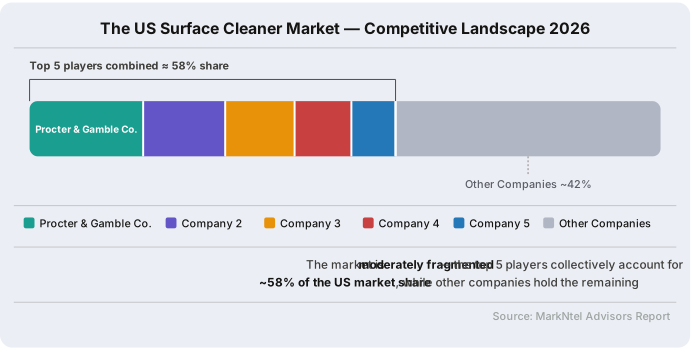
- The market structure remains moderately fragmented, with the top five players collectively holding around 58% share, reflecting strong brand dominance alongside niche and regional competition.
The US Surface Cleaner Market Size and Outlook
The US Surface Cleaner Market is expected to register a CAGR of approximately 8.18% during the forecast period. This trajectory reflects strong long-term demand growth, supported by rising hygiene awareness and consistent consumption of surface cleaning products across residential, healthcare, and commercial environments in the United States, ensuring stable expansion across diverse end-use sectors nationwide.
Growth momentum is further reinforced by the continued spread of infectious pathogens such as Candida auris, as highlighted by CDC surveillance data in 2025. The organism’s ability to survive on surfaces for extended periods has increased demand for hospital-grade disinfectants and specialized cleaning protocols, strengthening innovation-driven expansion across infection-control cleaning technologies and institutional sanitation practices across healthcare facilities throughout the United States over the coming years.
In parallel, expanding healthcare infrastructure is playing a critical role in sustaining market demand. Hospital and clinic construction starts reached USD 33.9 billion in 2024, with the 2026 pipeline projected at USD 30.7 billion. This sustained activity is supporting increased procurement of industrial and institutional cleaners, reinforcing premium product penetration across newly developed healthcare facilities requiring high-performance disinfection solutions and strict hygiene compliance requirements across operational environments.
Additionally, premiumization trends such as fragrance-enhanced formulations and sustainability-focused regulatory shifts are accelerating product innovation across the surface cleaners market in the United States, which is projected to grow from USD 4.58 billion in 2026 to USD 7.34 billion by 2032. At the same time, compliance-driven transformation is unlocking opportunities through safer chemistries and improved formulations. Supported by retail sales reaching USD 720.1 billion, increasing 3.9% from June 2024, the market is expected to maintain strong momentum driven by evolving consumer preferences and regulatory developments across key sectors.
The US Surface Cleaner Market Key Indicators
- Rising consumer expenditure trends are supporting growth in the surface cleaner sector, as the average annual expenditures reached USD 78,535 in 2024, compared to USD 77,158 in 2023, while income increased to USD 104,207. This improvement in purchasing capacity is enabling greater adoption of surface cleaning products and household cleaners, particularly premium offerings across residential and commercial applications.
- Increasing urban sanitation demand is driving the consumption of surface cleaners, with approximately 82.8% of the U.S. population, or 287.4 million people, residing in urban areas in 2025. Higher population density is increasing cleaning frequency across residential, commercial, and public infrastructure, supporting demand for industrial and institutional cleaners.
- Rising healthcare infection statistics continue to influence cleaning demand. Foodborne diseases affect approximately 48 million individuals annually in the United States, leading to 128,000 hospitalizations and 3,000 deaths. Additionally, seven major pathogens caused nearly 9.9 million illnesses and over 53,300 hospitalizations in 2025, reinforcing the need for advanced surface cleaning products.
- Strong retail sales performance and travel activity are supporting demand growth. Domestic visitor spending reached nearly USD 1.43 trillion in 2024, exceeding pre-pandemic levels by almost 14%. This increase is driving higher sanitation requirements across hospitality, transportation, and public infrastructure, boosting demand for surface cleaning products across commercial environments.
The US Surface Cleaner Market Scope
| Category | Segments |
|---|---|
| By Product Category | Multi-Surface Cleaners, Floor Cleaners, Glass & Window Cleaners, Kitchen Surface Cleaners, Bathroom & Toilet Surface Cleaners, Disinfectant Surface Cleaners, Degreasers, Furniture & Specialty Surface Cleaners, Metal Surface Cleaners, Surface Cleaners |
| By Chemistry Type | Chlorine-Based, Quaternary Ammonium Compound (Quat)-Based, Alcohol-Based, Hydrogen Peroxide-Based, Solvent-Based, Bio-Based, Enzyme-Based, pH-Neutral Formulations |
| By Form | Liquid, Spray, Wipes, Foam, Powder & Granules, Concentrates, Tablets & Pods |
| By Packaging Type | Bottles, Trigger Sprays, Refill Packs, Bulk Drums & Containers, Sachets, Canisters |
| By Distribution Channel | Supermarkets & Hypermarkets, Convenience Stores, Specialty Stores, Wholesale & Cash-and-Carry, Direct/B2B Sales, E-commerce |
| By End User | Residential, Commercial, Healthcare Facilities, Industrial & Manufacturing Facilities, Food Service & Food Processing, Transportation & Logistics Facilities |
The US Surface Cleaner Market Growth Drivers
Rising Healthcare-Driven Hygiene Demand
The US surface cleaner market is significantly driven by rising infection risks and increasing hygiene awareness across healthcare environments. According to the CDC, approximately 1 in 31 hospitalized patients in the United States acquires at least one healthcare-associated infection, reinforcing hospital sanitation demand and accelerating the use of surface cleaning products in clinical settings nationwide.
The CDC’s 2024–2025 HAI Progress Report further highlighted measurable reductions in key infections, including C. difficile infections (-11%), catheter-associated urinary tract infections (-10%), and central line-associated bloodstream infections (-9%). These improvements are directly linked to enhanced infection control cleaning solutions and stricter sanitation protocols across healthcare facilities.
Such developments are increasing reliance on antimicrobial surface products and hospital-grade disinfectants to maintain compliance with healthcare disinfection standards. Products incorporating quaternary ammonium compounds continue to play a crucial role in ensuring effective pathogen elimination, particularly in high-risk clinical environments where contamination risks remain elevated.
Collectively, these factors are strengthening demand across the US surface cleaner industry. Rising awareness around infection prevention is also influencing broader adoption of household cleaners and industrial and institutional cleaners, ensuring consistent hygiene standards across healthcare, commercial, and public-facing environments in the United States.
Recent Trends
Premiumization and Sensory Differentiation in Surface Cleaning Products
The US surface cleaner industry is increasingly shaped by product premiumization, driven by evolving consumer expectations for both performance and experience. Consumers are showing a strong preference for fragrance-enhanced cleaners that elevate routine cleaning into a more engaging and sensory-driven activity, particularly within household cleaners used in everyday applications.
A notable example of this trend is The Clorox Company’s December 2025 launch of a Cherry Blossom & Peach fragrance under its Scentiva scented bleach portfolio. This product was designed to address resistance toward harsh bleach odors while enhancing scent-driven product differentiation and overall consumer experience.
Manufacturers are also emphasizing aesthetic packaging design and experiential home care products to create stronger brand appeal. These innovations are enabling companies to introduce luxury cleaning formulations that combine functionality with visual and sensory enhancements, strengthening their competitive landscape.
The US surface cleaner market is transitioning toward value-added offerings that integrate performance with lifestyle preferences. This shift is encouraging greater adoption of advanced surface cleaning products and green cleaner solutions, supporting premium product penetration across residential and commercial segments.
The US Surface Cleaner Market Opportunities and Challenges
Regulatory Compliance Driving Sustainable Formulation Innovation
The US surface cleaner market is facing increasing regulatory pressure as environmental and safety standards continue to tighten. The Environmental Protection Agency reported that the Safer Choice certification program covered 1,724 cleaning products in 2024, with total production volume reaching approximately 2.4 billion pounds, reflecting strong momentum toward green chemistry compliance.
This transition presents significant challenges for manufacturers, as reformulating products to meet biodegradable surfactant adoption and low-toxicity formulation development requirements involves high research and development costs. These complexities are particularly impactful for smaller players within the US surface cleaner industry, which often face limited resources and operational constraints.
At the same time, regulatory pressure is creating opportunities through eco-certified cleaning products and sustainable packaging transition. Retailers are increasingly prioritizing compliant products for shelf placement, enabling manufacturers to strengthen their market presence by aligning with environmental standards and evolving consumer expectations.
For instance, Metrex Research introduced CaviCide HP, a hydrogen peroxide-based disinfectant designed for healthcare environments, offering rapid efficacy with reduced toxicity. This development highlights how companies can innovate while reducing reliance on quaternary ammonium compounds and expanding the adoption of green cleaners and PFAS water treatment-compatible formulations.
Segmentation Insights
Convenience and Efficiency Boost Multi-Surface Cleaner Adoption
Multi-surface cleaners account for approximately 30% of total revenue in the US surface cleaner market, reflecting their strong dominance driven by versatility and cost efficiency. These all-purpose cleaning solutions are widely used across residential and commercial settings, reducing the need for multiple specialized cleaning products.
The increasing preference for multi-use disinfectant sprays is driven by their ability to clean various surfaces effectively while maintaining consistent performance. These products support demand for versatile household cleaners and efficient sanitation across multiple environments requiring reliable cleaning outcomes.
Their application extends across offices, retail spaces, and other high-traffic areas, where efficiency and convenience are critical. Cross-surface cleaning products simplify cleaning processes while ensuring effective sanitation, making them essential within both household cleaners and industrial and institutional cleaners segments.
The US surface cleaner industry is also witnessing innovation in convenience-driven formulations, including ready-to-use sprays and improved usability features. These advancements are strengthening the segment’s position, reinforcing its importance as a core contributor to the overall growth of surface cleaning products in the United States. By product category, the market is classified into:
- Multi-Surface Cleaners
- Floor Cleaners
- Glass & Window Cleaners
- Kitchen Surface Cleaners
- Bathroom & Toilet Surface Cleaners
- Disinfectant Surface Cleaners
- Degreasers
- Furniture & Specialty Surface Cleaners
- Metal Surface Cleaners
- Electronic Surface Cleaners
Residential Sector Leads End-Use Demand Globally
The residential segment holds a dominant position in the US Surface Cleaner Market, accounting for approximately 50% of total revenue. This leadership is driven by increasing household cleaning consumption and growing awareness of hygiene practices across residential environments. Consumers are placing greater emphasis on maintaining clean and sanitized living spaces, supporting sustained demand for surface cleaning products across urban and suburban households nationwide.
Consumers are prioritizing products aligned with evolving home hygiene routines, focusing on maintaining cleaner and safer living spaces. This behavioral shift is driving higher usage of household cleaners and boosting demand for effective and convenient cleaning solutions that can be seamlessly integrated into daily cleaning practices.
The growing need for everyday surface maintenance is further supporting the adoption of advanced surface cleaning products. Households are increasingly choosing solutions that deliver consistent performance while also aligning with sustainability preferences, including green cleaner options.
The US surface cleaner industry continues to benefit from strong residential demand supported by changing consumer preferences. This sustained consumption pattern is reinforcing the segment’s dominance and ensuring long-term growth within the broader market landscape, as households increasingly prioritize hygiene, convenience, and product efficiency. The report outlines the following major end-user groups:
- Residential
- Commercial
- Healthcare Facilities
- Industrial & Manufacturing Facilities
- Food Service & Food Processing
- Transportation & Logistics Facilities
The US Surface Cleaner Market Competitive Analysis
The US surface cleaner market is led by five major players like Procter & Gamble Company, The Clorox Company, Reckitt Benckiser Group plc, Unilever PLC, and S. C. Johnson & Son, Inc., which collectively account for approximately 58% of the total market share. The presence of numerous regional and specialized players, such as Ecolab Inc. and Zep Inc., indicates a moderately fragmented market structure. Leading firms dominate retail and brand-driven segments, while smaller players compete in institutional niches.
Leading Companies in The US Surface Cleaner Industry
- The Procter & Gamble Company
- The Clorox Company
- S. C. Johnson & Son, Inc.
- Reckitt Benckiser Group plc
- Unilever PLC
- Ecolab Inc.
- Church & Dwight Co., Inc.
- Zep Inc.
- Spartan Chemical Company, Inc.
- Betco Corporation
- Others
The US Surface Cleaner Industry News and Recent Developments
April 2026: Wondercide Expands Household Line with Multi-Surface Disinfectant
Wondercide expanded its household cleaning portfolio in 2026 with the launch of an EPA-registered hypochlorous acid-based multi-surface disinfectant. The product was formulated for kitchens, pet areas, and food-contact surfaces, targeting consumers seeking safer and versatile home sanitation solutions.
Impact Analysis: The launch highlights rising consumer preference for non-toxic, family-safe, and multifunctional disinfectants within the U.S. surface cleaner market. Hypochlorous acid-based formulations are gaining traction due to their effectiveness and lower chemical intensity, supporting the broader shift toward safer cleaning chemistries and wellness-focused household products.
February 2026: Envirox Launches OxiGenesis Hyper-Concentrate Cleaner-Disinfectant
Envirox introduced OxiGenesis Hyper-Concentrate in 2026, a cleaner-disinfectant solution designed to address nearly 99% of facility cleaning and disinfection requirements through multiple dilution formats. The product was developed to simplify sanitation operations while improving efficiency across commercial and institutional environments.
Impact Analysis: The launch strengthens innovation within industrial and institutional cleaners by supporting operational efficiency and reducing product complexity. Hyper-concentrated formulations can lower packaging waste, transportation costs, and storage requirements, aligning with sustainability objectives across commercial facilities. The development also reflects increasing demand for high-performance surface cleaning products capable of supporting large-scale sanitation requirements in healthcare, hospitality, and public infrastructure environments.
January 2026: Clorox Launches Clorox PURE Allergen-Focused Cleaning Line
The Clorox Company introduced the Clorox PURE product line in 2026, featuring air and fabric sprays formulated to neutralize allergens such as pollen, dust mites, and pet dander. The launch targets nearly 60 million Americans affected by allergies and expands Clorox’s presence beyond traditional disinfectants into wellness-oriented home cleaning solutions.
Impact Analysis: The launch reflects the increasing convergence of home cleaning, indoor air quality, and preventive wellness trends within the U.S. surface cleaner market. By positioning cleaning products as health and lifestyle solutions rather than purely sanitation products, manufacturers can command higher pricing and expand usage occasions. This shift is expected to accelerate category diversification, strengthen premium product demand, and create new growth opportunities in multifunctional household cleaning segments.
- Market Segmentation
- Introduction
- Product Definition
- Research Process
- Assumptions
- Executive Summary
- The US Surface Cleaner Market Policies, Regulations, and Product Standards
- The US Surface Cleaner Production Trend 2022-2032
- The US Surface Cleaner Trend by Type of Product Category
- Multi-Surface Cleaners
- Floor Cleaners
- Glass & Window Cleaners
- Kitchen Surface Cleaners
- Bathroom & Toilet Surface Cleaners
- Disinfectant Surface Cleaners
- Degreasers
- Furniture & Specialty Surface Cleaners
- Metal Surface Cleaners
- Electronic Surface Cleaners
- Company Wise Production Plants and Statistics
- Installed Production Capacity
- Actual Production
- Planned Production Target
- The US Surface Cleaner Trend by Type of Product Category
- The US Surface Cleaner Pricing Analysis 2022-2032
- The US Surface Cleaner Pricing Trend 2022-2032
- The US Surface Cleaner Pricing Trend by Product Category 2022-2032
- Multi-Surface Cleaners
- Floor Cleaners
- Glass & Window Cleaners
- Kitchen Surface Cleaners
- Bathroom & Toilet Surface Cleaners
- Disinfectant Surface Cleaners
- Degreasers
- Furniture & Specialty Surface Cleaners
- Metal Surface Cleaners
- Electronic Surface Cleaners
- The US Surface Cleaner Market Dynamics
- Growth Factors
- Challenges
- The US Surface Cleaner Market Import & Export Analysis
- The US Surface Cleaner Market Hotspot & Opportunities
- The US Surface Cleaner Market Outlook, 2022-2032F
- Market Size & Outlook
- By Revenues (USD Million)
- By Quantity Sold (Tons)
- Market Share & Outlook
- By Product Category- Market Size & Forecast 2022-2032, USD Million
- Multi-Surface Cleaners
- Floor Cleaners
- Glass & Window Cleaners
- Kitchen Surface Cleaners
- Bathroom & Toilet Surface Cleaners
- Disinfectant Surface Cleaners
- Degreasers
- Furniture & Specialty Surface Cleaners
- Metal Surface Cleaners
- Electronic Surface Cleaners
- By Chemistry Type- Market Size & Forecast 2022-2032, USD Million
- Chlorine-Based
- Quaternary Ammonium Compound (Quat)-Based
- Alcohol-Based
- Hydrogen Peroxide-Based
- Solvent-Based
- Bio-Based
- Enzyme-Based
- pH-Neutral Formulations
- By Form- Market Size & Forecast 2022-2032, USD Million
- Liquid
- Spray
- Wipes
- Foam
- Powder & Granules
- Concentrates
- Tablets & Pods
- By Packaging Type- Market Size & Forecast 2022-2032, USD Million
- Bottles
- Trigger Sprays
- Refill Packs
- Bulk Drums & Containers
- Sachets
- Canisters
- By Distribution Channel- Market Size & Forecast 2022-2032, USD Million
- Supermarkets & Hypermarkets
- Convenience Stores
- Specialty Stores
- Wholesale & Cash-and-Carry
- Direct/B2B Sales
- E-commerce
- By End User- Market Size & Forecast 2022-2032, USD Million
- Residential
- Commercial
- Healthcare Facilities
- Industrial & Manufacturing Facilities
- Food Service & Food Processing
- Transportation & Logistics Facilities
- By Region- Market Size & Forecast 2022-2032, USD Million
- Northeast
- Midwest
- South
- West
- By Company
- Competition Characteristics
- Market Share & Analysis
- By Product Category- Market Size & Forecast 2022-2032, USD Million
- Market Size & Outlook
- The US Multi-Surface Cleaners Market Outlook, 2022-2032
- Market Size & Outlook
- By Revenues (USD Million)
- By Quantity Sold (Tons)
- Market Share & Outlook
- By Chemistry Type- Market Size & Forecast 2022-2032, USD Million
- By Form- Market Size & Forecast 2022-2032, USD Million
- By Packaging Type- Market Size & Forecast 2022-2032, USD Million
- By Distribution Channel- Market Size & Forecast 2022-2032, USD Million
- By End User- Market Size & Forecast 2022-2032, USD Million
- By Region- Market Size & Forecast 2022-2032, USD Million
- Market Size & Outlook
- The US Floor Cleaners Market Outlook, 2022-2032
- Market Size & Outlook
- By Revenues (USD Million)
- By Quantity Sold (Tons)
- Market Share & Outlook
- By Chemistry Type- Market Size & Forecast 2022-2032, USD Million
- By Form- Market Size & Forecast 2022-2032, USD Million
- By Packaging Type- Market Size & Forecast 2022-2032, USD Million
- By Distribution Channel- Market Size & Forecast 2022-2032, USD Million
- By End User- Market Size & Forecast 2022-2032, USD Million
- By Region- Market Size & Forecast 2022-2032, USD Million
- Market Size & Outlook
- The US Glass & Window Cleaners Market Outlook, 2022-2032
- Market Size & Outlook
- By Revenues (USD Million)
- By Quantity Sold (Tons)
- Market Share & Outlook
- By Chemistry Type- Market Size & Forecast 2022-2032, USD Million
- By Form- Market Size & Forecast 2022-2032, USD Million
- By Packaging Type- Market Size & Forecast 2022-2032, USD Million
- By Distribution Channel- Market Size & Forecast 2022-2032, USD Million
- By End User- Market Size & Forecast 2022-2032, USD Million
- By Region- Market Size & Forecast 2022-2032, USD Million
- Market Size & Outlook
- The US Kitchen Surface Cleaners Market Outlook, 2022-2032
- Market Size & Outlook
- By Revenues (USD Million)
- By Quantity Sold (Tons)
- Market Share & Outlook
- By Chemistry Type- Market Size & Forecast 2022-2032, USD Million
- By Form- Market Size & Forecast 2022-2032, USD Million
- By Packaging Type- Market Size & Forecast 2022-2032, USD Million
- By Distribution Channel- Market Size & Forecast 2022-2032, USD Million
- By End User- Market Size & Forecast 2022-2032, USD Million
- By Region- Market Size & Forecast 2022-2032, USD Million
- Market Size & Outlook
- The US Bathroom & Toilet Surface Cleaners Market Outlook, 2022-2032
- Market Size & Outlook
- By Revenues (USD Million)
- By Quantity Sold (Tons)
- Market Share & Outlook
- By Chemistry Type- Market Size & Forecast 2022-2032, USD Million
- By Form- Market Size & Forecast 2022-2032, USD Million
- By Packaging Type- Market Size & Forecast 2022-2032, USD Million
- By Distribution Channel- Market Size & Forecast 2022-2032, USD Million
- By End User- Market Size & Forecast 2022-2032, USD Million
- By Region- Market Size & Forecast 2022-2032, USD Million
- Market Size & Outlook
- The US Disinfectant Surface Cleaners Market Outlook, 2022-2032
- Market Size & Outlook
- By Revenues (USD Million)
- By Quantity Sold (Tons)
- Market Share & Outlook
- By Chemistry Type- Market Size & Forecast 2022-2032, USD Million
- By Form- Market Size & Forecast 2022-2032, USD Million
- By Packaging Type- Market Size & Forecast 2022-2032, USD Million
- By Distribution Channel- Market Size & Forecast 2022-2032, USD Million
- By End User- Market Size & Forecast 2022-2032, USD Million
- By Region- Market Size & Forecast 2022-2032, USD Million
- Market Size & Outlook
- The US Degreasers Market Outlook, 2022-2032
- Market Size & Outlook
- By Revenues (USD Million)
- By Quantity Sold (Tons)
- Market Share & Outlook
- By Chemistry Type- Market Size & Forecast 2022-2032, USD Million
- By Form- Market Size & Forecast 2022-2032, USD Million
- By Packaging Type- Market Size & Forecast 2022-2032, USD Million
- By Distribution Channel- Market Size & Forecast 2022-2032, USD Million
- By End User- Market Size & Forecast 2022-2032, USD Million
- By Region- Market Size & Forecast 2022-2032, USD Million
- Market Size & Outlook
- The US Furniture & Specialty Surface Cleaners Market Outlook, 2022-2032
- Market Size & Outlook
- By Revenues (USD Million)
- By Quantity Sold (Tons)
- Market Share & Outlook
- By Chemistry Type- Market Size & Forecast 2022-2032, USD Million
- By Form- Market Size & Forecast 2022-2032, USD Million
- By Packaging Type- Market Size & Forecast 2022-2032, USD Million
- By Distribution Channel- Market Size & Forecast 2022-2032, USD Million
- By End User- Market Size & Forecast 2022-2032, USD Million
- By Region- Market Size & Forecast 2022-2032, USD Million
- Market Size & Outlook
- The US Metal Surface Cleaners Market Outlook, 2022-2032
- Market Size & Outlook
- By Revenues (USD Million)
- By Quantity Sold (Tons)
- Market Share & Outlook
- By Chemistry Type- Market Size & Forecast 2022-2032, USD Million
- By Form- Market Size & Forecast 2022-2032, USD Million
- By Packaging Type- Market Size & Forecast 2022-2032, USD Million
- By Distribution Channel- Market Size & Forecast 2022-2032, USD Million
- By End User- Market Size & Forecast 2022-2032, USD Million
- By Region- Market Size & Forecast 2022-2032, USD Million
- Market Size & Outlook
- The US Electronic Surface Cleaners Market Outlook, 2022-2032
- Market Size & Outlook
- By Revenues (USD Million)
- By Quantity Sold (Tons)
- Market Share & Outlook
- By Chemistry Type- Market Size & Forecast 2022-2032, USD Million
- By Form- Market Size & Forecast 2022-2032, USD Million
- By Packaging Type- Market Size & Forecast 2022-2032, USD Million
- By Distribution Channel- Market Size & Forecast 2022-2032, USD Million
- By End User- Market Size & Forecast 2022-2032, USD Million
- By Region- Market Size & Forecast 2022-2032, USD Million
- Market Size & Outlook
- The US Surface Cleaner Market Key Strategic Imperatives for Success & Growth
- Competitive Outlook
- Company Profiles
- The Procter & Gamble Company
- Business Description
- Product Portfolio
- Collaborations & Alliances
- Recent Developments
- Financial Details
- Others
- The Clorox Company
- Business Description
- Product Portfolio
- Collaborations & Alliances
- Recent Developments
- Financial Details
- Others
- S. C. Johnson & Son, Inc.
- Business Description
- Product Portfolio
- Collaborations & Alliances
- Recent Developments
- Financial Details
- Others
- Reckitt Benckiser Group plc
- Business Description
- Product Portfolio
- Collaborations & Alliances
- Recent Developments
- Financial Details
- Others
- Unilever PLC
- Business Description
- Product Portfolio
- Collaborations & Alliances
- Recent Developments
- Financial Details
- Others
- Ecolab Inc.
- Business Description
- Product Portfolio
- Collaborations & Alliances
- Recent Developments
- Financial Details
- Others
- Church & Dwight Co., Inc.
- Business Description
- Product Portfolio
- Collaborations & Alliances
- Recent Developments
- Financial Details
- Others
- Zep Inc.
- Business Description
- Product Portfolio
- Collaborations & Alliances
- Recent Developments
- Financial Details
- Others
- Spartan Chemical Company, Inc.
- Business Description
- Product Portfolio
- Collaborations & Alliances
- Recent Developments
- Financial Details
- Others
- Betco Corporation
- Business Description
- Product Portfolio
- Collaborations & Alliances
- Recent Developments
- Financial Details
- Others
- Others
- The Procter & Gamble Company
- Company Profiles
- Disclaimer

MarkNtel Advisors follows a robust and iterative research methodology designed to ensure maximum accuracy and minimize deviation in market estimates and forecasts. Our approach combines both bottom-up and top-down techniques to effectively segment and quantify various aspects of the market. A consistent feature across all our research reports is data triangulation, which examines the market from three distinct perspectives to validate findings. Key components of our research process include:
1. Scope & Research Design At the outset, MarkNtel Advisors define the research objectives and formulate pertinent questions. This phase involves determining the type of research—qualitative or quantitative—and designing a methodology that outlines data collection methods, target demographics, and analytical tools. They also establish timelines and budgets to ensure the research aligns with client goals.
2. Sample Selection and Data Collection In this stage, the firm identifies the target audience and determines the appropriate sample size to ensure representativeness. They employ various sampling methods, such as random or stratified sampling, based on the research objectives. Data collection is carried out using tools like surveys, interviews, and observations, ensuring the gathered data is reliable and relevant.
3. Data Analysis and Validation Once data is collected, MarkNtel Advisors undertake a rigorous analysis process. This includes cleaning the data to remove inconsistencies, employing statistical software for quantitative analysis, and thematic analysis for qualitative data. Validation steps are taken to ensure the accuracy and reliability of the findings, minimizing biases and errors.

4. Data Forecast and FinalizationThe final phase involves forecasting future market trends based on the analyzed data. MarkNtel Advisors utilize predictive modeling and time series analysis to anticipate market behaviors. The insights are then compiled into comprehensive reports, featuring visual aids like charts and graphs, and include strategic recommendations to inform client decision-making
We offer flexible licensing options to cater to varying organizational needs. Choose the pricing pack that best suits your requirements:
Buy Now Inquire Before Buying
 Request Customization