

By Product Type (Dry Pet Food, Wet Pet Food, Semi-moist Pet Food, Snacks & Treats), By Pet Type (Dog, Cat, Bird, Others (Fish, Small Mammals, Reptiles, etc.)), By Form (Pellets, Crumbles, Mesh, Flakes... ... umbles, Mesh, Flakes), By Specialty (Prescription or Therapeutic Diets, Weight Management Diets, Hypoallergenic Diets), By Ingredients (Animal-based, Plant-based), By Packaging (Bags (Flexible Packaging), Cans, Tetra Packs, Others (Jars, Single-serve trays)), By Food Type (Prepared Pet Food, Unprepared Pet Food), By Distribution Channel (Offline (Hypermarkets/Supermarkets, Retail Stores, Specialty Pet Stores), Online, Others), and others Read more
- Food & Beverages
- Apr 2026
- 120
- PDF, Excel, PPT
India Pet Food Market Key Takeaways
- India Pet Food market size was valued at around USD 0.73 billion in 2025 and is projected to grow from USD 0.85 billion in 2026 to USD 1.6 billion by 2032, exhibiting a CAGR of 11.57 % during 2026-2032.
- South India holds the largest share of about 32.7%.
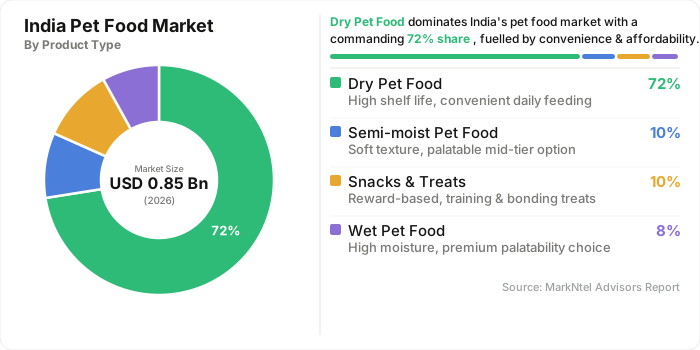
- By Product Type, the Dry Pet Food holds a significant share of about 72%.
- By Pet Type, the Dogs consume a massive portion of total pet food demand, around 77% in 2026.
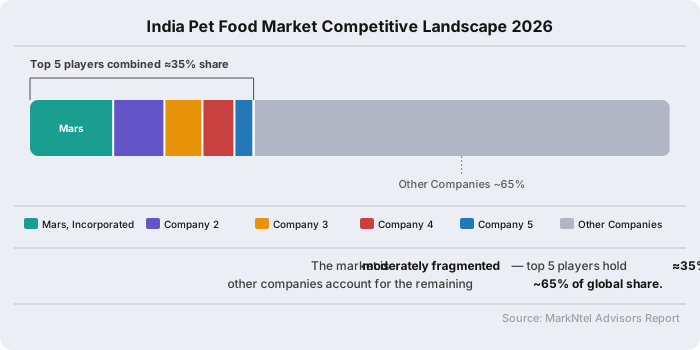
- The industry in India is moderately fragmented, with approximately 50 companies operating across the country. However, the top three players collectively account for nearly 35% share.
India Pet Food Market Size and Outlook
The Pet Food market in India was valued at around USD 0.73 billion in 2025 and is projected to grow from USD 0.85 billion in 2026 to USD 1.6 billion by 2032. Along with this, the market is estimated to grow at a CAGR of around 11.57% during the forecast period, i.e., 2026-32.
India’s pet food market has demonstrated a robust growth trajectory, underpinned by rising pet ownership, urbanization, and evolving consumer preferences toward scientifically formulated nutrition. Official data from the Department of Animal Husbandry and Dairying shows that India recorded over 19 million dogs in the 20th Livestock Census (2019), reflecting a substantial companion animal base. The ongoing 21st Livestock Census (2024–2025) further indicates continued institutional tracking and policy relevance of companion animals . This structural shift from informal feeding to packaged nutrition has been reinforced by increasing awareness of pet health and longevity.
Current market conditions reflect increasing formalization, supported by regulatory oversight and rising consumer awareness. The Food Safety and Standards Authority of India (FSSAI) has strengthened food safety, labeling, and packaging regulations across 2025–2026, improving transparency and product reliability. Residential households dominate demand, as pet ownership is primarily concentrated within urban families, while commercial demand from veterinary clinics and pet care centers is expanding alongside service infrastructure. The livestock census also confirms that animals are counted across households, enterprises, and institutions, reinforcing the relevance of both residential and commercial end-user segments in demand generation.
Macroeconomic and demographic factors provide a strong foundation for continued market expansion. India’s urban population has increased significantly, reaching over 534.9 million by 2024, reflecting a long-term rise in urban living standards and lifestyle shifts. Urbanization is closely associated with higher pet adoption rates and increased spending on premium pet nutrition. Additionally, government-led statistical systems such as the Livestock Census and Integrated Sample Survey ensure continuous monitoring of animal husbandry trends, supporting policy formulation and industry planning . Infrastructure improvements and supply chain expansion further enable deeper market penetration beyond metropolitan regions.
Industry participants are aligning with these structural drivers through localization, product innovation, and supply chain investments. Companies such as Mars Petcare and Nestlé Purina PetCare have expanded India-focused manufacturing and introduced tailored nutritional products addressing breed size, age, and health conditions. These initiatives are complemented by growing veterinary awareness and the expansion of organized pet care ecosystems. Looking ahead, the convergence of regulatory strengthening, urbanization, and industry investment is expected to sustain long-term demand growth across both residential and commercial segments in India pet food industry.
India Pet Food Market Key Indicators
- According to the Food and Agriculture Organization, global meat production reached approximately 373 million tonnes in 2024, reflecting the strong availability of animal protein inputs. Pet food manufacturing depends on meat derivatives such as poultry and fish meal, and higher livestock output ensures raw material availability, thereby supporting large-scale production and growth of the pet food industry.
- India’s private final consumption expenditure accounts for approximately 56.3% of GDP, reflecting strong household spending patterns, as reported in national economic datasets aligned with the Reserve Bank of India . Rising discretionary expenditure enables consumers to shift toward premium and specialized pet nutrition products, thereby supporting value growth in the pet food market.
- India has witnessed consistent growth in livestock and animal-based food production, including meat, milk, fish, and eggs, as highlighted in national submissions to the United Nations Framework Convention on Climate Change . Expanding livestock output strengthens the availability of key raw materials used in pet food manufacturing, thereby supporting domestic production capabilities.
India Pet Food Market Scope
| Category | Segments |
|---|---|
| By Product Type | (Dry Pet Food, Wet Pet Food, Semi-moist Pet Food, Snacks & Treats), |
| By Pet Type | (Dog, Cat, Bird, Others (Fish, Small Mammals, Reptiles, etc.)), |
| By Form | (Pellets, Crumbles, Mesh, Flakes), |
| By Specialty | (Prescription or Therapeutic Diets, Weight Management Diets, Hypoallergenic Diets), |
| By Ingredients | (Animal-based, Plant-based), |
| By Packaging | (Bags (Flexible Packaging), Cans, Tetra Packs, Others (Jars, Single-serve trays)), |
| By Food Type | (Prepared Pet Food, Unprepared Pet Food), |
| By Distribution Channel | (Offline (Hypermarkets/Supermarkets, Retail Stores, Specialty Pet Stores), Online, Others), |
India Pet Food Market Growth Drivers
Rising Pet Ownership and Urbanization
The expansion of pet ownership in India has accelerated alongside rapid urbanization, emerging as a structural demand driver for the pet food industry. According to the World Bank, India’s urban population exceeded approximately 535 million in 2024, reflecting sustained migration toward cities and evolving household structures. Urban living is associated with nuclear families and smaller households, which increases the need for companionship and drives pet adoption. This shift has intensified in recent years as changing lifestyles and emotional well-being considerations continue to influence consumer behavior.
This driver is directly translating into measurable demand growth across residential end-users, who represent the dominant consumption segment. According to the India Brand Equity Foundation, over 600,000 additional dogs are fostered annually in India, indicating a continuously expanding companion animal base. The steady addition of pets across households is increasing the recurring consumption of packaged and nutritionally balanced pet food products. Furthermore, the expansion of veterinary services and pet care infrastructure in urban centers is reinforcing awareness of scientifically formulated diets, thereby accelerating consumption volumes.
The impact of this driver extends beyond short-term adoption trends, contributing materially to sustained market volume expansion. Rising pet ownership structurally enlarges the consumer base, leading to continuous and repeat demand for pet food products across the pet lifecycle. Government-led urban development and digital retail expansion are further improving accessibility and availability of pet food products across cities. As urbanization continues and new pet-owning households emerge, this driver is expected to support long-term scalability in market size and consumption growth.
Recent Trends
Shift Toward Specialized and Functional Nutrition
The shift toward specialized and functional pet nutrition has emerged as a defining structural trend, driven by rising awareness of preventive healthcare and regulatory emphasis on product transparency. Regulatory actions by the Food Safety and Standards Authority of India in 2025–2026, including stricter labeling norms and scientific validation of claims, have reinforced the importance of nutritional efficacy. Simultaneously, increasing access to veterinary care and pet health information is influencing consumer preference toward scientifically formulated diets. This has accelerated demand for nutrition targeting immunity, digestion, and condition-specific health needs.
This trend is fundamentally reshaping the value chain by shifting innovation toward functional ingredients and science-driven formulations. Industry initiatives such as Mars Petcare’s Next Generation Pet Food Program highlight this transition, supporting startups like Terramatter that develop fermentation-based proteins for pet food applications . In parallel, Nestlé Purina PetCare has expanded therapeutic offerings such as Pro Plan Veterinary Diets, which are designed for condition-specific health needs and distributed through veterinary networks. These developments demonstrate the growing integration of clinical nutrition, biotechnology, and specialized formulations across the pet food ecosystem.
The persistence of this trend is supported by long-term structural factors, including regulatory tightening, rising disposable incomes, and global standards for animal health promoted by the World Organization for Animal Health. Continuous advancements in ingredient science and formulation technologies are expected to further institutionalize functional nutrition across both mass and premium segments. Consequently, this shift represents a sustained transformation in product design, consumption patterns, and industry innovation, positioning specialized nutrition as a core driver of long-term market evolution.
India Pet Food Market Opportunities and Challenges
High Price Sensitivity Creating Opportunity for Volume Expansion Through Affordable and Localized Pet Food Offerings
High price sensitivity among Indian consumers remains a significant barrier to the widespread adoption of commercial pet food, particularly across middle- and lower-income households. According to the Reserve Bank of India, household consumption expenditure constitutes a major share of economic activity, yet spending on discretionary categories remains highly price-conscious. This limits the uptake of premium and imported pet food products, while many pet owners continue to rely on homemade feeding as a cost-effective alternative. As a result, affordability constraints continue to restrict large-scale market penetration and volume growth across diverse consumer segments.
This challenge is simultaneously creating a strong opportunity for manufacturers to expand market volume through affordable and localized product strategies. For instance, Reliance Consumer Products Limited launched its “Waggies” pet food brand in 2025, focusing on affordability and accessibility by offering competitively priced products and low-cost trial packs to attract first-time users. Such initiatives demonstrate how companies are leveraging pricing innovation and local sourcing to reduce cost barriers and accelerate adoption. As more players adopt similar strategies, the market is expected to witness increased penetration, enabling large-scale conversion of price-sensitive consumers and sustained expansion in consumption volumes.
Segmentation Insights
Dry Pet Food is the Dominant Product Type
Dry pet food accounts for approximately 72% of the India pet food industry by product type, making it the most widely consumed category across households. This dominance is primarily attributed to its affordability, longer shelf life, and ease of storage compared to wet or fresh alternatives. Dry pet food does not require refrigeration and is well-suited to India’s climatic conditions and distribution infrastructure, enabling efficient transportation and bulk storage. Its convenience in handling, portion control, and cost-effectiveness make it the preferred choice among price-sensitive consumers, particularly across urban and semi-urban households.
From a demand and supply perspective, strong industry investment in affordable and scalable offerings further reinforces the dominance of dry pet food. For instance, Godrej Group entered the pet food industry in 2025 with the launch of its “Godrej Ninja” dry dog food, backed by an investment of approximately USD 60 million. The product is positioned as a nutritionally enhanced yet accessible solution, incorporating probiotics, prebiotics, and polyphenols while maintaining competitive pricing. Such developments highlight how manufacturers are leveraging dry food formats to deliver both functional benefits and affordability at scale. As a result, dry pet food continues to lead the market, supported by strong alignment with consumer purchasing behavior, supply chain efficiency, and sustained industry focus on mass-market adoption. Based on product type, the market is segmented into:
- Dry Pet Food
- Wet Pet Food
- Semi-moist Pet Food
- Snacks & Treats
Dogs Segment Generates Maximum Market Demand
Dogs account for approximately 77% of the market by pet type, making them the most dominant segment in terms of consumption. This leadership is primarily driven by higher adoption rates across both urban and semi-urban households, where dogs serve dual roles as companions and security animals. Compared to other pets, dogs require larger and more frequent food intake, resulting in higher consumption volumes. Additionally, dog ownership is more prevalent in independent homes and gated communities, further strengthening their leading share in the overall pet population.
From a demand perspective, the dominance of dogs is further reinforced by stronger emotional attachment and higher engagement among pet owners. Insights from Mars Petcare’s Global Pet Parent Survey indicate that over 64% of young dog owners in India associate pet ownership with stress reduction and emotional well-being, leading to increased care and spending on pets . This behavioral shift supports greater adoption of commercial pet food, particularly for dogs, where owners prioritize balanced and convenient nutrition. As a result, dogs continue to dominate the market, driven by higher ownership levels, greater nutritional requirements, and stronger consumer spending patterns. Based on pet type, the market is segmented into:
- Dog
- Cat
- Bird
- Others (Fish, Small Mammals, Reptiles, etc.)
India Pet Food Market Geographical Outlook
South India accounts for approximately 32.7% of the India pet food industry, making it the dominant regional contributor in terms of demand. This leadership is primarily driven by higher pet ownership rates and stronger urbanization across key states such as Tamil Nadu, Karnataka, and Telangana. Cities like Bengaluru, Chennai, and Hyderabad have witnessed significant growth in nuclear households and working professionals, which has increased pet adoption as a source of companionship. Additionally, the region has a well-developed pet care ecosystem, including veterinary clinics, pet stores, and grooming services, supporting higher consumption of commercial pet food products.
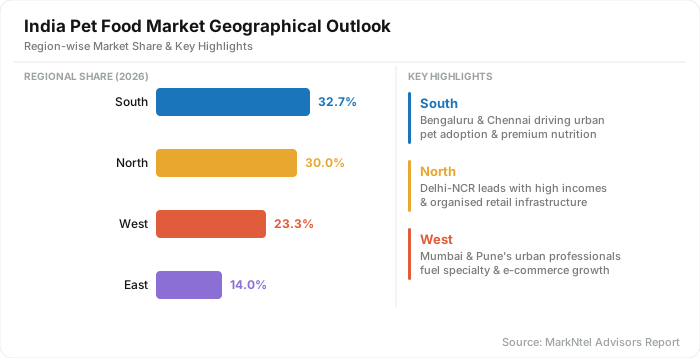
From a demand perspective, the dominance of South India is further reinforced by higher consumer awareness and spending on pet care. For instance, Godrej Group identified Tamil Nadu as a key market with approximately 2–3 million pet parent households, highlighting the region’s substantial consumer base. The presence of organized retail networks and the rapid expansion of e-commerce platforms have improved accessibility to pet food products across urban and semi-urban areas in the region. Additionally, higher literacy levels and greater exposure to veterinary guidance have encouraged the adoption of scientifically formulated pet diets. As a result, South India continues to lead the market, supported by strong urban infrastructure, higher pet ownership density, and increasing consumer preference for commercial pet nutrition.
India Pet Food Market Competitive Analysis
The market in India is moderately fragmented, with a mix of global and regional players operating across the country. However, the leading 3 companies, such as Mars Inc, Nestlé SA, and Charoen Pokphand Group, hold a strong presence, approximately 35% of the total market share
Key Pet Food Companies in India
- Mars Inc
- Indian Broiler Group
- Charoen Pokphand Group
- Russo Mangimi SpA
- Nestlé SA
- Tropical Industry
- Glenands Group
- Kamihata Fish Industries Ltd
- Creative Pet Products Co.
- Spectrum Brands Holdings Inc
- Others
India Pet Food Industry News and Recent Developments
May 2025: Nestlé SA Invests in Drools, Elevating India’s Pet Food Startup to Unicorn Status
Nestlé SA invested in Indian pet food company Drools in May 2025, leading to its valuation crossing USD 1 billion and achieving unicorn status. The investment strengthens Nestlé’s presence in India’s rapidly growing pet food market, while enabling Drools to expand manufacturing capacity, product innovation, and distribution across domestic and international markets.
Impact Analysis: The investment highlights increasing global interest in India’s pet food sector and strengthens competition by empowering a strong domestic player. Nestlé’s backing is expected to accelerate premiumization, expand local production, and enhance distribution reach, thereby intensifying competition with established global brands while supporting overall market growth.
June 2025: Benny’s Bowl Raises USD 1.4 Million to Expand R&D and Distribution
Indian pet food startup Benny’s Bowl raised approximately USD 1.4 million in a pre-Series A funding round led by Atomic Capital. The company plans to invest in research and development, launch new product lines including cat food and supplements, and expand distribution across major Indian cities, while strengthening consumer awareness around pet nutrition.
Impact Analysis: The funding highlights growing investor interest in India’s pet food landscape and supports innovation in functional and human-grade nutrition. Increased investment in R&D and distribution is expected to accelerate product diversification, improve accessibility, and intensify competition from emerging premium brands, thereby contributing to market expansion and category evolution.
*Reports Delivery Format - Market research studies from MarkNtel Advisors are offered in PDF, Excel and PowerPoint formats. Within 24 hours of the payment being successfully received, the report will be sent to your email address.
- Market Segmentation
- Introduction
- Product Definition
- Research Process
- Assumptions
- Executive Summary
- India Pet Food Market Policies, Regulations, and Product Standards
- India Pet Food Market Trends & Developments
- India Pet Food Market Dynamics
- Growth Factors
- Challenges
- India Pet Food Market Hotspot & Opportunities
- India Pet Food Market Outlook, 2022-2032F
- Market Size & Outlook
- By Revenues (USD Million)
- By Quantity Sold (Million Tons)
- Market Share & Outlook
- By Product Type- Market Size & Forecast 2022-2032, USD Million & Million Tons
- Dry Pet Food
- Wet Pet Food
- Semi-moist Pet Food
- Snacks & Treats
- By Pet Type- Market Size & Forecast 2022-2032, USD Million & Million Tons
- Dog
- Cat
- Bird
- Others (Fish, Small Mammals, Reptiles, etc.)
- By Form- Market Size & Forecast 2022-2032, USD Million & Million Tons
- Pellets
- Crumbles
- Mesh
- Flakes
- By Specialty- Market Size & Forecast 2022-2032, USD Million & Million Tons
- Prescription or Therapeutic Diets
- Weight Management Diets
- Hypoallergenic Diets
- By Ingredients- Market Size & Forecast 2022-2032, USD Million & Million Tons
- Animal-based
- Plant-based
- By Packaging- Market Size & Forecast 2022-2032, USD Million & Million Tons
- Bags (Flexible Packaging)
- Cans
- Tetra Packs
- Others (Jars, Single-serve trays)
- By Food Type- Market Size & Forecast 2022-2032, USD Million & Million Tons
- Prepared Pet Food
- Unprepared Pet Food
- By Distribution Channel- Market Size & Forecast 2022-2032, USD Million & Million Tons
- Offline
- Hypermarkets/Supermarkets
- Retail Stores
- Specialty Pet Stores
- Online
- Others
- Offline
- By Region- Market Size & Forecast 2022-2032, USD Million & Million Tons
- North India
- Uttar Pradesh
- Punjab
- Haryana
- Delhi NCR
- Others
- East India
- West Bengal
- Bihar
- Jharkhand
- North Eastern States
- Chhattisgarh
- Others
- West India
- Rajasthan
- Gujarat
- Maharashtra
- Madhya Pradesh
- Others
- South India
- Tamil Nadu
- Karnataka
- Kerala
- Andhra
- Telangana
- Others
- North India
- By Company
- Competition Characteristics
- Market Share & Analysis
- By Product Type- Market Size & Forecast 2022-2032, USD Million & Million Tons
- Market Size & Outlook
- India Dry Pet Food Market Outlook, 2022-2032
- Market Size & Outlook
- By Revenues (USD Million)
- By Quantity Sold (Million Tons)
- Market Share & Outlook
- By Pet Type- Market Size & Forecast 2022-2032, USD Million & Million Tons
- By Form- Market Size & Forecast 2022-2032, USD Million & Million Tons
- By Specialty- Market Size & Forecast 2022-2032, USD Million & Million Tons
- By Ingredients- Market Size & Forecast 2022-2032, USD Million & Million Tons
- By Packaging- Market Size & Forecast 2022-2032, USD Million & Million Tons
- By Food Type- Market Size & Forecast 2022-2032, USD Million & Million Tons
- By Distribution Channel- Market Size & Forecast 2022-2032, USD Million & Million Tons
- By Region- Market Size & Forecast 2022-2032, USD Million & Million Tons
- Market Size & Outlook
- India Wet Pet Food Market Outlook, 2022-2032
- Market Size & Outlook
- By Revenues (USD Million)
- By Quantity Sold (Million Tons)
- Market Share & Outlook
- By Pet Type- Market Size & Forecast 2022-2032, USD Million & Million Tons
- By Form- Market Size & Forecast 2022-2032, USD Million & Million Tons
- By Specialty- Market Size & Forecast 2022-2032, USD Million & Million Tons
- By Ingredients- Market Size & Forecast 2022-2032, USD Million & Million Tons
- By Packaging- Market Size & Forecast 2022-2032, USD Million & Million Tons
- By Food Type- Market Size & Forecast 2022-2032, USD Million & Million Tons
- By Distribution Channel- Market Size & Forecast 2022-2032, USD Million & Million Tons
- By Region- Market Size & Forecast 2022-2032, USD Million & Million Tons
- Market Size & Outlook
- India Semi-Moist Pet Food Market Outlook, 2022-2032
- Market Size & Outlook
- By Revenues (USD Million)
- By Quantity Sold (Million Tons)
- Market Share & Outlook
- By Pet Type- Market Size & Forecast 2022-2032, USD Million & Million Tons
- By Form- Market Size & Forecast 2022-2032, USD Million & Million Tons
- By Specialty- Market Size & Forecast 2022-2032, USD Million & Million Tons
- By Ingredients- Market Size & Forecast 2022-2032, USD Million & Million Tons
- By Packaging- Market Size & Forecast 2022-2032, USD Million & Million Tons
- By Food Type- Market Size & Forecast 2022-2032, USD Million & Million Tons
- By Distribution Channel- Market Size & Forecast 2022-2032, USD Million & Million Tons
- By Region- Market Size & Forecast 2022-2032, USD Million & Million Tons
- Market Size & Outlook
- India Snacks & Treats Market Outlook, 2022-2032
- Market Size & Outlook
- By Revenues (USD Million)
- By Quantity Sold (Million Tons)
- Market Share & Outlook
- By Pet Type- Market Size & Forecast 2022-2032, USD Million & Million Tons
- By Form- Market Size & Forecast 2022-2032, USD Million & Million Tons
- By Specialty- Market Size & Forecast 2022-2032, USD Million & Million Tons
- By Ingredients- Market Size & Forecast 2022-2032, USD Million & Million Tons
- By Packaging- Market Size & Forecast 2022-2032, USD Million & Million Tons
- By Food Type- Market Size & Forecast 2022-2032, USD Million & Million Tons
- By Distribution Channel- Market Size & Forecast 2022-2032, USD Million & Million Tons
- By Region- Market Size & Forecast 2022-2032, USD Million & Million Tons
- Market Size & Outlook
- India Pet Food Market Key Strategic Imperatives for Success & Growth
- Competitive Outlook
- Company Profiles
- Mars Inc
- Business Description
- Product Portfolio
- Collaborations & Alliances
- Recent Developments
- Financial Details
- Others
- Indian Broiler Group
- Business Description
- Product Portfolio
- Collaborations & Alliances
- Recent Developments
- Financial Details
- Others
- Charoen Pokphand Group
- Business Description
- Product Portfolio
- Collaborations & Alliances
- Recent Developments
- Financial Details
- Others
- Russo Mangimi SpA
- Business Description
- Product Portfolio
- Collaborations & Alliances
- Recent Developments
- Financial Details
- Others
- Nestlé SA
- Business Description
- Product Portfolio
- Collaborations & Alliances
- Recent Developments
- Financial Details
- Others
- Tropical Industry
- Business Description
- Product Portfolio
- Collaborations & Alliances
- Recent Developments
- Financial Details
- Others
- Glenands Group
- Business Description
- Product Portfolio
- Collaborations & Alliances
- Recent Developments
- Financial Details
- Others
- Kamihata Fish Ind Ltd
- Business Description
- Product Portfolio
- Collaborations & Alliances
- Recent Developments
- Financial Details
- Others
- Creative Pet Products Co.
- Business Description
- Product Portfolio
- Collaborations & Alliances
- Recent Developments
- Financial Details
- Others
- Spectrum Brands Holdings Inc
- Business Description
- Product Portfolio
- Collaborations & Alliances
- Recent Developments
- Financial Details
- Others
- Mars Inc
- Company Profiles
- Disclaimer

MarkNtel Advisors follows a robust and iterative research methodology designed to ensure maximum accuracy and minimize deviation in market estimates and forecasts. Our approach combines both bottom-up and top-down techniques to effectively segment and quantify various aspects of the market. A consistent feature across all our research reports is data triangulation, which examines the market from three distinct perspectives to validate findings. Key components of our research process include:
1. Scope & Research Design At the outset, MarkNtel Advisors define the research objectives and formulate pertinent questions. This phase involves determining the type of research—qualitative or quantitative—and designing a methodology that outlines data collection methods, target demographics, and analytical tools. They also establish timelines and budgets to ensure the research aligns with client goals.
2. Sample Selection and Data Collection In this stage, the firm identifies the target audience and determines the appropriate sample size to ensure representativeness. They employ various sampling methods, such as random or stratified sampling, based on the research objectives. Data collection is carried out using tools like surveys, interviews, and observations, ensuring the gathered data is reliable and relevant.
3. Data Analysis and Validation Once data is collected, MarkNtel Advisors undertake a rigorous analysis process. This includes cleaning the data to remove inconsistencies, employing statistical software for quantitative analysis, and thematic analysis for qualitative data. Validation steps are taken to ensure the accuracy and reliability of the findings, minimizing biases and errors.

4. Data Forecast and FinalizationThe final phase involves forecasting future market trends based on the analyzed data. MarkNtel Advisors utilize predictive modeling and time series analysis to anticipate market behaviors. The insights are then compiled into comprehensive reports, featuring visual aids like charts and graphs, and include strategic recommendations to inform client decision-making
We offer flexible licensing options to cater to varying organizational needs. Choose the pricing pack that best suits your requirements:
Buy Now Inquire Before Buying
 Request Customization