

By Component Type (Hardware (Handheld Detectors, Fixed Detectors, UAV-Based Detecto, Gas Detectors, Sensors, Infrared Cameras, Laser-Based Detection Systems, Monitoring Devices), Software (Emission Mo... ... oftware (Emission Monitoring Software, Data Analytics Platforms, Compliance Management Software), Services (Inspection Services, Repair & Maintenance Services, Consulting & Compliance Services, Training Services)), By Technology (Optical Gas Imaging (OGI), Acoustic Detection, Laser-Based Detection, IoT-Based Monitoring, AI & Predictive Analytics, Drone-Based Inspection, Others), By Deployment Type (Portable Systems, Fixed/Continuous Monitoring Systems, Remote Monitoring Systems), By Equipment Type (Pipelines, Valves, Pumps, Compressors, Storage Tanks, Flanges & Connectors, Pressure Relief Devices), By Leak Type (Gas Leaks, Liquid Leaks, Steam Leaks, Vacuum Leaks), By End Users (Oil & Gas Industry, Chemical Plants, Water Treatment Plants, Power Plants, Mining & Slurry, Commercial, Residential), and others Read more
- Buildings, Construction, Metals & Mining
- May 2026
- 130
- PDF, Excel, PPT
India Leak Detection and Repair Market Report Key Takeaways
- The India Leak Detection and Repair Market is valued at USD 426.7 million in 2025 and is projected to reach USD 485 million in 2026, further expanding to USD 735 million by 2032, registering a CAGR of 7.17%.
- By component type, the services segment dominates the market with a 45% share, supported by recurring demand for inspection, maintenance, compliance audits, and emissions monitoring across industrial facilities. This has positioned leak detection as a continuous operational requirement rather than a one-time equipment deployment.
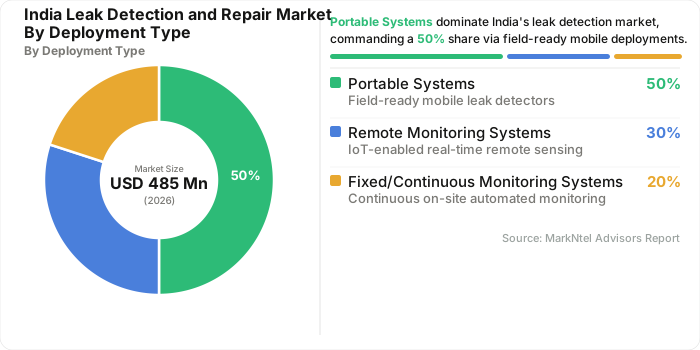
- By deployment type, portable systems hold the leading position with a 50% share, driven by their operational flexibility, cost-effectiveness, and suitability for fragmented industrial and utility infrastructure, where rapid field-based leak identification is preferred over fixed monitoring installations.
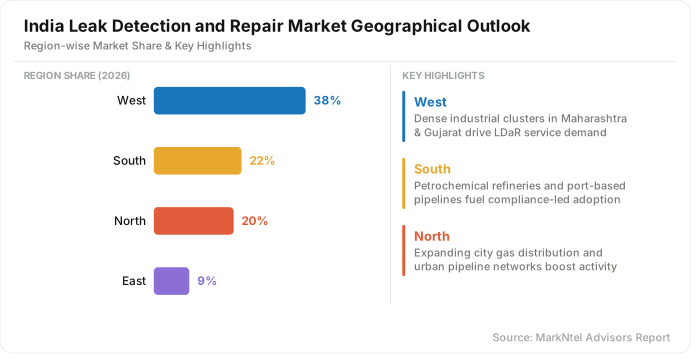
- Regionally, West India accounts for the largest market share at 38%, supported by the presence of dense industrial clusters in Gujarat and Maharashtra, a strong refinery and petrochemical base, and extensive infrastructure across ports, pipelines, and manufacturing hubs, making it the most demand-intensive region in the country.
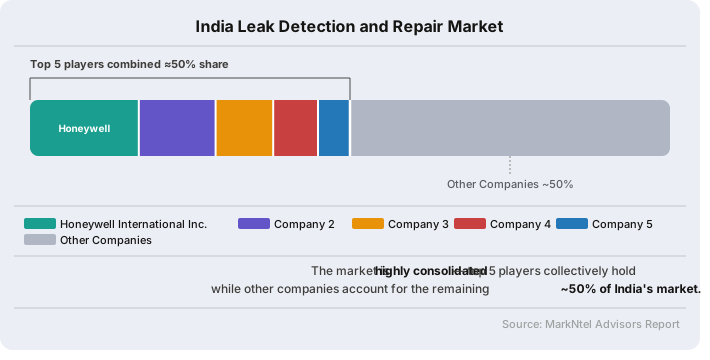
- The market remains highly consolidated at the technology layer, with the top five companies collectively accounting for nearly 50% of the market share. These companies lead enterprise deployments through integrated sensing systems, gas detection technologies, and industrial automation platforms across the oil & gas, chemicals, power, and manufacturing sectors.
India Leak Detection and Repair Market Size and Outlook
The India Leak Detection and Repair Market is projected to grow at a CAGR of 7.17% during 2026–2032, driven by rising investments in industrial safety systems, increasing emphasis on emissions reduction and environmental compliance, modernization of aging pipeline and utility infrastructure, and growing adoption of advanced monitoring technologies across oil & gas, chemicals, power, water utilities, and city gas distribution networks.
The Government of India’s AMRUT 2.0 program, with an indicative outlay of nearly USD 33 billion, targets universal urban water access and mandates the reduction of non-revenue water below 20%, accelerating deployment of acoustic sensors, SCADA systems, and pipeline monitoring technologies across municipalities.
Urban demand growth and rising pipeline stress have increased the need for continuous monitoring solutions in residential and commercial water distribution systems, particularly in high-density cities facing supply losses and intermittent service conditions. Official reviews linked to AMRUT 2.0 noted that non-revenue water in several Indian cities historically ranged between 30% and 70%, prompting local authorities to adopt district metered areas, digital pressure management, and targeted leakage mapping programs.
The industrial and energy sectors are also strengthening market demand as oil and gas operators invest in methane monitoring, emergency response systems, and advanced detection technologies to improve operational safety and environmental compliance. In 2024, Oil and Natural Gas Corporation partnered with TotalEnergies to deploy drone-based AUSEA methane detection technology across upstream assets, supporting India’s broader decarbonization and emission reduction objectives.
Additional momentum is emerging from stricter consumer protection and infrastructure reliability requirements introduced across India’s petroleum and natural gas ecosystem during 2025 and 2026. The Petroleum and Natural Gas Regulatory Board’s consumer protection regulations strengthened accountability for safe transportation and distribution operations, while recent operational incidents in upstream fields reinforced the importance of preventive leak detection and rapid response capabilities.
Technology adoption is further advancing through smart utility modernization projects that integrate IoT-enabled sensors, AI-assisted analytics, and real-time monitoring platforms into urban water networks and industrial facilities. Indian municipalities are increasingly deploying smart metering and automated inspection systems to improve billing efficiency, reduce pipeline losses, and support continuous water supply initiatives aligned with national urban development priorities.
Operational success stories are strengthening confidence in long-term market expansion, particularly in cities implementing structured leakage reduction and network rehabilitation programs. In 2025, Nagpur Municipal Corporation and Orange City Water reduced non-revenue water below 29% through pipeline replacement , leak repair campaigns, Robocam inspections, and elimination of unauthorized connections, demonstrating measurable efficiency gains from modern leak detection strategies.
Future market prospects remain favorable as the India Leak Detection and Repair Market expands from USD 485 million in 2026 to USD 735 million by 2032, supported by continued expansion of urban water systems, gas distribution infrastructure, industrial corridors, and smart city investments requiring continuous monitoring and predictive maintenance solutions. Growing emphasis on sustainability, methane reduction, infrastructure resilience, and digital utility management is expected to sustain demand for advanced leak detection platforms, repair services, and automated monitoring technologies across public and private end-user segments over the coming years.
India Leak Detection and Repair Market Key Indicators
- The Ministry of Petroleum and Natural Gas reported India's operational natural gas pipeline network at 24,945 km as of September 2024, with an additional 10,805 km under active construction; this expanding infrastructure base widens the mandatory scope for leak detection and repair (LDAR) inspections across trunk transmission lines, sub-transmission networks, and city gas distribution feeders.
- The Petroleum and Natural Gas Regulatory Board (PNGRB) authorised 307 geographical areas for city gas distribution (CGD) infrastructure development, with 13.6 million domestic piped natural gas connections and 7,259 CNG stations active as of September 2024; each connection node introduces incremental leak -risk points requiring periodic detection, pressure monitoring, and scheduled repair interventions.
- The International Energy Agency's (IEA) Global Methane Tracker 2025 ranked India among the six largest national emitters of methane from fossil fuel operations in 2024; the IEA further estimates that Leak Detection and Repair programmes can eliminate over a percentage of oil and gas methane emissions using currently available technology, establishing a direct compliance imperative for India's upstream and midstream operators.
India Leak Detection and Repair Market Scope
| Category | Segments |
|---|---|
| By Product Type | Fruit Juice (Fresh Juice, Fortified Juice, Fruit Nectars (High Concentration (40%–50% fruit content), Medium Concentration (30%–39% fruit content), Low Concentration (25%–29% fruit content))), Vegetable Juice, Fruit and Vegetable Blends |
| By Source | Not from Concentrate (NFC), From Concentrate (FC |
| By Packaging | Cartons (Tetra Pak) (Single-Serve Packs, Family Packs), PET Bottles (Small-Size Bottles, Large-Size Bottles), Glass Bottles, Cans, Others |
| By Distribution Channel | Off-Trade (Retail) (Supermarkets & Hypermarkets, Convenience Stores, Traditional Grocery), On-Trade (HoReCa) (Hotels, Restaurants & Cafes), Online Retail |
| By End User | Household, Hotels, Restaurants, and Cafes (HoReCa), Institutional, Industrial |
India Leak Detection and Repair Industry Growth Drivers
Rapid Expansion of India’s City Gas Distribution and Pipeline Infrastructure Driving Leak Detection Demand
The accelerated expansion of India’s city gas distribution and pipeline infrastructure has emerged as the strongest structural driver for the fugitive emissions monitoring in India, as larger transmission networks directly increase inspection, monitoring, and maintenance requirements. The Petroleum and Natural Gas Regulatory Board reported that India’s CGD network now covers more than 98% of the population across 88% geographical areas, while the government continues expanding pipeline connectivity under national energy transition goals.
As pipeline density rises across urban and industrial regions, utilities and operators are deploying advanced leak detection technologies to prevent gas losses, maintain operational continuity, and comply with stricter safety obligations. This infrastructure-led demand is materially expanding service volume because every newly commissioned pipeline segment requires continuous surveillance, pressure monitoring, periodic inspection, and emergency leak response systems throughout its operational lifecycle.
The driver intensified significantly during 2025 and 2026 as India accelerated natural gas adoption to improve energy accessibility and reduce dependence on liquid fuels across residential, commercial, and industrial sectors. Government data and publicly reported industry updates indicate that the country’s natural gas pipeline network exceeded 25,000 kilometers of operational trunk pipelines, while thousands of additional kilometers remain under development through ongoing expansion projects.
Industrial clusters, fertilizer plants, commercial kitchens, and urban residential users are increasingly connected to piped natural gas systems, creating geographically widespread demand for real-time monitoring technologies, infrared imaging tools, acoustic sensors, and predictive maintenance services. Unlike temporary technology upgrades, these investments generate recurring inspection cycles and long-term repair contracts that continuously expand market volume across multiple end-user categories.
Government regulations introduced in recent years have further strengthened this demand by increasing accountability for pipeline safety, network integrity, and consumer protection standards within gas distribution operations. In 2025, the Petroleum and Natural Gas Regulatory Board updated technical and safety standards for CGD networks , reinforcing mandatory monitoring, emergency preparedness, and operational reliability requirements for authorized entities managing gas infrastructure.
Simultaneously, public and private operators are increasing capital expenditure on smart monitoring platforms, unmanned inspection systems, and automated leak identification technologies to minimize downtime and improve response efficiency. The combination of nationwide gas infrastructure growth, mandatory safety compliance, and rising industrial gas utilization is therefore creating sustained, measurable, and long-duration demand expansion for leak detection and repair solutions across India.
Recent Trends
Shift Toward AI-Enabled and IoT-Integrated Continuous Monitoring Systems
The most significant trend reshaping leak detection and repair demand in India is the transition from periodic manual inspection toward AI-enabled and IoT-integrated continuous monitoring systems across utility, industrial, and energy infrastructure. This trend has accelerated as operators seek faster fault identification, lower operational losses, and real-time network visibility amid expanding water and gas distribution systems. Government-backed smart infrastructure programs and increasing digitalization of utilities have further encouraged the adoption of connected monitoring technologies.
The shift is structurally changing operational models by moving leak detection from reactive maintenance toward predictive and automated asset management across pipelines, storage facilities, and municipal networks. Utilities and industrial operators are increasingly deploying smart sensors, cloud-based analytics platforms, and remote monitoring systems capable of detecting pressure fluctuations, abnormal flow behavior, and methane emissions in real time. In 2025, the Hyderabad Metropolitan Water Supply and Sewerage Board introduced advanced acoustic leak detection devices and correlator-based systems capable of identifying underground pipeline leak locations with high precision, allowing repair teams to immediately isolate damaged sections and complete targeted maintenance without large-scale excavation.
Similarly, Solinas has developed AI-powered robotic inspection systems that travel inside underground pipelines to detect cracks, corrosion, blockages, and leak-prone sections in water, sewer, and industrial utility networks. The company’s systems generate actionable diagnostics that help maintenance teams carry out targeted repairs before pipeline failure occurs.
The trend is expected to persist because continuous monitoring systems improve regulatory compliance, reduce repair costs, and support long-term infrastructure efficiency objectives within rapidly urbanizing regions. The Ministry of Housing and Urban Affairs continues promoting smart water management and digital infrastructure integration under urban modernization initiatives, encouraging broader deployment of intelligent monitoring platforms across municipalities. As utilities increasingly prioritize predictive maintenance and automated response capabilities, AI-driven leak detection technologies are becoming embedded within long-term infrastructure planning and operational investment strategies across India.
India Leak Detection and Repair Market Opportunities and Challenges
High Cost and Operational Disruption of Conventional Pipeline Repair Creating Opportunity for Trenchless Rehabilitation Technologies
One of the major challenges in India’s leak detection and repair market is the high operational cost and urban disruption associated with conventional excavation-based pipeline repair methods. Road digging, traffic diversion, service interruptions, and restoration expenses significantly increase repair timelines for municipal utilities and industrial operators, particularly in densely populated metropolitan regions with aging underground infrastructure networks. These operational constraints often delay maintenance decisions and reduce the frequency of preventive repair activities.
The challenge has intensified as Indian cities continue expanding underground water, sewage, and gas infrastructure under urban modernization programs during 2025 and 2026. Municipal authorities increasingly face pressure to reduce water losses and repair failures without disrupting transportation corridors or commercial activity. In several smart city projects, utilities have shifted toward non-invasive maintenance approaches to minimize excavation-related operational burdens and public inconvenience. For instance, in Mumbai, the Brihanmumbai Municipal Corporation initiated trenchless geopolymer lining upgrades for century-old underground stormwater drains in 2026 to modernize infrastructure while avoiding extensive surface excavation and traffic disruption in dense urban areas.
This challenge is creating substantial opportunities for emerging players developing smart leak detection equipment, trenchless rehabilitation technologies, robotic inspection systems, ultrasonic monitoring devices, and non-invasive repair solutions for underground utility networks. Utilities and municipal operators are increasingly investing in modular and technology-driven infrastructure solutions that reduce excavation requirements, operational downtime, labor intensity, and restoration costs compared to conventional pipeline replacement methods.
For instance, Companies including HPL Electric, WEGoT, introduced ultrasonic smart water metering systems integrated with AMR and AMI platforms for utilities and smart city projects. The technology supports proactive leak detection, real- time monitoring, and automated water network management, while HPL also commissioned a dedicated smart meter manufacturing facility in Gurugram to scale deployment.
Additionally, Governments are also investing, for example, NDMC announced investments exceeding USD 20 million across smart irrigation systems, sewer rehabilitation, and sensor-based drainage infrastructure modernization projects in New Delhi during 2025. These projects include automated monitoring systems, trenchless pipeline upgrades, and intelligent water management technologies designed to improve leakage control and long-term infrastructure efficiency.
As utilities and industrial operators increasingly prioritize cost-efficient, automated, and sustainable infrastructure management solutions, the India Leak Detection and Repair Market is expected to witness continued technological advancement and long-term growth potential over the coming years.
Segmentation Analysis
Portable Systems as the Backbone of Multi-Industry Leak Detection in India
Portable systems are leading in the India Leak Detection and Repair Market with a market share of 50%, due to rising support from multi-industry applications, including oil & gas, chemicals, manufacturing, power generation, pharmaceuticals, water utilities, and HVAC systems. Industries handling gas leaks, steam leaks, compressed air losses, liquid pipeline leakage, and vacuum system failures require mobile inspection equipment that can quickly identify faults across large operational facilities. Portable ultrasonic leak detectors and acoustic imaging devices are widely adopted because they can detect leaks in pipelines, valves, storage tanks, boilers, refrigeration systems, and pressurized industrial networks without shutting down operations.
Technologies such as the portable correlator solutions like Se Corrc 200 are specifically designed for rapid underground leak identification with minimal excavation and low manpower requirements. These systems are preferred because they reduce operational downtime and can be used across metal, PVC, and concrete pipelines.
A key reason for segment leadership is India’s rising industrial energy efficiency focus and stricter operational safety requirements. Sectors such as refineries, fertilizer plants, steel manufacturing, LNG terminals, and pharmaceutical production facilities increasingly use portable systems for predictive maintenance because even minor steam, gas, or compressed air leaks can create major operational losses and safety risks. For example, SDT ultrasound solutions provides portable ultrasound-based inspection systems used globally for steam trap monitoring, compressed air leak detection, and vacuum system diagnostics.
The market impact of portable system dominance is significant because industries increasingly prioritize low-cost predictive maintenance and rapid inspection flexibility over expensive fixed monitoring deployments. Portable systems help manufacturers reduce energy wastage, improve worker safety, minimize downtime, and comply with industrial environmental regulations. Their ability to operate across multiple leak types, including gas, liquid, steam, and vacuum systems, makes them commercially more scalable than single-purpose fixed systems, reinforcing portable systems as the most versatile and economically practical deployment category in the overall leak detection and repair market. By deployment type, the market is further classified into the following sub-categories:
- Portable Systems
- Fixed/Continuous Monitoring Systems
- Remote Monitoring Systems
Service-Based Operational Model Leading India’s Leak Detection Landscape
The services segment dominates the India leak detection and repair market with a share of 45%, primarily because leak detection and repair activities are fundamentally labor-intensive and compliance-driven in nature. Industrial facilities, oil refineries, chemical plants, and municipal utility systems typically do not rely on standalone detection devices alone; instead, they require comprehensive end-to-end inspection, monitoring, reporting, and repair execution services.
As a result, industries increasingly depend on specialized third-party service providers to manage complete Leak Detection and Repair (LDAR) programs. For example, companies like TEAM Inc. provide full LDAR programs including Method 21 inspections, Optical Gas Imaging (OGI), repair tracking, and audit-ready reporting, showing that leak detection is delivered as a managed service rather than a product.
Secondly, it is regulatory enforcement and compliance complexity. LDAR programs are required under environmental frameworks such as VOC emission control and fugitive emission standards, which demand continuous monitoring, documentation, and verification, not just sensor installation. Firms like SGS India provide complete fugitive emissions and LDAR service programs, including routine monitoring, leak identification, repair verification, and compliance reporting, highlighting why industries outsource instead of building internal capability.
The market impact is that services create a recurring revenue with high dependency model, where industries repeatedly hire external experts due to a lack of in-house technical teams and evolving compliance rules. For example, operators in oil refineries and chemical plants rely on LDAR contractors like Applus+ for full program management aligned with methane and VOC regulations, integrating inspection, data logging, and emissions reporting in a single workflow. This shifts the market away from one-time hardware sales toward continuous service contracts, making industrial inspection services the most dominant and structurally sticky segment in India. By component type, the market is further segmented into the following categories:
- Hardware
- Software
- Services
India Leak Detection and Repair Industry Geographical Analysis
West India leads the India Leak Detection and Repair Market with a share of 38%due to its dense concentration of high-risk, process-intensive industries and large-scale energy infrastructure. Gujarat and Maharashtra collectively host India’s most advanced refining, petrochemical, and chemical manufacturing ecosystems, where continuous monitoring of gas, steam, and liquid pipelines is operationally critical. For example, the Jamnagar refinery complex operated by Reliance Industries Limited is among the world’s largest refining hubs, requiring continuous inspection and maintenance systems to manage complex pipeline networks. Similarly, petrochemical clusters in Dahej and Hazira, along with industrial zones in the Mumbai–Pune belt, generate sustained demand for leak detection services due to high asset density and safety risks.
Infrastructure and logistics integration further reinforce regional dominance. West India hosts major ports such as JNPT (Mumbai), Kandla, and Mundra, which handle large volumes of petroleum, chemicals, and industrial goods requiring strict safety and operational compliance during storage and transit. The Delhi–Mumbai Industrial Corridor (DMIC), a government-led infrastructure initiative under the Department for Promotion of Industry and Internal Trade, is designed to develop high-capacity industrial zones, logistics infrastructure, and smart manufacturing clusters along the western industrial belt, strengthening large-scale industrial activity and investment inflows in the region.
Policy and industrial governance frameworks strengthen this leadership position. Gujarat Industrial Policy and Maharashtra MIDC initiatives actively support the expansion of chemical, refining, and engineering industries, while environmental compliance norms related to emissions control and industrial safety increase demand for regular inspection and repair activities. Large industrial operators such as Indian Oil Corporation Limited , Limited maintain extensive pipeline and refinery networks in this region, requiring continuous leak detection operations. As a result, West India exhibits the highest adoption intensity due to the combined effect of industrial clustering, infrastructure scale, regulatory pressure, and concentration of major end users.
India Leak Detection and Repair Industry Competitive Landscape
The India Leak Detection and Repair Market is highly consolidated at the technology layer, where Honeywell India, Siemens India, Emerson India, ABB India, and Yokogawa India lead enterprise deployments through integrated sensing systems, gas detection technologies, and industrial automation platforms across oil & gas, chemicals, power, and manufacturing sectors. Overall, the top five companies, Honeywell India, Siemens India, Emerson India, ABB India, and Yokogawa India, collectively account for an estimated 50% share of enterprise-level leak detection and industrial monitoring deployments in India due to strong installed base dominance and integrated automation ecosystems.
Major Leak Detection and Repair Companies in India
- Honeywell India
- Dräger India
- MSA Safety
- FLIR Systems (Teledyne FLIR)
- ABB India
- Emerson India
- Yokogawa India
- Siemens India
- SGS India
- Bureau Veritas India
- TÜV SÜD South Asia
- Intertek India
- EFCO India
- Permaweld Pvt Ltd
- Nicco Engineering Services Ltd (NESL)
- S-Wrap (Siddharth Enterprises)
- Petrock Line Engineering
- Arudra Engineers Pvt Ltd
- Tectrac
India Leak Detection and Repair Industry News and Recent Developments
2026: ABB Launches EmissionVision Platform to Automate Gas Leak Detection and Repair
ABB introduced EmissionVision™, a cloud-based workflow platform designed to automate methane and industrial gas leak detection processes. It integrates leak detection, field inspection, and repair workflows into a single digital system. The platform uses ABB’s OA-ICOS laser-based detection technology along with AI-driven analytics. It helps operators shift from manual inspection methods to fully digitized, traceable LDAR workflows.
Impact Analysis: This strengthens the industrial digital LDAR foundation in India’s oil & gas and manufacturing sectors. It supports the shift from manual leak detection to automated, software-integrated emissions monitoring systems, improving operational efficiency and compliance accuracy. It encourages more industrial technology providers to invest in AI-based leak detection, methane monitoring, and cloud-based repair workflow platforms. Overall, it accelerates the transition toward a fully digitized, real-time, and compliance-driven LDAR ecosystem in India’s industrial infrastructure market.
2026: SmartTerra Deploys AI-Based Water Loss Management System to Reduce Pipeline Leakage in India
SmartTerra introduced an AI-driven water loss management system aimed at detecting and reducing pipeline leakage in Indian cities. The platform uses IoT sensors, pressure-flow analytics, and AI algorithms to identify abnormal water loss patterns in distribution networks. It enables utilities to move from reactive leak fixing to predictive identification and targeted repair planning. The solution is primarily focused on reducing Non-Revenue Water (NRW) in urban water infrastructure.
Impact analysis: This development significantly strengthens the Indian water Leak Detection & Repair market by accelerating AI-based leakage detection adoption in municipal water systems. It reduces dependence on manual inspection methods and supports utilities in identifying underground pipeline leaks more accurately and in real time. It also encourages broader deployment of smart water infrastructure technologies such as IoT-enabled sensors, SCADA integration, and predictive analytics platforms, which are becoming essential for addressing high NRW levels in Indian cities. Overall, it drives the shift in India’s LDAR market toward a data-driven, predictive, and automated leak detection ecosystem, improving the efficiency of repair operations and supporting long-term water conservation goals.
2026: Honeywell Launches New Infrared Gas Sensor to Enhance Industrial Worker Safety
Honeywell introduced a new NDIR (Non-Dispersive Infrared) hydrocarbon gas sensor designed to detect flammable gases such as methane, propane, and butane in industrial environments.
The sensor is built for harsh operating conditions like mining, oil & gas, and petrochemical plants.
It provides high accuracy, low power consumption, and improved resistance to sensor poisoning and environmental interference. The solution is designed for integration into fixed and portable gas detection systems for continuous monitoring of hazardous leaks.
Impact Analysis: This development strengthens the industrial gas Leak Detection & Repair segment in India, particularly in oil & gas, refineries, petrochemicals, and mining operations, where flammable gas leakage risk is high. It supports the shift toward advanced infrared-based sensing systems that offer continuous, real-time leak detection instead of periodic manual inspections. For India, this improves the adoption of modern fixed and portable LDAR infrastructure, especially in large PSUs and industrial clusters that are upgrading safety compliance systems. The improved durability and low-power design also make it suitable for large-scale deployment in cost-sensitive industrial environments, which is important for Indian market scalability. Overall, this accelerates the transition of India’s LDAR market toward infrared sensor-based, automated, and always-on industrial safety monitoring systems, improving both operational safety and regulatory compliance in high-risk sectors.
- Market Segmentation
- Introduction
- Product Definition
- Research Process
- Assumptions
- Executive Summary
- Global Gamification Market Policies, Regulations, and Product Standards
- Global Gamification Market Trends & Developments
- Global Gamification Market Dynamics
- Growth Factors
- Challenges
- Global Gamification Market Hotspot & Opportunities
- Global Gamification Market Outlook, 2022-2032F
- Market Size & Outlook
- By Revenues (USD Million)
- Market Share & Analysis
- By Component- Market Size & Forecast 2022-2032, USD Million
- Solution
- Services
- By Deployment Mode- Market Size & Forecast 2022-2032, USD Million
- Cloud-Based
- On-Premises
- By Organization Size- Market Size & Forecast 2022-2032, USD Million
- Small and Medium Enterprises (SMEs)
- Large Enterprises
- By Application- Market Size & Forecast 2022-2032, USD Million
- Marketing and Sales
- HR and Training
- Product Development and Innovation
- Customer Support and Experience
- Others
- By End-Use Industry- Market Size & Forecast 2022-2032, USD Million
- Banking, Financial Services & Insurance (BFSI)
- Retail and E-Commerce
- Education and EdTech
- Healthcare and Life Sciences
- Education and EdTech
- IT & Telecommunications
- Retail and E-Commerce
- Media, Entertainment & Gaming
- Manufacturing
- Travel and Hospitality
- Government & Public Sector
- Banking, Financial Services & Insurance (BFSI)
- By Region
- North America
- South America
- Europe
- The Middle East & Africa
- Asia-Pacific
- By Company
- Competition Characteristics
- Market Share & Analysis
- By Component- Market Size & Forecast 2022-2032, USD Million
- Market Size & Outlook
- North America Gamification Market Outlook, 2022-2032F
- Market Size & Outlook
- By Revenues (USD Million)
- Market Share & Analysis
- By Component- Market Size & Forecast 2022-2032, USD Million
- By Deployment Mode- Market Size & Forecast 2022-2032, USD Million
- By Organization Size- Market Size & Forecast 2022-2032, USD Million
- By Application- Market Size & Forecast 2022-2032, USD Million
- By End-Use Industry- Market Size & Forecast 2022-2032, USD Million
- By Country
- The US
- Canada
- Mexico
- Rest of North America
- The US Gamification Market Outlook, 2022-2032F
- Market Size & Outlook
- By Revenues (USD Million)
- Market Share & Analysis
- By Component- Market Size & Forecast 2022-2032, USD Million
- By Deployment Mode- Market Size & Forecast 2022-2032, USD Million
- By Organization Size- Market Size & Forecast 2022-2032, USD Million
- By Application- Market Size & Forecast 2022-2032, USD Million
- By End-Use Industry- Market Size & Forecast 2022-2032, USD Million
- Market Size & Outlook
- Canada Gamification Market Outlook, 2022-2032F
- Market Size & Outlook
- By Revenues (USD Million)
- Market Share & Analysis
- By Component- Market Size & Forecast 2022-2032, USD Million
- By Deployment Mode- Market Size & Forecast 2022-2032, USD Million
- By Organization Size- Market Size & Forecast 2022-2032, USD Million
- By Application- Market Size & Forecast 2022-2032, USD Million
- By End-Use Industry- Market Size & Forecast 2022-2032, USD Million
- Market Size & Outlook
- Mexico Gamification Market Outlook, 2022-2032F
- Market Size & Outlook
- By Revenues (USD Million)
- Market Share & Analysis
- By Component- Market Size & Forecast 2022-2032, USD Million
- By Deployment Mode- Market Size & Forecast 2022-2032, USD Million
- By Organization Size- Market Size & Forecast 2022-2032, USD Million
- By Application- Market Size & Forecast 2022-2032, USD Million
- By End-Use Industry- Market Size & Forecast 2022-2032, USD Million
- Market Size & Outlook
- Market Size & Outlook
- South America Gamification Market Outlook, 2022-2032F
- Market Size & Outlook
- By Revenues (USD Million)
- Market Share & Analysis
- By Component- Market Size & Forecast 2022-2032, USD Million
- By Deployment Mode- Market Size & Forecast 2022-2032, USD Million
- By Organization Size- Market Size & Forecast 2022-2032, USD Million
- By Application- Market Size & Forecast 2022-2032, USD Million
- By End-Use Industry- Market Size & Forecast 2022-2032, USD Million
- By Country
- Brazil
- Argentina
- Chile
- Colombia
- Peru
- Rest of South America
- Brazil Gamification Market Outlook, 2022-2032F
- Market Size & Outlook
- By Revenues (USD Million)
- Market Share & Analysis
- By Component- Market Size & Forecast 2022-2032, USD Million
- By Deployment Mode- Market Size & Forecast 2022-2032, USD Million
- By Organization Size- Market Size & Forecast 2022-2032, USD Million
- By Application- Market Size & Forecast 2022-2032, USD Million
- By End-Use Industry- Market Size & Forecast 2022-2032, USD Million
- Market Size & Outlook
- Argentina Gamification Market Outlook, 2022-2032F
- Market Size & Outlook
- By Revenues (USD Million)
- Market Share & Analysis
- By Component- Market Size & Forecast 2022-2032, USD Million
- By Deployment Mode- Market Size & Forecast 2022-2032, USD Million
- By Organization Size- Market Size & Forecast 2022-2032, USD Million
- By Application- Market Size & Forecast 2022-2032, USD Million
- By End-Use Industry- Market Size & Forecast 2022-2032, USD Million
- Market Size & Outlook
- Chile Gamification Market Outlook, 2022-2032F
- Market Size & Outlook
- By Revenues (USD Million)
- Market Share & Analysis
- By Component- Market Size & Forecast 2022-2032, USD Million
- By Deployment Mode- Market Size & Forecast 2022-2032, USD Million
- By Organization Size- Market Size & Forecast 2022-2032, USD Million
- By Application- Market Size & Forecast 2022-2032, USD Million
- By End-Use Industry- Market Size & Forecast 2022-2032, USD Million
- Market Size & Outlook
- Colombia Gamification Market Outlook, 2022-2032F
- Market Size & Outlook
- By Revenues (USD Million)
- Market Share & Analysis
- By Component- Market Size & Forecast 2022-2032, USD Million
- By Deployment Mode- Market Size & Forecast 2022-2032, USD Million
- By Organization Size- Market Size & Forecast 2022-2032, USD Million
- By Application- Market Size & Forecast 2022-2032, USD Million
- By End-Use Industry- Market Size & Forecast 2022-2032, USD Million
- Market Size & Outlook
- Peru Gamification Market Outlook, 2022-2032F
- Market Size & Outlook
- By Revenues (USD Million)
- Market Share & Analysis
- By Component- Market Size & Forecast 2022-2032, USD Million
- By Deployment Mode- Market Size & Forecast 2022-2032, USD Million
- By Organization Size- Market Size & Forecast 2022-2032, USD Million
- By Application- Market Size & Forecast 2022-2032, USD Million
- By End-Use Industry- Market Size & Forecast 2022-2032, USD Million
- Market Size & Outlook
- Market Size & Outlook
- Europe Gamification Market Outlook, 2022-2032F
- Market Size & Outlook
- By Revenues (USD Million)
- Market Share & Analysis
- By Component- Market Size & Forecast 2022-2032, USD Million
- By Deployment Mode- Market Size & Forecast 2022-2032, USD Million
- By Organization Size- Market Size & Forecast 2022-2032, USD Million
- By Application- Market Size & Forecast 2022-2032, USD Million
- By End-Use Industry- Market Size & Forecast 2022-2032, USD Million
- By Country
- The UK
- Germany
- France
- Italy
- Spain
- Netherlands
- Belgium
- Switzerland
- Sweden
- Austria
- Portugal
- Poland
- Rest of Europe
- The UK Gamification Market Outlook, 2022-2032F
- Market Size & Outlook
- By Revenues (USD Million)
- Market Share & Analysis
- By Component- Market Size & Forecast 2022-2032, USD Million
- By Deployment Mode- Market Size & Forecast 2022-2032, USD Million
- By Organization Size- Market Size & Forecast 2022-2032, USD Million
- By Application- Market Size & Forecast 2022-2032, USD Million
- By End-Use Industry- Market Size & Forecast 2022-2032, USD Million
- Market Size & Outlook
- Germany Gamification Market Outlook, 2022-2032F
- Market Size & Outlook
- By Revenues (USD Million)
- Market Share & Analysis
- By Component- Market Size & Forecast 2022-2032, USD Million
- By Deployment Mode- Market Size & Forecast 2022-2032, USD Million
- By Organization Size- Market Size & Forecast 2022-2032, USD Million
- By Application- Market Size & Forecast 2022-2032, USD Million
- By End-Use Industry- Market Size & Forecast 2022-2032, USD Million
- Market Size & Outlook
- France Gamification Market Outlook, 2022-2032F
- Market Size & Outlook
- By Revenues (USD Million)
- Market Share & Analysis
- By Component- Market Size & Forecast 2022-2032, USD Million
- By Deployment Mode- Market Size & Forecast 2022-2032, USD Million
- By Organization Size- Market Size & Forecast 2022-2032, USD Million
- By Application- Market Size & Forecast 2022-2032, USD Million
- By End-Use Industry- Market Size & Forecast 2022-2032, USD Million
- Market Size & Outlook
- Italy Gamification Market Outlook, 2022-2032F
- Market Size & Outlook
- By Revenues (USD Million)
- Market Share & Analysis
- By Component- Market Size & Forecast 2022-2032, USD Million
- By Deployment Mode- Market Size & Forecast 2022-2032, USD Million
- By Organization Size- Market Size & Forecast 2022-2032, USD Million
- By Application- Market Size & Forecast 2022-2032, USD Million
- By End-Use Industry- Market Size & Forecast 2022-2032, USD Million
- Market Size & Outlook
- Spain Gamification Market Outlook, 2022-2032F
- Market Size & Outlook
- By Revenues (USD Million)
- Market Share & Analysis
- By Component- Market Size & Forecast 2022-2032, USD Million
- By Deployment Mode- Market Size & Forecast 2022-2032, USD Million
- By Organization Size- Market Size & Forecast 2022-2032, USD Million
- By Application- Market Size & Forecast 2022-2032, USD Million
- By End-Use Industry- Market Size & Forecast 2022-2032, USD Million
- Market Size & Outlook
- Netherlands Gamification Market Outlook, 2022-2032F
- Market Size & Outlook
- By Revenues (USD Million)
- Market Share & Analysis
- By Component- Market Size & Forecast 2022-2032, USD Million
- By Deployment Mode- Market Size & Forecast 2022-2032, USD Million
- By Organization Size- Market Size & Forecast 2022-2032, USD Million
- By Application- Market Size & Forecast 2022-2032, USD Million
- By End-Use Industry- Market Size & Forecast 2022-2032, USD Million
- Market Size & Outlook
- Belgium Gamification Market Outlook, 2022-2032F
- Market Size & Outlook
- By Revenues (USD Million)
- Market Share & Analysis
- By Component- Market Size & Forecast 2022-2032, USD Million
- By Deployment Mode- Market Size & Forecast 2022-2032, USD Million
- By Organization Size- Market Size & Forecast 2022-2032, USD Million
- By Application- Market Size & Forecast 2022-2032, USD Million
- By End-Use Industry- Market Size & Forecast 2022-2032, USD Million
- Market Size & Outlook
- Switzerland Gamification Market Outlook, 2022-2032F
- Market Size & Outlook
- By Revenues (USD Million)
- Market Share & Analysis
- By Component- Market Size & Forecast 2022-2032, USD Million
- By Deployment Mode- Market Size & Forecast 2022-2032, USD Million
- By Organization Size- Market Size & Forecast 2022-2032, USD Million
- By Application- Market Size & Forecast 2022-2032, USD Million
- By End-Use Industry- Market Size & Forecast 2022-2032, USD Million
- Market Size & Outlook
- Sweden Gamification Market Outlook, 2022-2032F
- Market Size & Outlook
- By Revenues (USD Million)
- Market Share & Analysis
- By Component- Market Size & Forecast 2022-2032, USD Million
- By Deployment Mode- Market Size & Forecast 2022-2032, USD Million
- By Organization Size- Market Size & Forecast 2022-2032, USD Million
- By Application- Market Size & Forecast 2022-2032, USD Million
- By End-Use Industry- Market Size & Forecast 2022-2032, USD Million
- Market Size & Outlook
- Austria Gamification Market Outlook, 2022-2032F
- Market Size & Outlook
- By Revenues (USD Million)
- Market Share & Analysis
- By Component- Market Size & Forecast 2022-2032, USD Million
- By Deployment Mode- Market Size & Forecast 2022-2032, USD Million
- By Organization Size- Market Size & Forecast 2022-2032, USD Million
- By Application- Market Size & Forecast 2022-2032, USD Million
- By End-Use Industry- Market Size & Forecast 2022-2032, USD Million
- Market Size & Outlook
- Portugal Gamification Market Outlook, 2022-2032F
- Market Size & Outlook
- By Revenues (USD Million)
- Market Share & Analysis
- By Component- Market Size & Forecast 2022-2032, USD Million
- By Deployment Mode- Market Size & Forecast 2022-2032, USD Million
- By Organization Size- Market Size & Forecast 2022-2032, USD Million
- By Application- Market Size & Forecast 2022-2032, USD Million
- By End-Use Industry- Market Size & Forecast 2022-2032, USD Million
- Market Size & Outlook
- Poland Gamification Market Outlook, 2022-2032F
- Market Size & Outlook
- By Revenues (USD Million)
- Market Share & Analysis
- By Component- Market Size & Forecast 2022-2032, USD Million
- By Deployment Mode- Market Size & Forecast 2022-2032, USD Million
- By Organization Size- Market Size & Forecast 2022-2032, USD Million
- By Application- Market Size & Forecast 2022-2032, USD Million
- By End-Use Industry- Market Size & Forecast 2022-2032, USD Million
- Market Size & Outlook
- Market Size & Outlook
- The Middle East & Africa Gamification Market Outlook, 2022-2032F
- Market Size & Outlook
- By Revenues (USD Million)
- Market Share & Analysis
- By Component- Market Size & Forecast 2022-2032, USD Million
- By Deployment Mode- Market Size & Forecast 2022-2032, USD Million
- By Organization Size- Market Size & Forecast 2022-2032, USD Million
- By Application- Market Size & Forecast 2022-2032, USD Million
- By End-Use Industry- Market Size & Forecast 2022-2032, USD Million
- By Country
- Saudi Arabia
- UAE
- South Africa
- Israel
- Egypt
- Nigeria
- Rest of Middle East & Africa
- Saudi Arabia Gamification Market Outlook, 2022-2032F
- Market Size & Outlook
- By Revenues (USD Million)
- Market Share & Analysis
- By Component- Market Size & Forecast 2022-2032, USD Million
- By Deployment Mode- Market Size & Forecast 2022-2032, USD Million
- By Organization Size- Market Size & Forecast 2022-2032, USD Million
- By Application- Market Size & Forecast 2022-2032, USD Million
- By End-Use Industry- Market Size & Forecast 2022-2032, USD Million
- Market Size & Outlook
- UAE Gamification Market Outlook, 2022-2032F
- Market Size & Outlook
- By Revenues (USD Million)
- Market Share & Analysis
- By Component- Market Size & Forecast 2022-2032, USD Million
- By Deployment Mode- Market Size & Forecast 2022-2032, USD Million
- By Organization Size- Market Size & Forecast 2022-2032, USD Million
- By Application- Market Size & Forecast 2022-2032, USD Million
- By End-Use Industry- Market Size & Forecast 2022-2032, USD Million
- Market Size & Outlook
- South Africa Gamification Market Outlook, 2022-2032F
- Market Size & Outlook
- By Revenues (USD Million)
- Market Share & Analysis
- By Component- Market Size & Forecast 2022-2032, USD Million
- By Deployment Mode- Market Size & Forecast 2022-2032, USD Million
- By Organization Size- Market Size & Forecast 2022-2032, USD Million
- By Application- Market Size & Forecast 2022-2032, USD Million
- By End-Use Industry- Market Size & Forecast 2022-2032, USD Million
- Market Size & Outlook
- Israel Gamification Market Outlook, 2022-2032F
- Market Size & Outlook
- By Revenues (USD Million)
- Market Share & Analysis
- By Component- Market Size & Forecast 2022-2032, USD Million
- By Deployment Mode- Market Size & Forecast 2022-2032, USD Million
- By Organization Size- Market Size & Forecast 2022-2032, USD Million
- By Application- Market Size & Forecast 2022-2032, USD Million
- By End-Use Industry- Market Size & Forecast 2022-2032, USD Million
- Market Size & Outlook
- Egypt Gamification Market Outlook, 2022-2032F
- Market Size & Outlook
- By Revenues (USD Million)
- Market Share & Analysis
- By Component- Market Size & Forecast 2022-2032, USD Million
- By Deployment Mode- Market Size & Forecast 2022-2032, USD Million
- By Organization Size- Market Size & Forecast 2022-2032, USD Million
- By Application- Market Size & Forecast 2022-2032, USD Million
- By End-Use Industry- Market Size & Forecast 2022-2032, USD Million
- Market Size & Outlook
- Nigeria Gamification Market Outlook, 2022-2032F
- Market Size & Outlook
- By Revenues (USD Million)
- Market Share & Analysis
- By Component- Market Size & Forecast 2022-2032, USD Million
- By Deployment Mode- Market Size & Forecast 2022-2032, USD Million
- By Organization Size- Market Size & Forecast 2022-2032, USD Million
- By Application- Market Size & Forecast 2022-2032, USD Million
- By End-Use Industry- Market Size & Forecast 2022-2032, USD Million
- Market Size & Outlook
- Market Size & Outlook
- Asia-Pacific Gamification Market Outlook, 2022-2032F
- Market Size & Outlook
- By Revenues (USD Million)
- Market Share & Analysis
- By Component- Market Size & Forecast 2022-2032, USD Million
- By Deployment Mode- Market Size & Forecast 2022-2032, USD Million
- By Organization Size- Market Size & Forecast 2022-2032, USD Million
- By Application- Market Size & Forecast 2022-2032, USD Million
- By End-Use Industry- Market Size & Forecast 2022-2032, USD Million
- By Country
- China
- Japan
- India
- South Korea
- Australia
- New Zealand
- Rest of Asia-Pacific
- China Gamification Market Outlook, 2022-2032F
- Market Size & Outlook
- By Revenues (USD Million)
- Market Share & Analysis
- By Component- Market Size & Forecast 2022-2032, USD Million
- By Deployment Mode- Market Size & Forecast 2022-2032, USD Million
- By Organization Size- Market Size & Forecast 2022-2032, USD Million
- By Application- Market Size & Forecast 2022-2032, USD Million
- By End-Use Industry- Market Size & Forecast 2022-2032, USD Million
- Market Size & Outlook
- Japan Gamification Market Outlook, 2022-2032F
- Market Size & Outlook
- By Revenues (USD Million)
- Market Share & Analysis
- By Component- Market Size & Forecast 2022-2032, USD Million
- By Deployment Mode- Market Size & Forecast 2022-2032, USD Million
- By Organization Size- Market Size & Forecast 2022-2032, USD Million
- By Application- Market Size & Forecast 2022-2032, USD Million
- By End-Use Industry- Market Size & Forecast 2022-2032, USD Million
- Market Size & Outlook
- India Gamification Market Outlook, 2022-2032F
- Market Size & Outlook
- By Revenues (USD Million)
- Market Share & Analysis
- By Component- Market Size & Forecast 2022-2032, USD Million
- By Deployment Mode- Market Size & Forecast 2022-2032, USD Million
- By Organization Size- Market Size & Forecast 2022-2032, USD Million
- By Application- Market Size & Forecast 2022-2032, USD Million
- By End-Use Industry- Market Size & Forecast 2022-2032, USD Million
- Market Size & Outlook
- South Korea Gamification Market Outlook, 2022-2032F
- Market Size & Outlook
- By Revenues (USD Million)
- Market Share & Analysis
- By Component- Market Size & Forecast 2022-2032, USD Million
- By Deployment Mode- Market Size & Forecast 2022-2032, USD Million
- By Organization Size- Market Size & Forecast 2022-2032, USD Million
- By Application- Market Size & Forecast 2022-2032, USD Million
- By End-Use Industry- Market Size & Forecast 2022-2032, USD Million
- Market Size & Outlook
- Australia Gamification Market Outlook, 2022-2032F
- Market Size & Outlook
- By Revenues (USD Million)
- Market Share & Analysis
- By Component- Market Size & Forecast 2022-2032, USD Million
- By Deployment Mode- Market Size & Forecast 2022-2032, USD Million
- By Organization Size- Market Size & Forecast 2022-2032, USD Million
- By Application- Market Size & Forecast 2022-2032, USD Million
- By End-Use Industry- Market Size & Forecast 2022-2032, USD Million
- Market Size & Outlook
- New Zealand Gamification Market Outlook, 2022-2032F
- Market Size & Outlook
- By Revenues (USD Million)
- Market Share & Analysis
- By Component- Market Size & Forecast 2022-2032, USD Million
- By Deployment Mode- Market Size & Forecast 2022-2032, USD Million
- By Organization Size- Market Size & Forecast 2022-2032, USD Million
- By Application- Market Size & Forecast 2022-2032, USD Million
- By End-Use Industry- Market Size & Forecast 2022-2032, USD Million
- Market Size & Outlook
- Market Size & Outlook
- Global Gamification Market Key Strategic Imperatives for Success & Growth
- Competitive Outlook
- Company Profiles
- Microsoft Corporation
- Business Description
- Product Portfolio
- Collaborations & Alliances
- Recent Developments
- Financial Details
- Others
- SAP SE
- Business Description
- Product Portfolio
- Collaborations & Alliances
- Recent Developments
- Financial Details
- Others
- Cognizant Technology Solutions Corp.
- Business Description
- Product Portfolio
- Collaborations & Alliances
- Recent Developments
- Financial Details
- Others
- Axonify Inc.
- Business Description
- Product Portfolio
- Collaborations & Alliances
- Recent Developments
- Financial Details
- Others
- Aon plc
- Business Description
- Product Portfolio
- Collaborations & Alliances
- Recent Developments
- Financial Details
- Others
- BI Worldwide
- Business Description
- Product Portfolio
- Collaborations & Alliances
- Recent Developments
- Financial Details
- Others
- Bunchball Inc.
- Business Description
- Product Portfolio
- Collaborations & Alliances
- Recent Developments
- Financial Details
- Others
- Salesforce Inc.
- Business Description
- Product Portfolio
- Collaborations & Alliances
- Recent Developments
- Financial Details
- Others
- LevelEleven LLC
- Business Description
- Product Portfolio
- Collaborations & Alliances
- Recent Developments
- Financial Details
- Others
- Badgeville Inc.
- Business Description
- Product Portfolio
- Collaborations & Alliances
- Recent Developments
- Financial Details
- Others
- Ambition Solutions Inc.
- Business Description
- Product Portfolio
- Collaborations & Alliances
- Recent Developments
- Financial Details
- Others
- MPS Interactive Systems Ltd.
- Business Description
- Product Portfolio
- Collaborations & Alliances
- Recent Developments
- Financial Details
- Others
- Kahoot! ASA
- Business Description
- Product Portfolio
- Collaborations & Alliances
- Recent Developments
- Financial Details
- Others
- G-Cube Solutions
- Business Description
- Product Portfolio
- Collaborations & Alliances
- Recent Developments
- Financial Details
- Others
- IACTIONABLE Inc.
- Business Description
- Product Portfolio
- Collaborations & Alliances
- Recent Developments
- Financial Details
- Others
- Others
- Business Description
- Product Portfolio
- Collaborations & Alliances
- Recent Developments
- Financial Details
- Others
- Microsoft Corporation
- Company Profiles
- Disclaimer

MarkNtel Advisors follows a robust and iterative research methodology designed to ensure maximum accuracy and minimize deviation in market estimates and forecasts. Our approach combines both bottom-up and top-down techniques to effectively segment and quantify various aspects of the market. A consistent feature across all our research reports is data triangulation, which examines the market from three distinct perspectives to validate findings. Key components of our research process include:
1. Scope & Research Design At the outset, MarkNtel Advisors define the research objectives and formulate pertinent questions. This phase involves determining the type of research—qualitative or quantitative—and designing a methodology that outlines data collection methods, target demographics, and analytical tools. They also establish timelines and budgets to ensure the research aligns with client goals.
2. Sample Selection and Data Collection In this stage, the firm identifies the target audience and determines the appropriate sample size to ensure representativeness. They employ various sampling methods, such as random or stratified sampling, based on the research objectives. Data collection is carried out using tools like surveys, interviews, and observations, ensuring the gathered data is reliable and relevant.
3. Data Analysis and Validation Once data is collected, MarkNtel Advisors undertake a rigorous analysis process. This includes cleaning the data to remove inconsistencies, employing statistical software for quantitative analysis, and thematic analysis for qualitative data. Validation steps are taken to ensure the accuracy and reliability of the findings, minimizing biases and errors.

4. Data Forecast and FinalizationThe final phase involves forecasting future market trends based on the analyzed data. MarkNtel Advisors utilize predictive modeling and time series analysis to anticipate market behaviors. The insights are then compiled into comprehensive reports, featuring visual aids like charts and graphs, and include strategic recommendations to inform client decision-making
We offer flexible licensing options to cater to varying organizational needs. Choose the pricing pack that best suits your requirements:
Buy Now Inquire Before Buying
 Request Customization