

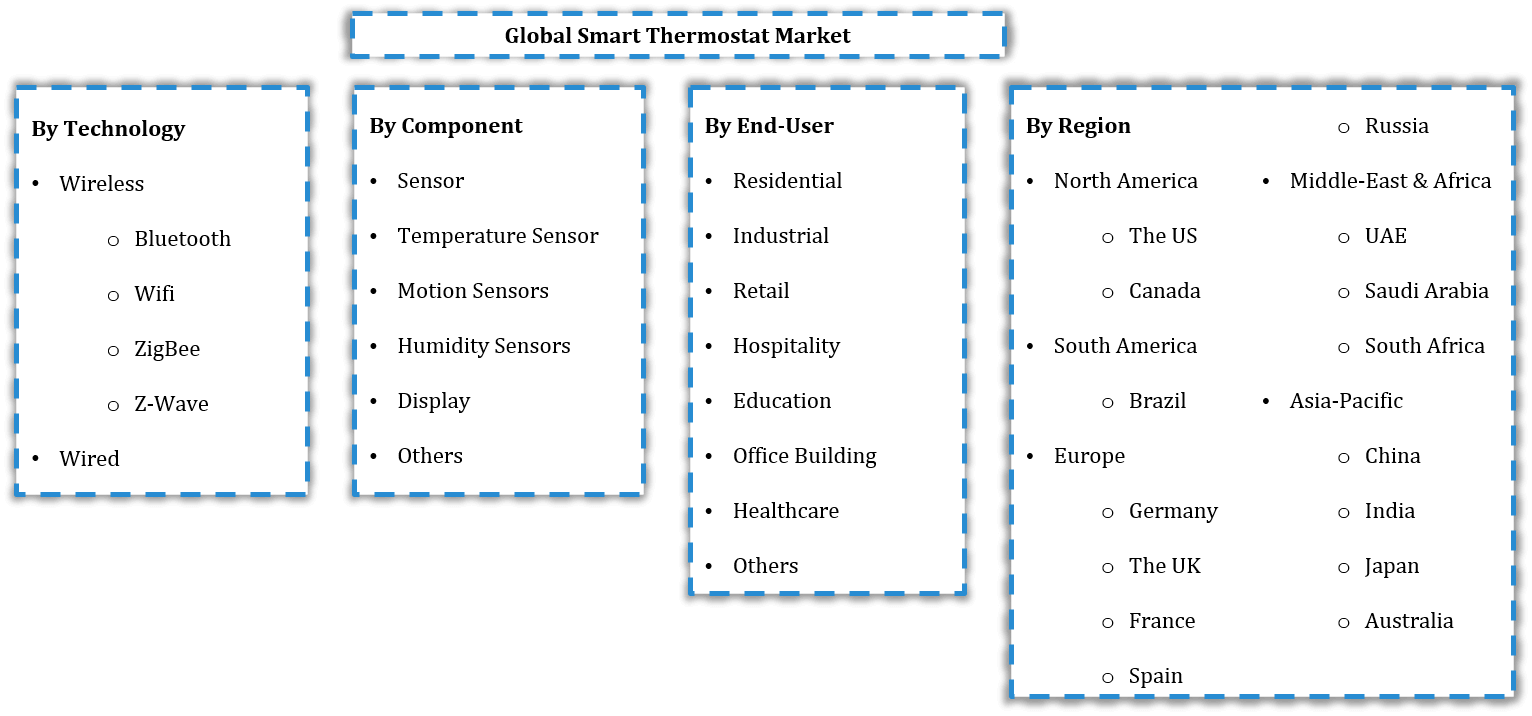
By Technology (Wireless [Bluetooth, Wifi, ZigBee, Z-Wave], Wired), By Component (By Component [Sensor {Temperature Sensor, Motion Sensors, Humidity Sensors}, Display, Others), By End-User (Residential... ... nd-User (Residential, Industrial, Hospitality, Education, Office Building, Healthcare, Others (Retail)), By Region (North America, South America, Europe, Asia-Pacific, Middle East & Africa), By Country (US, Canada, Brazil, Germany, France, Spain, The UK, Russia, China, Japan, India, Australia, UAE, Saudi Arabia, South Africa), By Company (Emerson Electric Co., Nest Labs, GridPoint, Inc., Tado GmbH, Honeywell International, Computime Group Ltd., Schneider Electric SE, Radio Thermostat Company of America, Ecobee, Inc., Control4 Corporation, Carrier Corporation, Siemens AG, Johnson Controls, Zen Ecosystems, Resideo Technologies, Inc. etc.) Read more
- Energy
- Jan 2022
- 182
- PDF, Excel, PPT
Market Definition
A smart thermostat is a digitally programmable heating system that remotely controls the heating & cooling at homes. With the growing trend of smart homes, smart thermostats are becoming a critical part of the home comfort system. Through internet connectivity, consumers can regulate their cooling & heating temperature settings for energy conservation & better comfort. It has been made possible owing to the capability of smart thermostats to communicate with emerging virtual private assistants & learn with AI capabilities.
Market Insights
The Global Smart Thermostat Market is anticipated to grow at a CAGR of around 19% during the forecast period, i.e., 2021-26. The rapidly expanding residential & commercial buildings are leading to the increasing deployment of HVAC systems, which, in turn, is driving the Global Smart Thermostat Market. In addition, the surge in energy prices and escalating need for optimizing power to cut down energy bills are also projected to boost the market. For instance:
- Google’s Nest Learning thermostat saved around 10% to 12% on heating and 15% on cooling. Based on typical energy costs, the estimated average savings using this device are nearly $131- $145 a year.
| Report Coverage | Details |
|---|---|
| Study Period | Historical Data: 2016-19 |
| Base Year: 2020 | |
| Forecast Period: 2021-26 | |
| CAGR (2021-2026) | 19% |
| Regions Covered | North America: US, Canada |
| Europe: Germany, UK, France, Spain, Russia | |
| Asia-Pacific: China, India, Japan, Australia | |
| South America: Brazil | |
| Middle East & Africa: UAE, Saudi Arabia, South Africa | |
| Key Companies Profiled | Emerson Electric Co., Nest Labs, GridPoint, Inc., Tado GmbH, Honeywell International, Computime Group Ltd., Schneider Electric SE, Radio Thermostat Company of America, Ecobee, Inc., Control4 Corporation, Carrier Corporation, Siemens AG, Johnson Controls, Zen Ecosystems, Resideo Technologies, Inc., etc. |
| Unit Denominations | USD Million/Billion |
Furthermore, governments worldwide are encouraged to reduce energy wastage and use energy-saving devices, thereby driving the demand for smart thermostats. Besides, rising consumer awareness regarding efficiency & safety, coupled with advanced features of smart thermostats & the increasing disposable income, are expected to drive the market during 2021-26.
However, increasing price-based competition might hamper the overall market growth in the coming years. Nevertheless, the rising integration of advanced technologies like IoT & AI into smart thermostats is also fueling the overall market growth.
Impact of Covid-19 on the Global Smart Thermostat Market
The Covid-19 pandemic in 2020 brought unprecedented challenges to the Global Smart Thermostat Market. The market witnessed a significant decline in its growth due to the changing buying behavior of consumers. Even though the time spent at home amidst the pandemic was significantly high, people were more inclined towards buying essential goods rather than investing in smart devices. Hence, the dwindling interest in buying smart devices negatively influenced the growth of the Smart Thermostat Market amidst the pandemic.
Further, the lockdown imposed in the wake of the pandemic negatively impacted the production capacity of smart thermostats owing to the shutdown of manufacturing units. The market is highly dependent on China for hardware. However, China, the epicenter of the COVID-19 outbreak, adversely impacted the market's supply chain. Additionally, the US government increased tariffs on Chinese manufactured products, which created immense pressure on smart thermostat manufacturers who are dependent on China for hardware supply.
- Introduction
- Product Definition
- Research Process
- Assumptions
- Market Segmentation
- Preface
- Executive Summary
- Impact of COVID-19 on Global Smart Thermostat Market
- Global Smart Thermostat Market Outlook, 2016-2026F
- Market Size & Analysis
- By Revenues
- Market Share & Analysis
- By Technology
- Wireless
- Bluetooth
- Wifi
- ZigBee
- Z-Wave
- Wired
- Wireless
- By Component
- Sensor
- Temperature Sensor
- Motion Sensors
- Humidity Sensors
- Display
- Others
- Sensor
- By End User
- Residential
- Industrial
- Retail
- Hospitality
- Education
- Office Building
- Healthcare
- Others (government, etc.)
- By Region
- North America
- South America
- Europe
- Middle East & Africa
- Asia-Pacific
- By Competitors
- Competition Characteristics
- Market Share & Analysis
- Competitive Metrix
- By Technology
- Market Size & Analysis
- North America Smart Thermostat Market Outlook, 2016-2026F
- Market Size & Analysis
- By Revenues
- Market Share & Analysis
- By Technology
- By Component
- By End User
- By Country
- The US
- Canada
- The US Smart Thermostat Market Outlook, 2016-2026F
- Market Size & Analysis
- By Revenues
- Market Share & Analysis
- By Technology
- By Component
- By End User
- Market Size & Analysis
- Canada Smart Thermostat Market Outlook, 2016-2026F
- Market Size & Analysis
- By Revenues
- Market Share & Analysis
- By Technology
- By Component
- By End User
- Market Size & Analysis
- Market Size & Analysis
- South America Smart Thermostat Market Outlook, 2016-2026F
- Market Size & Analysis
- By Revenues
- Market Share & Analysis
- By Technology
- By Component
- By End User
- By Country
- Brazil
- Others
- Brazil Smart Thermostat Market Outlook, 2016-2026F
- Market Size & Analysis
- By Revenues
- Market Share & Analysis
- By Technology
- By Component
- By End User
- Market Size & Analysis
- Market Size & Analysis
- Europe Smart Thermostat Market Outlook, 2016-2026F
- Market Size & Analysis
- By Revenues
- Market Share & Analysis
- By Technology
- By Component
- By End User
- By Country
- Germany
- The UK
- France
- Spain
- Russia
- Others
- Germany Smart Thermostat Market Outlook, 2016-2026F
- Market Size & Analysis
- By Revenues
- Market Share & Analysis
- By Technology
- By Component
- By End User
- Market Size & Analysis
- The UK Smart Thermostat Market Outlook, 2016-2026F
- Market Size & Analysis
- By Revenues
- Market Share & Analysis
- By Technology
- By Component
- By End User
- Market Size & Analysis
- France Smart Thermostat Market Outlook, 2016-2026F
- Market Size & Analysis
- By Revenues
- Market Share & Analysis
- By Technology
- By Component
- By End User
- Market Size & Analysis
- Spain Smart Thermostat Market Outlook, 2016-2026F
- Market Size & Analysis
- By Revenues
- Market Share & Analysis
- By Technology
- By Component
- By End User
- Market Size & Analysis
- Russia Smart Thermostat Market Outlook, 2016-2026F
- Market Size & Analysis
- By Revenues
- Market Share & Analysis
- By Technology
- By Component
- By End User
- Market Size & Analysis
- Market Size & Analysis
- Middle East & Africa Smart Thermostat Market Outlook, 2016-2026F
- Market Size & Analysis
- By Revenues
- Market Share & Analysis
- By Technology
- By Component
- By End User
- By Country
- UAE
- Saudi Arabia
- South Africa
- Others
- UAE Smart Thermostat Market Outlook, 2016-2026F
- Market Size & Analysis
- By Revenues
- Market Share & Analysis
- By Technology
- By Component
- By End User
- Market Size & Analysis
- Saudi Arabia Smart Thermostat Market Outlook, 2016-2026F
- Market Size & Analysis
- By Revenues
- Market Share & Analysis
- By Technology
- By Component
- By End User
- Market Size & Analysis
- South Africa Smart Thermostat Market Outlook, 2016-2026F
- Market Size & Analysis
- By Revenues
- Market Share & Analysis
- By Technology
- By Component
- By End User
- Market Size & Analysis
- Market Size & Analysis
- Asia-Pacific Smart Thermostat Market Outlook, 2016-2026F
- Market Size & Analysis
- By Revenues
- Market Share & Analysis
- By Technology
- By Component
- By End User
- By Country
- China
- India
- Japan
- Australia
- Others
- China Smart Thermostat Market Outlook, 2016-2026F
- Market Size & Analysis
- By Revenues
- Market Share & Analysis
- By Technology
- By Component
- By End User
- Market Size & Analysis
- India Smart Thermostat Market Outlook, 2016-2026F
- Market Size & Analysis
- By Revenues
- Market Share & Analysis
- By Technology
- By Component
- By End User
- Market Size & Analysis
- Japan Smart Thermostat Market Outlook, 2016-2026F
- Market Size & Analysis
- By Revenues
- Market Share & Analysis
- By Technology
- By Component
- By End User
- Market Size & Analysis
- Australia Smart Thermostat Market Outlook, 2016-2026F
- Market Size & Analysis
- By Revenues
- Market Share & Analysis
- By Technology
- By Component
- By End User
- Market Size & Analysis
- Market Size & Analysis
- Global Smart Thermostat Market Trends & Insights
- Global Smart Thermostat Market Dynamics
- Drivers
- Challenges
- Impact Analysis
- Global Smart Thermostat Market Hotspots & Opportunities
- Global Smart Thermostat Value Chain Analysis
- Global Smart Thermostat Market Regulations & Policy
- Key Strategic Imperatives for Success and Growth
- Competition Outlook
- Competition Matrix
- Product Portfolio
- Target Markets
- Target End Users
- Research & Development
- Strategic Alliances
- Strategic Initiatives
- Company Profile
- Emerson Electric Co.
- Nest Labs
- GridPoint, Inc.
- Tado GmbH
- Honeywell International
- Computime Group Ltd.
- Schneider Electric SE
- Radio Thermostat Company of America
- Ecobee, Inc.
- Control4 Corporation
- Carrier Corporation
- Siemens AG
- Johnson Controls
- Zen Ecosystems
- Resideo Technologies, Inc.
- Competition Matrix
- Disclaimer
MarkNtel Advisors follows a robust and iterative research methodology designed to ensure maximum accuracy and minimize deviation in market estimates and forecasts. Our approach combines both bottom-up and top-down techniques to effectively segment and quantify various aspects of the market. A consistent feature across all our research reports is data triangulation, which examines the market from three distinct perspectives to validate findings. Key components of our research process include:
1. Scope & Research Design At the outset, MarkNtel Advisors define the research objectives and formulate pertinent questions. This phase involves determining the type of research—qualitative or quantitative—and designing a methodology that outlines data collection methods, target demographics, and analytical tools. They also establish timelines and budgets to ensure the research aligns with client goals.
2. Sample Selection and Data Collection In this stage, the firm identifies the target audience and determines the appropriate sample size to ensure representativeness. They employ various sampling methods, such as random or stratified sampling, based on the research objectives. Data collection is carried out using tools like surveys, interviews, and observations, ensuring the gathered data is reliable and relevant.
3. Data Analysis and Validation Once data is collected, MarkNtel Advisors undertake a rigorous analysis process. This includes cleaning the data to remove inconsistencies, employing statistical software for quantitative analysis, and thematic analysis for qualitative data. Validation steps are taken to ensure the accuracy and reliability of the findings, minimizing biases and errors.

4. Data Forecast and FinalizationThe final phase involves forecasting future market trends based on the analyzed data. MarkNtel Advisors utilize predictive modeling and time series analysis to anticipate market behaviors. The insights are then compiled into comprehensive reports, featuring visual aids like charts and graphs, and include strategic recommendations to inform client decision-making
We offer flexible licensing options to cater to varying organizational needs. Choose the pricing pack that best suits your requirements:
Buy Now Inquire Before Buying
 Request Customization