

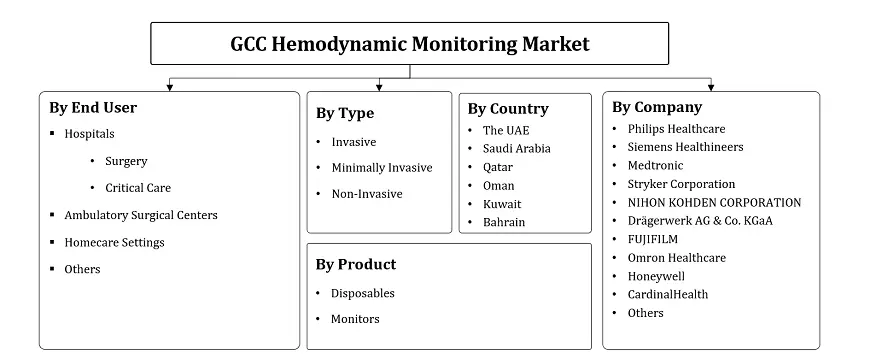
GCC Hemodynamic Monitoring Market - By Type (Invasive, Minimally Invasive, Non-Invasive), By Product (Disposables, Monitors), By End User (Hospitals [Surgery, Critical Care], Ambulatory Surgical Cente... ... atory Surgical Centers, Homecare Settings) and Others Read more
- Healthcare
- Nov 2024
- 156
- PDF, Excel, PPT
Market Definition
Hemodynamic monitoring is a medical technique that measures distinctive blood drift, stress, and volume parameters to evaluate and deal with a patient’s cardiovascular situation. Metrics consisting of heart rate, blood pressure, crucial venous pressure, and cardiac output are frequently covered in this monitoring. It is essential in critical care situations because it aids scientific specialists in figuring out hemodynamic instability, directing fluid remedies, and maximizing cardiac features.
Market Insights & Analysis: GCC Hemodynamic Monitoring Market (2025-30):
The GCC Hemodynamic Monitoring Market size was valued at around USD 71.29 million in 2024 and is projected to reach USD 141.25 million by 2030. Along with this, the market is estimated to grow at a CAGR of around 3.48% during the forecast period, i.e., 2025-30. The GCC Hemodynamic Monitoring Market is poised for robust growth, driven by several key elements. The growing occurrence of cardiovascular diseases, due to lifestyle changes and an aging population, is increasing the demand for powerful monitoring solutions. Technological improvements, especially non-invasive strategies, facilitate real-time data collection without any risk associated with invasive methods.
| Report Coverage | Details |
|---|---|
| Historical Years | 2020-23 |
|
Base Years
|
2024
|
|
Forecast Years
|
2025-30
|
| Market Value in 2024 | USD 71.29 Million |
| Market Value in 2030 | USD 141.25 Million |
| CAGR (2025-30) | 3.48% |
| Leading Countries | Saudi Arabia |
| Top Key Players | Philips Healthcare, Siemens Healthineers, Medtronic, Stryker Corporation, NIHON KOHDEN CORPORATION, Drägerwerk AG & Co. KgaA, FUJIFILM, Omron Healthcare, Honeywell, CardinalHealth, and Others |
| Key Report Highlights |
|
*Boost strategic growth with in-depth market analysis - Get a free sample preview today!
Furthermore, government initiatives such as Saudi Arabia's Vision 2030 and the UAE's Health Strategy, Emirates Health Services are making an investment in healthcare infrastructure, fostering the adoption of superior hemodynamic monitoring systems. Additionally, the GCC Hemodynamic Monitoring Market is presenting ample growth opportunities, especially with the rise of telemedicine, which helps remote patient management through software. Additionally, as healthcare digitization progresses, there is a growing focus on wearable hemodynamic monitoring gadgets. These devices support long-term patient monitoring outside of hospital settings, offering convenience and real-time monitoring.
The growing emphasis on patient-centric care aligns with the demand for non-invasive monitoring options that prioritize patient comfort and simple of use. Moreover, the integration of AI and ML into hemodynamic monitoring structures is enhancing data analysis, permitting healthcare providers to make choices based on real-time insights. With supportive regulatory frameworks encouraging innovation, the GCC is well-positioned to leverage those developments and improvements, in the long run improving the best of cardiovascular care. As stakeholders capitalize on those traits, the marketplace is ready to evolve rapidly, reflecting a broader shift toward advanced, efficient healthcare solutions.
- Market Segmentation
- Introduction
- Market Definition
- Research Process
- Assumption
- Executive Summary
- GCC Hemodynamic Monitoring Market Trends & Insights
- GCC Hemodynamic Monitoring Market Dynamics
- Growth Drivers
- Challenges
- GCC Hemodynamic Monitoring Market Hotspot & Opportunities
- GCC Hemodynamic Monitoring Market Supply Chain Analysis
- GCC Hemodynamic Monitoring Market Regulation & Policy
- GCC Hemodynamic Monitoring Market Outlook, 2020-2030F
- Market Size & Analysis
- By Revenues (USD Million)
- Market Share & Analysis
- By Type
- Invasive - Market Size & Forecast 2020-2030F, USD Million
- Minimally Invasive - Market Size & Forecast 2020-2030F, USD Million
- Non-Invasive - Market Size & Forecast 2020-2030F, USD Million
- By Product
- Disposables - Market Size & Forecast 2020-2030F, USD Million
- Monitors - Market Size & Forecast 2020-2030F, USD Million
- By End User
- Hospitals - Market Size & Forecast 2020-2030F, USD Million
- Surgery - Market Size & Forecast 2020-2030F, USD Million
- Critical Care - Market Size & Forecast 2020-2030F, USD Million
- Ambulatory Surgical Centers - Market Size & Forecast 2020-2030F, USD Million
- Homecare Settings - Market Size & Forecast 2020-2030F, USD Million
- Others - Market Size & Forecast 2020-2030F, USD Million
- Hospitals - Market Size & Forecast 2020-2030F, USD Million
- By Country
- The UAE
- Saudi Arabia
- Qatar
- Oman
- Kuwait
- Bahrain
- By Competitors
- Competition Characteristics
- Market Share & Analysis
- By Type
- Market Size & Analysis
- UAE Hemodynamic Monitoring Market Outlook, 2020-2030F
- Market Size & Analysis
- By Revenues (USD Million)
- Market Share & Analysis
- By Type - Market Size & Forecast 2020-2030F, USD Million
- By Product - Market Size & Forecast 2020-2030F, USD Million
- By End User - Market Size & Forecast 2020-2030F, USD Million
- Market Size & Analysis
- Saudi Arabia Hemodynamic Monitoring Market Outlook, 2020-2030F
- Market Size & Analysis
- By Revenues (USD Million)
- Market Share & Analysis
- By Type - Market Size & Forecast 2020-2030F, USD Million
- By Product - Market Size & Forecast 2020-2030F, USD Million
- By End User - Market Size & Forecast 2020-2030F, USD Million
- Market Size & Analysis
- Qatar Hemodynamic Monitoring Market Outlook, 2020-2030F
- Market Size & Analysis
- By Revenues (USD Million)
- Market Share & Analysis
- By Type - Market Size & Forecast 2020-2030F, USD Million
- By Product - Market Size & Forecast 2020-2030F, USD Million
- By End User - Market Size & Forecast 2020-2030F, USD Million
- Market Size & Analysis
- Oman Hemodynamic Monitoring Market Outlook, 2020-2030F
- Market Size & Analysis
- By Revenues (USD Million)
- Market Share & Analysis
- By Type - Market Size & Forecast 2020-2030F, USD Million
- By Product - Market Size & Forecast 2020-2030F, USD Million
- By End User - Market Size & Forecast 2020-2030F, USD Million
- Market Size & Analysis
- Kuwait Hemodynamic Monitoring Market Outlook, 2020-2030F
- Market Size & Analysis
- By Revenues (USD Million)
- Market Share & Analysis
- By Type - Market Size & Forecast 2020-2030F, USD Million
- By Product - Market Size & Forecast 2020-2030F, USD Million
- By End User - Market Size & Forecast 2020-2030F, USD Million
- Market Size & Analysis
- Bahrain Hemodynamic Monitoring Market Outlook, 2020-2030F
- Market Size & Analysis
- By Revenues (USD Million)
- Market Share & Analysis
- By Type - Market Size & Forecast 2020-2030F, USD Million
- By Product - Market Size & Forecast 2020-2030F, USD Million
- By End User - Market Size & Forecast 2020-2030F, USD Million
- Market Size & Analysis
- GCC Hemodynamic Monitoring Market Key Strategic Imperatives for Success & Growth
- Competition Outlook
- Company Profile
- Philips Healthcare
- Business Description
- Product Portfolio
- Strategic Alliances or Partnerships
- Recent Developments
- Financial Details
- Others
- Siemens Healthineers
- Business Description
- Product Portfolio
- Strategic Alliances or Partnerships
- Recent Developments
- Financial Details
- Others
- Medtronic
- Business Description
- Product Portfolio
- Strategic Alliances or Partnerships
- Recent Developments
- Financial Details
- Others
- Stryker Corporation
- Business Description
- Product Portfolio
- Strategic Alliances or Partnerships
- Recent Developments
- Financial Details
- Others
- NIHON KOHDEN CORPORATION
- Business Description
- Product Portfolio
- Strategic Alliances or Partnerships
- Recent Developments
- Financial Details
- Others
- Drägerwerk AG & Co. KGaA
- Business Description
- Product Portfolio
- Strategic Alliances or Partnerships
- Recent Developments
- Financial Details
- Others
- FUJIFILM
- Business Description
- Product Portfolio
- Strategic Alliances or Partnerships
- Recent Developments
- Financial Details
- Others
- Omron Healthcare
- Business Description
- Product Portfolio
- Strategic Alliances or Partnerships
- Recent Developments
- Financial Details
- Others
- Honeywell
- Business Description
- Product Portfolio
- Strategic Alliances or Partnerships
- Recent Developments
- Financial Details
- Others
- CardinalHealth
- Business Description
- Product Portfolio
- Strategic Alliances or Partnerships
- Recent Developments
- Financial Details
- Others
- Others
- Philips Healthcare
- Company Profile
- Disclaimer
MarkNtel Advisors follows a robust and iterative research methodology designed to ensure maximum accuracy and minimize deviation in market estimates and forecasts. Our approach combines both bottom-up and top-down techniques to effectively segment and quantify various aspects of the market. A consistent feature across all our research reports is data triangulation, which examines the market from three distinct perspectives to validate findings. Key components of our research process include:
1. Scope & Research Design At the outset, MarkNtel Advisors define the research objectives and formulate pertinent questions. This phase involves determining the type of research—qualitative or quantitative—and designing a methodology that outlines data collection methods, target demographics, and analytical tools. They also establish timelines and budgets to ensure the research aligns with client goals.
2. Sample Selection and Data Collection In this stage, the firm identifies the target audience and determines the appropriate sample size to ensure representativeness. They employ various sampling methods, such as random or stratified sampling, based on the research objectives. Data collection is carried out using tools like surveys, interviews, and observations, ensuring the gathered data is reliable and relevant.
3. Data Analysis and Validation Once data is collected, MarkNtel Advisors undertake a rigorous analysis process. This includes cleaning the data to remove inconsistencies, employing statistical software for quantitative analysis, and thematic analysis for qualitative data. Validation steps are taken to ensure the accuracy and reliability of the findings, minimizing biases and errors.

4. Data Forecast and FinalizationThe final phase involves forecasting future market trends based on the analyzed data. MarkNtel Advisors utilize predictive modeling and time series analysis to anticipate market behaviors. The insights are then compiled into comprehensive reports, featuring visual aids like charts and graphs, and include strategic recommendations to inform client decision-making
We offer flexible licensing options to cater to varying organizational needs. Choose the pricing pack that best suits your requirements:
Buy Now Inquire Before Buying
 Request Customization