

By Type (Epoxy Curing Agents, Polyurethane Curing Agents, Silicone Curing Agents, Acrylic Curing Agents, Rubber Curing Agents, Others), By Chemistry (Amine-Based, Anhydride-Based, Isocyanate-Based, Ph... ... Isocyanate-Based, Phenalkamine-Based, Mercaptan-Based, Others), By Form (Liquid, Solid, Others), By Curing Technology (Ambient Temperature Curing, Heat Curing, UV/Light Curing, Moisture Curing), By Application (Coatings, Adhesives & Sealants, Composites, Encapsulation & Potting, Elastomers, Others), By End User (Building & Construction, Automotive & Transportation, Electrical & Electronics, Industrial Manufacturing, Wind Energy, Aerospace & Defense, Marine, Others),and others Read more
- Chemicals
- Jun 2026
- 200
- PDF, Excel, PPT
GCC Curing Agent Market Key Takeaways
- GCC curing agent market size valued at USD 140 million in 2025, rising from USD 152 million in 2026 to USD 193 million by 2032, at 4.06% CAGR.
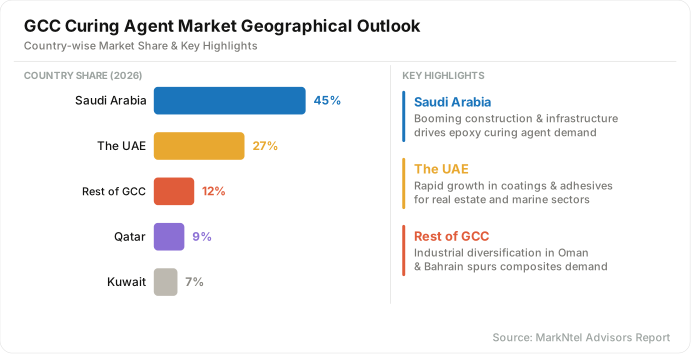
- Saudi Arabia dominates regional demand, contributing approximately 45% of the share.
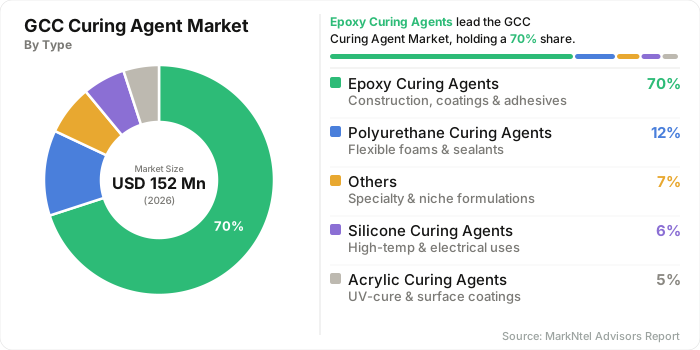
- Epoxy curing agents lead by type, capturing nearly 70% share in 2026.
- Amine-based chemistry dominates the demand with around a 55% share in 2026.
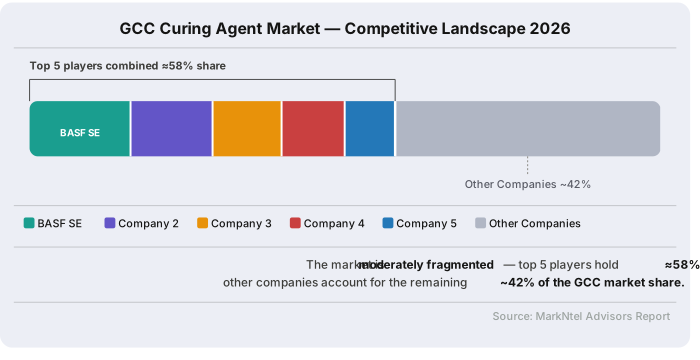
- The industry is moderately consolidated, with the top five players collectively accounting for nearly 58% share, reflecting strong global presence alongside regional competition.
GCC Curing Agent Market Size and Outlook
The GCC curing agent market is projected to expandi at a CAGR of 4.06% during 2026–2032, supported by sustained infrastructure expansion and rising demand for high-performance materials across construction and industrial sectors. Increasing utilization of epoxy hardeners in coatings, adhesives, and flooring systems continues to strengthen demand across diverse end-use industries and large-scale development projects across the region.
A key growth driver is Saudi Arabia’s infrastructure-led development strategy. The 2026 budget allocates approximately USD 43 billion toward capital expenditure, supporting transport networks, utilities, and giga-project construction. These large-scale developments are significantly increasing demand for coating chemicals, particularly in applications requiring corrosion resistance, durability, and long-term structural integrity under extreme climatic conditions prevalent across the GCC region and industrial environments.
Renewable energy expansion is emerging as a parallel growth engine across the GCC. Saudi Arabia’s National Renewable Energy Program targets approximately 130 GW of installed capacity by 2030, including around 40 GW of wind power. Wind turbine blades rely heavily on epoxy-based composites cured with amine systems, strengthening demand for curing agents in advanced composites used across energy infrastructure, industrial manufacturing, and large-scale renewable project deployments across regional markets.
Additionally, Saudi Arabia’s Housing Program is reinforcing demand through large-scale residential expansion, with homeownership reaching 65.4% in 2024 and targeting 70% by 2030, while over 48,000 families secured homes in H1 2025. This growth is increasing the consumption of coatings and waterproofing systems, supporting the expansion of the Saudi Arabia Curing Agents Market from USD 152 million in 2026 to USD 193 million by 2032. Combined with sustainability-driven innovations and regulatory shifts toward low-emission materials, these factors position curing agents as critical enablers of durability, efficiency, and performance across the evolving GCC industrial landscape.
GCC Curing Agent Market Key Indicators
- The Middle East produced approximately 4.6 million tonnes of crude steel in December 2024, reflecting strong construction and industrial activity . Structural steel used in high-rise buildings, bridges, and plants requires protective epoxy coatings, where curing agents ensure durability and adhesion. This directly links regional steel output with rising demand for protective coatings, reinforcing consumption patterns across construction and infrastructure segments.
- Saudi Arabia’s crude oil production exceeded 9.7 million barrels per day in August 2025, highlighting the scale of upstream and midstream infrastructure . Pipelines, refineries, and storage systems rely heavily on anti-corrosion coatings, creating consistent demand for curing agents used in oil and gas coatings. This extensive hydrocarbon network ensures stable, long-term consumption across maintenance and expansion cycles.
- Saudi Arabia operates a desalination capacity of around 7.5 million cubic metres per day, making it one of the largest globally . Facilities such as reverse-osmosis plants and pipelines require corrosion-resistant epoxy linings, driving demand for curing agents compatible with potable water systems. This establishes desalination infrastructure as a critical demand driver for marine coatings and water-treatment applications.
- Saudi Arabia’s non-oil GDP grew by approximately 5% in 2025, with continued expansion expected in manufacturing and logistics. The rise of industrial facilities, warehouses, and processing units is increasing demand for epoxy flooring and protective materials. This diversification broadens the application base for curing agents across industrial coatings, reducing reliance on oil-driven demand cycles.
- ADNOC has increased crude production capacity to 4.85 million barrels per day, with plans to reach 5 million by 2027 through USD 150 billion investments. Expansion of oilfields and processing infrastructure necessitates advanced corrosion protection, supporting increased use of curing agents in anti-corrosion coatings. This growth trajectory strengthens long-term demand across the UAE energy infrastructure.
- QatarEnergy plans to increase LNG capacity from 77 to 142 million tonnes per annum by 2030, representing an 85% expansion. The development of LNG trains, storage tanks, and export terminals requires specialized coating solutions to withstand extreme conditions. This large-scale expansion is expected to drive demand for curing agents used in epoxy resins within cryogenic and protective applications.
GCC Curing Agent Market Scope
| Category | Segments |
|---|---|
| By Type | Epoxy Curing Agents, Polyurethane Curing Agents, Silicone Curing Agents, Acrylic Curing Agents, Rubber Curing Agents, Others |
| By Chemistry | Amine-Based, Anhydride-Based, Isocyanate-Based, Phenalkamine-Based, Mercaptan-Based, Others |
| By Form | Liquid, Solid, Others |
| By Curing Technology | Ambient Temperature Curing, Heat Curing, UV/Light Curing, Moisture Curing |
| By Application | Coatings, Adhesives & Sealants, Composites, Encapsulation & Potting, Elastomers, Others |
| By End User | Building & Construction, Automotive & Transportation, Electrical & Electronics, Industrial Manufacturing, Wind Energy, Aerospace & Defense, Marine, Others |
GCC Curing Agent Market Growth Drivers
Rapid Infrastructure and Construction Expansion
Large-scale infrastructure expansion across the Gulf is a primary driver for the GCC curing agent sector, driven by sustained government investments in transportation, housing, and industrial development. As in Qatar, the Public Works Authority (Ashghal) launched a USD 22.2 billion infrastructure programme for 2025–2029, significantly boosting demand for construction chemicals across large-scale public and private development projects.
Saudi Arabia is further accelerating regional growth through substantial fiscal allocations. The Ministry of Finance committed approximately USD 342.7 billion for 2025, targeting infrastructure, logistics, and industrial diversification under Vision 2030. These investments are expanding demand for advanced coating systems across mega-projects, industrial zones, and urban development requiring high-performance material durability.
Additionally, the rapid expansion of utilities and water infrastructure is intensifying requirements for desalination coatings across the GCC. The region’s reliance on desalination plants operating in saline environments requires durable epoxy and polyurethane systems, where curing agents ensure chemical resistance, adhesion, and long-term structural performance under extreme operational conditions.
The sustained infrastructure investments and industrial expansion are strengthening downstream material demand across the region. This continuous pipeline of construction, energy, and utility projects is expected to reinforce the role of curing technologies, positioning curing agents as critical enablers of durability, lifecycle efficiency, and long-term performance across GCC infrastructure ecosystems.
Recent Trends
Shift Toward High-Performance Protective Coatings
The GCC is witnessing a strong shift toward high-performance protective materials, positioning corrosion-resistant coatings as a defining trend within the GCC curing agent industry. Infrastructure assets across oil & gas, marine, and water treatment sectors are increasingly exposed to extreme climatic conditions, accelerating demand for corrosion coatings designed to deliver long-term durability and performance.
The region’s heavy reliance on desalination further reinforces this transition. According to Reuters, desalinated water supplies account for over 80% in the UAE and nearly 100% in Qatar and Bahrain . Such exposure to saline environments necessitates advanced anti-corrosion coatings, where curing agents play a vital role in ensuring adhesion, chemical resistance, and coating stability.
Recent industrial developments also reflect this durability-focused approach. In May 2026, Mubadala and Tubacex launched TBX Nexxia in Abu Dhabi, focusing on corrosion-resistant alloy solutions for energy infrastructure. This investment complements growing adoption of industrial coatings that enhance asset lifespan and reduce maintenance frequency in harsh operating conditions.
As infrastructure owners prioritize lifecycle cost optimization and operational reliability, the transition toward high-performance coating systems is expected to intensify. This shift is directly increasing the reliance on advanced curing chemistries, reinforcing their importance in enabling durable, corrosion-resistant materials across critical GCC infrastructure and industrial applications.
GCC Curing Agent Market Opportunities and Challenges
Regulatory Pressure Driving Sustainable Curing Innovations
Stringent global environmental regulations are creating compliance challenges for the GCC curing agent landscape, particularly for conventional chemistries such as isocyanate-based systems. Under the EU’s REACH Regulation (Entry 74), the use of diisocyanates above 0.1% requires mandatory safety training, increasing operational complexity for manufacturers supplying to regulated export markets and limiting traditional curing agent usage.
At the same time, these regulatory constraints are accelerating the shift toward low VOC curing technologies across GCC construction and industrial applications. Manufacturers are increasingly adopting alternative formulations, including amine-based and waterborne systems, which reduce emissions while maintaining high performance. This transition aligns with evolving environmental standards and sustainability-driven procurement requirements across infrastructure and industrial projects.
A notable example is the 2025 launch of Baxxodur® EC 151 by BASF and Sika, an advanced epoxy hardener designed for ultra-low-emission flooring applications. The product enables up to 90% reduction in VOC emissions, highlighting the commercial viability of sustainable curing technologies while maintaining durability, efficiency, and compatibility with demanding industrial coating requirements.
Overall, while regulatory compliance introduces cost and formulation challenges, it is simultaneously driving innovation across curing chemistries. This dual impact is expected to create long-term opportunities for bio-based curing agents, positioning sustainable solutions as key growth drivers within the evolving GCC curing agent landscape.
Segmentation Insights
Epoxy Curing Agents Driving Growth Across GCC Industrial Sectors
Epoxy curing agents dominate the GCC curing agent industry, accounting for approximately 70% of total revenue due to their superior performance in demanding industrial applications. Their ability to enable strong crosslinking and chemical resistance makes them essential in thermoset polymers widely used across construction, energy, and infrastructure sectors. These properties are particularly critical in the GCC, where materials must withstand extreme temperatures and aggressive environmental exposure.
The segment’s leadership is further supported by extensive use in industrial coatings applied to pipelines, storage tanks, and structural assets. Epoxy-based systems provide long-lasting protection against corrosion, abrasion, and chemical exposure, making them indispensable in oil & gas and marine environments. The reliance on high-performance coatings directly increases demand for epoxy curing agents, which ensure durability and structural integrity across large-scale projects.
Other curing agent types, serve more specialized roles such as flexibility, thermal stability, and niche industrial applications. The continued expansion of infrastructure and energy projects reinforces epoxy curing agents as the dominant segment, while increasing adoption of advanced coating systems further strengthens their long-term market position within the GCC Curing Agent Industry. The market is classified by type into the following segments:
- Epoxy Curing Agents
- Polyurethane Curing Agents
- Silicone Curing Agents
- Acrylic Curing Agents
- Rubber Curing Agents
- Others
Crosslinking Efficiency Positions Amine-Based Systems at the Forefront
Amine-based curing agents lead the GCC curing agent industry, accounting for approximately 55% of total revenue due to their versatility and strong performance across industrial applications. Their dominance is supported by widespread use in amine curing agents for epoxy systems, offering excellent adhesion, chemical resistance, and mechanical strength.
The segment’s growth is further reinforced by increasing demand for crosslinking agents in high-performance coatings and flooring systems. Amine-based chemistries enable efficient curing at ambient conditions, making them ideal for large-scale construction and maintenance projects across the GCC. Their compatibility with various epoxy formulations enhances their adoption across diverse industrial applications.
Other chemistries, such as anhydride-based and phenalkamine-based curing agents, cater to specialized applications requiring enhanced chemical resistance or faster curing performance. Isocyanate-based systems are primarily used in polyurethane applications, while mercaptan-based variants support rapid-curing formulations. However, these segments remain comparatively smaller due to narrower application scopes.
Overall, the strong functional performance and broad applicability of amine-based systems continue to drive their leadership, while evolving application requirements further support their sustained demand within the GCC curing agent industry. The report evaluates the market based on the following chemistry types:
- Amine-Based
- Anhydride-Based
- Isocyanate-Based
- Phenalkamine-Based
- Mercaptan-Based
- Others
GCC Curing Agent Market Geographical Outlook
Saudi Arabia accounts for approximately 45% of total demand within the GCC curing agent demand, driven by its strong industrial base and hydrocarbon advantages. The country’s integrated petrochemical ecosystem supports large-scale production of epoxy resins, enabling consistent downstream demand across coatings, construction, and manufacturing sectors that rely on high-performance curing technologies.
Jubail Industrial City serves as a major industrial hub, hosting more than 150 petrochemical and chemical plants. The development of the USD 11 billion Amiral complex by Saudi Aramco and TotalEnergies further strengthens this ecosystem, with a mixed-feed cracker producing 1.65 million tonnes per year of ethylene, supporting growth in industrial coatings and specialty chemical applications.
This expanding petrochemical infrastructure directly supports downstream industries, including pipelines, storage systems, and processing facilities. These assets require durable coating systems to withstand harsh environmental conditions, increasing reliance on curing agents that ensure corrosion resistance, adhesion, and long-term structural integrity across industrial and infrastructure applications throughout the Kingdom.
Overall, Saudi Arabia’s combination of feedstock availability, industrial scale, and ongoing investments in petrochemicals and infrastructure positions it as the dominant country. This leadership is expected to continue, reinforcing its critical role in shaping demand patterns and long-term growth prospects across the GCC curing agent landscape.
GCC Curing Agent Market Competitive Analysis
The GCC curing agent market is moderately consolidated, with leading multinational players such as BASF SE, Huntsman Corporation, Dow Inc., Evonik Industries AG, and Hexion Inc. collectively accounting for approximately 58% of the total market share. These companies maintain strong positioning through advanced product portfolios, global supply networks, and continuous innovation in high-performance and sustainable curing solutions. However, the presence of regional and niche players in specialized applications ensures competitive diversity, resulting in a balanced market structure driven by both scale advantages and application-specific expertise.
Prominent Players in GCC Curing Agent Industry
- BASF SE
- Huntsman Corporation
- Dow Inc.
- Evonik Industries AG
- Hexion Inc.
- Olin Corporation
- Cardolite Corporation
- KUKDO CHEMICAL CO., LTD.
- Aditya Birla Chemicals
- Arkema S.A.
- Others
- Market Segmentation
- Introduction
- Product Definition
- Research Process
- Assumptions
- Executive Summary
- GCC Curing Agent Market Policies, Regulations, and Product Standards
- GCC Curing Agent Production Trend 2022-2032
- GCC Curing Agent Trend by Type of Type
- Epoxy Curing Agents
- Polyurethane Curing Agents
- Silicone Curing Agents
- Acrylic Curing Agents
- Rubber Curing Agents
- Others
- Company Wise Production Plants and Statistics
- Installed Production Capacity
- Actual Production
- Planned Production Target
- GCC Curing Agent Trend by Type of Type
- GCC Curing Agent Pricing Analysis 2022-2032
- GCC Curing Agent Pricing Trend 2022-2032
- GCC Curing Agent Pricing Trend by Type 2022-2032
- Epoxy Curing Agents
- Polyurethane Curing Agents
- Silicone Curing Agents
- Acrylic Curing Agents
- Rubber Curing Agents
- Others
- GCC Curing Agent Market Dynamics
- Growth Factors
- Challenges
- GCC Curing Agent Market Hotspot & Opportunities
- GCC Curing Agent Market Outlook, 2022-2032F
- Market Size & Outlook
- By Revenues (USD Million)
- By Quantity Sold (Million Tons)
- Market Share & Analysis
- By Type- Market Size & Forecast 2022-2032, USD Million & Million Tons
- Epoxy Curing Agents
- Polyurethane Curing Agents
- Silicone Curing Agents
- Acrylic Curing Agents
- Rubber Curing Agents
- Others
- By Chemistry - Market Size & Forecast 2022-2032, USD Million & Million Tons
- Amine-Based
- Anhydride-Based
- Isocyanate-Based
- Phenalkamine-Based
- Mercaptan-Based
- Others
- By Form- Market Size & Forecast 2022-2032, USD Million & Million Tons
- Liquid
- Solid
- Others
- By Curing Technology- Market Size & Forecast 2022-2032, USD Million & Million Tons
- Ambient Temperature Curing
- Heat Curing
- UV/Light Curing
- Moisture Curing
- By Application- Market Size & Forecast 2022-2032, USD Million & Million Tons
- Coatings
- Adhesives & Sealants
- Composites
- Encapsulation & Potting
- Elastomers
- Others
- By End User- Market Size & Forecast 2022-2032, USD Million & Million Tons
- Building & Construction
- Automotive & Transportation
- Electrical & Electronics
- Industrial Manufacturing
- Wind Energy
- Aerospace & Defense
- Marine
- Others
- By Country
- The UAE
- Saudi Arabia
- Qatar
- Kuwait
- Oman
- Bahrain
- Rest of GCC
- By Company
- Competition Characteristics
- Market Share & Analysis
- By Type- Market Size & Forecast 2022-2032, USD Million & Million Tons
- Market Size & Outlook
- The UAE Curing Agent Market Outlook, 2022-2032F
- Market Size & Outlook
- By Revenues (USD Million)
- By Quantity Sold (Tons)
- Market Share & Analysis
- By Type- Market Size & Forecast 2022-2032, USD Million & Million Tons
- By Chemistry - Market Size & Forecast 2022-2032, USD Million & Million Tons
- By Form- Market Size & Forecast 2022-2032, USD Million & Million Tons
- By Curing Technology- Market Size & Forecast 2022-2032, USD Million & Million Tons
- By Application- Market Size & Forecast 2022-2032, USD Million & Million Tons
- By End User- Market Size & Forecast 2022-2032, USD Million & Million Tons
- Market Size & Outlook
- Saudi Arabia Curing Agent Market Outlook, 2022-2032F
- Market Size & Outlook
- By Revenues (USD Million)
- By Quantity Sold (Tons)
- Market Share & Analysis
- By Type- Market Size & Forecast 2022-2032, USD Million & Million Tons
- By Chemistry - Market Size & Forecast 2022-2032, USD Million & Million Tons
- By Form- Market Size & Forecast 2022-2032, USD Million & Million Tons
- By Curing Technology- Market Size & Forecast 2022-2032, USD Million & Million Tons
- By Application- Market Size & Forecast 2022-2032, USD Million & Million Tons
- By End User- Market Size & Forecast 2022-2032, USD Million & Million Tons
- Market Size & Outlook
- Qatar Curing Agent Market Outlook, 2022-2032F
- Market Size & Outlook
- By Revenues (USD Million)
- By Quantity Sold (Tons)
- Market Share & Analysis
- By Type- Market Size & Forecast 2022-2032, USD Million & Million Tons
- By Chemistry - Market Size & Forecast 2022-2032, USD Million & Million Tons
- By Form- Market Size & Forecast 2022-2032, USD Million & Million Tons
- By Curing Technology- Market Size & Forecast 2022-2032, USD Million & Million Tons
- By Application- Market Size & Forecast 2022-2032, USD Million & Million Tons
- By End User- Market Size & Forecast 2022-2032, USD Million & Million Tons
- Market Size & Outlook
- Kuwait Curing Agent Market Outlook, 2022-2032F
- Market Size & Outlook
- By Revenues (USD Million)
- By Quantity Sold (Tons)
- Market Share & Analysis
- By Type- Market Size & Forecast 2022-2032, USD Million & Million Tons
- By Chemistry - Market Size & Forecast 2022-2032, USD Million & Million Tons
- By Form- Market Size & Forecast 2022-2032, USD Million & Million Tons
- By Curing Technology- Market Size & Forecast 2022-2032, USD Million & Million Tons
- By Application- Market Size & Forecast 2022-2032, USD Million & Million Tons
- By End User- Market Size & Forecast 2022-2032, USD Million & Million Tons
- Market Size & Outlook
- Oman Curing Agent Market Outlook, 2022-2032F
- Market Size & Outlook
- By Revenues (USD Million)
- By Quantity Sold (Tons)
- Market Share & Analysis
- By Type- Market Size & Forecast 2022-2032, USD Million & Million Tons
- By Chemistry - Market Size & Forecast 2022-2032, USD Million & Million Tons
- By Form- Market Size & Forecast 2022-2032, USD Million & Million Tons
- By Curing Technology- Market Size & Forecast 2022-2032, USD Million & Million Tons
- By Application- Market Size & Forecast 2022-2032, USD Million & Million Tons
- By End User- Market Size & Forecast 2022-2032, USD Million & Million Tons
- Market Size & Outlook
- Bahrain Curing Agent Market Outlook, 2022-2032F
- Market Size & Outlook
- By Revenues (USD Million)
- By Quantity Sold (Tons)
- Market Share & Analysis
- By Type- Market Size & Forecast 2022-2032, USD Million & Million Tons
- By Chemistry - Market Size & Forecast 2022-2032, USD Million & Million Tons
- By Form- Market Size & Forecast 2022-2032, USD Million & Million Tons
- By Curing Technology- Market Size & Forecast 2022-2032, USD Million & Million Tons
- By Application- Market Size & Forecast 2022-2032, USD Million & Million Tons
- By End User- Market Size & Forecast 2022-2032, USD Million & Million Tons
- Market Size & Outlook
- GCC Curing Agent Market Key Strategic Imperatives for Success & Growth
- Competitive Outlook
- Company Profiles
- BASF SE
- Business Description
- Product Portfolio
- Collaborations & Alliances
- Recent Developments
- Financial Details
- Others
- Huntsman Corporation
- Business Description
- Product Portfolio
- Collaborations & Alliances
- Recent Developments
- Financial Details
- Others
- Dow Inc.
- Business Description
- Product Portfolio
- Collaborations & Alliances
- Recent Developments
- Financial Details
- Others
- Evonik Industries AG
- Business Description
- Product Portfolio
- Collaborations & Alliances
- Recent Developments
- Financial Details
- Others
- Hexion Inc.
- Business Description
- Product Portfolio
- Collaborations & Alliances
- Recent Developments
- Financial Details
- Others
- Olin Corporation
- Business Description
- Product Portfolio
- Collaborations & Alliances
- Recent Developments
- Financial Details
- Others
- Cardolite Corporation
- Business Description
- Product Portfolio
- Collaborations & Alliances
- Recent Developments
- Financial Details
- Others
- KUKDO CHEMICAL CO., LTD.
- Business Description
- Product Portfolio
- Collaborations & Alliances
- Recent Developments
- Financial Details
- Others
- Aditya Birla Chemicals
- Business Description
- Product Portfolio
- Collaborations & Alliances
- Recent Developments
- Financial Details
- Others
- Arkema S.A.
- Business Description
- Product Portfolio
- Collaborations & Alliances
- Recent Developments
- Financial Details
- Others
- Others
- BASF SE
- Company Profiles
- Disclaimer

MarkNtel Advisors follows a robust and iterative research methodology designed to ensure maximum accuracy and minimize deviation in market estimates and forecasts. Our approach combines both bottom-up and top-down techniques to effectively segment and quantify various aspects of the market. A consistent feature across all our research reports is data triangulation, which examines the market from three distinct perspectives to validate findings. Key components of our research process include:
1. Scope & Research Design At the outset, MarkNtel Advisors define the research objectives and formulate pertinent questions. This phase involves determining the type of research—qualitative or quantitative—and designing a methodology that outlines data collection methods, target demographics, and analytical tools. They also establish timelines and budgets to ensure the research aligns with client goals.
2. Sample Selection and Data Collection In this stage, the firm identifies the target audience and determines the appropriate sample size to ensure representativeness. They employ various sampling methods, such as random or stratified sampling, based on the research objectives. Data collection is carried out using tools like surveys, interviews, and observations, ensuring the gathered data is reliable and relevant.
3. Data Analysis and Validation Once data is collected, MarkNtel Advisors undertake a rigorous analysis process. This includes cleaning the data to remove inconsistencies, employing statistical software for quantitative analysis, and thematic analysis for qualitative data. Validation steps are taken to ensure the accuracy and reliability of the findings, minimizing biases and errors.

4. Data Forecast and FinalizationThe final phase involves forecasting future market trends based on the analyzed data. MarkNtel Advisors utilize predictive modeling and time series analysis to anticipate market behaviors. The insights are then compiled into comprehensive reports, featuring visual aids like charts and graphs, and include strategic recommendations to inform client decision-making
We offer flexible licensing options to cater to varying organizational needs. Choose the pricing pack that best suits your requirements:
Buy Now Inquire Before Buying
 Request Customization