

By Product Type (Alcoholic Beverages (Beer, Wine, Spirits), Non-Alcoholic Beverages (Carbonated Soft Drinks, Bottled Water, Juices, RTD Tea & Coffee, Energy & Sports Drinks, Functional Beverages, Dair... ... onal Beverages, Dairy-Based Beverages)), By Distribution Channel (On-Trade (Food Service, Hospitality, Entertainment), Off-Trade (Modern Retail, Traditional Retail, Online Retail, Specialty Stores)), By Packaging Type (Bottles, Cans, Cartons, Pouches), and others Read more
- Food & Beverages
- Apr 2026
- 330
- PDF, Excel, PPT
Global Beverage Market Key Takeaways
- Global Beverage market size was valued at around USD 2.75 trillion in 2025 and is projected to grow from USD 2.83 trillion in 2026 to USD 3.38 trillion by 2032, exhibiting a CAGR of 4.5% during 2026-2032.
- In 2026, the Asia-Pacific holds the largest share of about 41.76%.
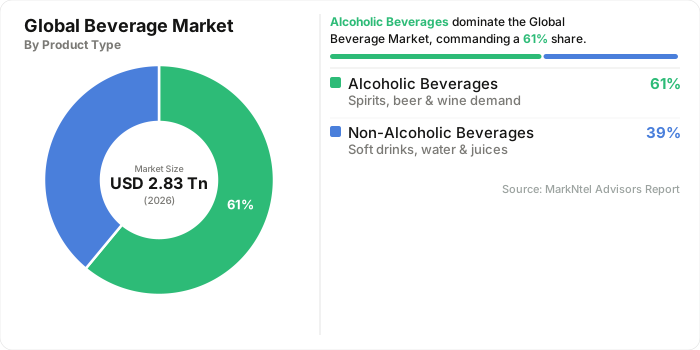
- Based on Product Type, the Alcoholic Beverages hold a significant share of about 61% in 2026.
- By Packaging Type, the Bottles segment seized a significant share of about 59% in 2026.
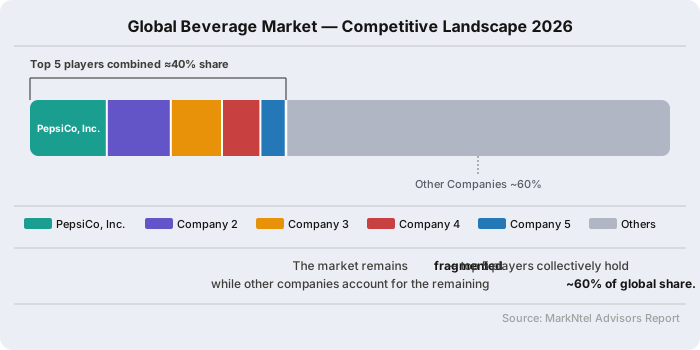
- The industry is moderately fragmented, with over 1,000 organized companies operating globally alongside numerous regional and local players. However, the top five players collectively account for approximately 40% share.
Global Beverage Market Size and Outlook
The Beverage market size was valued at USD 2.75 trillion in 2025 and is projected to grow from USD 2.83 trillion in 2026 to USD 3.38 trillion by 2032. Along with this, the market is estimated to grow at a CAGR of around 4.5% during the forecast period, i.e., 2026-32.
Due to continuous population growth and increased consumption in both developed and emerging economies, the global beverage industry demonstrated resilient expansion. According to the U.S. Census Bureau, the global population reached approximately 8 billion in 2023 and increased to about 8.1 billion in 2025, directly expanding baseline consumption demand. Additionally, increasing urbanization and income growth have further accelerated the shift toward packaged and processed beverages. Over time, these structural demographic and economic factors have consistently reinforced beverage consumption across regions, particularly in Asia and Africa.
Current market conditions reflect stable demand supported by both volume-driven and value-driven consumption dynamics across end-user segments. According to the Food and Agriculture Organization, global sugar consumption is projected to grow by approximately 1.3% year-on-year in 2025/26, indicating continued expansion in beverage ingredient demand . From a segment perspective, residential users account for the largest share of overall demand, driven by consistent daily consumption patterns. Meanwhile, commercial demand, particularly from foodservice and hospitality sectors, continues to recover steadily, contributing to incremental growth and demand for beverages worldwide. In addition, institutional demand across offices, healthcare, and educational establishments is expanding, further supporting consistent multi-channel consumption across beverage categories.
Government policies and regulatory frameworks are actively shaping market evolution by promoting healthier consumption and strengthening production ecosystems. For instance, the World Health Organization reported in 2025 that multiple countries have implemented or expanded sugar-sweetened beverage taxes to discourage excessive sugar intake and promote reformulation . At the same time, agricultural and food system policies highlighted by the Organisation for Economic Co-operation and Development and FAO emphasize that rising incomes and urbanization will continue to drive processed food and beverage demand in emerging economies . Moreover, the infrastructure developments, including cold chain expansion and logistics modernization, are further enhancing supply chain efficiency and market accessibility.
Industry participants are responding through innovation, sustainability initiatives, and capacity expansion to align with evolving consumer and regulatory trends. Companies such as The Coca-Cola Company and PepsiCo are expanding low-sugar and functional beverage portfolios while investing in recyclable packaging and localized production. For instance, in February 2025, The Coca-Cola Company expanded into the prebiotic soda segment with the launch of Simply Pop, a fruit-forward beverage formulated with 6 grams of prebiotic fiber to support gut health, along with vitamin C and zinc to enhance immune function. On the supply side, continued growth in global agricultural output and ingredient availability is supporting large-scale beverage manufacturing. Looking ahead, the combined impact of demographic expansion, regulatory-driven product innovation, and industry-led investments is expected to sustain drinks market growth and reinforce long-term demand fundamentals.
Global Beverage Market Key Indicators
- The Food and Agriculture Organization reports that global milk production reached approximately 982 million tonnes in 2024, with projections indicating continued growth toward nearly 993 million tonnes in 2025. This steady increase ensures abundant raw material supply for dairy-based beverages such as flavored milk and protein drinks, thereby supporting production scalability and market expansion.
- As per recent data from the International Coffee Organization (ICO), global coffee consumption reached approximately 177 million 60-kg bags in 2024, reflecting sustained demand for coffee beverages worldwide. This rising consumption across both residential and foodservice channels is supporting the expansion of ready-to-drink coffee and café-based offerings, thereby contributing to overall growth in the market .
- World Health Organization reports that approximately 2.3 billion people globally consume alcohol, highlighting widespread consumption across regions. This large consumer base directly supports sustained demand for alcoholic beverages such as beer, wine, and spirits, which contribute significantly to total beverage industry value .
- According to the Food and Agriculture Organization, global cereal production is projected to reach approximately 3.02 billion tonnes in 2025, reflecting strong agricultural output. This ensures sufficient availability of key beverage inputs such as sweeteners and grain-based ingredients, thereby supporting large-scale beverage manufacturing and industry growth.
- The latest report from the Food and Agriculture Organization estimated that, the global fruit production reached approximately 933 million tonnes in 2022 and has further increased to around 940–950 million tonnes annually by 2023–2024, reflecting sustained expansion in agricultural output worldwide. This growing supply base ensures consistent availability of key raw materials for juices, concentrates, and flavored beverages, thereby supporting large-scale beverage manufacturing and overall market growth .
Global Beverage Market Scope
| Category | Segments |
|---|---|
| By Product Type | (Alcoholic Beverages (Beer, Wine, Spirits), Non-Alcoholic Beverages (Carbonated Soft Drinks, Bottled Water, Juices, RTD Tea & Coffee, Energy & Sports Drinks, Functional Beverages, Dairy-Based Beverages)), |
| By Distribution Channel | (On-Trade (Food Service, Hospitality, Entertainment), Off-Trade (Modern Retail, Traditional Retail, Online Retail, Specialty Stores)), |
| By Packaging Type | (Bottles, Cans, Cartons, Pouches), |
Global Beverage Market Growth Drivers
Rising Global Population & Urbanization
Rising population density in urban areas has intensified over recent years, emerging as a key structural driver of beverage demand. According to the United Nations Department of Economic and Social Affairs World Urbanization Prospects (2024 revision), urban populations are projected to increase by 2.5 billion people by 2050, with Asia and Africa accounting for nearly 90% of this growth . This rapid concentration of population in cities has accelerated over the past decade, driven by employment migration and infrastructure development. As a result, consumption patterns are shifting toward commercially distributed beverages rather than locally sourced or informal alternatives.
Urban expansion is measurably increasing beverage demand across residential and commercial end-user segments by altering consumption behavior. The International Labour Organization reports that urban employment continues to rise globally, with wage-based income structures supporting higher spending on packaged goods. Urban households demonstrate higher reliance on bottled water, ready-to-drink beverages, and foodservice consumption due to time constraints and lifestyle shifts. Additionally, rapid growth in organized retail and foodservice outlets across urban centers is enabling higher per capita beverage consumption, particularly in developing economies where market penetration is still expanding.
This driver materially expands market volume as it increases both the number of consumers and the frequency of monetized consumption occasions. Rather than pricing-driven growth, urbanization converts informal or home-prepared beverage intake into packaged and commercially purchased products, directly increasing the beverage industry size. In addition to this, governments across the globe are also reinforcing this trend through urban infrastructure programs such as India’s Smart Cities Mission, which enhances retail accessibility and cold chain logistics. Consequently, the structural shift toward urban living continues to generate sustained, large-scale demand, making it a fundamental growth engine for the global beverage sector.
Recent Trends
Shift Toward Health & Wellness Beverages
The shift toward health and wellness beverages has emerged as a structural trend driven by rising health awareness and regulatory intervention across global markets. The World Health Organization continues to recommend reducing free sugar intake, prompting governments to expand sugar taxes and labeling norms. In 2025, the United Kingdom broadened its sugar tax scope to include additional beverage categories, reflecting tightening regulatory oversight. These developments have accelerated consumer preference for low- and no-sugar beverages, reshaping demand patterns across both developed and emerging economies.
This trend is driving structural transformation across the beverage value chain, particularly in product formulation and portfolio strategies of major industry participants. Major beverage Companies are significantly expanding zero-sugar and functional beverage portfolios in response to evolving demand. For instance, Reuters reported strong growth in Coca-Cola’s zero-sugar product sales, while PepsiCo recorded over 30% growth in Pepsi Zero Sugar in 2025 . Additionally, PepsiCo introduced a low-sugar prebiotic cola in 2025, highlighting increasing innovation in functional and health-oriented beverage categories .
The trend is expected to persist as regulatory pressure and consumer behavior continue to reinforce long-term structural change in consumption patterns. Industry data indicates that zero- and low-sugar beverages accounted for nearly 30% of total beverage volume in 2025, demonstrating a significant shift toward healthier alternatives. As a result, this trend is reshaping competitive dynamics, innovation pipelines, and long-term growth strategies across the global beverage industry.
Global Beverage Market Opportunities and Challenges
Environmental Concerns & Packaging Waste Accelerating Innovation in Sustainable and Eco-Friendly Packaging Solutions
Rising environmental concerns and increasing packaging waste are emerging as significant challenges for the global beverage industry, particularly due to the extensive use of single-use plastics. The Organisation for Economic Co-operation and Development estimates that global plastic waste exceeds 350 million tonnes annually, highlighting the scale of environmental impact and the urgency for sustainable solutions. This challenge is simultaneously creating a strong opportunity for innovation in sustainable and eco-friendly packaging solutions across the beverage value chain.
Governments and regulatory authorities are implementing stricter policies to reduce plastic waste and promote circular economy practices. For instance, regulatory mandates in India require beverage companies to incorporate at least 30% recycled plastic in PET bottles, with targets increasing to 60% by 2028–29, thereby intensifying compliance pressure. Supported by these regulatory mandates and evolving consumer preferences, advancements in lightweight materials and recycling technologies are enabling manufacturers to reduce environmental impact while strengthening brand positioning. As sustainability becomes a critical factor in purchasing decisions, these innovations are unlocking new growth opportunities and reshaping competitive dynamics in the global beverage landscape.
Segmentation Insights
Alcohol-Based Drinks Emerge as the Largest Revenue-Contributing Segment Globally
Alcoholic beverages account for approximately 61% share of the overall market, making them the leading product segment in terms of value contribution. This dominance is primarily driven by significantly higher per-unit pricing compared to non-alcoholic beverages, particularly across premium categories such as spirits and craft beer. Alcohol consumption is deeply embedded in social and cultural practices, especially across developed regions, ensuring consistent demand across both on-trade and off-trade channels. The presence of well-established distribution networks and strong brand positioning further enhances market penetration and revenue generation. For instance, in December 2025, Pernod Ricard launched Seagram’s Xclamat!on, a premium alcohol portfolio comprising whisky, vodka, gin, rum, and brandy, reinforcing its premiumization strategy in the alcoholic beverages segment.
From a regional demand perspective, dominance is strongly supported by high consumption intensity and frequency across developed economies. According to the World Health Organization, Europe remains the highest alcohol-consuming region globally, with average consumption exceeding 9.2 liters per capita annually, indicating strong volume and value contribution . Additionally, the Organisation for Economic Co-operation and Development reports that a significant share of adults engages in frequent alcohol consumption, with around 27% participating in monthly heavy drinking occasions, reinforcing repeat purchase behavior. These factors collectively drive sustained demand, ensuring high consumption frequency and premium pricing advantages. As a result, alcoholic beverages maintain their leading position in the global beverage market, supported by strong regional consumption patterns, high purchase frequency, and superior value realization. Based on product type, the market is segmented into:
- Alcoholic Beverages
- Non-Alcoholic Beverages
Bottles Account for the Highest Share Among Beverage Packaging Formats
Bottles account for approximately 59% share of the global beverage packaging market, making them the leading packaging format across beverage categories. This dominance is primarily attributed to their versatility and widespread applicability across both alcoholic and non-alcoholic beverages, including water, carbonated drinks, juices, and spirits. Bottles, particularly PET and glass variants, offer strong advantages such as durability, product safety, extended shelf life, and ease of transportation. Additionally, their compatibility with resealing and portability enhances consumer convenience, making them the preferred choice for on-the-go consumption. The ability to support both mass-market and premium positioning further strengthens their dominance across diverse product segments.
As per the demand, the large-scale consumption of bottled beverages continues to reinforce the segment’s leading position. According to the United Nations, global urban populations are expanding rapidly, increasing reliance on packaged and portable beverage formats such as bottled water and ready-to-drink products. Furthermore, the Organisation for Economic Co-operation and Development highlights that global plastic production and consumption remain significantly high, supporting widespread use of PET bottles in beverage packaging. The growing demand for convenience, coupled with advancements in lightweight and recyclable bottle materials, is further driving adoption across regions. As a result, bottles continue to dominate the global beverage packaging market, supported by their functional advantages, scalability, and strong alignment with evolving consumption patterns. Based on packaging type, the market is segmented into:
- Bottles
- Cans
- Cartons
- Pouches
Global Beverage Market Geographical Outlook
The Asia-Pacific region accounts for around 41.76% share of the beverage demand, making it the biggest regional contributor in terms of overall consumption. This dominance is primarily driven by the region’s large and rapidly expanding population base, coupled with accelerating urbanization across key economies such as China, India, and Southeast Asia. According to the World Bank, India’s urban population is projected to reach 951 million by 2050, significantly increasing demand for packaged and ready-to-drink beverages . Additionally, rising income levels and changing consumer lifestyles across emerging Asian economies are enabling higher spending on both alcoholic and non-alcoholic beverages, further strengthening regional demand.
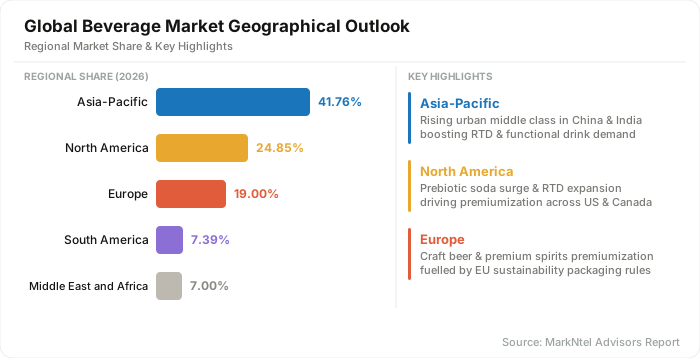
From a demand perspective, Asia-Pacific’s leadership is reinforced by strong multi-country consumption patterns across key beverage categories. According to Kirin Holdings, China has remained the world’s largest beer-consuming country for over 20 consecutive years, while countries such as India and Thailand recorded 14.6% and 5.8% growth in beer consumption in 2025, respectively. Additionally, high-frequency consumption patterns, such as widespread bottled water usage among urban populations, are significantly contributing to daily beverage demand across the region. Therefore, the combination of large-scale consumption, rising demand intensity, and multi-category growth drivers are significantly accelerating the expansion of the beverage industry in the Asia-Pacific.
Global Beverage Market Competitive Analysis
The beverage industry is moderately fragmented, with over 1,000 organized companies operating globally alongside numerous regional and local players. The top five players, The Coca-Cola Company, PepsiCo, Inc., Anheuser-Busch,, Nestlé S.A., and Keurig Dr Pepper Inc. collectively account for approximately 40% of the global market share, reflecting a balanced competitive landscape. The Coca-Cola Company leads globally, PepsiCo, Inc. holds a strong position in North America, Anheuser-Busch InBev is prominent in Europe and Latin America, while Suntory Holdings Limited and Asahi Group Holdings, Ltd. are key players in the Asia-Pacific region.
Leading Beverage Companies Worldwide
- The Coca-Cola Company
- PepsiCo, Inc.
- Anheuser-Busch InBev
- Nestlé S.A.
- Keurig Dr Pepper Inc.
- Danone S.A.
- Suntory Holdings Limited
- Red Bull GmbH
- Monster Beverage Corporation
- Asahi Group Holdings, Ltd.
- Heineken N.V
- Anheuser-Busch InBev SA/NV
- Diageo plc
- Pernod Ricard S.A.
- Molson Coors Beverage Company
- Britvic plc
- Tata Consumer Products Limited
- Nongfu Spring Co., Ltd.
- Carlsberg Group
- Others
Global Beverage Industry News and Recent Developments
February 2025: PepsiCo, Inc. Launches Prebiotic Cola
PepsiCo introduced its first-ever prebiotic cola, marking a significant innovation in the carbonated beverage segment after nearly two decades. The product combines traditional cola flavor with added functional benefits such as digestive health support, aligning with rising consumer preference for healthier beverage alternatives.
Impact Analysis: The launch highlights PepsiCo’s strategic shift toward functional and low-sugar beverages, strengthening its presence in the growing “better-for-you” segment. It is expected to accelerate innovation in carbonated drinks while intensifying competition with emerging functional beverage brands globally.
April 2025: Carlsberg Group Completes Acquisition of Britvic
Carlsberg completed the acquisition of Britvic, forming a major combined entity in the soft drinks and bottling segment. The deal strengthens Carlsberg’s position as one of the largest PepsiCo bottlers globally while expanding its footprint across European beverage markets.
Impact Analysis: The acquisition enhances production scale and distribution capabilities, enabling Carlsberg to diversify beyond alcoholic beverages into soft drinks. It is expected to improve operational synergies and intensify competition in the European beverage industry by strengthening integrated beverage portfolios.
- Market Segmentation
- Introduction
- Product Definition
- Research Process
- Assumptions
- Executive Summary
- Global Beverage Market Policies, Regulations, and Product Standards
- Global Beverage Market Trends & Developments
- Global Beverage Market Dynamics
- Growth Factors
- Challenges
- Global Beverage Market Hotspot & Opportunities
- Global Beverage Market Outlook, 2022-2032F
- Market Size & Outlook
- By Revenues (USD Million)
- Market Share & Analysis
- By Product Type- Market Size & Forecast 2022-2032, USD Million
- Alcoholic Beverages
- Beer
- Wine
- Spirits
- Non-Alcoholic Beverages
- Carbonated Soft Drinks
- Bottled Water
- Juices
- RTD Tea & Coffee
- Energy & Sports Drinks
- Functional Beverages
- Dairy-Based Beverages
- Alcoholic Beverages
- By Distribution Channel- Market Size & Forecast 2022-2032, USD Million
- On-Trade
- Food Service
- Hospitality
- Entertainment
- Off-Trade
- Modern Retail
- Traditional Retail
- Online Retail
- Specialty Stores
- On-Trade
- By Packaging Type- Market Size & Forecast 2022-2032, USD Million
- Bottles
- Cans
- Cartons
- Pouches
- By Region
- North America
- South America
- Europe
- Middle East & Africa
- Asia-Pacific
- By Company
- Competition Characteristics
- Market Share & Analysis
- By Product Type- Market Size & Forecast 2022-2032, USD Million
- Market Size & Outlook
- North America Beverage Market Outlook, 2022-2032F
- Market Size & Outlook
- By Revenues (USD Million)
- Market Share & Analysis
- By Product Type- Market Size & Forecast 2022-2032, USD Million
- By Distribution Channel- Market Size & Forecast 2022-2032, USD Million
- By Packaging Type- Market Size & Forecast 2022-2032, USD Million
- By Country
- The US
- Canada
- Mexico
- Rest of North America
- The US Beverage Market Outlook, 2022-2032F
- Market Size & Outlook
- By Revenues (USD Million)
- Market Share & Analysis
- By Product Type- Market Size & Forecast 2022-2032, USD Million
- By Distribution Channel- Market Size & Forecast 2022-2032, USD Million
- By Packaging Type- Market Size & Forecast 2022-2032, USD Million
- Market Size & Outlook
- Canada Beverage Market Outlook, 2022-2032F
- Market Size & Outlook
- By Revenues (USD Million)
- Market Share & Analysis
- By Product Type- Market Size & Forecast 2022-2032, USD Million
- By Distribution Channel- Market Size & Forecast 2022-2032, USD Million
- By Packaging Type- Market Size & Forecast 2022-2032, USD Million
- Market Size & Outlook
- Mexico Beverage Market Outlook, 2022-2032F
- Market Size & Outlook
- By Revenues (USD Million)
- Market Share & Analysis
- By Product Type- Market Size & Forecast 2022-2032, USD Million
- By Distribution Channel- Market Size & Forecast 2022-2032, USD Million
- By Packaging Type- Market Size & Forecast 2022-2032, USD Million
- Market Size & Outlook
- Market Size & Outlook
- South America Beverage Market Outlook, 2022-2032F
- Market Size & Outlook
- By Revenues (USD Million)
- Market Share & Analysis
- By Product Type- Market Size & Forecast 2022-2032, USD Million
- By Distribution Channel- Market Size & Forecast 2022-2032, USD Million
- By Packaging Type- Market Size & Forecast 2022-2032, USD Million
- By Country
- Brazil
- Argentina
- Chile
- Columbia
- Peru
- Rest of South America
- Brazil Beverage Market Outlook, 2022-2032F
- Market Size & Outlook
- By Revenues (USD Million)
- Market Share & Analysis
- By Product Type- Market Size & Forecast 2022-2032, USD Million
- By Distribution Channel- Market Size & Forecast 2022-2032, USD Million
- By Packaging Type- Market Size & Forecast 2022-2032, USD Million
- Market Size & Outlook
- Argentina Beverage Market Outlook, 2022-2032F
- Market Size & Outlook
- By Revenues (USD Million)
- Market Share & Analysis
- By Product Type- Market Size & Forecast 2022-2032, USD Million
- By Distribution Channel- Market Size & Forecast 2022-2032, USD Million
- By Packaging Type- Market Size & Forecast 2022-2032, USD Million
- Market Size & Outlook
- Chile Beverage Market Outlook, 2022-2032F
- Market Size & Outlook
- By Revenues (USD Million)
- Market Share & Analysis
- By Product Type- Market Size & Forecast 2022-2032, USD Million
- By Distribution Channel- Market Size & Forecast 2022-2032, USD Million
- By Packaging Type- Market Size & Forecast 2022-2032, USD Million
- Market Size & Outlook
- Columbia Beverage Market Outlook, 2022-2032F
- Market Size & Outlook
- By Revenues (USD Million)
- Market Share & Analysis
- By Product Type- Market Size & Forecast 2022-2032, USD Million
- By Distribution Channel- Market Size & Forecast 2022-2032, USD Million
- By Packaging Type- Market Size & Forecast 2022-2032, USD Million
- Market Size & Outlook
- Peru Beverage Market Outlook, 2022-2032F
- Market Size & Outlook
- By Revenues (USD Million)
- Market Share & Analysis
- By Product Type- Market Size & Forecast 2022-2032, USD Million
- By Distribution Channel- Market Size & Forecast 2022-2032, USD Million
- By Packaging Type- Market Size & Forecast 2022-2032, USD Million
- Market Size & Outlook
- Market Size & Outlook
- Europe Beverage Market Outlook, 2022-2032F
- Market Size & Outlook
- By Revenues (USD Million)
- Market Share & Analysis
- By Product Type- Market Size & Forecast 2022-2032, USD Million
- By Distribution Channel- Market Size & Forecast 2022-2032, USD Million
- By Packaging Type- Market Size & Forecast 2022-2032, USD Million
- By Country
- Germany
- The UK
- France
- Italy
- Spain
- Netherlands
- Russia
- Poland
- Belgium
- Sweden
- Rest of Europe
- Germany Beverage Market Outlook, 2022-2032F
- Market Size & Outlook
- By Revenues (USD Million)
- Market Share & Analysis
- By Product Type- Market Size & Forecast 2022-2032, USD Million
- By Distribution Channel- Market Size & Forecast 2022-2032, USD Million
- By Packaging Type- Market Size & Forecast 2022-2032, USD Million
- Market Size & Outlook
- The UK Beverage Market Outlook, 2022-2032F
- Market Size & Outlook
- By Revenues (USD Million)
- Market Share & Analysis
- By Product Type- Market Size & Forecast 2022-2032, USD Million
- By Distribution Channel- Market Size & Forecast 2022-2032, USD Million
- By Packaging Type- Market Size & Forecast 2022-2032, USD Million
- Market Size & Outlook
- France Beverage Market Outlook, 2022-2032F
- Market Size & Outlook
- By Revenues (USD Million)
- Market Share & Analysis
- By Product Type- Market Size & Forecast 2022-2032, USD Million
- By Distribution Channel- Market Size & Forecast 2022-2032, USD Million
- By Packaging Type- Market Size & Forecast 2022-2032, USD Million
- Market Size & Outlook
- Italy Beverage Market Outlook, 2022-2032F
- Market Size & Outlook
- By Revenues (USD Million)
- Market Share & Analysis
- By Product Type- Market Size & Forecast 2022-2032, USD Million
- By Distribution Channel- Market Size & Forecast 2022-2032, USD Million
- By Packaging Type- Market Size & Forecast 2022-2032, USD Million
- Market Size & Outlook
- Spain Beverage Market Outlook, 2022-2032F
- Market Size & Outlook
- By Revenues (USD Million)
- Market Share & Analysis
- By Product Type- Market Size & Forecast 2022-2032, USD Million
- By Distribution Channel- Market Size & Forecast 2022-2032, USD Million
- By Packaging Type- Market Size & Forecast 2022-2032, USD Million
- Market Size & Outlook
- Netherlands Beverage Market Outlook, 2022-2032F
- Market Size & Outlook
- By Revenues (USD Million)
- Market Share & Analysis
- By Product Type- Market Size & Forecast 2022-2032, USD Million
- By Distribution Channel- Market Size & Forecast 2022-2032, USD Million
- By Packaging Type- Market Size & Forecast 2022-2032, USD Million
- Market Size & Outlook
- Russia Beverage Market Outlook, 2022-2032F
- Market Size & Outlook
- By Revenues (USD Million)
- Market Share & Analysis
- By Product Type- Market Size & Forecast 2022-2032, USD Million
- By Distribution Channel- Market Size & Forecast 2022-2032, USD Million
- By Packaging Type- Market Size & Forecast 2022-2032, USD Million
- Market Size & Outlook
- Poland Beverage Market Outlook, 2022-2032F
- Market Size & Outlook
- By Revenues (USD Million)
- Market Share & Analysis
- By Product Type- Market Size & Forecast 2022-2032, USD Million
- By Distribution Channel- Market Size & Forecast 2022-2032, USD Million
- By Packaging Type- Market Size & Forecast 2022-2032, USD Million
- Market Size & Outlook
- Belgium Beverage Market Outlook, 2022-2032F
- Market Size & Outlook
- By Revenues (USD Million)
- Market Share & Analysis
- By Product Type- Market Size & Forecast 2022-2032, USD Million
- By Distribution Channel- Market Size & Forecast 2022-2032, USD Million
- By Packaging Type- Market Size & Forecast 2022-2032, USD Million
- Market Size & Outlook
- Sweden Beverage Market Outlook, 2022-2032F
- Market Size & Outlook
- By Revenues (USD Million)
- Market Share & Analysis
- By Product Type- Market Size & Forecast 2022-2032, USD Million
- By Distribution Channel- Market Size & Forecast 2022-2032, USD Million
- By Packaging Type- Market Size & Forecast 2022-2032, USD Million
- Market Size & Outlook
- Market Size & Outlook
- Middle East & Africa Beverage Market Outlook, 2022-2032F
- Market Size & Outlook
- By Revenues (USD Million)
- Market Share & Analysis
- By Product Type- Market Size & Forecast 2022-2032, USD Million
- By Distribution Channel- Market Size & Forecast 2022-2032, USD Million
- By Packaging Type- Market Size & Forecast 2022-2032, USD Million
- By Country
- Saudi Arabia
- The UAE
- South Africa
- Egypt
- Nigeria
- Morocco
- Turkey
- Rest of the Middle East & Africa
- Saudi Arabia Beverage Market Outlook, 2022-2032F
- Market Size & Outlook
- By Revenues (USD Million)
- Market Share & Analysis
- By Product Type- Market Size & Forecast 2022-2032, USD Million
- By Distribution Channel- Market Size & Forecast 2022-2032, USD Million
- By Packaging Type- Market Size & Forecast 2022-2032, USD Million
- Market Size & Outlook
- The UAE Beverage Market Outlook, 2022-2032F
- Market Size & Outlook
- By Revenues (USD Million)
- Market Share & Analysis
- By Product Type- Market Size & Forecast 2022-2032, USD Million
- By Distribution Channel- Market Size & Forecast 2022-2032, USD Million
- By Packaging Type- Market Size & Forecast 2022-2032, USD Million
- Market Size & Outlook
- South Africa Beverage Market Outlook, 2022-2032F
- Market Size & Outlook
- By Revenues (USD Million)
- Market Share & Analysis
- By Product Type- Market Size & Forecast 2022-2032, USD Million
- By Distribution Channel- Market Size & Forecast 2022-2032, USD Million
- By Packaging Type- Market Size & Forecast 2022-2032, USD Million
- Market Size & Outlook
- Egypt Beverage Market Outlook, 2022-2032F
- Market Size & Outlook
- By Revenues (USD Million)
- Market Share & Analysis
- By Product Type- Market Size & Forecast 2022-2032, USD Million
- By Distribution Channel- Market Size & Forecast 2022-2032, USD Million
- By Packaging Type- Market Size & Forecast 2022-2032, USD Million
- Market Size & Outlook
- Nigeria Beverage Market Outlook, 2022-2032F
- Market Size & Outlook
- By Revenues (USD Million)
- Market Share & Analysis
- By Product Type- Market Size & Forecast 2022-2032, USD Million
- By Distribution Channel- Market Size & Forecast 2022-2032, USD Million
- By Packaging Type- Market Size & Forecast 2022-2032, USD Million
- Market Size & Outlook
- Morocco Beverage Market Outlook, 2022-2032F
- Market Size & Outlook
- By Revenues (USD Million)
- Market Share & Analysis
- By Product Type- Market Size & Forecast 2022-2032, USD Million
- By Distribution Channel- Market Size & Forecast 2022-2032, USD Million
- By Packaging Type- Market Size & Forecast 2022-2032, USD Million
- Market Size & Outlook
- Turkey Beverage Market Outlook, 2022-2032F
- Market Size & Outlook
- By Revenues (USD Million)
- Market Share & Analysis
- By Product Type- Market Size & Forecast 2022-2032, USD Million
- By Distribution Channel- Market Size & Forecast 2022-2032, USD Million
- By Packaging Type- Market Size & Forecast 2022-2032, USD Million
- Market Size & Outlook
- Market Size & Outlook
- Asia-Pacific Beverage Market Outlook, 2022-2032F
- Market Size & Outlook
- By Revenues (USD Million)
- Market Share & Analysis
- By Product Type- Market Size & Forecast 2022-2032, USD Million
- By Distribution Channel- Market Size & Forecast 2022-2032, USD Million
- By Packaging Type- Market Size & Forecast 2022-2032, USD Million
- By Country
- China
- India
- Japan
- South Korea
- Australia
- Indonesia
- Thailand
- Malaysia
- Vietnam
- Philippines
- Singapore
- New Zealand
- Rest of Asia-Pacific
- China Beverage Market Outlook, 2022-2032F
- Market Size & Outlook
- By Revenues (USD Million)
- Market Share & Analysis
- By Product Type- Market Size & Forecast 2022-2032, USD Million
- By Distribution Channel- Market Size & Forecast 2022-2032, USD Million
- By Packaging Type- Market Size & Forecast 2022-2032, USD Million
- Market Size & Outlook
- India Beverage Market Outlook, 2022-2032F
- Market Size & Outlook
- By Revenues (USD Million)
- Market Share & Analysis
- By Product Type- Market Size & Forecast 2022-2032, USD Million
- By Distribution Channel- Market Size & Forecast 2022-2032, USD Million
- By Packaging Type- Market Size & Forecast 2022-2032, USD Million
- Market Size & Outlook
- Japan Beverage Market Outlook, 2022-2032F
- Market Size & Outlook
- By Revenues (USD Million)
- Market Share & Analysis
- By Product Type- Market Size & Forecast 2022-2032, USD Million
- By Distribution Channel- Market Size & Forecast 2022-2032, USD Million
- By Packaging Type- Market Size & Forecast 2022-2032, USD Million
- Market Size & Outlook
- South Korea Beverage Market Outlook, 2022-2032F
- Market Size & Outlook
- By Revenues (USD Million)
- Market Share & Analysis
- By Product Type- Market Size & Forecast 2022-2032, USD Million
- By Distribution Channel- Market Size & Forecast 2022-2032, USD Million
- By Packaging Type- Market Size & Forecast 2022-2032, USD Million
- Market Size & Outlook
- Australia Beverage Market Outlook, 2022-2032F
- Market Size & Outlook
- By Revenues (USD Million)
- Market Share & Analysis
- By Product Type- Market Size & Forecast 2022-2032, USD Million
- By Distribution Channel- Market Size & Forecast 2022-2032, USD Million
- By Packaging Type- Market Size & Forecast 2022-2032, USD Million
- Market Size & Outlook
- Indonesia Beverage Market Outlook, 2022-2032F
- Market Size & Outlook
- By Revenues (USD Million)
- Market Share & Analysis
- By Product Type- Market Size & Forecast 2022-2032, USD Million
- By Distribution Channel- Market Size & Forecast 2022-2032, USD Million
- By Packaging Type- Market Size & Forecast 2022-2032, USD Million
- Market Size & Outlook
- Thailand Beverage Market Outlook, 2022-2032F
- Market Size & Outlook
- By Revenues (USD Million)
- Market Share & Analysis
- By Product Type- Market Size & Forecast 2022-2032, USD Million
- By Distribution Channel- Market Size & Forecast 2022-2032, USD Million
- By Packaging Type- Market Size & Forecast 2022-2032, USD Million
- Market Size & Outlook
- Malaysia Beverage Market Outlook, 2022-2032F
- Market Size & Outlook
- By Revenues (USD Million)
- Market Share & Analysis
- By Product Type- Market Size & Forecast 2022-2032, USD Million
- By Distribution Channel- Market Size & Forecast 2022-2032, USD Million
- By Packaging Type- Market Size & Forecast 2022-2032, USD Million
- Market Size & Outlook
- Vietnam Beverage Market Outlook, 2022-2032F
- Market Size & Outlook
- By Revenues (USD Million)
- Market Share & Analysis
- By Product Type- Market Size & Forecast 2022-2032, USD Million
- By Distribution Channel- Market Size & Forecast 2022-2032, USD Million
- By Packaging Type- Market Size & Forecast 2022-2032, USD Million
- Market Size & Outlook
- Philippines Beverage Market Outlook, 2022-2032F
- Market Size & Outlook
- By Revenues (USD Million)
- Market Share & Analysis
- By Product Type- Market Size & Forecast 2022-2032, USD Million
- By Distribution Channel- Market Size & Forecast 2022-2032, USD Million
- By Packaging Type- Market Size & Forecast 2022-2032, USD Million
- Market Size & Outlook
- Singapore Beverage Market Outlook, 2022-2032F
- Market Size & Outlook
- By Revenues (USD Million)
- Market Share & Analysis
- By Product Type- Market Size & Forecast 2022-2032, USD Million
- By Distribution Channel- Market Size & Forecast 2022-2032, USD Million
- By Packaging Type- Market Size & Forecast 2022-2032, USD Million
- Market Size & Outlook
- New Zealand Beverage Market Outlook, 2022-2032F
- Market Size & Outlook
- By Revenues (USD Million)
- Market Share & Analysis
- By Product Type- Market Size & Forecast 2022-2032, USD Million
- By Distribution Channel- Market Size & Forecast 2022-2032, USD Million
- By Packaging Type- Market Size & Forecast 2022-2032, USD Million
- Market Size & Outlook
- Market Size & Outlook
- Global Beverage Market Key Strategic Imperatives for Success & Growth
- Competitive Outlook
- Company Profiles
- The Coca-Cola Company
- Business Description
- Product Portfolio
- Collaborations & Alliances
- Recent Developments
- Financial Details
- Others
- PepsiCo, Inc.
- Business Description
- Product Portfolio
- Collaborations & Alliances
- Recent Developments
- Financial Details
- Others
- Nestlé S.A.
- Business Description
- Product Portfolio
- Collaborations & Alliances
- Recent Developments
- Financial Details
- Others
- Danone S.A.
- Business Description
- Product Portfolio
- Collaborations & Alliances
- Recent Developments
- Financial Details
- Others
- Keurig Dr Pepper Inc.
- Business Description
- Product Portfolio
- Collaborations & Alliances
- Recent Developments
- Financial Details
- Others
- Red Bull GmbH
- Business Description
- Product Portfolio
- Collaborations & Alliances
- Recent Developments
- Financial Details
- Others
- Monster Beverage Corporation
- Business Description
- Product Portfolio
- Collaborations & Alliances
- Recent Developments
- Financial Details
- Others
- Suntory Holdings Limited
- Business Description
- Product Portfolio
- Collaborations & Alliances
- Recent Developments
- Financial Details
- Others
- Asahi Group Holdings, Ltd.
- Business Description
- Product Portfolio
- Collaborations & Alliances
- Recent Developments
- Financial Details
- Others
- Anheuser-Busch InBev SA/NV
- Business Description
- Product Portfolio
- Collaborations & Alliances
- Recent Developments
- Financial Details
- Others
- Heineken N.V.
- Business Description
- Product Portfolio
- Collaborations & Alliances
- Recent Developments
- Financial Details
- Others
- Diageo plc
- Business Description
- Product Portfolio
- Collaborations & Alliances
- Recent Developments
- Financial Details
- Others
- Carlsberg Group
- Business Description
- Product Portfolio
- Collaborations & Alliances
- Recent Developments
- Financial Details
- Others
- Pernod Ricard S.A.
- Business Description
- Product Portfolio
- Collaborations & Alliances
- Recent Developments
- Financial Details
- Others
- Molson Coors Beverage Company
- Business Description
- Product Portfolio
- Collaborations & Alliances
- Recent Developments
- Financial Details
- Others
- Britvic plc
- Business Description
- Product Portfolio
- Collaborations & Alliances
- Recent Developments
- Financial Details
- Others
- Tata Consumer Products Limited
- Business Description
- Product Portfolio
- Collaborations & Alliances
- Recent Developments
- Financial Details
- Others
- Nongfu Spring Co., Ltd.
- Business Description
- Product Portfolio
- Collaborations & Alliances
- Recent Developments
- Financial Details
- Others
- The Coca-Cola Company
- Company Profiles
- Disclaimer

MarkNtel Advisors follows a robust and iterative research methodology designed to ensure maximum accuracy and minimize deviation in market estimates and forecasts. Our approach combines both bottom-up and top-down techniques to effectively segment and quantify various aspects of the market. A consistent feature across all our research reports is data triangulation, which examines the market from three distinct perspectives to validate findings. Key components of our research process include:
1. Scope & Research Design At the outset, MarkNtel Advisors define the research objectives and formulate pertinent questions. This phase involves determining the type of research—qualitative or quantitative—and designing a methodology that outlines data collection methods, target demographics, and analytical tools. They also establish timelines and budgets to ensure the research aligns with client goals.
2. Sample Selection and Data Collection In this stage, the firm identifies the target audience and determines the appropriate sample size to ensure representativeness. They employ various sampling methods, such as random or stratified sampling, based on the research objectives. Data collection is carried out using tools like surveys, interviews, and observations, ensuring the gathered data is reliable and relevant.
3. Data Analysis and Validation Once data is collected, MarkNtel Advisors undertake a rigorous analysis process. This includes cleaning the data to remove inconsistencies, employing statistical software for quantitative analysis, and thematic analysis for qualitative data. Validation steps are taken to ensure the accuracy and reliability of the findings, minimizing biases and errors.

4. Data Forecast and FinalizationThe final phase involves forecasting future market trends based on the analyzed data. MarkNtel Advisors utilize predictive modeling and time series analysis to anticipate market behaviors. The insights are then compiled into comprehensive reports, featuring visual aids like charts and graphs, and include strategic recommendations to inform client decision-making
We offer flexible licensing options to cater to varying organizational needs. Choose the pricing pack that best suits your requirements:
Buy Now Inquire Before Buying
 Request Customization