

By Component (Platform, Services, Consulting Services, Integration & Deployment, Support & Maintenance, Managed Services), By Deployment Mode (Public Cloud, Private Cloud, Hybrid Cloud), By Organizati... ... loud), By Organization Size (Large Enterprises, Small & Medium Enterprises (SMEs)), By Technology (Kubernetes, Docker Swarm, Apache Mesos, Nomad, Others), By Application (Application Lifecycle Management, Infrastructure Management, Networking & Security, Resource Management, Monitoring & Logging, Storage Orchestration), By Vertical (BFSI, IT & Telecommunications, Retail & E-commerce, Healthcare, Manufacturing, Government & Public Sector, Media & Entertainment, Transportation & Logistics, Energy & Utilities), and others Read more
- ICT & Electronics
- May 2026
- 205
- PDF, Excel, PPT
Asia Container Orchestration Market Key Takeaways
- The Asia container orchestration market was valued at around USD 345 million in 2025 and is anticipated to expand from USD 397.44 million in 2026 to USD 928.94 million by 2032.
- The industry is projected to reflect a steady CAGR of 15.2% over the forecast period.
- China dominated with 34.29% share in 2026, driven by cloud expansion and rising Kubernetes adoption across major economies.
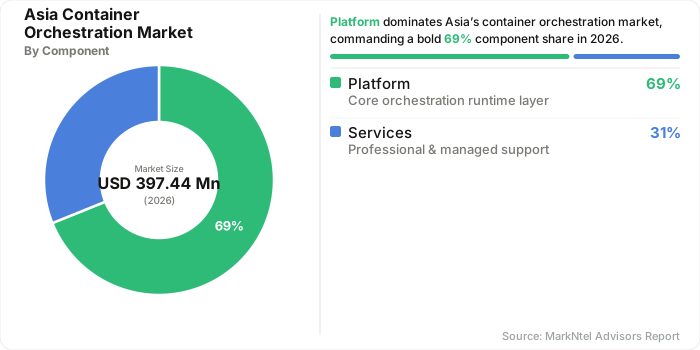
- In 2026, Platform solutions held nearly 69% share due to growing automated deployment and hybrid cloud infrastructure modernization demand.
- IT & Telecommunications captured nearly 31% share in 2026, supported by 5G deployment and increasing cloud-native network adoption.
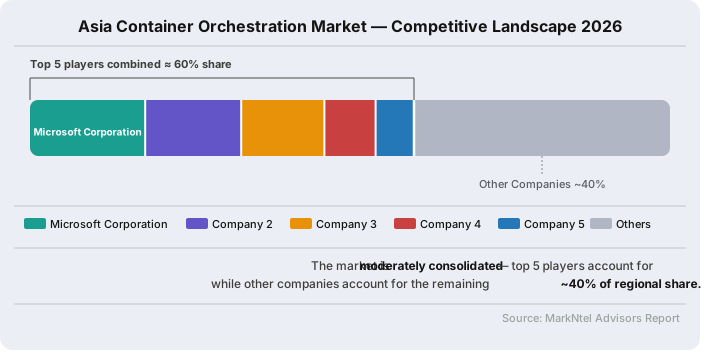
- The industry is moderately consolidated, with the top five leading players accounting for approximately 60% of the total market share.
Asia Container Orchestration Market Size and Outlook
The Asia container orchestration market is expected to witness sustained growth at a steady CAGR of 15.2% during the forecast period. Rapid modernization of enterprise IT infrastructure and increasing adoption of cloud-native technologies have significantly strengthened the growth of the Asia container orchestration market across China, India, Japan, and South Korea.
Organizations across telecommunications, banking, retail, manufacturing, and e-commerce sectors are increasingly deploying Kubernetes-based orchestration platforms to improve workload scalability, automate application deployment, and optimize multi-cloud infrastructure management. The growing adoption of microservices architecture and DevOps practices has further accelerated enterprise demand for containerized application environments across the region.
This market expansion has been supported by government-backed digital transformation initiatives and investments in cloud infrastructure development across Asia. China’s 14th Five-Year Plan prioritizes artificial intelligence, cloud computing, and advanced digital infrastructure , while India’s Digital India initiative continues accelerating cloud adoption among enterprises and public institutions . Similarly, Singapore’s Smart Nation strategy is strengthening investments in secure digital ecosystems and cloud-enabled governance systems . These policy frameworks are encouraging organizations to modernize legacy IT environments and adopt scalable container orchestration technologies.
The increasing deployment of AI applications, edge computing systems, fintech platforms, and 5G infrastructure has further strengthened adoption across commercial and industrial end users. Telecommunications providers are utilizing orchestration platforms to support network virtualization and edge infrastructure management, while BFSI institutions are adopting containerized environments to improve transaction scalability and cybersecurity resilience. Manufacturing enterprises across East Asia are also integrating cloud-native industrial applications to enhance automation, predictive maintenance, and real-time operational analytics within smart factory ecosystems.
To support rising enterprise demand, leading cloud and technology providers continue expanding regional cloud infrastructure and orchestration capabilities across Asia. Alibaba Cloud expanded cloud and AI infrastructure investments across Asian markets during 2025, while other hyperscale cloud providers increased regional availability zones, sovereign cloud capabilities, and Kubernetes-based managed services. These ongoing investments in AI-ready infrastructure, localized cloud ecosystems, and energy-efficient data centers are expected to sustain long-term market growth, with the market projected to expand from USD 397.44 million in 2026 to USD 928.94 million by 2032, as enterprises continue accelerating digital transformation initiatives across the region.
Asia Container Orchestration Market Key Indicators
- According to the Cloud Native Computing Foundation, Kubernetes adoption continues to rise globally, with more than 90% of organizations utilizing cloud-native technologies, integrating container orchestration platforms into enterprise infrastructure environments. Rising Kubernetes adoption is strengthening demand for scalable orchestration, workload automation, and cloud-native application management solutions across Asian enterprises.
- GSMA reported Asia-Pacific’s mobile sector contributed nearly USD 950 billion in 2024, with expanding 5G and cloud-native infrastructure significantly increasing demand for container orchestration and automated workload management platforms.
- According to the Government of India, the Digital India initiative and MeghRaj cloud program are accelerating the adoption of cloud-enabled public services, strengthening demand for scalable container orchestration and hybrid cloud management solutions across enterprises and government institutions.
- Over 70% of Singapore’s eligible government systems have migrated to commercial cloud environments under the Government on Commercial Cloud framework, strengthening demand for secure container orchestration and multi-cloud infrastructure management solutions.
Asia Container Orchestration Market Scope
| Category | Segments |
|---|---|
| By Component | Platform, Services, Consulting Services, Integration & Deployment, Support & Maintenance, Managed Services |
| By Deployment Mode | Public Cloud, Private Cloud, Hybrid Cloud |
| By Organization Size | Large Enterprises, Small & Medium Enterprises (SMEs |
| By Technology | Kubernetes, Docker Swarm, Apache Mesos, Nomad, Others |
| By Application | Application Lifecycle Management, Infrastructure Management, Networking & Security, Resource Management, Monitoring & Logging, Storage Orchestration |
| By Vertical | BFSI, IT & Telecommunications, Retail & E-commerce, Healthcare, Manufacturing, Government & Public Sector, Media & Entertainment, Transportation & Logistics, Energy & Utilities |
Asia Container Orchestration Market Growth Drivers
Rapid Enterprise Digital Transformation
Rapid enterprise digital transformation has emerged as the primary driver of the Asia container orchestration market's growth across China, India, Japan, South Korea, and Southeast Asia. Enterprises are increasingly modernizing legacy IT infrastructure and adopting cloud-native architectures to improve operational agility, scalability, and application deployment efficiency. The growing adoption of AI-enabled business operations, digital commerce platforms, and hybrid work environments has significantly increased demand for containerized application ecosystems and Kubernetes-based orchestration platforms across banking, telecommunications, retail, healthcare, and manufacturing sectors.
This transformation is becoming increasingly measurable through rising investments in digital infrastructure and cloud modernization initiatives across Asia. The Asian Development Bank’s Asian Development Policy Report 2025 highlighted accelerating digital transformation across developing Asian economies supported by investments in artificial intelligence, cloud computing, and digital connectivity infrastructure . In addition, Microsoft announced a USD 10 billion investment in Japan during 2026–2029 to strengthen AI infrastructure, cybersecurity capabilities, and cloud computing ecosystems, further supporting enterprise migration toward scalable cloud-native environments.
Government-backed cloud modernization programs are also strengthening long-term market demand. India’s Digital India initiative continues expanding cloud-enabled public infrastructure through the MeghRaj cloud program, while Google Cloud’s compliance with Malaysia’s MAMPU cloud security framework is encouraging secure enterprise cloud adoption . These developments are collectively reinforcing demand for advanced container orchestration and multi-cloud infrastructure management platforms across Asia.
Recent Trends
Growing Dominance of Kubernetes
Kubernetes is increasingly establishing itself as the foundational orchestration technology across Asia due to rising enterprise migration toward scalable cloud-native architectures and containerized application ecosystems. Organizations across telecommunications, banking, retail, manufacturing, and digital commerce sectors are increasingly adopting Kubernetes to improve workload scalability, deployment automation, and infrastructure efficiency. As enterprises continue shifting toward hybrid and multi-cloud environments, Kubernetes is becoming central to managing distributed applications and containerized workloads across enterprise infrastructure ecosystems.
This transition is reshaping enterprise cloud infrastructure strategies across Asia. Businesses are increasingly moving toward containerized environments capable of supporting AI workloads, edge computing, and real-time analytics. At the same time, enterprises are integrating DevOps and MLOps pipelines to improve automation, deployment efficiency, and continuous delivery across Kubernetes-based environments, as highlighted by TechRadar during 2025 . Consequently, cloud providers are expanding managed Kubernetes services and automation capabilities to simplify infrastructure management and improve operational resilience.
The persistence of this trend is supported by accelerating development of hyperscale data centers, AI infrastructure, and cloud-native enterprise ecosystems throughout Asia. Digital Edge announced a USD 4.5 billion investment during 2026 to develop Indonesia’s largest 500MW AI-ready hyperscale campus, reflecting rising regional demand for scalable cloud-native infrastructure . Simultaneously, increasing deployment of AI-enabled applications and distributed computing environments is strengthening enterprise reliance on Kubernetes-based orchestration platforms across Asia’s evolving digital economy ecosystem.
Asia Container Orchestration Market Opportunities and Challenges
Complexity of Multi-Cloud Management Driving Adoption of Unified Container Orchestration Platforms
Increasing deployment of applications across public cloud, private cloud, and edge environments is intensifying operational complexity for enterprises adopting cloud-native technologies in Asia. Organizations are increasingly facing challenges related to workload visibility, interoperability, infrastructure consistency, and operational governance as containerized applications become distributed across fragmented cloud ecosystems. The rapid expansion of AI workloads, real-time analytics platforms, and distributed computing environments is further increasing the need for centralized infrastructure management and orchestration capabilities.
As enterprises continue accelerating hybrid and multi-cloud adoption, operational inefficiencies and infrastructure management costs are becoming more difficult to control across large-scale digital environments. Additionally, the growing difficulty of managing distributed cloud environments is accelerating enterprise adoption of unified orchestration platforms capable of simplifying multi-cloud infrastructure operations. Enterprises are increasingly deploying Kubernetes-based orchestration solutions to automate workload deployment, optimize resource utilization, strengthen security governance, and improve infrastructure scalability across distributed cloud environments.
At the same time, cloud providers and technology vendors are expanding managed Kubernetes services, observability platforms, and automation capabilities to improve operational resilience and simplify infrastructure management. In addition, Rakuten Symphony launched a dedicated Japan organization during 2026 to accelerate cloud and OSS innovation , further supporting enterprise adoption of cloud-native automation and centralized infrastructure management solutions across the Japanese market.
Segmentation Insights
Rising Enterprise Preference for Automated Cloud-Native Infrastructure Strengthening Leadership of the Platform Segment
The platform segment captured around 69% share within the Asia container orchestration market, driven by accelerating enterprise adoption of Kubernetes-based infrastructure platforms. The segment’s dominance is further supported by rising demand for workload automation environments and cloud-native infrastructure solutions designed to improve application scalability, deployment consistency, and operational efficiency across hybrid cloud ecosystems. As enterprise IT environments become increasingly complex and microservices adoption continues expanding, organizations are steadily deploying orchestration platforms to automate workload scaling, infrastructure monitoring, and application lifecycle management across distributed cloud environments.
The growing adoption of DevOps practices and cloud-native software development is further strengthening platform segment expansion across the region. Enterprises are increasingly prioritizing orchestration environments integrated with observability, automation, and security management capabilities to improve software delivery efficiency and strengthen infrastructure resilience. Reflecting this industry shift, Red Hat expanded its AI-powered management and container-native infrastructure capabilities during 2025 to simplify hybrid cloud automation and improve enterprise infrastructure operations .
Continuous innovation in managed Kubernetes services, multi-cloud orchestration platforms, and cloud-native automation technologies is expected to further support long-term platform segment growth across Asia’s evolving digital infrastructure ecosystem. Based on the component, the market has been segmented into:
- Platform
- Services
Increasing Cloud-Native Network Modernization Supporting Strong Growth of the IT & Telecommunications Segment
Nearly 31% share positioned IT & Telecommunications as the leading vertical segment within the Asia Container Orchestration Market. The segment’s dominance is supported by rapid 5G infrastructure deployment, expanding cloud-native network transformation, and rising adoption of virtualized telecom infrastructure across regional telecom operators and digital service providers. As telecom networks become increasingly software-driven, enterprises are deploying container orchestration platforms to improve infrastructure scalability, network automation, and operational efficiency across distributed connectivity ecosystems.
Telecommunications companies are increasingly utilizing container orchestration platforms to support network function virtualization (NFV), distributed edge computing, and real-time traffic management within expanding digital ecosystems. As telecom operators accelerate cloud-native deployment, in 2025, Nokia and Bharti Airtel expanded their partnership to deploy cloud-native 5G core and packet core infrastructure across India, supporting automation, network scalability, and real-time traffic management capabilities .
Rising deployment of AI-driven telecom applications, cloud-based communication services, and edge-native platforms is further strengthening demand for scalable orchestration environments capable of supporting dynamic workloads and high-performance infrastructure requirements across Asia’s evolving telecom ecosystem. Based on vertical, the market is categorized into:
- BFSI
- IT & Telecommunications
- Retail & E-commerce
- Healthcare
- Manufacturing
- Government & Public Sector
- Media & Entertainment
- Transportation & Logistics
- Energy & Utilities
- Others
Asia Container Orchestration Market Geographical Outlook
China dominates the Asia container orchestration market, accounting for approximately 34.29% of the regional market share, primarily due to its strong hyperscale cloud ecosystem and rapid adoption of cloud-native technologies. Major domestic cloud providers such as Alibaba Group Cloud, Tencent Cloud, and Huawei Cloud continue expanding large-scale containerized computing infrastructure across the country.
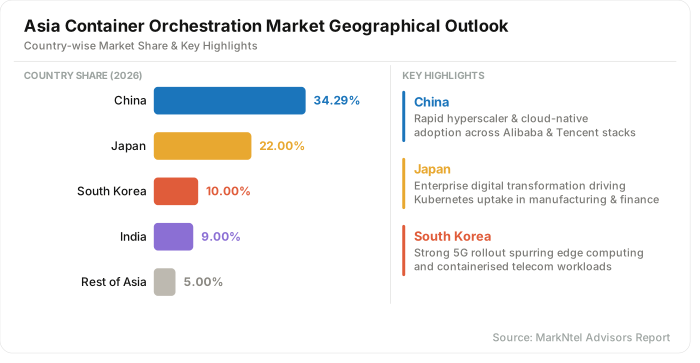
Supporting this trend, Alibaba Cloud recently introduced its AI-centric HPN 8.0 network architecture with 800 Gbps throughput capabilities designed for large-scale AI and distributed cloud workloads. The company also upgraded its Container Compute Services (ACS) platform with auto-scaling capabilities supporting up to 15,000 pods per minute for AI agent workloads, highlighting the rapid advancement of cloud-native infrastructure in China.
This strong infrastructure foundation has accelerated the adoption of Kubernetes, microservices architecture, DevOps practices, and hybrid cloud environments across industries including telecommunications, e-commerce, banking, and manufacturing. China also benefits from extensive data center expansion, rising AI deployment, strong enterprise IT spending, and a mature domestic cloud ecosystem, enabling the country to deploy container orchestration platforms at a significantly larger scale than other Asian markets.
Asia Container Orchestration Market Competitive Analysis
Competition within the Asia container orchestration industry remains moderately consolidated due to the presence of global hyperscale cloud providers and cloud-native infrastructure vendors competing across Kubernetes platforms and hybrid cloud solutions. Leading companies including Amazon Web Services, Inc., Microsoft, Google Cloud, Alibaba Cloud, and Red Hat collectively account for approximately 60% share of the market, supported by strong managed Kubernetes capabilities and expanding enterprise cloud-native infrastructure deployments across Asia.
Key Players of Container Orchestration in Asia
- Google Cloud
- Amazon Web Services, Inc
- Microsoft
- Red Hat
- VMware
- Alibaba Cloud
- Huawei Cloud Computing Technologies Co., Ltd.
- Tencent Cloud
- Docker Inc
- IBM
- Others
Asia Container Orchestration Industry News and Recent Developments
August 2025: Bharti Airtel Launched AI-Enabled Cloud Services Platform Through Xtelify
Bharti Airtel launched a cloud and AI services platform through its digital unit Xtelify to support enterprises and telecom operators with scalable cloud-native infrastructure solutions. The platform includes AI-driven software tools and secure cloud migration capabilities designed to strengthen enterprise cloud adoption across India.
Impact Analysis: The launch highlights increasing enterprise demand for orchestration-ready cloud environments and AI-enabled infrastructure automation across Asia. Rising deployment of AI-driven applications and cloud-native platforms is expected to strengthen adoption of Kubernetes-based orchestration solutions across enterprise infrastructure environments.
June 2025: Ericsson Signed Multi-Year Network Operations Agreement with Bharti Airtel
Ericsson signed a multi-year managed services agreement with Bharti Airtel to oversee pan-India network operations covering 4G, 5G Standalone, and network slicing infrastructure. The agreement is focused on improving telecom network automation and cloud-native infrastructure management across Airtel’s expanding digital connectivity ecosystem.
Impact Analysis: The agreement reflects accelerating adoption of cloud-native telecom infrastructure and distributed network automation technologies across Asia. Expanding deployment of 5G infrastructure and edge-native services is expected to increase demand for container orchestration platforms supporting scalable telecom workloads and real-time infrastructure management.
- Market Segmentation
- Introduction
- Product Definition
- Research Process
- Assumptions
- Executive Summary
- Asia Container Orchestration Market Policies, Regulations, and Product Standards
- Asia Container Orchestration Market Trends & Developments
- Asia Container Orchestration Market Dynamics
- Growth Factors
- Challenges
- Asia Container Orchestration Market Hotspot & Opportunities
- Asia Container Orchestration Market Outlook, 2022-2032F
- Market Size & Outlook
- By Revenues (USD Million)
- Market Share & Analysis
- By Component- Market Size & Forecast 2022-2032, USD Million
- Platform
- Services
- Consulting Services
- Integration & Deployment
- Support & Maintenance
- Managed Services
- By Deployment Mode- Market Size & Forecast 2022-2032, USD Million
- Public Cloud
- Private Cloud
- Hybrid Cloud
- By Organization Size- Market Size & Forecast 2022-2032, USD Million
- Large Enterprises
- Small & Medium Enterprises (SMEs)
- By Technology- Market Size & Forecast 2022-2032, USD Million
- Kubernetes
- Docker Swarm
- Apache Mesos
- Nomad
- Others
- By Application- Market Size & Forecast 2022-2032, USD Million
- Application Lifecycle Management
- Infrastructure Management
- Networking & Security
- Resource Management
- Monitoring & Logging
- Storage Orchestration
- By Vertical- Market Size & Forecast 2022-2032, USD Million
- BFSI
- IT & Telecommunications
- Retail & E-commerce
- Healthcare
- Manufacturing
- Government & Public Sector
- Media & Entertainment
- Transportation & Logistics
- Energy & Utilities
- Others
- By Country
- China
- Japan
- South Korea
- India
- Indonesia
- Thailand
- Vietnam
- Malaysia
- Saudi Arabia
- UAE
- Qatar
- By Company
- Competition Characteristics
- Market Share & Analysis
- By Component- Market Size & Forecast 2022-2032, USD Million
- Market Size & Outlook
- China Container Orchestration Market Outlook, 2022-2032F
- Market Size & Outlook
- By Revenues (USD Million)
- Market Share & Analysis
- By Component- Market Size & Forecast 2022-2032, USD Million
- By Deployment Mode- Market Size & Forecast 2022-2032, USD Million
- By Organization Size- Market Size & Forecast 2022-2032, USD Million
- By Technology- Market Size & Forecast 2022-2032, USD Million
- By Application- Market Size & Forecast 2022-2032, USD Million
- By Vertical- Market Size & Forecast 2022-2032, USD Million
- Market Size & Outlook
- Japan Container Orchestration Market Outlook, 2022-2032F
- Market Size & Outlook
- By Revenues (USD Million)
- Market Share & Analysis
- By Component- Market Size & Forecast 2022-2032, USD Million
- By Deployment Mode- Market Size & Forecast 2022-2032, USD Million
- By Organization Size- Market Size & Forecast 2022-2032, USD Million
- By Technology- Market Size & Forecast 2022-2032, USD Million
- By Application- Market Size & Forecast 2022-2032, USD Million
- By Vertical- Market Size & Forecast 2022-2032, USD Million
- Market Size & Outlook
- South Korea Container Orchestration Market Outlook, 2022-2032F
- Market Size & Outlook
- By Revenues (USD Million)
- Market Share & Analysis
- By Component- Market Size & Forecast 2022-2032, USD Million
- By Deployment Mode- Market Size & Forecast 2022-2032, USD Million
- By Organization Size- Market Size & Forecast 2022-2032, USD Million
- By Technology- Market Size & Forecast 2022-2032, USD Million
- By Application- Market Size & Forecast 2022-2032, USD Million
- By Vertical- Market Size & Forecast 2022-2032, USD Million
- Market Size & Outlook
- India Container Orchestration Market Outlook, 2022-2032F
- Market Size & Outlook
- By Revenues (USD Million)
- Market Share & Analysis
- By Component- Market Size & Forecast 2022-2032, USD Million
- By Deployment Mode- Market Size & Forecast 2022-2032, USD Million
- By Organization Size- Market Size & Forecast 2022-2032, USD Million
- By Technology- Market Size & Forecast 2022-2032, USD Million
- By Application- Market Size & Forecast 2022-2032, USD Million
- By Vertical- Market Size & Forecast 2022-2032, USD Million
- Market Size & Outlook
- Indonesia Container Orchestration Market Outlook, 2022-2032F
- Market Size & Outlook
- By Revenues (USD Million)
- Market Share & Analysis
- By Component- Market Size & Forecast 2022-2032, USD Million
- By Deployment Mode- Market Size & Forecast 2022-2032, USD Million
- By Organization Size- Market Size & Forecast 2022-2032, USD Million
- By Technology- Market Size & Forecast 2022-2032, USD Million
- By Application- Market Size & Forecast 2022-2032, USD Million
- By Vertical- Market Size & Forecast 2022-2032, USD Million
- Market Size & Outlook
- Thailand Container Orchestration Market Outlook, 2022-2032F
- Market Size & Outlook
- By Revenues (USD Million)
- Market Share & Analysis
- By Component- Market Size & Forecast 2022-2032, USD Million
- By Deployment Mode- Market Size & Forecast 2022-2032, USD Million
- By Organization Size- Market Size & Forecast 2022-2032, USD Million
- By Technology- Market Size & Forecast 2022-2032, USD Million
- By Application- Market Size & Forecast 2022-2032, USD Million
- By Vertical- Market Size & Forecast 2022-2032, USD Million
- Market Size & Outlook
- Vietnam Container Orchestration Market Outlook, 2022-2032F
- Market Size & Outlook
- By Revenues (USD Million)
- Market Share & Analysis
- By Component- Market Size & Forecast 2022-2032, USD Million
- By Deployment Mode- Market Size & Forecast 2022-2032, USD Million
- By Organization Size- Market Size & Forecast 2022-2032, USD Million
- By Technology- Market Size & Forecast 2022-2032, USD Million
- By Application- Market Size & Forecast 2022-2032, USD Million
- By Vertical- Market Size & Forecast 2022-2032, USD Million
- Market Size & Outlook
- Malaysia Container Orchestration Market Outlook, 2022-2032F
- Market Size & Outlook
- By Revenues (USD Million)
- Market Share & Analysis
- By Component- Market Size & Forecast 2022-2032, USD Million
- By Deployment Mode- Market Size & Forecast 2022-2032, USD Million
- By Organization Size- Market Size & Forecast 2022-2032, USD Million
- By Technology- Market Size & Forecast 2022-2032, USD Million
- By Application- Market Size & Forecast 2022-2032, USD Million
- By Vertical- Market Size & Forecast 2022-2032, USD Million
- Market Size & Outlook
- Saudi Arabia Container Orchestration Market Outlook, 2022-2032F
- Market Size & Outlook
- By Revenues (USD Million)
- Market Share & Analysis
- By Component- Market Size & Forecast 2022-2032, USD Million
- By Deployment Mode- Market Size & Forecast 2022-2032, USD Million
- By Organization Size- Market Size & Forecast 2022-2032, USD Million
- By Technology- Market Size & Forecast 2022-2032, USD Million
- By Application- Market Size & Forecast 2022-2032, USD Million
- By Vertical- Market Size & Forecast 2022-2032, USD Million
- Market Size & Outlook
- UAE Container Orchestration Market Outlook, 2022-2032F
- Market Size & Outlook
- By Revenues (USD Million)
- Market Share & Analysis
- By Component- Market Size & Forecast 2022-2032, USD Million
- By Deployment Mode- Market Size & Forecast 2022-2032, USD Million
- By Organization Size- Market Size & Forecast 2022-2032, USD Million
- By Technology- Market Size & Forecast 2022-2032, USD Million
- By Application- Market Size & Forecast 2022-2032, USD Million
- By Vertical- Market Size & Forecast 2022-2032, USD Million
- Market Size & Outlook
- Asia Container Orchestration Market Key Strategic Imperatives for Success & Growth
- Competitive Outlook
- Company Profiles
- Google Cloud
- Business Description
- Product Portfolio
- Collaborations & Alliances
- Recent Developments
- Financial Details
- Others
- Amazon Web Services, Inc
- Business Description
- Product Portfolio
- Collaborations & Alliances
- Recent Developments
- Financial Details
- Others
- Microsoft
- Business Description
- Product Portfolio
- Collaborations & Alliances
- Recent Developments
- Financial Details
- Others
- Red Hat
- Business Description
- Product Portfolio
- Collaborations & Alliances
- Recent Developments
- Financial Details
- Others
- VMware
- Business Description
- Product Portfolio
- Collaborations & Alliances
- Recent Developments
- Financial Details
- Others
- Alibaba Cloud
- Business Description
- Product Portfolio
- Collaborations & Alliances
- Recent Developments
- Financial Details
- Others
- Huawei Cloud Computing Technologies Co., Ltd.
- Business Description
- Product Portfolio
- Collaborations & Alliances
- Recent Developments
- Financial Details
- Others
- Tencent Cloud
- Business Description
- Product Portfolio
- Collaborations & Alliances
- Recent Developments
- Financial Details
- Others
- Docker Inc
- Business Description
- Product Portfolio
- Collaborations & Alliances
- Recent Developments
- Financial Details
- Others
- IBM
- Business Description
- Product Portfolio
- Collaborations & Alliances
- Recent Developments
- Financial Details
- Others
- Google Cloud
- Company Profiles
- Disclaimer

MarkNtel Advisors follows a robust and iterative research methodology designed to ensure maximum accuracy and minimize deviation in market estimates and forecasts. Our approach combines both bottom-up and top-down techniques to effectively segment and quantify various aspects of the market. A consistent feature across all our research reports is data triangulation, which examines the market from three distinct perspectives to validate findings. Key components of our research process include:
1. Scope & Research Design At the outset, MarkNtel Advisors define the research objectives and formulate pertinent questions. This phase involves determining the type of research—qualitative or quantitative—and designing a methodology that outlines data collection methods, target demographics, and analytical tools. They also establish timelines and budgets to ensure the research aligns with client goals.
2. Sample Selection and Data Collection In this stage, the firm identifies the target audience and determines the appropriate sample size to ensure representativeness. They employ various sampling methods, such as random or stratified sampling, based on the research objectives. Data collection is carried out using tools like surveys, interviews, and observations, ensuring the gathered data is reliable and relevant.
3. Data Analysis and Validation Once data is collected, MarkNtel Advisors undertake a rigorous analysis process. This includes cleaning the data to remove inconsistencies, employing statistical software for quantitative analysis, and thematic analysis for qualitative data. Validation steps are taken to ensure the accuracy and reliability of the findings, minimizing biases and errors.

4. Data Forecast and FinalizationThe final phase involves forecasting future market trends based on the analyzed data. MarkNtel Advisors utilize predictive modeling and time series analysis to anticipate market behaviors. The insights are then compiled into comprehensive reports, featuring visual aids like charts and graphs, and include strategic recommendations to inform client decision-making
We offer flexible licensing options to cater to varying organizational needs. Choose the pricing pack that best suits your requirements:
Buy Now Inquire Before Buying
 Request Customization