

By Vehicle Type (Light Commercial Vehicles (LCV), Medium Commercial Vehicles (MCV), Heavy Commercial Vehicles (HCV)), By Temperature Type (Chilled (0°C to +8°C), Frozen (Below 0°C), Multi-Temperature)... ... �C), Multi-Temperature), By Capacity (Below 7 Tons, 7–12 Tons, 12–18 Tons, Above 18 Tons), By Propulsion Type (Diesel, Electric, Hybrid), By End User (Food & Beverages, Pharmaceuticals & Healthcare, Chemicals, Others), and others Read more
- FMCG
- May 2026
- 140
- PDF, Excel, PPT
India Refrigerated Truck Market Key Takeaways
- The India Refrigerated Truck market was valued at around USD 130 million in 2025 and is anticipated to expand from USD 158.95 million in 2026 to USD 226.01 million by 2032, reflecting a CAGR of 6.04% over the forecast period.
- North India emerged as the leading regional market in 2026, accounting for nearly 30.23% share due to strong food processing activities, pharmaceutical manufacturing clusters, and expanding cold chain logistics infrastructure across states, including Delhi NCR, Punjab, Haryana, and Uttar Pradesh.
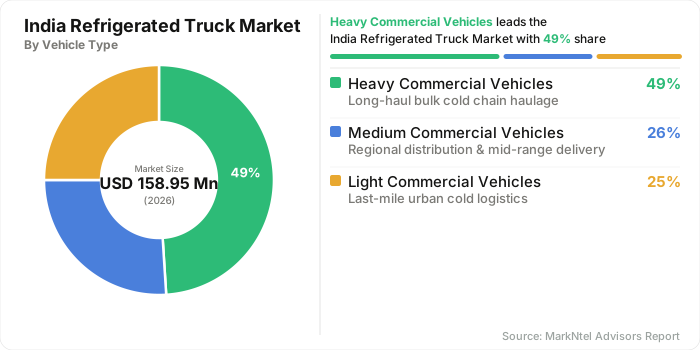
- Based on vehicle type, Heavy Commercial Vehicles (HCV) held the dominant position with nearly 49% market share in 2026, supported by rising long-distance transportation demand for frozen food, dairy products, seafood, and temperature-sensitive pharmaceutical products across interstate logistics networks.
- By end user, the Food & Beverages segment accounted for around 66% share in 2026 owing to increasing demand for temperature-controlled transportation for dairy products, frozen foods, fresh produce, meat products, and quick-service restaurant supply chains across India.
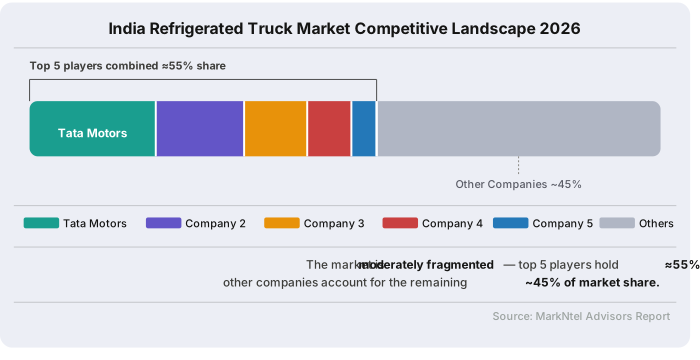
- The industry is moderately fragmented, with the top five leading players accounting for approximately 55% of the total market share.
India Refrigerated Truck Market Size and Outlook
The India Refrigerated Truck Market is expected to grow at a CAGR of approximately 6.04% during the forecast period (2026–2032), supported by the increasing adoption of cold-chain logistics across pharmaceuticals, dairy, processed food, and organized retail sectors.
According to India’s Ministry of Food Processing Industries, the country approved more than USD 3.6 billion in cold-chain and agro-processing infrastructure investments under the PM Kisan SAMPADA Yojana through 2025 , supporting the expansion of nationwide refrigerated transportation capabilities. Rising urbanization, changing food consumption patterns, and increasing demand for frozen and ready-to-eat products have further accelerated the deployment of refrigerated commercial vehicles across metropolitan and tier-2 cities. Additionally, India’s expanding exports of seafood, processed foods, vaccines, and pharmaceutical products continue to increase the requirement for reliable temperature-controlled transportation systems.
At the same time, government-led infrastructure modernization programs are improving freight efficiency and strengthening logistics connectivity across the country. Through initiatives such as the National Logistics Policy and the PM Gati Shakti National Master Plan, India accelerated multimodal freight integration and corridor development during 2025–2026 to reduce transportation inefficiencies and improve cold-chain accessibility. Supporting these initiatives, the Ministry of Road Transport and Highways reported national highway expansion beyond 146,000 kilometers in 2025, enabling faster interstate transportation of perishable goods . Simultaneously, stricter food safety and pharmaceutical transportation standards are encouraging logistics operators to modernize refrigerated fleets with advanced monitoring and temperature-control technologies.
The food and beverage industry remains the primary contributor to refrigerated transportation demand as dairy processors, frozen food manufacturers, seafood suppliers, and quick-service restaurant operators increasingly rely on temperature-controlled logistics to maintain product quality and supply-chain efficiency. Rapid growth in e-grocery platforms and quick-commerce delivery services during 2025 has further intensified refrigerated transportation requirements across urban consumption centers where delivery speed and freshness remain critical operational priorities. Pharmaceutical and healthcare applications are also emerging as important growth areas due to rising biologics manufacturing and vaccine transportation activities. According to the India Brand Equity Foundation, India’s food processing industry is projected to exceed USD 700 billion by 2030, creating long-term opportunities for refrigerated transportation and cold-chain fleet deployment.
To address evolving cold-chain requirements, industry players are expanding investments in localized manufacturing, fuel-efficient refrigeration technologies, and environmentally sustainable transportation platforms. In 2025, Carrier Transicold expanded its India-focused refrigeration solutions portfolio to improve transportation efficiency for food and pharmaceutical logistics applications. Commercial vehicle manufacturers are also investing in connected fleet technologies, alternative-fuel platforms, and next-generation refrigerated transport systems to address operational efficiency and sustainability objectives. Growing deployment of electric refrigerated vehicle pilots, integrated cold-storage hubs, and smart refrigerated transport systems is expected to support the long-term expansion of India’s refrigerated truck market.
India Refrigerated Truck Market Key Indicators
- According to the National Centre for Cold-chain Development (NCCD), India’s cold storage capacity exceeded 40 million metric tons in 2025, supporting growing demand for refrigerated transportation infrastructure across food and pharmaceutical supply chains.
- India produced more than 370 million metric tons of horticulture produce during 2024–25, according to the Ministry of Agriculture & Farmers Welfare. The large-scale production of fruits and vegetables is increasing demand for refrigerated trucks to minimize post-harvest losses and improve transportation efficiency across agricultural supply chains.
- Under the PM Gati Shakti National Master Plan, the Indian government continued investments in multimodal logistics and freight infrastructure projects worth more than USD 1.16 billion during 2025–2026 to improve logistics efficiency and integrated connectivity across key economic corridors.
- The Indian pharmaceutical industry continues expanding under the government’s Production Linked Incentive (PLI) schemes for pharmaceuticals and medical devices. According to the Ministry of Chemicals and Fertilizers, cumulative pharmaceutical sales under the PLI scheme exceeded approximately USD 853 million by September 2025, while exports surpassed nearly USD 664 million, supporting increased adoption of refrigerated transportation systems across pharmaceutical and vaccine distribution networks .
- India’s seafood exports reached approximately USD 7.45 billion during FY2024–25, according to the Marine Products Export Development Authority (MPEDA). Rising exports of frozen shrimp, fish, and other marine products are generating strong demand for temperature-controlled logistics and long-haul refrigerated truck transportation across port-connected supply chains
India Refrigerated Truck Market Scope
| Category | Segments |
|---|---|
| By Vehicle Type | Light Commercial Vehicles (LCV), Medium Commercial Vehicles (MCV), Heavy Commercial Vehicles (HCV |
| By Temperature Type | Chilled (0°C to +8°C), Frozen (Below 0°C), Multi-Temperature |
| By Capacity | Below 7 Tons, 7–12 Tons, 12–18 Tons, Above 18 Tons |
| By Propulsion Type | Diesel, Electric, Hybrid |
| By End User | Food & Beverages, Pharmaceuticals & Healthcare, Chemicals, Others |
India Refrigerated Truck Market Growth Drivers
Expansion of Organized Food Processing and Frozen Food Distribution Networks
The continued expansion of organized food manufacturing and distribution activities is contributing significantly to rising deployment of refrigerated transportation systems across India. Rising consumption of frozen foods, packaged dairy products, ready-to-eat meals, and processed meat products is substantially increasing the requirement for temperature-controlled goods transportation across urban and semi-urban regions. As food manufacturers, supermarket chains, and restaurant operators continue expanding regional distribution networks, refrigerated transportation has become essential for maintaining product quality, shelf life, and food safety compliance throughout the supply chain. Consequently, refrigerated fleet utilization is steadily increasing across both short-haul and long-distance food logistics operations nationwide.
Expanding investments in cold-chain connectivity and modern food processing infrastructure are significantly improving refrigerated logistics capabilities throughout India. Under the Production Linked Incentive Scheme for Food Processing Industry (PLISFPI), the country added approximately 34 lakh metric tonnes per annum of food processing and preservation capacity, significantly increasing the movement of temperature-sensitive products across domestic and export supply chains. Expansion of processing facilities for ready-to-cook foods, processed fruits and vegetables, marine products, and dairy products is creating higher demand for refrigerated transportation systems connecting production centers with warehouses, logistics parks, and retail distribution networks. This expansion is improving cold-chain efficiency while simultaneously supporting larger refrigerated cargo volumes throughout the country.
India’s growing processed food export ecosystem is also accelerating demand for long-haul refrigerated transportation services. According to the Agricultural and Processed Food Products Export Development Authority (APEDA), India’s processed food exports reached approximately USD 7.89 billion during 2024–25, supported by increasing international demand for processed vegetables, frozen food products, and ready-to-cook meals. Rising export volumes are encouraging greater deployment of heavy refrigerated commercial vehicles connecting production hubs with ports, cold-storage facilities, and multimodal logistics centers. With organized retail penetration, food delivery platforms, and cold-chain fleet solutions for food processing continuing to expand across India, demand for integrated refrigerated transportation infrastructure is expected to maintain sustained long-term growth.
Recent Trends
Adoption of Smart Refrigerated Fleet Monitoring Systems
Increasing emphasis on product quality, regulatory compliance, and supply-chain visibility is accelerating adoption of IoT-enabled cold-chain monitoring systems across India’s refrigerated transportation industry. Food processors, pharmaceutical distributors, dairy companies, and organized retail operators are increasingly integrating GPS tracking, real-time temperature monitoring, and cloud-based fleet analytics into refrigerated vehicles to reduce spoilage risks and improve operational transparency. Rising transportation volumes of temperature-sensitive products, coupled with stricter compliance requirements for food and pharmaceutical logistics, are steadily strengthening this transition toward digitally connected refrigerated transportation systems. As cold-chain distribution networks continue expanding across multiple regions, fleet operators are prioritizing technologies that improve cargo traceability, delivery reliability, and temperature consistency throughout transit operations.
This shift toward digitally integrated refrigerated logistics is gradually transforming transportation, warehousing, and distribution practices across India’s cold-chain ecosystem. In 2026, GMR Aero Cargo & Logistics launched India’s first airside reefer truck at Hyderabad Airport to maintain uninterrupted cold-chain integrity for pharmaceuticals, seafood, dairy products, and perishables during airport cargo transfers . Building on this momentum, in 2025, Carrier Transicold introduced intelligent refrigeration solutions equipped with advanced controllers, remote monitoring capabilities, and digital data recording systems to improve temperature visibility and operational efficiency across refrigerated transportation networks . These developments collectively highlight the industry’s growing focus on technologically advanced and digitally monitored cold-chain operations.
The trend is expected to strengthen further as cold-chain modernization and digital logistics integration continue expanding across India’s food, pharmaceutical, and retail supply chains. Rapid growth in e-grocery platforms, quick-commerce delivery networks, and export-oriented food logistics is increasing the requirement for real-time reefer temperature monitoring across both urban and interstate transportation corridors. In response, commercial fleet operators are investing in telematics, cloud-connected refrigeration systems, and AI-enabled monitoring platforms to improve asset utilization and reduce transportation losses. As organized cold-chain infrastructure continues evolving nationwide, digitally monitored refrigerated transportation systems are expected to become a standard operational requirement across India’s temperature-sensitive logistics industry.
India Refrigerated Truck Market Opportunities and Challenges
Increasing Fuel and Fleet Operating Costs Driving Demand for Energy-Efficient Refrigerated Transportation Technologies
Increasing fuel prices, refrigeration energy consumption, and fleet maintenance expenses continue to remain major operational challenges for refrigerated transportation operators across India. Refrigerated trucks require additional fuel to power cooling systems during long-haul transportation, particularly in high-temperature climatic conditions where continuous temperature regulation is essential for maintaining food and pharmaceutical product quality. Rising diesel costs and higher servicing requirements for refrigeration units are therefore placing significant pressure on fleet profitability, especially for small and mid-sized logistics operators. As organized food distribution, pharmaceutical logistics, and export-oriented cold-chain networks continue expanding nationwide, transportation companies are increasingly seeking solutions capable of reducing operational expenses while maintaining delivery reliability.
As transportation costs continue rising, logistics operators are increasingly prioritizing energy-efficient refrigeration technologies to improve fleet profitability and operational efficiency. Fleet operators are investing in lightweight insulated truck bodies, energy-efficient transport refrigeration units, telematics-enabled fleet optimization platforms, and low-emission refrigerated vehicles to reduce fuel consumption and long-term operating costs. Strengthening this transition, in 2025, Carrier Transicold launched the Pulsor eCool system in India, an all-electric refrigeration solution for light commercial refrigerated vehicles designed to reduce fuel dependency, emissions, and operating costs across urban cold-chain transportation networks. As refrigerated logistics networks continue modernizing across food, pharmaceutical, and retail supply chains, adoption of fuel-efficient refrigeration systems is expected to become a key competitive strategy for fleet operators.
Segmentation Insights
Heavy Commercial Vehicles (HCV) Hold the Dominant Position within Vehicle Type Segment Supported by Expanding Interstate Cold-Chain Transportation Requirements
Dominance within the vehicle type segment remains concentrated in Heavy Commercial Vehicles, which contribute nearly 49% of the India refrigerated truck industry. The segment’s leading position is primarily supported by rising interstate transportation requirements for frozen foods, seafood products, dairy products, pharmaceuticals, vaccines, and processed agricultural commodities requiring long-distance temperature-controlled logistics operations. HCV refrigerated trucks are extensively utilized across major logistics corridors connecting food processing facilities, ports, cold-storage warehouses, manufacturing hubs, and retail distribution centers across India. Their higher payload capacity and operational suitability for long-haul transportation continue to strengthen deployment across bulk refrigerated cargo movement nationwide.
The increasing development of dedicated freight corridors, national highway modernization projects, and integrated logistics parks is further accelerating adoption of heavy refrigerated commercial vehicles across the country. Large fleet operators are increasingly utilizing reefer trucks equipped with multi-temperature storage capabilities, GPS-enabled fleet tracking systems, and energy-efficient refrigeration units to improve transportation efficiency and cargo management. In addition, expanding seafood exports and pharmaceutical transportation requirements are strengthening utilization of long-haul refrigerated trucks connecting manufacturing clusters with ports, airports, cold-storage hubs, and regional distribution centers. Based on vehicle type, the market has been segmented into:
- Light Commercial Vehicles (LCV)
- Medium Commercial Vehicles (MCV)
- Heavy Commercial Vehicles (HCV)
Food & Beverages Segment Dominates the End User Category Driven by Expanding Frozen Food Consumption and Dairy Logistics Requirements
Food & Beverages contributes approximately 66% share of the total market revenue, making it the dominant end-user segment within the refrigerated truck market across India. Rising consumption of frozen foods, dairy products, seafood, beverages, processed meat, and fresh produce across India’s urbanizing population is significantly increasing refrigerated transportation demand. Expansion of organized retail chains, food delivery platforms, supermarkets, and quick-commerce services is further strengthening utilization of refrigerated transportation fleets across both urban and regional supply chains. Consequently, food distribution networks continue generating substantial demand for temperature-controlled transportation nationwide.
India’s dairy industry remains one of the largest contributors supporting refrigerated transportation demand within the segment. Dairy cooperatives and private food manufacturers are increasingly deploying temperature-controlled transportation systems to maintain freshness and comply with food safety standards during interstate distribution. Alongside this, according to Invest India, rapid expansion of India’s online grocery and digital retail ecosystem is accelerating deployment of refrigerated commercial vehicles supporting urban cold-chain and last-mile food distribution operations. Simultaneously, expansion of frozen food manufacturing and export-oriented food processing activities continues strengthening refrigerated truck utilization across India. Based on end user, the market is categorized into:
- Food & Beverages
- Pharmaceuticals & Healthcare
- Chemicals
- Others
India Refrigerated Truck Market Geographical Outlook
Strong agricultural production, growing cold-chain infrastructure, and rising pharmaceutical logistics activities have positioned North India as the leading regional market, accounting for nearly 30.23% share of the India refrigerated truck industry. States including Delhi NCR, Punjab, Haryana, Uttar Pradesh, and Rajasthan continue witnessing expansion of cold-chain and food logistics infrastructure supported by government-backed modernization initiatives. The Ministry of Food Processing Industries approved 399 cold-chain projects and 41 Mega Food Parks under PMKSY, strengthening cold storage capacity, food processing infrastructure, and refrigerated transportation networks across major agricultural states including Uttar Pradesh, Haryana, and Punjab . Rising distribution of fruits, vegetables, dairy products, pharmaceuticals, and processed foods is therefore continuously increasing demand for refrigerated transportation operations throughout North India.
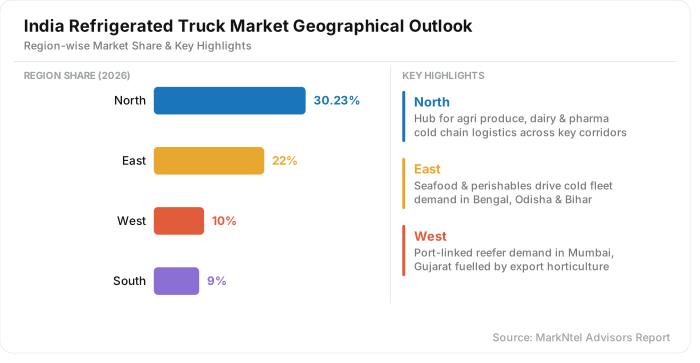
The region’s dominance is further supported by rapid logistics infrastructure development and expanding pharmaceutical transportation requirements across major manufacturing hubs. The Dadri–Jewar logistics corridor in Uttar Pradesh is being developed as a major multimodal freight and warehousing hub with integrated cold storage facilities, benefiting interstate refrigerated transportation networks across Delhi NCR, Haryana, Rajasthan, and western Uttar Pradesh . Simultaneously, pharmaceutical companies in Himachal Pradesh and Uttar Pradesh increasingly rely on refrigerated transportation systems for temperature-sensitive medicines, vaccines, biologics, and specialty healthcare products distributed across domestic and export supply chains. Expansion of organized retail chains, e-commerce grocery operations, and food delivery platforms across Delhi NCR and surrounding metropolitan regions is also accelerating the deployment of refrigerated commercial vehicles across the region.
India Refrigerated Truck Market Competitive Analysis
The refrigerated truck industry across India remains moderately fragmented, with a combination of commercial vehicle manufacturers, refrigeration system providers, reefer body fabricators, and cold-chain solution companies operating across the industry. Leading players such as Tata Motors, Ashok Leyland, Mahindra Truck and Bus, VE Commercial Vehicles, and BharatBenz collectively account for nearly 55% share of the organized market, supported by strong manufacturing capabilities, extensive service networks, and growing refrigerated transportation portfolios.
Key Players of Refrigerated Truck in India
- Tata Motors
- Ashok Leyland
- Mahindra Truck and Bus
- VE Commercial Vehicles
- BharatBenz
- Carrier Transicold
- Thermo King
- Blue Star
- Rinac India
- Crystal Group
- Others
India Refrigerated Truck Industry News and Recent Developments
December 2025: Reema Transport Expands Pharmaceutical Cold-Chain Fleet with Advanced Reefer Trucks
Reema Transport Pvt. Ltd. expanded its refrigerated transportation fleet with reefer trucks equipped with FMS-enabled monitoring systems to strengthen temperature-controlled pharmaceutical logistics operations across major transportation corridors in India. The deployment focuses on improving real-time fleet visibility, cargo monitoring, and temperature compliance for pharmaceutical and healthcare product distribution.
Impact Analysis: This development highlights the growing integration of digitally connected refrigerated transportation systems within India’s pharmaceutical cold-chain ecosystem. It is expected to accelerate adoption of smart fleet monitoring technologies, strengthen temperature-sensitive healthcare logistics infrastructure, and increase demand for technologically advanced refrigerated commercial vehicles across pharmaceutical distribution networks.
October 2025: Celcius Logistics and Switch Mobility Launch Large-Scale Electric Reefer Truck Initiative in India
Celcius Logistics partnered with Switch Mobility to deploy 350 electric refrigerated trucks across India aimed at strengthening sustainable and digitally connected cold-chain transportation infrastructure. The initiative focuses on supporting transportation of dairy products, frozen foods, seafood, pharmaceuticals, fruits, and vegetables through low-emission refrigerated logistics solutions integrated with digital fleet management systems.
Impact Analysis: This development reflects the growing transition toward electric and energy-efficient refrigerated transportation technologies across India’s cold-chain industry. It is expected to accelerate adoption of EV reefer fleets, support sustainable cold-chain modernization, and encourage further investments in charging infrastructure, smart fleet management systems, and low-emission refrigerated logistics operations nationwide.
- Market Segmentation
- Introduction
- Product Definition
- Research Process
- Assumptions
- Executive Summary
- India Refrigerated Truck Market Policies, Regulations, and Product Standards
- India Refrigerated Truck Market Trends & Developments
- India Refrigerated Truck Market Dynamics
- Growth Factors
- Challenges
- India Refrigerated Truck Market Hotspot & Opportunities
- India Refrigerated Truck Market Outlook, 2022-2032F
- Market Size & Outlook
- By Revenues (USD Million)
- Market Share & Outlook
- By Vehicle Type- Market Size & Forecast 2022-2032, USD Million
- Light Commercial Vehicles (LCV)
- Medium Commercial Vehicles (MCV)
- Heavy Commercial Vehicles (HCV)
- By Temperature Type- Market Size & Forecast 2022-2032, USD Million
- Chilled (0°C to +8°C)
- Frozen (Below 0°C)
- Multi-Temperature
- By Capacity- Market Size & Forecast 2022-2032, USD Million
- Below 7 Tons
- 7–12 Tons
- 12–18 Tons
- Above 18 Tons
- By Propulsion Type- Market Size & Forecast 2022-2032, USD Million
- Diesel
- Electric
- Hybrid
- By End User- Market Size & Forecast 2022-2032, USD Million
- Food & Beverages
- Pharmaceuticals & Healthcare
- Chemicals
- Others
- By Region- Market Size & Forecast 2022-2032, USD Million
- North India
- East India
- West India
- South India
- By Company
- Competition Characteristics
- Market Share & Analysis
- By Vehicle Type- Market Size & Forecast 2022-2032, USD Million
- Market Size & Outlook
- India Light Commercial Vehicles (LCV) Market Outlook, 2022-2032
- Market Size & Outlook
- By Revenues (USD Million)
- Market Share & Outlook
- By Temperature Type- Market Size & Forecast 2022-2032, USD Million
- By Capacity- Market Size & Forecast 2022-2032, USD Million
- By Propulsion Type- Market Size & Forecast 2022-2032, USD Million
- By End User- Market Size & Forecast 2022-2032, USD Million
- By Region- Market Size & Forecast 2022-2032, USD Million
- Market Size & Outlook
- India Medium Commercial Vehicles (MCV) Market Outlook, 2022-2032
- Market Size & Outlook
- By Revenues (USD Million)
- Market Share & Outlook
- By Temperature Type- Market Size & Forecast 2022-2032, USD Million
- By Capacity- Market Size & Forecast 2022-2032, USD Million
- By Propulsion Type- Market Size & Forecast 2022-2032, USD Million
- By End User- Market Size & Forecast 2022-2032, USD Million
- By Region- Market Size & Forecast 2022-2032, USD Million
- Market Size & Outlook
- India Heavy Commercial Vehicles (HCV) Market Outlook, 2022-2032
- Market Size & Outlook
- By Revenues (USD Million)
- Market Share & Outlook
- By Temperature Type- Market Size & Forecast 2022-2032, USD Million
- By Capacity- Market Size & Forecast 2022-2032, USD Million
- By Propulsion Type- Market Size & Forecast 2022-2032, USD Million
- By End User- Market Size & Forecast 2022-2032, USD Million
- By Region- Market Size & Forecast 2022-2032, USD Million
- Market Size & Outlook
- India Refrigerated Truck Market Key Strategic Imperatives for Success & Growth
- Competitive Outlook
- Company Profiles
- Tata Motors
- Business Description
- Product Portfolio
- Collaborations & Alliances
- Recent Developments
- Financial Details
- Others
- Ashok Leyland
- Business Description
- Product Portfolio
- Collaborations & Alliances
- Recent Developments
- Financial Details
- Others
- Mahindra Truck and Bus
- Business Description
- Product Portfolio
- Collaborations & Alliances
- Recent Developments
- Financial Details
- Others
- VE Commercial Vehicles
- Business Description
- Product Portfolio
- Collaborations & Alliances
- Recent Developments
- Financial Details
- Others
- BharatBenz
- Business Description
- Product Portfolio
- Collaborations & Alliances
- Recent Developments
- Financial Details
- Others
- Carrier Transicold
- Business Description
- Product Portfolio
- Collaborations & Alliances
- Recent Developments
- Financial Details
- Others
- Thermo King
- Business Description
- Product Portfolio
- Collaborations & Alliances
- Recent Developments
- Financial Details
- Others
- Blue Star
- Business Description
- Product Portfolio
- Collaborations & Alliances
- Recent Developments
- Financial Details
- Others
- Rinac India
- Business Description
- Product Portfolio
- Collaborations & Alliances
- Recent Developments
- Financial Details
- Others
- Crystal Group
- Business Description
- Product Portfolio
- Collaborations & Alliances
- Recent Developments
- Financial Details
- Others
- Tata Motors
- Company Profiles
- Disclaimer

MarkNtel Advisors follows a robust and iterative research methodology designed to ensure maximum accuracy and minimize deviation in market estimates and forecasts. Our approach combines both bottom-up and top-down techniques to effectively segment and quantify various aspects of the market. A consistent feature across all our research reports is data triangulation, which examines the market from three distinct perspectives to validate findings. Key components of our research process include:
1. Scope & Research Design At the outset, MarkNtel Advisors define the research objectives and formulate pertinent questions. This phase involves determining the type of research—qualitative or quantitative—and designing a methodology that outlines data collection methods, target demographics, and analytical tools. They also establish timelines and budgets to ensure the research aligns with client goals.
2. Sample Selection and Data Collection In this stage, the firm identifies the target audience and determines the appropriate sample size to ensure representativeness. They employ various sampling methods, such as random or stratified sampling, based on the research objectives. Data collection is carried out using tools like surveys, interviews, and observations, ensuring the gathered data is reliable and relevant.
3. Data Analysis and Validation Once data is collected, MarkNtel Advisors undertake a rigorous analysis process. This includes cleaning the data to remove inconsistencies, employing statistical software for quantitative analysis, and thematic analysis for qualitative data. Validation steps are taken to ensure the accuracy and reliability of the findings, minimizing biases and errors.

4. Data Forecast and FinalizationThe final phase involves forecasting future market trends based on the analyzed data. MarkNtel Advisors utilize predictive modeling and time series analysis to anticipate market behaviors. The insights are then compiled into comprehensive reports, featuring visual aids like charts and graphs, and include strategic recommendations to inform client decision-making
We’d love to understand what matters most to you.