

By Product Type (Coffee Premix (Cappuccino Premix, Latte Premix, Mocha Premix, Plain Coffee Premix, Low-Sugar / Sugar-Free Coffee Premix), Tea Premix (Masala Tea Premix, Cardamom (Elaichi) Tea Premix,... ... Elaichi) Tea Premix, Ginger Tea Premix, Lemon Tea Premix, Plain Tea Premix), Milk-Based Premix (Badam Milk Premix, Chocolate Milk Premix, Flavored Milk Premix), Others (Instant Soup Premix, Functional / Health Beverage Premix (Herbal, Protein-based, etc.))), By Distribution Channel (Institutional / B2B (Corporate Offices, IT Parks & Co-working Spaces, Manufacturing Units / Factories, Government Offices), HoReCa (Hotels, Restaurants, Cafés, Catering Services), Retail (Supermarkets / Hypermarkets, Convenience Stores / Kirana Stores, E-commerce Platforms), Quick Commerce (10–30 min delivery platforms)), By Packaging Format (Bulk Packs (Vending Machine Packs), Single-Serve Sachets / Stick Packs, Jars / Tins), and others Read more
- Food & Beverages
- Apr 2026
- 150
- PDF, Excel, PPT
India Hot Beverage Premix Market Key Takeaways
- The India Hot Beverage Premix Market stood at around USD 207 million in 2025 and is anticipated to expand from USD 235 million in 2026 to USD 351 million by 2032, reflecting a CAGR of 6.92% over the forecast period.
- In 2026, South India emerged as the leading region with nearly 33.73% share, supported by robust consumption patterns and institutional demand, while North India’s Institutional / B2B segment held around 42% share. The western region is projected to be fastest growing at a CAGR of 13%, with Delhi NCR at approximately 15% CAGR.
- By distribution channel, Institutional / B2B dominated with nearly 62% share in 2026, with corporate offices contributing about 65% within the segment and growing at a CAGR of 12%.
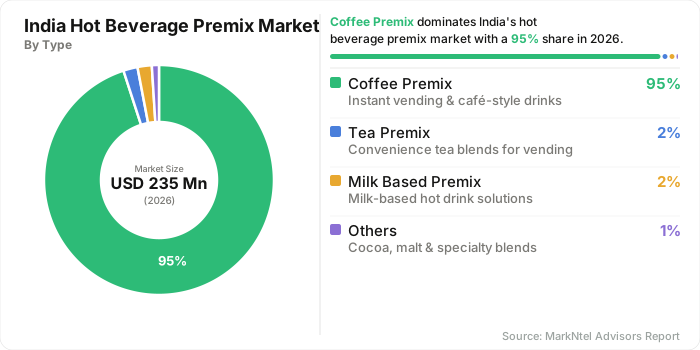
- By type, Coffee Premix held the largest share of around 95% in 2026 and is projected to grow at a CAGR of 13.19%, driven by strong institutional demand.
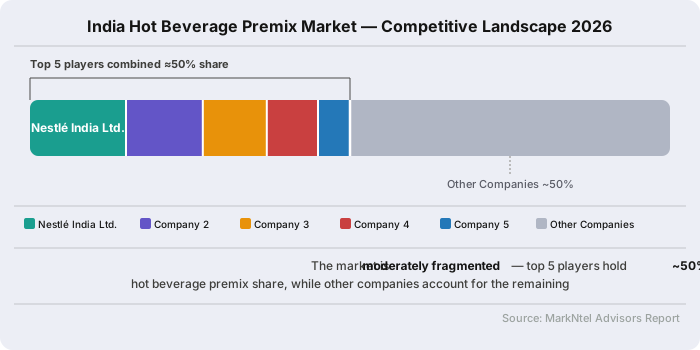
- The industry is moderately fragmented, with the top five leading players accounting for approximately 50% of the total market share.
India Hot Beverage Premix Market Size and Outlook
At a CAGR of approximately 6.92% over 2026–2032, the India hot beverage premix market is expected to rise from USD 235 million in 2026 to USD 351 million by 2032, following a valuation of USD 207 million in 2025.
India’s hot beverage premix market is increasingly influenced by the growth of structured workplaces and a gradual transition toward convenient, ready-to-consume beverage formats. Data from the Ministry of Statistics and Programme Implementation shows that manufacturing recorded double-digit growth and services-related sectors expanded by over 10% in FY 2025–26, indicating stronger workplace-linked economic activity. This shift has contributed to rising demand for convenient beverage solutions across offices and industrial environments. At the same time, insights from the India Brand Equity Foundation highlight increasing coffee consumption, reflecting a gradual move beyond traditional tea preferences.
As organized employment continues to expand, institutional demand remains central to market growth. Corporate offices and industrial units generate consistent consumption due to routine beverage usage, reinforcing the role of workplace environments in overall demand. Supporting this trend, updates from the Press Information Bureau indicate ongoing expansion in employment and industrial activity during 2025–2026. This environment supports vending machine deployment and recurring premix consumption. In line with this, BuyBuyCart announced plans to deploy 300–400 smart vending machines across offices, campuses, and hospitals in 2026, highlighting the growing adoption of automated retail in high-footfall locations .
Simultaneously, improvements in logistics and regulatory frameworks are enhancing market efficiency and scalability. Initiatives under the PM Gati Shakti National Master Plan have strengthened multimodal connectivity, enabling more efficient distribution across regions . In parallel, the Food Safety and Standards Authority of India continues to enforce food safety standards, ensuring product consistency and building confidence among institutional buyers. These developments collectively support smoother operations and wider market penetration.
In response to these favorable conditions, industry participants are focusing on product innovation and operational efficiency. Advancements in automated dispensing technologies and improvements in product formulations are supporting broader adoption across workplaces and hospitality settings. As urbanization accelerates and infrastructure continues to improve, demand is expected to remain stable and gradually expand. Overall, the market outlook remains positive, supported by sustained institutional consumption, improving supply chain capabilities, and evolving consumer preferences toward convenient beverage solutions.
India Hot Beverage Premix Market Key Indicators
- According to the Coffee Board of India under the Ministry of Commerce and Industry, domestic coffee consumption in India increased from 84,000 tonnes in 2012 to 91,000 tonnes in 2023, driven by rising café culture and evolving consumer preferences. This growing adoption of coffee is supporting demand for instant coffee premix formats, particularly across vending machines and institutional consumption settings .
- In 2025, India’s services sector reached a 15-year high with a PMI of 62.9, driven by strong domestic demand and new business growth. As service-oriented industries continue to expand, office-based employment and workplace activity are also increasing, which is gradually driving demand for convenient beverage solutions, particularly across the vending machine drinks market in India.
- According to the Ministry of Tourism and related industry data, India’s tourism and hospitality sector continues to show strong recovery and growth, with premium hotel occupancy projected at around 72–74% in FY2026, supported by rising domestic and international travel. As travel activity increases, higher hotel occupancy and food service operations are driving demand for beverage premix solutions across hotels, restaurants, and catering services, thereby strengthening HoReCa beverage premix demand and supporting overall market growth.
India Hot Beverage Premix Market Scope
| Category | Segments |
|---|---|
| By Product Type | Fruit Juice (Fresh Juice, Fortified Juice, Fruit Nectars (High Concentration (40%–50% fruit content), Medium Concentration (30%–39% fruit content), Low Concentration (25%–29% fruit content))), Vegetable Juice, Fruit and Vegetable Blends |
| By Source | Not from Concentrate (NFC), From Concentrate (FC |
| By Packaging | Cartons (Tetra Pak) (Single-Serve Packs, Family Packs), PET Bottles (Small-Size Bottles, Large-Size Bottles), Glass Bottles, Cans, Others |
| By Distribution Channel | Off-Trade (Retail) (Supermarkets & Hypermarkets, Convenience Stores, Traditional Grocery), On-Trade (HoReCa) (Hotels, Restaurants & Cafes), Online Retail |
| By End User | Household, Hotels, Restaurants, and Cafes (HoReCa), Institutional, Industrial |
India Hot Beverage Premix Market Growth Drivers
Rising Demand for Convenience-Based Consumption
The rise in convenience-focused consumption, alongside expanding urban lifestyles and shifting work dynamics, is significantly influencing the growth of India’s hot beverage premix market. As daily routines become more time-constrained, particularly in urban centers, consumers are increasingly opting for quick and easy beverage options. According to the World Bank, Indian cities are expected to generate around 70% of new jobs by 2030, reflecting accelerating urban expansion. This shift is gradually reinforcing demand for faster and more efficient consumption habits, especially within workplace environments.
This shift is strongly reflected across institutional and urban consumers, where convenience increasingly guides purchasing choices. According to the Press Information Bureau, India’s services sector is projected to grow by 9.1% in FY 2025–26, contributing to higher employment and increased workplace density. As more individuals engage in structured work settings, the frequency of on-site beverage consumption rises. This, in turn, supports demand for vending machine beverage premix formats that offer speed, consistency, and ease of preparation.
At the same time, this shift extends beyond workplaces and is becoming embedded in broader consumer behavior. The expansion of digital infrastructure and widespread adoption of the Unified Payments Interface have enabled faster and more seamless purchases of instant products. As accessibility improves and consumption becomes more frequent, convenience-driven demand is directly contributing to higher product volumes. Consequently, the transition toward ready-to-consume beverage formats is sustaining long-term market growth and strengthening overall demand expansion.
Recent Trends
Premiumization of Beverage Offerings
Premiumization is becoming a defining shift in the India beverage premix market, with consumers gradually moving from basic, utility-driven consumption toward more experience-oriented and higher-quality beverage options. As urban lifestyles evolve and exposure to café-style formats increases, expectations around taste, variety, and overall experience are also rising. According to the India Brand Equity Foundation, processed food and beverages account for approximately 11.09% of urban and 9.84% of rural food expenditure, reflecting a steady shift toward value-added consumption. This transition is reinforcing demand for premium and differentiated beverage formats.
As this shift continues to gain momentum, its impact is becoming increasingly visible across the value chain, prompting manufacturers to enhance product quality and expand premium offerings. Companies are introducing café-style variants such as cappuccino, latte, and flavored beverages while improving formulation standards and ingredient quality. This evolution is further supported by recent product innovations, such as the launch of gourmet flavored coffee sachets by Impulse Coffees, designed to deliver enhanced taste through freeze-dried formulations in convenient formats . In parallel, Nestlé India is strengthening its focus on premiumization through portfolio expansion and higher-value product positioning within its beverage segment .
As consumer expectations evolve, the preference for quality, indulgence, and experience-led offerings is expected to sustain this trend over the long term. The expansion of organized foodservice formats, including cafés and quick-service restaurants, is further reinforcing demand for standardized and high-quality beverage offerings. As these consumption patterns become more deeply embedded, premiumization will continue to influence product innovation, pricing strategies, and competitive differentiation. Consequently, it is likely to remain a long-term structural trend shaping the evolution of the India beverage premix market.
India Hot Beverage Premix Market Opportunities and Challenges
Strong Preference for Freshly Prepared Beverages Driving Demand for Authentic & Fresh-Like Premix Formulations
A strong consumer preference for freshly prepared tea and coffee continues to act as a key challenge for the adoption of hot beverage premixes in India. Traditional consumption habits remain deeply embedded, with a large share of the population relying on freshly brewed beverages prepared at home or through local vendors. According to the Tea Board of India and related industry sources, India is among the largest tea-consuming nations globally, with nearly 80% of its tea production consumed domestically and a significant share still dominated by loose tea formats . This widespread reliance on loose tea reflects the continued preference for freshly brewed beverages across households and local consumption settings.
However, this challenge is simultaneously creating a strong opportunity for manufacturers to develop more authentic, fresh-like premix formulations that closely replicate traditional beverage profiles. Companies are increasingly focusing on region-specific variants such as masala chai and cardamom tea, along with improved processing techniques to enhance aroma and taste consistency. This shift is evident in recent product developments, such as the introduction of masala chai premix sachets by Hindustan Unilever under its Brooke Bond Red Label portfolio, aimed at delivering traditional chai taste in convenient formats . As convenience demand continues to rise across workplaces and urban households, bridging the gap between freshness and instant preparation is becoming a key competitive factor, supporting wider adoption across both institutional and retail segments.
Segmentation Insights
Coffee Premix is the Widely Used Product Type
The dominance of coffee premix in the India hot drink premix market is evident, with nearly 95% share and a projected CAGR of 13.19%, supported by its extensive adoption in vending systems and institutional consumption environments. Coffee premix is widely used across offices, factories, hospitals, and educational institutions where quick preparation and consistent taste are essential. According to the Coffee Board of India, domestic coffee consumption has been steadily rising, supported by urbanization and expanding café culture. This growing familiarity is directly contributing to higher adoption of instant coffee premix India across diverse end-user segments.
In addition, coffee premix offers strong compatibility with vending machines, enabling standardized dispensing and operational efficiency at scale. The increasing preference for café-style beverages such as cappuccino, latte, and mocha is further strengthening demand across both institutional and retail channels. This leadership position is reinforced by ongoing premiumization within the coffee segment. For instance, CCL Products has introduced premium freeze-dried variants under its Percol brand to expand into higher-value offerings. Such developments continue to strengthen the segment’s competitive edge over tea and milk-based premix alternatives. Based on type, the study is segmented into:
- Coffee Premix
- Tea Premix
- Milk-Based Premix
- Others
Institutional / B2B Represents the Leading Distribution Channel Category
The Institutional / B2B segment dominates the India Hot Beverage Premix industry, accounting for approximately 62% of total demand, with corporate offices emerging as the leading subsegment contributing nearly 65% share and projected to grow at a CAGR of 12%. This dominance is primarily driven by the widespread deployment of vending machines and centralized beverage systems across offices, factories, hospitals, and educational institutions. Among these, corporate offices generate consistent and high-frequency consumption due to structured work environments and regular beverage breaks, making them the largest contributors within the institutional segment. The need for quick preparation, standardized taste, and minimal operational effort further reinforces the adoption of premix solutions in these settings.
In addition, the expansion of India’s corporate and service-driven economy continues to strengthen institutional consumption patterns. According to the Ministry of Commerce and Industry, India’s IT and business services exports crossed USD 325 billion in FY2024–25, reflecting significant growth in office-based activities. This expansion is directly associated with increasing workplace density and daily operational consumption, thereby driving demand for vending-based beverage solutions. Furthermore, bulk procurement advantages, cost efficiency, and ease of inventory management make premix products highly suitable for institutional buyers, ensuring that the Institutional / B2B channel continues to maintain its leading position in the hot beverage mix industry in India. Based on distribution channel, the market is categorized into:
- Institutional / B2B
- HoReCa
- Retail
- Quick Commerce
India Hot Beverage Premix Market Geographical Outlook
Accounting for approximately 33.73% share, South India represents the largest regional market within the India beverage premix industry. This leadership is supported by the region’s strong coffee consumption culture and well-established institutional ecosystem across states such as Karnataka, Tamil Nadu, and Telangana. Key cities including Bengaluru, Chennai, and Hyderabad have emerged as major corporate and IT hubs, creating a concentrated base of office-going consumers. This is further reinforced by recent developments, where Bengaluru and Hyderabad together accounted for nearly 50% of total tech office leasing in H1 2025, reflecting the scale of workplace expansion . As a result, the presence of a large working population and structured office environments continues to drive consistent demand for vending-based beverage solutions, strengthening the region’s dominance.
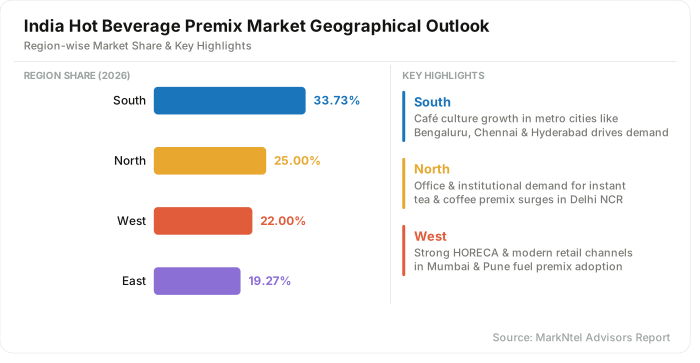
South India’s access to major coffee-producing zones ensures reliable product availability and supports sustained consumption patterns. According to the Coffee Board of India, a significant share of India’s coffee production originates from southern states, further reinforcing regional demand patterns. Beyond this, North India is gaining traction, particularly in the Institutional / B2B segment, which accounts for nearly 42% share due to expanding corporate infrastructure. Meanwhile, the western region is expected to be the fastest growing at a CAGR of around 13%, supported by rapid urbanization, while Delhi NCR is projected to grow at approximately 15% CAGR, driven by rising office density and increasing adoption of convenience beverage solution in India.
India Hot Beverage Premix Market Competitive Analysis
The Hot Beverage Premix Industry in India remains moderately fragmented, with approximately 80–120 manufacturers operating across institutional and retail segments. Leading players such as Nestlé India, Hindustan Unilever Limited, Tata Consumer Products, CCL Products (India) Limited, and Gemini Coffee Vending India Pvt. Ltd. collectively account for 50% of total market share, supported by strong distribution capabilities and established brand presence.
Beverage Premix Manufacturers in India
- Nestlé India
- Hindustan Unilever Limited
- Tata Consumer Products
- CCL Products (India) Limited
- Vending Updates India Pvt. Ltd.
- SLN Coffee Pvt. Ltd.
- Neel Beverages Pvt. Ltd.
- Gemini Coffee Vending India Pvt. Ltd.
- Radiant Consumer Appliances Pvt. Ltd.
- Kartin
- Others
India Hot Beverage Premix Industry News and Recent Developments
February 2025: Nitin’s Premix Showcases Expanded Beverage Portfolio at Indusfood Manufacturing
Nitin’s Premix presented its expanded instant beverage premix portfolio at Indusfood Manufacturing 2025, targeting B2B customers such as cafés, restaurants, and foodservice providers. The company highlighted product innovation and customization capabilities tailored for institutional buyers and commercial establishments.
Impact Analysis: This development underscores the growing importance of the Institutional / B2B segment in India’s beverage premix market. It is expected to strengthen demand for customized premix solutions, enhance competition among domestic manufacturers, and support the expansion of vending-based and bulk consumption channels.
- Market Segmentation
- Introduction
- Product Definition
- Research Process
- Assumptions
- Executive Summary
- India Hot Beverage Premix Market Policies, Regulations, and Product Standards
- India Hot Beverage Premix Market Trends & Developments
- India Hot Beverage Premix Market Dynamics
- Growth Factors
- Challenges
- India Hot Beverage Premix Market Hotspot & Opportunities
- India Hot Beverage Premix Market Outlook, 2022-2032F
- Market Size & Outlook
- By Revenues (USD Million)
- Market Share & Outlook
- By Product Type- Market Size & Forecast 2022-2032, USD Million
- Coffee Premix
- Cappuccino Premix
- Latte Premix
- Mocha Premix
- Plain Coffee Premix
- Low-Sugar / Sugar-Free Coffee Premix
- Tea Premix
- Masala Tea Premix
- Cardamom (Elaichi) Tea Premix
- Ginger Tea Premix
- Lemon Tea Premix
- Plain Tea Premix
- Milk-Based Premix
- Badam Milk Premix
- Chocolate Milk Premix
- Flavored Milk Premix
- Others
- Instant Soup Premix
- Functional / Health Beverage Premix (Herbal, Protein-based, etc.)
- Coffee Premix
- By Distribution Channel- Market Size & Forecast 2022-2032, USD Million
- Institutional / B2B
- Corporate Offices
- IT Parks & Co-working Spaces
- Manufacturing Units / Factories
- Government Offices
- HoReCa
- Hotels
- Restaurants
- Cafés
- Catering Services
- Retail
- Supermarkets / Hypermarkets
- Convenience Stores / Kirana Stores
- E-commerce Platforms
- Quick Commerce (10–30 min delivery platforms)
- Institutional / B2B
- By Packaging Format- Market Size & Forecast 2022-2032, USD Million
- Bulk Packs (Vending Machine Packs)
- Single-Serve Sachets / Stick Packs
- Jars / Tins
- By Region- Market Size & Forecast 2022-2032, USD Million
- North India
- East India
- West India
- South India
- By Company
- Competition Characteristics
- Market Share & Analysis
- By Product Type- Market Size & Forecast 2022-2032, USD Million
- Market Size & Outlook
- India Coffee Premix Market Outlook, 2022-2032
- Market Size & Outlook
- By Revenues (USD Million)
- Market Share & Outlook
- By Distribution Channel- Market Size & Forecast 2022-2032, USD Million
- By Packaging Format- Market Size & Forecast 2022-2032, USD Million
- By Region- Market Size & Forecast 2022-2032, USD Million
- Market Size & Outlook
- India Tea Premix Market Outlook, 2022-2032
- Market Size & Outlook
- By Revenues (USD Million)
- Market Share & Outlook
- By Distribution Channel- Market Size & Forecast 2022-2032, USD Million
- By Packaging Format- Market Size & Forecast 2022-2032, USD Million
- By Region- Market Size & Forecast 2022-2032, USD Million
- Market Size & Outlook
- India Milk-Based Premix Market Outlook, 2022-2032
- Market Size & Outlook
- By Revenues (USD Million)
- Market Share & Outlook
- By Distribution Channel- Market Size & Forecast 2022-2032, USD Million
- By Packaging Format- Market Size & Forecast 2022-2032, USD Million
- By Region- Market Size & Forecast 2022-2032, USD Million
- Market Size & Outlook
- India Hot Beverage Premix Market Key Strategic Imperatives for Success & Growth
- Competitive Outlook
- Company Profiles
- Nestlé India
- Business Description
- Product Portfolio
- Collaborations & Alliances
- Recent Developments
- Financial Details
- Others
- Hindustan Unilever Limited
- Business Description
- Product Portfolio
- Collaborations & Alliances
- Recent Developments
- Financial Details
- Others
- Tata Consumer Products
- Business Description
- Product Portfolio
- Collaborations & Alliances
- Recent Developments
- Financial Details
- Others
- CCL Products (India) Limited
- Business Description
- Product Portfolio
- Collaborations & Alliances
- Recent Developments
- Financial Details
- Others
- Vending Updates India Pvt. Ltd.
- Business Description
- Product Portfolio
- Collaborations & Alliances
- Recent Developments
- Financial Details
- Others
- SLN Coffee Pvt. Ltd.
- Business Description
- Product Portfolio
- Collaborations & Alliances
- Recent Developments
- Financial Details
- Others
- Neel Beverages Pvt. Ltd.
- Business Description
- Product Portfolio
- Collaborations & Alliances
- Recent Developments
- Financial Details
- Others
- Gemini Coffee Vending India Pvt. Ltd.
- Business Description
- Product Portfolio
- Collaborations & Alliances
- Recent Developments
- Financial Details
- Others
- Radiant Consumer Appliances Pvt. Ltd.
- Business Description
- Product Portfolio
- Collaborations & Alliances
- Recent Developments
- Financial Details
- Others
- Kartin
- Business Description
- Product Portfolio
- Collaborations & Alliances
- Recent Developments
- Financial Details
- Others
- Others
- Business Description
- Product Portfolio
- Collaborations & Alliances
- Recent Developments
- Financial Details
- Others
- Nestlé India
- Company Profiles
- Disclaimer

MarkNtel Advisors follows a robust and iterative research methodology designed to ensure maximum accuracy and minimize deviation in market estimates and forecasts. Our approach combines both bottom-up and top-down techniques to effectively segment and quantify various aspects of the market. A consistent feature across all our research reports is data triangulation, which examines the market from three distinct perspectives to validate findings. Key components of our research process include:
1. Scope & Research Design At the outset, MarkNtel Advisors define the research objectives and formulate pertinent questions. This phase involves determining the type of research—qualitative or quantitative—and designing a methodology that outlines data collection methods, target demographics, and analytical tools. They also establish timelines and budgets to ensure the research aligns with client goals.
2. Sample Selection and Data Collection In this stage, the firm identifies the target audience and determines the appropriate sample size to ensure representativeness. They employ various sampling methods, such as random or stratified sampling, based on the research objectives. Data collection is carried out using tools like surveys, interviews, and observations, ensuring the gathered data is reliable and relevant.
3. Data Analysis and Validation Once data is collected, MarkNtel Advisors undertake a rigorous analysis process. This includes cleaning the data to remove inconsistencies, employing statistical software for quantitative analysis, and thematic analysis for qualitative data. Validation steps are taken to ensure the accuracy and reliability of the findings, minimizing biases and errors.

4. Data Forecast and FinalizationThe final phase involves forecasting future market trends based on the analyzed data. MarkNtel Advisors utilize predictive modeling and time series analysis to anticipate market behaviors. The insights are then compiled into comprehensive reports, featuring visual aids like charts and graphs, and include strategic recommendations to inform client decision-making
We’d love to understand what matters most to you.