

By Game Type (Action, Adventure, Role-Playing Games (RPG), Sports Games, Strategy Games, Simulation Games, Puzzle Games, Others), By Platform (Online, Offline), By Revenue Model (Free-to-Play (F2P), P... ... ree-to-Play (F2P), Pay-to-Play (Premium Games), Subscription-Based Gaming, In-App Purchases, Advertising-Based Revenue), By Device Type (Smartphones, Tablets, Personal Computers, Gaming Consoles, Virtual Reality (VR) / Augmented Reality (AR) Devices), By Age Group (Adult, Children), By Distribution Channel (Digital Distribution, Physical Retail, Online Gaming Platforms / App Stores), and others Read more
- ICT & Electronics
- Apr 2026
- 305
- PDF, Excel, PPT
Global Gaming Market Key Takeaways
- Global Gaming market size was valued at around USD 252 billion in 2025 and is projected to grow from USD 275.94 billion in 2026 to USD 475.66 billion by 2032, exhibiting a CAGR of 9.5% during 2026-2032.
- Asia-Pacific holds the largest share of about 54.78%.
- Based on Game Type, the Action Games hold a significant share of about 31%.
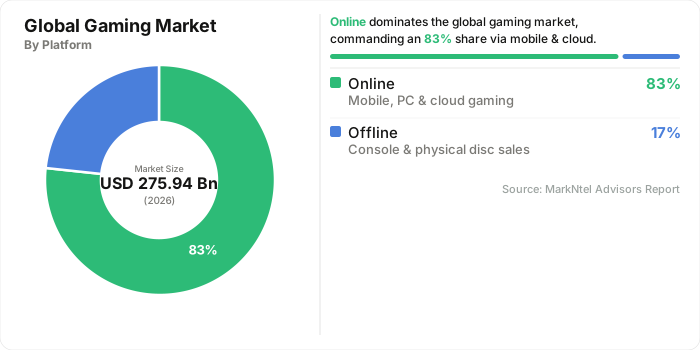
- By Platform, the online segment seized a significant share of about 83% in 2026.
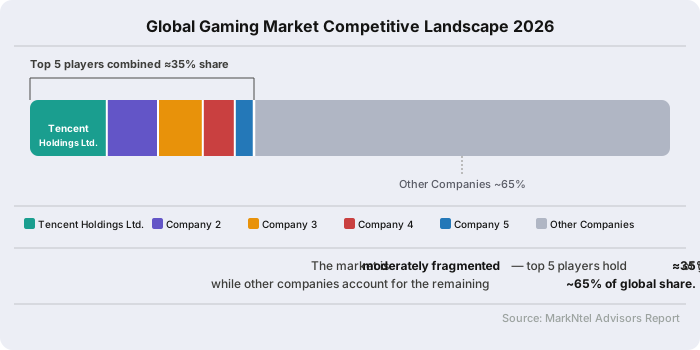
- The gaming sector is fragmented, with more than 100 companies operating worldwide. However, the top five players collectively account for approximately 35% share.
Global Gaming Market Size and Outlook
The Global Gaming market size was valued at USD 252 billion in 2025 and is projected to grow from USD 275.94 billion in 2026 to USD 475.66 billion by 2032. Along with this, the market is estimated to grow at a CAGR of around 9.5% during the forecast period, i.e., 2026-32.
Over the past decade, the global gaming market has undergone tremendous development, driven by rising digital connectivity and the widespread adoption of smart devices. The International Telecommunication Union reported that nearly 6 billion people were connected to the internet in 2025, representing about three-quarters of the global population. This expansion enabled gaming platforms from Tencent and Sony Group Corporation to scale across regions. Increased accessibility, combined with pandemic-driven digital engagement recognized by the World Health Organization, strengthened gaming as a mainstream entertainment category.
Current market conditions reflect strong demand driven by mobile-first ecosystems and improving digital infrastructure globally. Data from the International Telecommunication Union indicates that over 5 billion individuals access the internet via mobile devices, reinforcing gaming adoption across residential users. Commercial demand is also rising through esports, cloud gaming, and subscription ecosystems led by Microsoft. Government-led initiatives such as 5G expansion programs in India and South Korea are enabling low-latency connectivity, improving user experience and engagement across diverse demographic groups.
Regulatory frameworks and national policies are playing a critical role in shaping responsible growth and innovation. For instance, China continues to enforce gaming time restrictions for minors while approving new game licenses to sustain industry development. At the same time, the European Commission has introduced digital regulations to improve transparency in online transactions and user data protection. These measures are encouraging companies to adopt compliant monetization strategies, enhance data governance, and invest in localized content and infrastructure to align with regional regulatory environments.
Looking ahead, the market outlook remains positive, supported by demographic expansion and increasing digital inclusion. According to the United Nations, urbanization and rising middle-class populations, particularly in the Asia-Pacific, will continue to drive discretionary spending on digital entertainment. Additionally, nearly 2.6 billion people remain offline globally, presenting significant untapped growth potential as connectivity improves . Advancements in cloud computing, artificial intelligence, and immersive technologies such as augmented reality are expected to enhance gaming experiences and expand access, ensuring sustained long-term growth of the gaming landscape.
Global Gaming Market Key Indicators
- As per the United Nations Department of Economic and Social Affairs (2025), over 45% of the global population resides in urban areas, reflecting rapid urbanization trends. Increasing urban concentration enhances access to high-speed internet, digital infrastructure, and smart devices, which directly supports higher gaming adoption across residential users and strengthens overall market demand .
- The GSMA (2025) estimates that global mobile data traffic is expected to exceed 400 exabytes per month by 2027, driven by video streaming and interactive applications. This surge in data usage reflects rising engagement in online and cloud-based gaming, thereby accelerating demand for high-performance gaming platforms and services .
- The World Bank (2025) reported global GDP growth of approximately 2.6%, indicating stable economic conditions supporting discretionary spending. Rising disposable income, especially in developing economies, enables increased spending on in-game purchases, subscriptions, and premium gaming content, thereby boosting overall market revenue .
- According to the International Energy Agency (2025), global data center electricity consumption is projected to grow rapidly and nearly double to approximately 945 TWh by 2030, driven by the expansion of artificial intelligence and cloud-based digital services. This growth in data center infrastructure enhances computing capacity and reduces latency, thereby supporting cloud-enabled applications, including gaming platforms, and accelerating the adoption of streaming-based gaming services.
- In 2025, Eurostat states that over 94% of households in the European Union had internet access. High household connectivity directly supports gaming penetration across residential users, particularly through consoles, PCs, and mobile devices, thereby contributing to market expansion.
Global Gaming Market Scope
| Category | Segments |
|---|---|
| By Game Type | (Action, Adventure, Role-Playing Games (RPG), Sports Games, Strategy Games, Simulation Games, Puzzle Games, Others), |
| By Platform | (Online, Offline), |
| By Revenue Model | (Free-to-Play (F2P), Pay-to-Play (Premium Games), Subscription-Based Gaming, In-App Purchases, Advertising-Based Revenue), |
| By Device Type | (Smartphones, Tablets, Personal Computers, Gaming Consoles, Virtual Reality (VR) / Augmented Reality (AR) Devices), |
| By Age Group | (Adult, Children), |
| By Distribution Channel | (Digital Distribution, Physical Retail, Online Gaming Platforms / App Stores), |
Global Gaming Market Growth Drivers
Rapid Growth in Mobile Gaming Adoption
Mobile gaming has rapidly become a key growth area of the market, supported by a growing player base and easier access to games across devices and platforms. According to the United Nations Conference on Trade and Development (2025), over 3.3 billion people globally engage in video gaming, reflecting substantial penetration across diverse demographics . This growth has intensified in recent years as smartphones have become the primary medium for accessing digital entertainment. As a result, mobile gaming has significantly lowered entry barriers, enabling large-scale participation across both developed and emerging markets.
The impact of this driver is clearly measurable across end-user segments, particularly among younger populations and residential users. Data from Ofcom (2025) indicates that more than 90% of children in the United Kingdom actively engage in gaming, highlighting near-universal adoption within key demographic groups . Additionally, the Entertainment Software Association (2025) reports that approximately 65% of the population in the United States plays video games, demonstrating mainstream acceptance . This widespread participation is increasingly facilitated through mobile platforms, which provide continuous and convenient access, thereby driving higher engagement and sustained demand across regions.
Mobile gaming is a materially expanding market volume by continuously onboarding new users rather than merely increasing spending among existing players. The scalability of app-based ecosystems allows developers to reach billions of users simultaneously, particularly through free-to-play models that eliminate upfront costs. This results in consistent growth in active users and gameplay frequency, directly contributing to higher transaction volumes through in-app purchases and advertising. Unlike traditional gaming formats, mobile gaming enables exponential expansion across income groups and geographies, making it a primary driver of long-term market growth and overall industry scale.
Recent Trends
Shift Toward Cloud Gaming Platforms
The transition toward cloud gaming platforms has increased due to developments in streaming technology and expanding global availability of device-agnostic gaming services. Leading companies are increasingly deploying cloud infrastructure to eliminate reliance on high-end hardware. For instance, Microsoft expanded Xbox Cloud Gaming to India in 2025, enabling users to stream games across smartphones, PCs, and smart TVs . This reflects a clear transition toward accessible, platform-based gaming models across both developed and emerging markets.
Simultaneously, technological advancements are significantly improving the performance and viability of cloud gaming services. NVIDIA introduced next-generation GeForce NOW infrastructure powered by advanced GPUs, capable of delivering high-resolution gameplay with low latency comparable to traditional gaming systems . This development addresses previous limitations related to lag and performance, making cloud gaming a practical alternative to console and PC gaming. As a result, developers and publishers are increasingly optimizing games for streaming environments and subscription-based distribution.
The trend is expected to persist as it aligns with evolving consumer preferences for flexibility, affordability, and cross-device accessibility. Cloud gaming enables scalable subscription models, reduces upfront hardware costs, and supports rapid global deployment. Continued investments in cloud infrastructure and expansion into high-growth markets will further accelerate adoption. These structural changes are redefining industry dynamics and positioning cloud gaming as a key driver of long-term transformation in the gaming domain.
Global Gaming Market Opportunities and Challenges
High Development Costs and Long Production Cycles Driving Adoption of AI-Based Game Development Tools
Rising development costs and extended production cycles are increasingly constraining scalability across the global gaming industry, particularly for high-end and live-service titles. Industry insights referencing the Entertainment Software Association indicate that game development has become significantly more complex, requiring larger teams, advanced engines, and continuous post-launch support. This evolution has extended development timelines and elevated capital intensity, with studios facing mounting pressure to deliver high-quality, multi-platform experiences. As a result, time-to-market delays and budget overruns are becoming more frequent, limiting production agility and increasing financial risk.
This structural challenge is accelerating the adoption of artificial intelligence across the game development value chain to enhance efficiency and reduce costs. Ubisoft is deploying generative AI-driven NPC systems to enable dynamic gameplay , while Electronic Arts is integrating AI tools to streamline content creation and development workflows. In parallel, NVIDIA is advancing AI-driven rendering technologies, Unity Technologies is embedding AI for procedural content generation and coding support , and Sony Group Corporation is leveraging AI for automated testing and player behavior simulation. Collectively, these advancements are enabling shorter development cycles, optimized resource utilization, and scalable production models, positioning AI as a critical enabler of sustainable growth in the global gaming market.
Segmentation Insights
Action Games are the Leading Game Type
Action games account for approximately 31% of the overall market, making them the leading segment across game types. This dominance is driven by their ability to deliver high-intensity, real-time gameplay combined with competitive and social interaction. Action titles, particularly shooters and battle royale games, are designed around continuous engagement loops such as ranking systems, multiplayer modes, and frequent content updates. Their cross-platform compatibility further enhances accessibility, enabling seamless gameplay across mobile, PC, and console environments. These characteristics significantly improve player retention and increase average playtime compared to other genres.
From a demand perspective, the dominance of action games is reinforced by their central role in esports and digital content ecosystems. According to the International Olympic Committee, competitive gaming formats largely dominated by action-based titles are gaining institutional recognition through organized esports events and global tournaments . Additionally, major publishers such as Activision Blizzard and Epic Games continue to invest heavily in action franchises, expanding global player communities and monetization channels. Their strong revenue generation through in-game purchases, esports integration, and live-service models ensures sustained demand, reinforcing action games as the dominant segment in the gaming industry. Based on game type, the market is segmented into:
- Action
- Adventure
- Role-Playing Games (RPG)
- Sports Games
- Strategy Games
- Simulation Games
- Puzzle Games
- Others
Online Gaming Leads as the Dominant Platform Segment
The online gaming segment accounts for approximately 83% of the global gaming industry, making it the largest platform category. This dominance is primarily driven by the structural transition toward always-connected gaming environments, where gameplay, updates, and user interaction are delivered in real time. Online platforms enable persistent game worlds, multiplayer ecosystems, and continuous content updates, which significantly enhance user engagement and retention. In addition, the industry-wide shift toward digital downloads and cloud-based access has made internet connectivity a core requirement, further strengthening the reliance on online platforms over offline formats.
From a demand perspective, the growth of live-service gaming models and subscription ecosystems continues to reinforce online platform dominance. Companies such as Microsoft and Nintendo are expanding online-enabled services, including cloud gaming and subscription-based access to game libraries. These models rely on continuous connectivity to deliver updates, multiplayer functionality, and digital purchases. Furthermore, the increasing integration of social features, real-time competition, and global gaming communities is driving sustained user participation. As a result, online gaming continues to dominate the platform segment, supported by scalable distribution, recurring revenue models, and evolving consumer preferences toward connected experiences. Based on the platform, the market is segmented into:
- Online
- Offline
Global Gaming Market Geographical Outlook
In regional dominance, the Asia-Pacific holds approximately 54.78% of the global gaming demand, making it the largest contributing region. This dominance is primarily driven by its massive gaming population, mobile-first ecosystem, and strong presence of leading gaming companies. Major markets such as China, India, Japan, and South Korea collectively account for a significant share of global gamers, supported by widespread smartphone adoption and affordable internet access. The region’s preference for mobile and online gaming formats, combined with high engagement levels, significantly contributes to its leading market position.
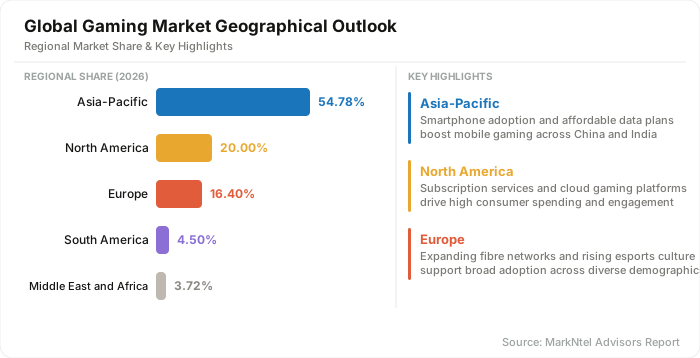
This leadership is further reinforced by strong ecosystem development and infrastructure investments across key countries. South Korea has established a highly advanced gaming ecosystem supported by esports institutions, dedicated training infrastructure, and government-backed initiatives promoting competitive gaming . Meanwhile, India is witnessing rapid expansion in online gaming and esports adoption, driven by increasing digital penetration and rising participation across Tier II and Tier III cities. Additionally, regional leaders such as Tencent and NetEase continue to scale global gaming operations through live-service and mobile-first models. These factors collectively drive sustained engagement, scalable monetization, and high user volumes, reinforcing Asia-Pacific’s dominant position in the global gaming sector.
Global Gaming Market Competitive Analysis
The gaming industry is fragmented, with numerous developers and publishers operating worldwide. However, the top five players, including Tencent, Sony Group Corporation, Microsoft, Nintendo, and NetEase, collectively account for a significant share of approx 35% the total market size. Tencent leads the global market, while Sony and Microsoft maintain strong positions across North America and international console ecosystems. Nintendo continues to dominate in Japan and global handheld gaming, whereas NetEase holds a strong position in Asia-Pacific online gaming.
Key Companies in the Global Gaming Industry
- Tencent
- Sony Group Corporation
- Microsoft
- Nintendo
- NetEase
- Electronic Arts
- Activision Blizzard
- Take-Two Interactive
- Ubisoft
- Bandai Namco Holdings
- Roblox Corporation
- Epic Games
- Valve Corporation
- Sega Sammy Holdings
- Square Enix
- Capcom
- Konami
- Others
Global Gaming Industry News and Recent Developments
June 2025: Nintendo Launches Switch 2 with Record-Breaking Global Sales
Nintendo launched its next-generation Switch 2 console in June 2025, achieving over 3.5 million units sold globally within the first four days. The console features enhanced performance, improved graphics, and hybrid gameplay capabilities, reinforcing Nintendo’s position in both home and portable gaming segments.
Impact Analysis: The strong launch reflects robust global demand for gaming hardware and highlights continued consumer interest in console-based gaming experiences. It is expected to drive additional revenue through game sales, subscriptions, and online services, while intensifying competition in the console market and supporting overall gaming industry growth.
November 2025: Sony Expands PlayStation Ecosystem with Strong PS5 Sales and User Growth
Sony Group Corporation reported strong PlayStation 5 momentum in late 2025, with over 8 million units sold during the period. The company also recorded 132 million monthly active users, driven by major game releases and increased adoption of subscription-based services within its gaming ecosystem.
Impact Analysis: The development highlights the growing importance of live-service models and digital ecosystems in driving user engagement and recurring revenue. It strengthens Sony’s competitive position in the global gaming landscape while reinforcing the shift toward subscription-led and content-driven growth strategies.
- Market Segmentation
- Introduction
- Product Definition
- Research Process
- Assumptions
- Executive Summary
- Global Gaming Market Policies, Regulations, and Product Standards
- Global Gaming Market Trends & Developments
- Global Gaming Market Dynamics
- Growth Factors
- Challenges
- Global Gaming Market Hotspot & Opportunities
- Global Gaming Market Outlook, 2022-2032F
- Market Size & Outlook
- By Revenues (USD Million)
- Market Share & Analysis
- By Game Type- Market Size & Forecast 2022-2032, USD Million
- Action
- Adventure
- Role-Playing Games (RPG)
- Sports Games
- Strategy Games
- Simulation Games
- Puzzle Games
- Others
- By Platform- Market Size & Forecast 2022-2032, USD Million
- Online
- Offline
- By Revenue Model- Market Size & Forecast 2022-2032, USD Million
- Free-to-Play (F2P)
- Pay-to-Play (Premium Games)
- Subscription-Based Gaming
- In-App Purchases
- Advertising-Based Revenue
- By Device Type- Market Size & Forecast 2022-2032, USD Million
- Smartphones
- Tablets
- Personal Computers
- Gaming Consoles
- Virtual Reality (VR) / Augmented Reality (AR) Devices
- By Age Group- Market Size & Forecast 2022-2032, USD Million
- Adult
- Children
- By Distribution Channel- Market Size & Forecast 2022-2032, USD Million
- Digital Distribution
- Physical Retail
- Online Gaming Platforms / App Stores
- By Region
- North America
- South America
- Europe
- The Middle East & Africa
- Asia-Pacific
- By Company
- Competition Characteristics
- Market Share & Analysis
- By Game Type- Market Size & Forecast 2022-2032, USD Million
- Market Size & Outlook
- North America Gaming Market Outlook, 2022-2032F
- Market Size & Outlook
- By Revenues (USD Million)
- Market Share & Analysis
- By Game Type- Market Size & Forecast 2022-2032, USD Million
- By Platform- Market Size & Forecast 2022-2032, USD Million
- By Revenue Model- Market Size & Forecast 2022-2032, USD Million
- By Device Type- Market Size & Forecast 2022-2032, USD Million
- By Age Group- Market Size & Forecast 2022-2032, USD Million
- By Distribution Channel- Market Size & Forecast 2022-2032, USD Million
- By Country
- The US
- Canada
- Mexico
- Rest of North America
- The US Gaming Market Outlook, 2022-2032F
- Market Size & Outlook
- By Revenues (USD Million)
- Market Share & Analysis
- By Game Type- Market Size & Forecast 2022-2032, USD Million
- By Platform- Market Size & Forecast 2022-2032, USD Million
- By Revenue Model- Market Size & Forecast 2022-2032, USD Million
- By Device Type- Market Size & Forecast 2022-2032, USD Million
- By Age Group- Market Size & Forecast 2022-2032, USD Million
- By Distribution Channel- Market Size & Forecast 2022-2032, USD Million
- Market Size & Outlook
- Canada Gaming Market Outlook, 2022-2032F
- Market Size & Outlook
- By Revenues (USD Million)
- Market Share & Analysis
- By Game Type- Market Size & Forecast 2022-2032, USD Million
- By Platform- Market Size & Forecast 2022-2032, USD Million
- By Revenue Model- Market Size & Forecast 2022-2032, USD Million
- By Device Type- Market Size & Forecast 2022-2032, USD Million
- By Age Group- Market Size & Forecast 2022-2032, USD Million
- By Distribution Channel- Market Size & Forecast 2022-2032, USD Million
- Market Size & Outlook
- Mexico Gaming Market Outlook, 2022-2032F
- Market Size & Outlook
- By Revenues (USD Million)
- Market Share & Analysis
- By Game Type- Market Size & Forecast 2022-2032, USD Million
- By Platform- Market Size & Forecast 2022-2032, USD Million
- By Revenue Model- Market Size & Forecast 2022-2032, USD Million
- By Device Type- Market Size & Forecast 2022-2032, USD Million
- By Age Group- Market Size & Forecast 2022-2032, USD Million
- By Distribution Channel- Market Size & Forecast 2022-2032, USD Million
- Market Size & Outlook
- Market Size & Outlook
- South America Gaming Market Outlook, 2022-2032F
- Market Size & Outlook
- By Revenues (USD Million)
- Market Share & Analysis
- By Game Type- Market Size & Forecast 2022-2032, USD Million
- By Platform- Market Size & Forecast 2022-2032, USD Million
- By Revenue Model- Market Size & Forecast 2022-2032, USD Million
- By Device Type- Market Size & Forecast 2022-2032, USD Million
- By Age Group- Market Size & Forecast 2022-2032, USD Million
- By Distribution Channel- Market Size & Forecast 2022-2032, USD Million
- By Country
- Brazil
- Argentina
- Chile
- Rest of South America
- Brazil Gaming Market Outlook, 2022-2032F
- Market Size & Outlook
- By Revenues (USD Million)
- Market Share & Analysis
- By Game Type- Market Size & Forecast 2022-2032, USD Million
- By Platform- Market Size & Forecast 2022-2032, USD Million
- By Revenue Model- Market Size & Forecast 2022-2032, USD Million
- By Device Type- Market Size & Forecast 2022-2032, USD Million
- By Age Group- Market Size & Forecast 2022-2032, USD Million
- By Distribution Channel- Market Size & Forecast 2022-2032, USD Million
- Market Size & Outlook
- Argentina Gaming Market Outlook, 2022-2032F
- Market Size & Outlook
- By Revenues (USD Million)
- Market Share & Analysis
- By Game Type- Market Size & Forecast 2022-2032, USD Million
- By Platform- Market Size & Forecast 2022-2032, USD Million
- By Revenue Model- Market Size & Forecast 2022-2032, USD Million
- By Device Type- Market Size & Forecast 2022-2032, USD Million
- By Age Group- Market Size & Forecast 2022-2032, USD Million
- By Distribution Channel- Market Size & Forecast 2022-2032, USD Million
- Market Size & Outlook
- Chile Gaming Market Outlook, 2022-2032F
- Market Size & Outlook
- By Revenues (USD Million)
- Market Share & Analysis
- By Game Type- Market Size & Forecast 2022-2032, USD Million
- By Platform- Market Size & Forecast 2022-2032, USD Million
- By Revenue Model- Market Size & Forecast 2022-2032, USD Million
- By Device Type- Market Size & Forecast 2022-2032, USD Million
- By Age Group- Market Size & Forecast 2022-2032, USD Million
- By Distribution Channel- Market Size & Forecast 2022-2032, USD Million
- Market Size & Outlook
- Market Size & Outlook
- Europe Gaming Market Outlook, 2022-2032F
- Market Size & Outlook
- By Revenues (USD Million)
- Market Share & Analysis
- By Game Type- Market Size & Forecast 2022-2032, USD Million
- By Platform- Market Size & Forecast 2022-2032, USD Million
- By Revenue Model- Market Size & Forecast 2022-2032, USD Million
- By Device Type- Market Size & Forecast 2022-2032, USD Million
- By Age Group- Market Size & Forecast 2022-2032, USD Million
- By Distribution Channel- Market Size & Forecast 2022-2032, USD Million
- By Country
- The UK
- Germany
- France
- Italy
- Spain
- Rest of Europe
- The UK Gaming Market Outlook, 2022-2032F
- Market Size & Outlook
- By Revenues (USD Million)
- Market Share & Analysis
- By Game Type- Market Size & Forecast 2022-2032, USD Million
- By Platform- Market Size & Forecast 2022-2032, USD Million
- By Revenue Model- Market Size & Forecast 2022-2032, USD Million
- By Device Type- Market Size & Forecast 2022-2032, USD Million
- By Age Group- Market Size & Forecast 2022-2032, USD Million
- By Distribution Channel- Market Size & Forecast 2022-2032, USD Million
- Market Size & Outlook
- Germany Gaming Market Outlook, 2022-2032F
- Market Size & Outlook
- By Revenues (USD Million)
- Market Share & Analysis
- By Game Type- Market Size & Forecast 2022-2032, USD Million
- By Platform- Market Size & Forecast 2022-2032, USD Million
- By Revenue Model- Market Size & Forecast 2022-2032, USD Million
- By Device Type- Market Size & Forecast 2022-2032, USD Million
- By Age Group- Market Size & Forecast 2022-2032, USD Million
- By Distribution Channel- Market Size & Forecast 2022-2032, USD Million
- Market Size & Outlook
- France Gaming Market Outlook, 2022-2032F
- Market Size & Outlook
- By Revenues (USD Million)
- Market Share & Analysis
- By Game Type- Market Size & Forecast 2022-2032, USD Million
- By Platform- Market Size & Forecast 2022-2032, USD Million
- By Revenue Model- Market Size & Forecast 2022-2032, USD Million
- By Device Type- Market Size & Forecast 2022-2032, USD Million
- By Age Group- Market Size & Forecast 2022-2032, USD Million
- By Distribution Channel- Market Size & Forecast 2022-2032, USD Million
- Market Size & Outlook
- Italy Gaming Market Outlook, 2022-2032F
- Market Size & Outlook
- By Revenues (USD Million)
- Market Share & Analysis
- By Game Type- Market Size & Forecast 2022-2032, USD Million
- By Platform- Market Size & Forecast 2022-2032, USD Million
- By Revenue Model- Market Size & Forecast 2022-2032, USD Million
- By Device Type- Market Size & Forecast 2022-2032, USD Million
- By Age Group- Market Size & Forecast 2022-2032, USD Million
- By Distribution Channel- Market Size & Forecast 2022-2032, USD Million
- Market Size & Outlook
- Spain Gaming Market Outlook, 2022-2032F
- Market Size & Outlook
- By Revenues (USD Million)
- Market Share & Analysis
- By Game Type- Market Size & Forecast 2022-2032, USD Million
- By Platform- Market Size & Forecast 2022-2032, USD Million
- By Revenue Model- Market Size & Forecast 2022-2032, USD Million
- By Device Type- Market Size & Forecast 2022-2032, USD Million
- By Age Group- Market Size & Forecast 2022-2032, USD Million
- By Distribution Channel- Market Size & Forecast 2022-2032, USD Million
- Market Size & Outlook
- Market Size & Outlook
- The Middle East & Africa Gaming Market Outlook, 2022-2032F
- Market Size & Outlook
- By Revenues (USD Million)
- Market Share & Analysis
- By Game Type- Market Size & Forecast 2022-2032, USD Million
- By Platform- Market Size & Forecast 2022-2032, USD Million
- By Revenue Model- Market Size & Forecast 2022-2032, USD Million
- By Device Type- Market Size & Forecast 2022-2032, USD Million
- By Age Group- Market Size & Forecast 2022-2032, USD Million
- By Distribution Channel- Market Size & Forecast 2022-2032, USD Million
- By Country
- Saudi Arabia
- UAE
- Israel
- Turkey
- South Africa
- Kenya
- Nigeria
- Rest of the Middle East & Africa
- Saudi Arabia Gaming Market Outlook, 2022-2032F
- Market Size & Outlook
- By Revenues (USD Million)
- Market Share & Analysis
- By Game Type- Market Size & Forecast 2022-2032, USD Million
- By Platform- Market Size & Forecast 2022-2032, USD Million
- By Revenue Model- Market Size & Forecast 2022-2032, USD Million
- By Device Type- Market Size & Forecast 2022-2032, USD Million
- By Age Group- Market Size & Forecast 2022-2032, USD Million
- By Distribution Channel- Market Size & Forecast 2022-2032, USD Million
- Market Size & Outlook
- UAE Gaming Market Outlook, 2022-2032F
- Market Size & Outlook
- By Revenues (USD Million)
- Market Share & Analysis
- By Game Type- Market Size & Forecast 2022-2032, USD Million
- By Platform- Market Size & Forecast 2022-2032, USD Million
- By Revenue Model- Market Size & Forecast 2022-2032, USD Million
- By Device Type- Market Size & Forecast 2022-2032, USD Million
- By Age Group- Market Size & Forecast 2022-2032, USD Million
- By Distribution Channel- Market Size & Forecast 2022-2032, USD Million
- Market Size & Outlook
- Israel Gaming Market Outlook, 2022-2032F
- Market Size & Outlook
- By Revenues (USD Million)
- Market Share & Analysis
- By Game Type- Market Size & Forecast 2022-2032, USD Million
- By Platform- Market Size & Forecast 2022-2032, USD Million
- By Revenue Model- Market Size & Forecast 2022-2032, USD Million
- By Device Type- Market Size & Forecast 2022-2032, USD Million
- By Age Group- Market Size & Forecast 2022-2032, USD Million
- By Distribution Channel- Market Size & Forecast 2022-2032, USD Million
- Market Size & Outlook
- Turkey Gaming Market Outlook, 2022-2032F
- Market Size & Outlook
- By Revenues (USD Million)
- Market Share & Analysis
- By Game Type- Market Size & Forecast 2022-2032, USD Million
- By Platform- Market Size & Forecast 2022-2032, USD Million
- By Revenue Model- Market Size & Forecast 2022-2032, USD Million
- By Device Type- Market Size & Forecast 2022-2032, USD Million
- By Age Group- Market Size & Forecast 2022-2032, USD Million
- By Distribution Channel- Market Size & Forecast 2022-2032, USD Million
- Market Size & Outlook
- South Africa Gaming Market Outlook, 2022-2032F
- Market Size & Outlook
- By Revenues (USD Million)
- Market Share & Analysis
- By Game Type- Market Size & Forecast 2022-2032, USD Million
- By Platform- Market Size & Forecast 2022-2032, USD Million
- By Revenue Model- Market Size & Forecast 2022-2032, USD Million
- By Device Type- Market Size & Forecast 2022-2032, USD Million
- By Age Group- Market Size & Forecast 2022-2032, USD Million
- By Distribution Channel- Market Size & Forecast 2022-2032, USD Million
- Market Size & Outlook
- Kenya Gaming Market Outlook, 2022-2032F
- Market Size & Outlook
- By Revenues (USD Million)
- Market Share & Analysis
- By Game Type- Market Size & Forecast 2022-2032, USD Million
- By Platform- Market Size & Forecast 2022-2032, USD Million
- By Revenue Model- Market Size & Forecast 2022-2032, USD Million
- By Device Type- Market Size & Forecast 2022-2032, USD Million
- By Age Group- Market Size & Forecast 2022-2032, USD Million
- By Distribution Channel- Market Size & Forecast 2022-2032, USD Million
- Market Size & Outlook
- Nigeria Gaming Market Outlook, 2022-2032F
- Market Size & Outlook
- By Revenues (USD Million)
- Market Share & Analysis
- By Game Type- Market Size & Forecast 2022-2032, USD Million
- By Platform- Market Size & Forecast 2022-2032, USD Million
- By Revenue Model- Market Size & Forecast 2022-2032, USD Million
- By Device Type- Market Size & Forecast 2022-2032, USD Million
- By Age Group- Market Size & Forecast 2022-2032, USD Million
- By Distribution Channel- Market Size & Forecast 2022-2032, USD Million
- Market Size & Outlook
- Market Size & Outlook
- Asia-Pacific Gaming Market Outlook, 2022-2032F
- Market Size & Outlook
- By Revenues (USD Million)
- Market Share & Analysis
- By Game Type- Market Size & Forecast 2022-2032, USD Million
- By Platform- Market Size & Forecast 2022-2032, USD Million
- By Revenue Model- Market Size & Forecast 2022-2032, USD Million
- By Device Type- Market Size & Forecast 2022-2032, USD Million
- By Age Group- Market Size & Forecast 2022-2032, USD Million
- By Distribution Channel- Market Size & Forecast 2022-2032, USD Million
- By Country
- China
- Japan
- India
- South Korea
- Indonesia
- Vietnam
- Singapore
- Rest of Asia-Pacific
- China Gaming Market Outlook, 2022-2032F
- Market Size & Outlook
- By Revenues (USD Million)
- Market Share & Analysis
- By Game Type- Market Size & Forecast 2022-2032, USD Million
- By Platform- Market Size & Forecast 2022-2032, USD Million
- By Revenue Model- Market Size & Forecast 2022-2032, USD Million
- By Device Type- Market Size & Forecast 2022-2032, USD Million
- By Age Group- Market Size & Forecast 2022-2032, USD Million
- By Distribution Channel- Market Size & Forecast 2022-2032, USD Million
- Market Size & Outlook
- Japan Gaming Market Outlook, 2022-2032F
- Market Size & Outlook
- By Revenues (USD Million)
- Market Share & Analysis
- By Game Type- Market Size & Forecast 2022-2032, USD Million
- By Platform- Market Size & Forecast 2022-2032, USD Million
- By Revenue Model- Market Size & Forecast 2022-2032, USD Million
- By Device Type- Market Size & Forecast 2022-2032, USD Million
- By Age Group- Market Size & Forecast 2022-2032, USD Million
- By Distribution Channel- Market Size & Forecast 2022-2032, USD Million
- Market Size & Outlook
- India Gaming Market Outlook, 2022-2032F
- Market Size & Outlook
- By Revenues (USD Million)
- Market Share & Analysis
- By Game Type- Market Size & Forecast 2022-2032, USD Million
- By Platform- Market Size & Forecast 2022-2032, USD Million
- By Revenue Model- Market Size & Forecast 2022-2032, USD Million
- By Device Type- Market Size & Forecast 2022-2032, USD Million
- By Age Group- Market Size & Forecast 2022-2032, USD Million
- By Distribution Channel- Market Size & Forecast 2022-2032, USD Million
- Market Size & Outlook
- South Korea Gaming Market Outlook, 2022-2032F
- Market Size & Outlook
- By Revenues (USD Million)
- Market Share & Analysis
- By Game Type- Market Size & Forecast 2022-2032, USD Million
- By Platform- Market Size & Forecast 2022-2032, USD Million
- By Revenue Model- Market Size & Forecast 2022-2032, USD Million
- By Device Type- Market Size & Forecast 2022-2032, USD Million
- By Age Group- Market Size & Forecast 2022-2032, USD Million
- By Distribution Channel- Market Size & Forecast 2022-2032, USD Million
- Market Size & Outlook
- Indonesia Gaming Market Outlook, 2022-2032F
- Market Size & Outlook
- By Revenues (USD Million)
- Market Share & Analysis
- By Game Type- Market Size & Forecast 2022-2032, USD Million
- By Platform- Market Size & Forecast 2022-2032, USD Million
- By Revenue Model- Market Size & Forecast 2022-2032, USD Million
- By Device Type- Market Size & Forecast 2022-2032, USD Million
- By Age Group- Market Size & Forecast 2022-2032, USD Million
- By Distribution Channel- Market Size & Forecast 2022-2032, USD Million
- Market Size & Outlook
- Vietnam Gaming Market Outlook, 2022-2032F
- Market Size & Outlook
- By Revenues (USD Million)
- Market Share & Analysis
- By Game Type- Market Size & Forecast 2022-2032, USD Million
- By Platform- Market Size & Forecast 2022-2032, USD Million
- By Revenue Model- Market Size & Forecast 2022-2032, USD Million
- By Device Type- Market Size & Forecast 2022-2032, USD Million
- By Age Group- Market Size & Forecast 2022-2032, USD Million
- By Distribution Channel- Market Size & Forecast 2022-2032, USD Million
- Market Size & Outlook
- Singapore Gaming Market Outlook, 2022-2032F
- Market Size & Outlook
- By Revenues (USD Million)
- Market Share & Analysis
- By Game Type- Market Size & Forecast 2022-2032, USD Million
- By Platform- Market Size & Forecast 2022-2032, USD Million
- By Revenue Model- Market Size & Forecast 2022-2032, USD Million
- By Device Type- Market Size & Forecast 2022-2032, USD Million
- By Age Group- Market Size & Forecast 2022-2032, USD Million
- By Distribution Channel- Market Size & Forecast 2022-2032, USD Million
- Market Size & Outlook
- Market Size & Outlook
- Global Gaming Market Key Strategic Imperatives for Success & Growth
- Competitive Outlook
- Company Profiles
- Tencent Holdings
- Business Description
- Product Portfolio
- Collaborations & Alliances
- Recent Developments
- Financial Details
- Others
- Sony Group Corporation
- Business Description
- Product Portfolio
- Collaborations & Alliances
- Recent Developments
- Financial Details
- Others
- Microsoft Corporation
- Business Description
- Product Portfolio
- Collaborations & Alliances
- Recent Developments
- Financial Details
- Others
- Nintendo Co., Ltd.
- Business Description
- Product Portfolio
- Collaborations & Alliances
- Recent Developments
- Financial Details
- Others
- NetEase, Inc.
- Business Description
- Product Portfolio
- Collaborations & Alliances
- Recent Developments
- Financial Details
- Others
- Electronic Arts Inc.
- Business Description
- Product Portfolio
- Collaborations & Alliances
- Recent Developments
- Financial Details
- Others
- Activision Blizzard
- Business Description
- Product Portfolio
- Collaborations & Alliances
- Recent Developments
- Financial Details
- Others
- Take-Two Interactive Software, Inc.
- Business Description
- Product Portfolio
- Collaborations & Alliances
- Recent Developments
- Financial Details
- Others
- Ubisoft Entertainment SA
- Business Description
- Product Portfolio
- Collaborations & Alliances
- Recent Developments
- Financial Details
- Others
- Bandai Namco Holdings Inc.
- Business Description
- Product Portfolio
- Collaborations & Alliances
- Recent Developments
- Financial Details
- Others
- Roblox Corporation
- Business Description
- Product Portfolio
- Collaborations & Alliances
- Recent Developments
- Financial Details
- Others
- Epic Games
- Business Description
- Product Portfolio
- Collaborations & Alliances
- Recent Developments
- Financial Details
- Others
- Valve Corporation
- Business Description
- Product Portfolio
- Collaborations & Alliances
- Recent Developments
- Financial Details
- Others
- Sega Sammy Holdings
- Business Description
- Product Portfolio
- Collaborations & Alliances
- Recent Developments
- Financial Details
- Others
- Square Enix Holdings Co., Ltd.
- Business Description
- Product Portfolio
- Collaborations & Alliances
- Recent Developments
- Financial Details
- Others
- Capcom Co., Ltd.
- Business Description
- Product Portfolio
- Collaborations & Alliances
- Recent Developments
- Financial Details
- Others
- Konami Group Corporation
- Business Description
- Product Portfolio
- Collaborations & Alliances
- Recent Developments
- Financial Details
- Others
- Tencent Holdings
- Company Profiles
- Disclaimer

MarkNtel Advisors follows a robust and iterative research methodology designed to ensure maximum accuracy and minimize deviation in market estimates and forecasts. Our approach combines both bottom-up and top-down techniques to effectively segment and quantify various aspects of the market. A consistent feature across all our research reports is data triangulation, which examines the market from three distinct perspectives to validate findings. Key components of our research process include:
1. Scope & Research Design At the outset, MarkNtel Advisors define the research objectives and formulate pertinent questions. This phase involves determining the type of research—qualitative or quantitative—and designing a methodology that outlines data collection methods, target demographics, and analytical tools. They also establish timelines and budgets to ensure the research aligns with client goals.
2. Sample Selection and Data Collection In this stage, the firm identifies the target audience and determines the appropriate sample size to ensure representativeness. They employ various sampling methods, such as random or stratified sampling, based on the research objectives. Data collection is carried out using tools like surveys, interviews, and observations, ensuring the gathered data is reliable and relevant.
3. Data Analysis and Validation Once data is collected, MarkNtel Advisors undertake a rigorous analysis process. This includes cleaning the data to remove inconsistencies, employing statistical software for quantitative analysis, and thematic analysis for qualitative data. Validation steps are taken to ensure the accuracy and reliability of the findings, minimizing biases and errors.

4. Data Forecast and FinalizationThe final phase involves forecasting future market trends based on the analyzed data. MarkNtel Advisors utilize predictive modeling and time series analysis to anticipate market behaviors. The insights are then compiled into comprehensive reports, featuring visual aids like charts and graphs, and include strategic recommendations to inform client decision-making
We’d love to understand what matters most to you.