

By Technology (Air Source Heat Pumps (Air-to-Air, Air-to-Water), Ground Source Heat Pumps (Closed Loop, Open Loop), Water Source Heat Pumps), By Capacity (Up to 10 kW, 10–20 kW, Above 20 kW), By Appli... ... Above 20 kW), By Application (Residential, Commercial, Industrial), and others Read more
- Environment
- Apr 2026
- 295
- PDF, Excel, PPT
Europe Heat Pump Market Key Takeaways
- Europe Heat Pump market size was valued at around USD 22.5 billion in 2025 and is projected to grow from USD 24.57 billion in 2026 to USD 41.66 billion by 2032, exhibiting a CAGR of 9.2 % during 2026-2032.
- In 2026, Germany holds the largest share of about 22.7%.
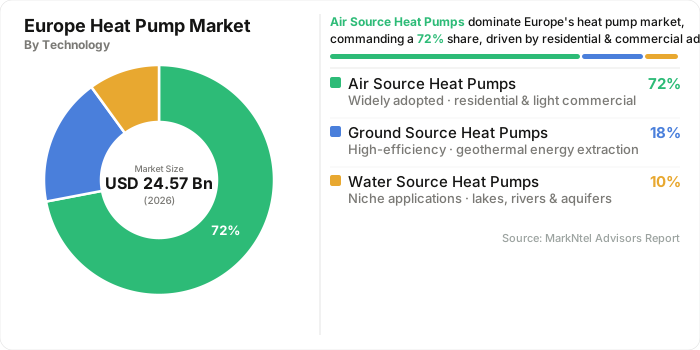
- Based on Technology, the Air Source Heat Pumps (ASHP) hold a significant share of about 72% in 2026.
- By Application, the Residential segment seized a significant share of about 63% in 2026.
- The industry in Europe is moderately fragmented, with approximately 60-80 companies operating in the region. However, the top five players collectively account for less than 40% of the overall European market.
Europe Heat Pump Market Size and Outlook
The Europe Heat Pump market was valued at USD 22.5 billion in 2025 and is projected to grow from USD 24.57 billion in 2026 to USD 41.66 billion by 2032. Along with this, the market is estimated to grow at a CAGR of around 9.2% during the forecast period, i.e., 2026-32.
The heat pump market size in Europe has demonstrated strong historical expansion, supported by the transition toward low-carbon heating and heightened energy security concerns following the Russia–Ukraine conflict. According to the European Commission, installations reached approximately 2.8 million units in 2022, reflecting a surge driven by rising energy prices and policy incentives. This rapid uptake was reinforced by EU-wide strategies promoting electrification of heating systems and reducing fossil fuel dependence. Consequently, early growth was largely concentrated in residential applications through widespread adoption of air source heat pumps.
Building on this surge, the European heat pump industry has transitioned into a normalization phase, with installations moderating to around 2.7 million units in 2023 and 2.11 million units in 2024 . This trend reflects adjustments in subsidy structures, affordability considerations, and demand stabilization across major markets such as Germany and France. Despite this moderation, underlying demand remains resilient, particularly in residential heat pump demand, driven by retrofit programs and energy efficiency mandates. Simultaneously, commercial heat pump systems are gaining traction as organizations align with emission reduction targets and regulatory compliance requirements.
This sustained demand for heat pump is further supported by strong regulatory frameworks and long-term policy commitments across the region. The European Commission, under the REPowerEU framework, aims to significantly scale up deployment, targeting up to 60 million installed heat pumps by 2030 to accelerate decarbonization and reduce reliance on fossil fuels . Complementing this, financing initiatives from the European Investment Bank are supporting district heating expansion and industrial heat pump adoption. In parallel, leading heat pump companies are increasingly investing in localized production capabilities and advanced energy-efficient technologies to strengthen supply chains and meet evolving regulatory requirements.
Looking ahead, the heat pump industry is expected to witness steady expansion as Europe continues to prioritize sustainable heating solutions and energy efficiency across buildings. The International Energy Agency highlights that heat pumps will play a central role in reducing emissions from buildings and expanding renewable-based heating solutions across Europe. Increasing adoption across residential, commercial, and industrial sectors, along with integration into district heating systems, is expected to sustain this demand. Overall, the outlook remains positive, supported by strong alignment between regulatory frameworks, infrastructure development, and ongoing technological advancements.
Europe Heat Pump Market Key Indicators
- Heat pumps can deliver 3 to 5 times more heat energy than the electricity they consume, demonstrating significantly higher efficiency compared to conventional heating systems, as highlighted by the International Energy Agency. This efficiency advantage supports increased adoption across residential and commercial sectors, thereby strengthening the growth of the Europe heat pump landscape.
- In Germany, government programs such as the Federal Funding for Efficient Buildings (BEG) provide subsidies covering around 30% of costs, with total support reaching up to 70% for heat pump installations, significantly reducing upfront expenses and accelerating the replacement of conventional heating systems .
- The European Investment Bank is supporting a Berlin district heating modernization project valued at approximately USD 540 million, which focuses on integrating district heating heat pumps and low-carbon heating systems in Europe .
- In 2026, France continues to promote heat pump adoption through schemes such as MaPrimeRénov’, which provides financial incentives for energy-efficient home upgrades, including heat pump installations. Increased participation in such programs drives higher installation rates, thereby supporting heat pump demand across Europe.
Europe Heat Pump Market Scope
| Category | Segments |
|---|---|
| By Technology | (Air Source Heat Pumps (Air-to-Air, Air-to-Water), Ground Source Heat Pumps (Closed Loop, Open Loop), Water Source Heat Pumps), |
| By Capacity | (Up to 10 kW, 10–20 kW, Above 20 kW), |
| By Application | (Residential, Commercial, Industrial), |
Europe Heat Pump Market Growth Drivers
Strong Policy Push for Decarbonization
The strong policy push for decarbonization has emerged as a central structural driver shaping Europe heat pump industry growth. In 2024, the European Commission strengthened regulatory efforts through the revised Energy Performance of Buildings Directive, enhancing energy efficiency standards and accelerating the decarbonization of buildings . From 2025, EU member states are required to discontinue financial incentives for fossil fuel-based heating systems, reinforcing the shift toward low-carbon heating systems Europe . This regulatory transition is positioning heat pumps as a compliant and scalable solution within evolving building standards.
As these policies take effect, their impact is becoming increasingly visible across residential heat pump demand and commercial heat pump systems in Europe. Countries such as Germany and France are strengthening building codes and renovation mandates to align with updated EU directives. Buildings account for nearly one-third of Europe’s total energy-related emissions, as highlighted by the International Energy Agency, making them a critical focus for regulatory intervention. Consequently, both retrofit activities and new construction projects are translating policy measures into sustained installation demand.
This alignment between regulation and adoption ensures that growth remains structural rather than temporary. Other than short-term incentives, these policies create long-term obligations for replacing conventional heating systems across a large building base. Public funding mechanisms and compliance requirements further support deployment of district heating heat pumps Europe across urban infrastructure. As a result, this driver is not only accelerating adoption but also expanding overall market share, reinforcing long-term growth for heat pump across the country.
Recent Trends
Shift Toward Natural Refrigerants
The shift toward natural refrigerants has emerged as a key trend shaping the heat pump deployment across HVAC systems, driven by tightening environmental regulations and sustainability targets. In 2024, the European Commission strengthened the F-Gas Regulation (EU) 2024/573, accelerating the phase-down of high global warming potential refrigerants. This has increased adoption of alternatives such as CO₂ (R744) and propane (R290). As compliance requirements intensify, manufacturers are transitioning toward low-GWP refrigerant-based systems.
This transition is driving structural changes across product design and system engineering. Manufacturers are redesigning heat pumps to operate efficiently with natural refrigerants, requiring new safety standards and configurations. For instance, in 2026, Daikin Industries Ltd. launched propane (R-290) heat pumps for residential and commercial applications in Europe . These developments are influencing residential and commercial heat pump systems, where regulatory compliance is becoming a key purchasing factor.
The trend is expected to persist due to long-term regulatory targets and increasing environmental awareness. The European Commission continues to push for reduction in fluorinated gases, ensuring the sustained adoption of natural refrigerants. At the same time, demand for sustainable heating solutions is rising across end users. As policy and innovation continue to align, this trend will play a key role in shaping Europe heat pump industry growth.
Europe Heat Pump Market Opportunities and Challenges
Rising Energy Costs Unlocking Opportunities for Efficient and Hybrid Heat Pump Solutions
High electricity prices are emerging as a significant challenge influencing the adoption dynamics of heat pump systems across Europe. Rising power tariffs, driven by ongoing energy market pressures and system constraints, have increased the operating costs of electric heating solutions. Electricity prices across several European countries remained elevated through 2024 compared to pre-crisis levels, as highlighted by the International Energy Agency. This cost sensitivity is particularly evident in residential heat pump demand in Europe, where consumers increasingly evaluate long-term operating expenses. As a result, higher electricity costs are limiting adoption despite the efficiency benefits of heat pumps.
At the same time, this challenge is creating a strong opportunity for the adoption of energy-efficient and hybrid heat pump systems. Manufacturers are focusing on inverter heat pump technology and hybrid configurations to optimize energy consumption and reduce cost dependency. For instance, Midea Group unveiled its H-Pack hybrid heat pump at MCE 2026, featuring a fully indoor design that addresses Europe’s regulatory constraints on outdoor unit installation while simplifying deployment and supporting hybrid heating applications . In parallel, government initiatives promoting energy-efficient appliances and smart heating systems are supporting adoption of optimized solutions. As end users prioritize cost-effective and flexible heating options, this shift is driving innovation and expanding demand for advanced heat pump technologies across Europe.
Segmentation Insights
Air Source Heat Pumps (ASHP) Represent the Most Widely Adopted Technology
Air Source Heat Pumps (ASHP) account for approximately 72% share of the Europe heat pump market, making them the most widely adopted technology across residential and light commercial applications. This dominance is primarily attributed to their lower installation cost and simplified deployment compared to ground source and water source systems. Other than ground source heat pumps (GSHP), ASHP systems do not require extensive drilling or land availability, which significantly reduces upfront investment and installation time. As a result, they are more accessible to a broader consumer base and can be deployed rapidly across both urban and semi-urban environments.
Building on this cost and installation advantage, ASHP systems have gained strong traction in retrofit and renovation projects across Europe. The European Commission emphasizes upgrading existing building stock to improve energy efficiency, which directly supports the adoption of easy-to-install heating solutions. For instance, in 2025, multiple retrofit projects across Europe incorporated air source heat pumps in older residential buildings, where ASHP systems were integrated with insulation and renewable energy solutions to reduce energy consumption and operating costs. In addition, advancements in inverter heat pump technology have improved efficiency and performance in colder climates. Consequently, their practicality, cost-effectiveness, and wide applicability continue to reinforce their dominant position in the Europe heat pump market. Based on technology, the market is segmented into:
- Air Source Heat Pumps
- Ground Source Heat Pumps
- Water Source Heat Pumps
Residential Segment Holds the Largest Market Share, Supported by Strong Growth Potential
Based on application, the residential segment accounts for approximately 63% share of the market. This dominance is primarily driven by the large base of residential buildings and strong household demand for space heating and hot water solutions. Heat pumps serve as an integrated solution for both functions, making them highly suitable for residential use. Compared to commercial and industrial applications, residential systems are smaller in capacity, easier to install, and more scalable, enabling faster adoption across diverse housing types.
From a demand perspective, the dominance of the residential segment is strongly supported by its significant share in overall building energy consumption. The International Energy Agency highlights that the residential sector accounts for approximately 70% of total building energy use, with most of it consumed for heating and hot water . This creates substantial demand for energy-efficient heating technologies such as heat pumps. In addition, the ongoing electrification of heating and replacement of fossil fuel-based systems in households are further accelerating adoption. As a result, high-volume residential installations continue to reinforce the segment’s leading position in the broader Europe heat pump industry analysis. Based on application, the market is segmented into:
- Residential
- Commercial
- Industrial
Europe Heat Pump Market Geographical Outlook
Germany accounts for approximately 22.7% share of the regional market, supported by strong residential demand and a well-established heating infrastructure. This leadership is further driven by the country’s ongoing transition away from conventional fossil fuel-based heating systems toward energy-efficient alternatives. The presence of a large housing base, combined with continuous construction and renovation activity, provides a strong foundation for widespread heat pump deployment. As a result, Germany has emerged as a key hub for residential heat pump adoption, supported by both new installations and replacement demand.
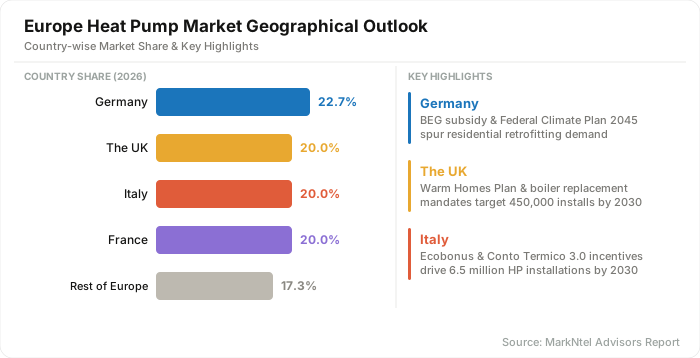
Building on this strong demand base, the shift toward heat pumps is clearly reflected in installation trends across the country. For instance, in 2025, Germany recorded approximately 284,000 heat pump installations, with heat pumps surpassing new gas boiler sales and accounting for nearly 47% of new heating system installations . This transition highlights the growing preference for electrified heating solutions at the household level. In parallel, government policies continue to support this shift through financial incentives and regulatory measures aimed at reducing reliance on fossil fuel-based heating systems.
This momentum is further strengthened by Germany’s robust industrial ecosystem and focus on long-term energy transition goals. The presence of established manufacturing capabilities and ongoing investments in heating technologies ensures strong supply availability and innovation. At the same time, the country’s emphasis on energy security and emission reduction continues to accelerate the adoption of low-carbon heating solutions. As a result, the combined impact of strong residential demand, policy support, and industrial strength is reinforcing Germany’s dominant position across Europe.
Europe Heat Pump Market Competitive Analysis
The Europe heat pump market is moderately fragmented, with approximately 60–80 companies operating across the region, creating a competitive landscape characterized by the presence of both global leaders and regional manufacturers. The top five companies, including Daikin Industries Ltd., Mitsubishi Electric Corporation, Carrier Global Corporation, Robert Bosch GmbH, and NIBE Industrier AB, collectively account for less than 40% of the overall European market, highlighting a relatively fragmented structure at the regional level.
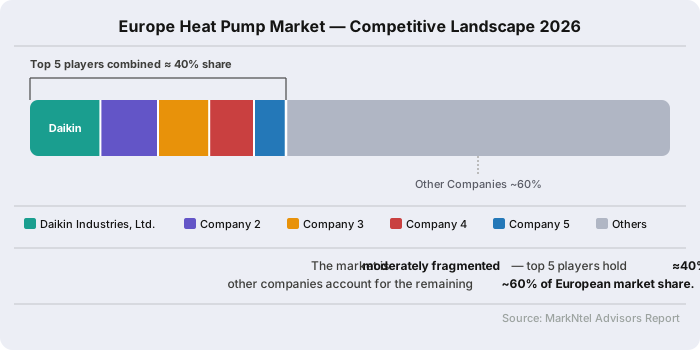
However, consolidation levels vary across sub-regions. Western Europe exhibits a more concentrated structure, with the top five players accounting for around 55% of the market share, supported by the strong presence of established European and Japanese manufacturers with advanced technologies and well-established brands. In contrast, Eastern Europe remains comparatively fragmented, with a higher presence of smaller and regional players. At the same time, the region is witnessing the gradual expansion of Chinese companies such as Midea Group and Gree Electric Appliances, which are gaining traction through competitive pricing and expanding distribution networks.
Leading Heat Pump Manufacturers in Europe
- Daikin Industries Ltd.
- Mitsubishi Electric Corporation
- Carrier Global Corporation
- Robert Bosch GmbH
- NIBE Industrier AB
- Viessmann Group
- Vaillant Group
- Panasonic Corporation
- Trane Technologies plc
- Stiebel Eltron GmbH & Co. KG
- Groupe Atlantic
- Others
Europe Heat Pump Industry News and Recent Developments
March 2025: Johnson Controls Deploys Large-Scale Heat Pumps in Zurich
Johnson Controls announced the deployment of large-scale heat pumps in Zurich, Switzerland, utilizing waste heat to supply energy to approximately 15,000 homes. The system operates using ammonia refrigerant with zero global warming potential, supporting sustainable and efficient district heating infrastructure.
Impact Analysis: The deployment highlights the increasing adoption of large-capacity heat pumps in urban energy systems. It strengthens the role of waste heat utilization in decarbonizing district heating and is expected to accelerate similar large-scale projects across European cities.
June 2025: STRABAG SE Develops 165 MW Mega Heat Pump Project in Germany
STRABAG announced the construction of a 165 MW heat pump system in Mannheim, Germany, expected to serve around 40,000 households. The project utilizes the Rhine River as a heat source, positioning it among the largest heat pump installations globally.
Impact Analysis: This development marks a significant step toward large-scale heat electrification in Europe. It demonstrates the viability of integrating renewable heat sources into district systems and is expected to drive investments in high-capacity heat pump infrastructure.
January 2025: Mitsubishi Electric Corporation Launches New Air-to-Water Heat Pumps
Mitsubishi Electric introduced new residential air-to-water heat pumps under its Hydrolution EZY series, capable of delivering hot water up to 75°C even at -25°C temperatures. The systems, with capacities of 6 kW and 7.1 kW, are designed for enhanced efficiency in cold European climates.
Impact Analysis: The launch reinforces the shift toward high-performance residential heat pumps tailored for cold regions. It is expected to support wider adoption in Northern and Central Europe while intensifying competition in the energy-efficient home heating segment.
- Market Segmentation
- Introduction
- Product Definition
- Research Process
- Assumptions
- Executive Summary
- Europe Macroeconomic Outlook
- Europe Heat Pump Market Policies, Regulations, and Product Standards
- Europe Heat Pump Market Trends & Developments
- Europe Heat Pump Market Supply Chain Analysis
- Europe Heat Pump Import Export Analysis, 2022-2025
- Europe Heat Pump Market Dynamics
- Growth Factors
- Challenges
- Europe Heat Pump Market Hotspot & Opportunities
- Europe Heat Pump Market Outlook, 2022-2032F
- Market Size & Outlook
- By Revenues (USD Billion)
- By Units Sold (Thousand Units)
- Market Share & Analysis
- By Technology- Market Size & Forecast 2022-2032, USD Billion & Thousand Units & Thousand Units
- Air Source Heat Pumps
- Air-to-Air
- Air-to-Water
- Ground Source Heat Pumps
- Closed Loop
- Open Loop
- Water Source Heat Pumps
- Air Source Heat Pumps
- By Capacity- Market Size & Forecast 2022-2032, USD Billion & Thousand Units
- Up to 10 kW
- 10–20 kW
- Above 20 kW
- By Application- Market Size & Forecast 2022-2032, USD Billion & Thousand Units
- Residential
- Commercial
- Industrial
- By Country
- Germany
- The UK
- Italy
- France
- Spain
- Belgium
- The Netherlands
- Sweden
- Poland
- Rest of Europe
- By Company
- Competition Characteristics
- Market Share & Analysis
- By Technology- Market Size & Forecast 2022-2032, USD Billion & Thousand Units & Thousand Units
- Market Size & Outlook
- Germany Heat Pump Market Outlook, 2022-2032F
- Market Size & Outlook
- By Revenues (USD Billion)
- By Units Sold (Thousand Units)
- Market Share & Analysis
- By Technology- Market Size & Forecast 2022-2032, USD Billion & Thousand Units
- By Capacity- Market Size & Forecast 2022-2032, USD Billion & Thousand Units
- By Application- Market Size & Forecast 2022-2032, USD Billion & Thousand Units
- Market Size & Outlook
- The UK Heat Pump Market Outlook, 2022-2032F
- Market Size & Outlook
- By Revenues (USD Billion)
- By Units Sold (Thousand Units)
- Market Share & Analysis
- By Technology- Market Size & Forecast 2022-2032, USD Billion & Thousand Units
- By Capacity- Market Size & Forecast 2022-2032, USD Billion & Thousand Units
- By Application- Market Size & Forecast 2022-2032, USD Billion & Thousand Units
- Market Size & Outlook
- Italy Heat Pump Market Outlook, 2022-2032F
- Market Size & Outlook
- By Revenues (USD Billion)
- By Units Sold (Thousand Units)
- Market Share & Analysis
- By Technology- Market Size & Forecast 2022-2032, USD Billion & Thousand Units
- By Capacity- Market Size & Forecast 2022-2032, USD Billion & Thousand Units
- By Application- Market Size & Forecast 2022-2032, USD Billion & Thousand Units
- Market Size & Outlook
- France Heat Pump Market Outlook, 2022-2032F
- Market Size & Outlook
- By Revenues (USD Billion)
- By Units Sold (Thousand Units)
- Market Share & Analysis
- By Technology- Market Size & Forecast 2022-2032, USD Billion & Thousand Units
- By Capacity- Market Size & Forecast 2022-2032, USD Billion & Thousand Units
- By Application- Market Size & Forecast 2022-2032, USD Billion & Thousand Units
- Market Size & Outlook
- Spain Heat Pump Market Outlook, 2022-2032F
- Market Size & Outlook
- By Revenues (USD Billion)
- By Units Sold (Thousand Units)
- Market Share & Analysis
- By Technology- Market Size & Forecast 2022-2032, USD Billion & Thousand Units
- By Capacity- Market Size & Forecast 2022-2032, USD Billion & Thousand Units
- By Application- Market Size & Forecast 2022-2032, USD Billion & Thousand Units
- Market Size & Outlook
- Belgium Heat Pump Market Outlook, 2022-2032F
- Market Size & Outlook
- By Revenues (USD Billion)
- By Units Sold (Thousand Units)
- Market Share & Analysis
- By Technology- Market Size & Forecast 2022-2032, USD Billion & Thousand Units
- By Capacity- Market Size & Forecast 2022-2032, USD Billion & Thousand Units
- By Application- Market Size & Forecast 2022-2032, USD Billion & Thousand Units
- Market Size & Outlook
- The Netherlands Heat Pump Market Outlook, 2022-2032F
- Market Size & Outlook
- By Revenues (USD Billion)
- By Units Sold (Thousand Units)
- Market Share & Analysis
- By Technology- Market Size & Forecast 2022-2032, USD Billion & Thousand Units
- By Capacity- Market Size & Forecast 2022-2032, USD Billion & Thousand Units
- By Application- Market Size & Forecast 2022-2032, USD Billion & Thousand Units
- Market Size & Outlook
- Sweden Heat Pump Market Outlook, 2022-2032F
- Market Size & Outlook
- By Revenues (USD Billion)
- By Units Sold (Thousand Units)
- Market Share & Analysis
- By Technology- Market Size & Forecast 2022-2032, USD Billion & Thousand Units
- By Capacity- Market Size & Forecast 2022-2032, USD Billion & Thousand Units
- By Application- Market Size & Forecast 2022-2032, USD Billion & Thousand Units
- Market Size & Outlook
- Poland Heat Pump Market Outlook, 2022-2032F
- Market Size & Outlook
- By Revenues (USD Billion)
- By Units Sold (Thousand Units)
- Market Share & Analysis
- By Technology- Market Size & Forecast 2022-2032, USD Billion & Thousand Units
- By Capacity- Market Size & Forecast 2022-2032, USD Billion & Thousand Units
- By Application- Market Size & Forecast 2022-2032, USD Billion & Thousand Units
- Market Size & Outlook
- Europe Heat Pump Market Key Strategic Imperatives for Success & Growth
- Competitive Outlook
- Company Profiles
- Daikin Europe N.V.
- Business Description
- Product Portfolio
- Collaborations & Alliances
- Recent Developments
- Financial Details
- Others
- Mitsubishi Electric Corporation
- Business Description
- Product Portfolio
- Collaborations & Alliances
- Recent Developments
- Financial Details
- Others
- Carrier Global Corporation
- Business Description
- Product Portfolio
- Collaborations & Alliances
- Recent Developments
- Financial Details
- Others
- Robert Bosch GmbH
- Business Description
- Product Portfolio
- Collaborations & Alliances
- Recent Developments
- Financial Details
- Others
- NIBE Industrier AB
- Business Description
- Product Portfolio
- Collaborations & Alliances
- Recent Developments
- Financial Details
- Others
- Viessmann Group
- Business Description
- Product Portfolio
- Collaborations & Alliances
- Recent Developments
- Financial Details
- Others
- Vaillant Group
- Business Description
- Product Portfolio
- Collaborations & Alliances
- Recent Developments
- Financial Details
- Others
- Johnson Controls
- Business Description
- Product Portfolio
- Collaborations & Alliances
- Recent Developments
- Financial Details
- Others
- Trane Technologies plc
- Business Description
- Product Portfolio
- Collaborations & Alliances
- Recent Developments
- Financial Details
- Others
- Stiebel Eltron GmbH & Co. KG
- Business Description
- Product Portfolio
- Collaborations & Alliances
- Recent Developments
- Financial Details
- Others
- Groupe Atlantic
- Business Description
- Product Portfolio
- Collaborations & Alliances
- Recent Developments
- Financial Details
- Others
- Panasonic
- Business Description
- Product Portfolio
- Collaborations & Alliances
- Recent Developments
- Financial Details
- Others
- Daikin Europe N.V.
- Company Profiles
- Disclaimer

MarkNtel Advisors follows a robust and iterative research methodology designed to ensure maximum accuracy and minimize deviation in market estimates and forecasts. Our approach combines both bottom-up and top-down techniques to effectively segment and quantify various aspects of the market. A consistent feature across all our research reports is data triangulation, which examines the market from three distinct perspectives to validate findings. Key components of our research process include:
1. Scope & Research Design At the outset, MarkNtel Advisors define the research objectives and formulate pertinent questions. This phase involves determining the type of research—qualitative or quantitative—and designing a methodology that outlines data collection methods, target demographics, and analytical tools. They also establish timelines and budgets to ensure the research aligns with client goals.
2. Sample Selection and Data Collection In this stage, the firm identifies the target audience and determines the appropriate sample size to ensure representativeness. They employ various sampling methods, such as random or stratified sampling, based on the research objectives. Data collection is carried out using tools like surveys, interviews, and observations, ensuring the gathered data is reliable and relevant.
3. Data Analysis and Validation Once data is collected, MarkNtel Advisors undertake a rigorous analysis process. This includes cleaning the data to remove inconsistencies, employing statistical software for quantitative analysis, and thematic analysis for qualitative data. Validation steps are taken to ensure the accuracy and reliability of the findings, minimizing biases and errors.

4. Data Forecast and FinalizationThe final phase involves forecasting future market trends based on the analyzed data. MarkNtel Advisors utilize predictive modeling and time series analysis to anticipate market behaviors. The insights are then compiled into comprehensive reports, featuring visual aids like charts and graphs, and include strategic recommendations to inform client decision-making
We’d love to understand what matters most to you.