

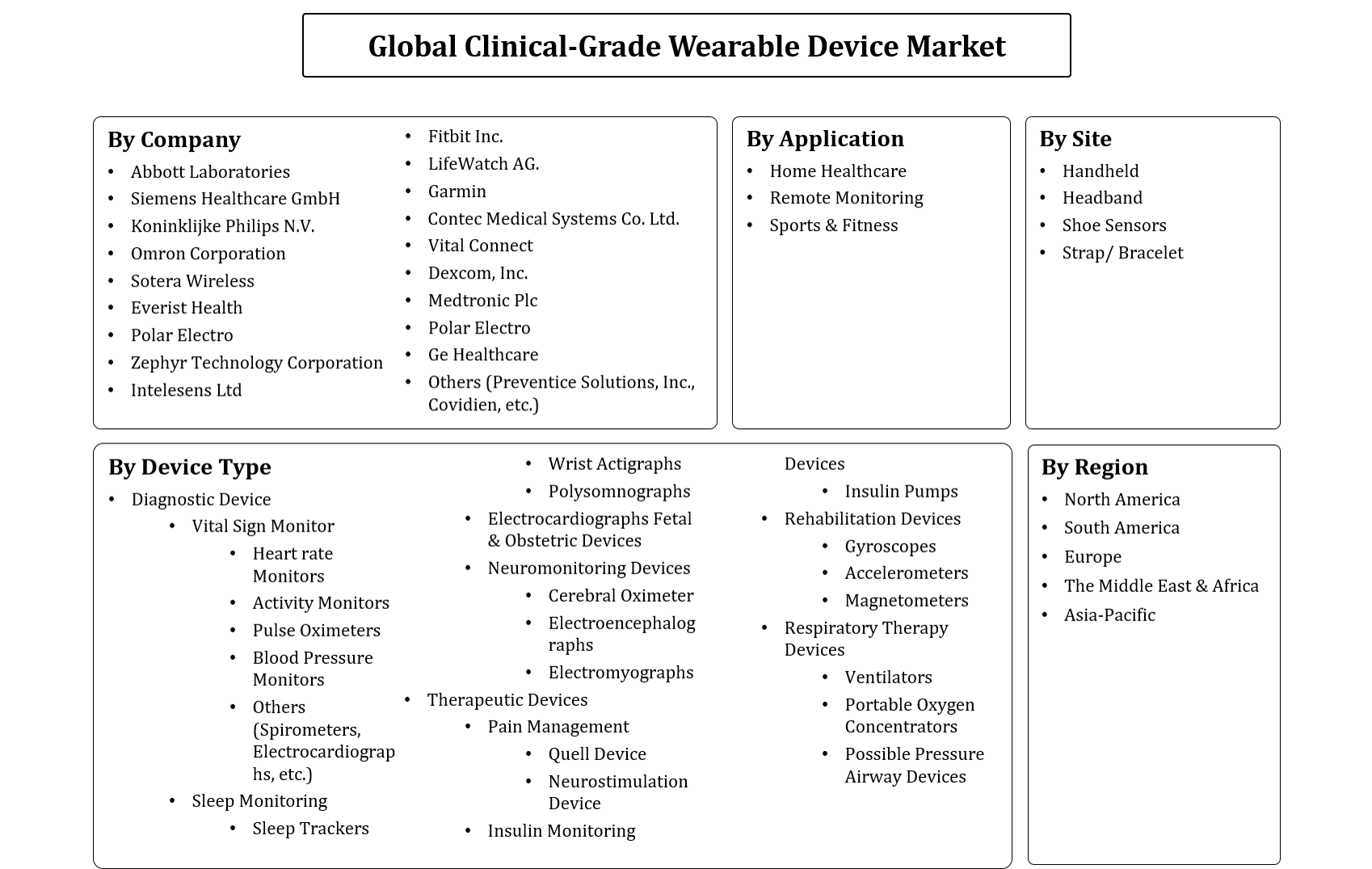
Global Clinical-Grade Wearable Device Market Report - By Device Type, (Diagnostic Device (Vital Sign Monitor (Heart rate Monitors, Activity Monitors, Pulse Oximeters, Blood Pressure Monitors, Others (... ... e Monitors, Others (Spirometers, Electrocardiographs, etc.)), Sleep Monitoring, (Sleep Trackers, Wrist Actigraphs, Polysomnographs), Electrocardiographs Fetal & Obstetric Devices, Neuromonitoring Devices (Cerebral Oximeter, Electroencephalographs, Electromyographs), Therapeutic Devices (Pain Management, Quell Device, Neurostimulation Device), Insulin Monitoring Devices (Insulin Pumps), Rehabilitation Devices (Gyroscopes, Accelerometers, Magnetometers), Respiratory Therapy Devices (Ventilators, Portable Oxygen Concentrators, Possible Pressure Airway Devices))), By Device Site, (Handheld, Headband, Shoe Sensors, Strap/ Bracelet), By Application, (Home Healthcare, Remote Monitoring, Sports & Fitness), and Others Read more
- Healthcare
- May 2023
- 178
- PDF, Excel, PPT
Market Definition
Clinical-Grade wearables are the technology-based devices majorly used in healthcare to monitor the status of patients’ health by attaching the wearables to their bodies. The Clinical-Grade medical devices include fitness trackers, blood pressure monitors, and biosensors. These devices tend to collect health & fitness data, which gives an indication to the user regarding their health report based on their day-to-day activity. Additionally, the demand for Clinical-Grade wearable devices arises from the geriatric population owing to the requirement for consistent monitoring of their health status.
Market Insights & Analysis: Clinical-Grade Wearable Device Market (2023-28):
The Global Clinical-Grade Wearable Market is projected to grow at a CAGR of around 25% during the forecast period, i.e., 2023-28, due to the factors such as growing health awareness among the population, rising diseases, sustainable investments in the public health systems, etc. In historical years, the number of cases of chronic diseases in countries such as the US, the UK, and others has surged, necessitating the use of Clinical-Grade wearable devices for continuous health monitoring. The growing number of health issues & the flexibility provided by the devices have expanded the market for Clinical-Grade wearables.
Several countries, such as Australia, funded the companies to focus on technology-driven health products. Additionally, the funds encouraged the healthcare industry to digitalize their working processes, resulting in greater adoption of technology-based products. Besides, countries such as the UK, Israel, New Zealand, etc., have a healthcare shortage, forcing patients to rely on wearable devices to consistently monitor their health. Due to a lack of workforce, such as nurses, and a shortage of hospital beds, consumers have shifted to homecare health monitoring, boosting the market for Clinical-Grade wearable devices.
| Report Coverage | Details |
|---|---|
| Study Period | Historical Data: 2018-21 |
| Base Year: 2022 | |
| Forecast Period: 2023-28 | |
| CAGR (2023-2028) | 25% |
| Regions Covered | North America: US, Canada, Mexico |
| Europe: Germany, The UK, France, Spain, Italy, Rest of Europe | |
| Asia-Pacific: China, India, Japan, South Korea, Australia, Rest of Asia-Pacific | |
| South America: Brazil, Argentina, Rest of South America | |
| Middle East & Africa: The UAE, Saudi Arabia, South Africa, Egypt, Rest of MEA | |
| Key Companies Profiled | Abbott Laboratories, Siemens Healthcare GmbH, Koninklijke Philips N.V., Omron Corporation, Sotera Wireless, Everist Health, Polar Electro, Zephyr Technology Corporation, Intelesens Ltd, Fitbit Inc., LifeWatch AG., Garmin, Contec Medical Systems Co. Ltd., Vital Connect, Dexcom, Inc., Medtronic Plc, Polar Electro, Ge Healthcare, and Others (Preventice Solutions, Inc., Covidien, etc.) |
| Unit Denominations | USD Million/Billion |
Several countries, such as Australia, funded the companies to focus on technology-driven health products. Additionally, the funds encouraged the healthcare industry to digitalize their working processes, resulting in greater adoption of technology-based products. Besides, countries such as the UK, Israel, New Zealand, etc., have a healthcare shortage, forcing patients to rely on wearable devices to consistently monitor their health. Due to a lack of workforce, such as nurses, and a shortage of hospital beds, consumers have shifted to homecare health monitoring, boosting the market for Clinical-Grade wearable devices.
Furthermore, as these devices offer users flexibility & ease of use and do not require consumers to stay in hospitals, therefore individuals rely on them to monitor their health at home. Furthermore, the impact of consumer behavior has permeated the field of medical applications such as diagnosis, monitoring, and, to a lesser extent, treatment of chronic diseases. As a result of the widespread adoption of devices in the healthcare industry, the market for Clinical-Grade wearables is expected to expand in the forecast years.
Clinical-Grade Wearable Device Market Driver:
Rising Demand for Incessant Health Monitoring for Diabetes & Related Health Issues: Over the past few years, there has been an increase in the population suffering from diabetes, thereby generating the demand for Clinical-Grade wearable devices for examining glucose levels at regular intervals of time. According to World Health Organization, over 422 million people are suffering from diabetes, globally, which leads to over 1.5 million deaths per year. Consequently, patients use glucose-monitoring wearable devices and insulin pumps to keep track of their sugar levels and deliver insulin precisely at designated times. This helps patients maintain their blood sugar levels efficiently.
- Market Segmentation
- Introduction
- Product Definition
- Research Process
- Assumptions
- Executive Summary
- Global Clinical-Grade Wearable Device Market Start-up Ecosystem
- Year-on-Year Funding
- Key Investors Active in the Market
- Series-wise Funding Received
- Impact of COVID-19 on Global Clinical-Grade Wearable Device Market
- Global Clinical-Grade Wearable Device Market Trends & Developments
- Global Clinical-Grade Wearable Device Market Dynamics
- Growth Drivers
- Challenges
- Global Clinical-Grade Wearable Device Market Regulations & Policy
- Global Clinical-Grade Wearable Device Market Supply Chain Analysis
- Global Clinical-Grade Wearable Device Market Patent Analysis
- Global Clinical-Grade Wearable Device Market Hotspots & Opportunities
- Global Clinical-Grade Wearable Device Market Outlook, 2018-2028F
- Market Size & Analysis
- By Revenues (USD Million)
- By Units Sold (Thousand Units)
- Market Share & Analysis
- By Device Type
- Diagnostic Device
- Vital Sign Monitor
- Heart rate Monitors
- Activity Monitors
- Pulse Oximeters
- Blood Pressure Monitors
- Others (Spirometers, Electrocardiographs, etc.)
- Sleep Monitoring
- Sleep Trackers
- Wrist Actigraphs
- Polysomnographs
- Electrocardiographs Fetal & Obstetric Devices
- Neuromonitoring Devices
- Cerebral Oximeter
- Electroencephalographs
- Electromyographs
- Vital Sign Monitor
- Therapeutic Devices
- Pain Management
- Quell Device
- Neurostimulation Device
- Insulin Monitoring Devices
- Insulin Pumps
- Rehabilitation Devices
- Gyroscopes
- Accelerometers
- Magnetometers
- Respiratory Therapy Devices
- Ventilators
- Portable Oxygen Concentrators
- Possible Pressure Airway Devices
- Pain Management
- Diagnostic Device
- By Device Site
- Handheld
- Headband
- Shoe Sensors
- Strap/ Bracelet
- By Application
- Home Healthcare
- Remote Monitoring
- Sports & Fitness
- By Region
- North America
- South America
- Europe
- Middle East & Africa
- Asia-Pacific
- By Company
- Competition Characteristics
- Revenue Shares
- By Device Type
- Market Size & Analysis
- North America Clinical-Grade Wearable Device Market Outlook, 2018-2028F
- Market Size & Analysis
- By Revenues
- By Units Sold
- Market Share & Analysis
- By Device Type
- By Site
- By Application
- By Country
- The US
- Canada
- Mexico
- The United States Clinical-Grade Wearable Device Market Outlook, 2018-2028F
- Market Size & Analysis
- By Revenues
- By Units Sold
- Market Share & Analysis
- By Device Type
- Market Size & Analysis
- Canada Clinical-Grade Wearable Device Market Outlook, 2018-2028F
- Market Size & Analysis
- By Revenues
- By Units Sold
- Market Share & Analysis
- By Device Type
- Market Size & Analysis
- Mexico Clinical-Grade Wearable Device Market Outlook, 2018-2028F
- Market Size & Analysis
- By Revenues
- By Units Sold
- Market Share & Analysis
- By Device Type
- Market Size & Analysis
- Market Size & Analysis
- South America Clinical-Grade Wearable Device Market Outlook, 2018-2028F
- Market Size & Analysis
- By Revenues
- By Units Sold
- Market Share & Analysis
- By Device Type
- By Site
- By Application
- By Country
- Brazil
- Argentina
- Rest of South America
- Brazil Clinical-Grade Wearable Device Market Outlook, 2018-2028F
- Market Size & Analysis
- By Revenues
- By Units Sold
- Market Share & Analysis
- By Device Type
- Market Size & Analysis
- Argentina Clinical-Grade Wearable Device Market Outlook, 2018-2028F
- Market Size & Analysis
- By Revenues
- By Units Sold
- Market Share & Analysis
- By Device Type
- Market Size & Analysis
- Market Size & Analysis
- Europe Clinical-Grade Wearable Device Market Outlook, 2018-2028F
- Market Size & Analysis
- By Revenues
- By Units Sold
- Market Share & Analysis
- By Device Type
- By Site
- By Application
- By Country
- Germany
- The UK
- France
- Italy
- Spain
- Rest of Europe
- Germany Clinical-Grade Wearable Device Market Outlook, 2018-2028F
- Market Size & Analysis
- By Revenues
- By Units Sold
- Market Share & Analysis
- By Device Type
- Market Size & Analysis
- The UK Clinical-Grade Wearable Device Market Outlook, 2018-2028F
- Market Size & Analysis
- By Revenues
- By Units Sold
- Market Share & Analysis
- By Device Type
- Market Size & Analysis
- France Clinical-Grade Wearable Device Market Outlook, 2018-2028F
- Market Size & Analysis
- By Revenues
- By Units Sold
- Market Share & Analysis
- By Device Type
- Market Size & Analysis
- Italy Clinical-Grade Wearable Device Market Outlook, 2018-2028F
- Market Size & Analysis
- By Revenues
- By Units Sold
- Market Share & Analysis
- By Device Type
- Market Size & Analysis
- Spain Clinical-Grade Wearable Device Market Outlook, 2018-2028F
- Market Size & Analysis
- By Revenues
- By Units Sold
- Market Share & Analysis
- By Device Type
- Market Size & Analysis
- Market Size & Analysis
- Middle East & Africa Clinical-Grade Wearable Device Market Outlook, 2018-2028F
- Market Size & Analysis
- By Revenues
- By Units Sold
- Market Share & Analysis
- By Device Type
- By Site
- By Application
- By Country
- UAE
- Saudi Arabia
- South Africa
- Egypt
- Rest of MEA
- UAE Clinical-Grade Wearable Device Market Outlook, 2018-2028F
- Market Size & Analysis
- By Revenues
- By Units Sold
- Market Share & Analysis
- By Device Type
- Market Size & Analysis
- Saudi Arabia Clinical-Grade Wearable Device Market Outlook, 2018-2028F
- Market Size & Analysis
- By Revenues
- By Units Sold
- Market Share & Analysis
- By Device Type
- Market Size & Analysis
- South Africa Clinical-Grade Wearable Device Market Outlook, 2018-2028F
- Market Size & Analysis
- By Revenues
- By Units Sold
- Market Share & Analysis
- By Device Type
- Market Size & Analysis
- Market Size & Analysis
- Asia-Pacific Clinical-Grade Wearable Device Market Outlook, 2018-2028F
- Market Size & Analysis
- By Revenues
- By Units Sold
- Market Share & Analysis
- By Device Type
- By Site
- By Application
- By Country
- China
- India
- Japan
- South Korea
- Australia
- Rest of Asia-Pacific
- China Clinical-Grade Wearable Device Market Outlook, 2018-2028F
- Market Size & Analysis
- By Revenues
- By Units Sold
- Market Share & Analysis
- By Device Type
- By Site
- By Application
- Market Size & Analysis
- India Clinical-Grade Wearable Device Market Outlook, 2018-2028F
- Market Size & Analysis
- By Revenues
- By Units Sold
- Market Share & Analysis
- By Device Type
- Market Size & Analysis
- Japan Clinical-Grade Wearable Device Market Outlook, 2018-2028F
- Market Size & Analysis
- By Revenues
- By Units Sold
- Market Share & Analysis
- By Device Type
- Market Size & Analysis
- South Korea Clinical-Grade Wearable Device Market Outlook, 2018-2028F
- Market Size & Analysis
- By Revenues
- By Units Sold
- Market Share & Analysis
- By Device Type
- Market Size & Analysis
- Australia Clinical-Grade Wearable Device Market Outlook, 2018-2028F
- Market Size & Analysis
- By Revenues
- By Units Sold
- Market Share & Analysis
- By Device Type
- Market Size & Analysis
- Market Size & Analysis
- Global Clinical-Grade Wearable Device Market Key Strategic Imperatives for Success & Growth
- Competition Outlook
- Competition Matrix
- Product Portfolio
- Target Markets
- Research & Development
- Strategic Alliances
- Strategic Initiatives
- Company Profiles (Business Description, Product Segments, Business Segments, Financials, Strategic Alliances/ Partnerships, Future Plans)
- Abott Laboratories
- Siemens Healthcare GmbH
- Koninklijke Philips N.V.
- Omron Corporation
- Sotera Wireless
- Everist Health
- Polar Electro
- Zephyr Technology Corporation
- Intelesens Ltd
- Fitbit Inc.
- LifeWatch AG.
- Garmin
- Contec Medical Systems Co. Ltd.
- Vital Connect
- Dexcom, Inc.
- Medtronic Plc
- Polar Electro
- Ge Healthcare
- Others (Preventice Solutions, Inc., Covidien, etc.)
- Competition Matrix
- Disclaimer
MarkNtel Advisors follows a robust and iterative research methodology designed to ensure maximum accuracy and minimize deviation in market estimates and forecasts. Our approach combines both bottom-up and top-down techniques to effectively segment and quantify various aspects of the market. A consistent feature across all our research reports is data triangulation, which examines the market from three distinct perspectives to validate findings. Key components of our research process include:
1. Scope & Research Design At the outset, MarkNtel Advisors define the research objectives and formulate pertinent questions. This phase involves determining the type of research—qualitative or quantitative—and designing a methodology that outlines data collection methods, target demographics, and analytical tools. They also establish timelines and budgets to ensure the research aligns with client goals.
2. Sample Selection and Data Collection In this stage, the firm identifies the target audience and determines the appropriate sample size to ensure representativeness. They employ various sampling methods, such as random or stratified sampling, based on the research objectives. Data collection is carried out using tools like surveys, interviews, and observations, ensuring the gathered data is reliable and relevant.
3. Data Analysis and Validation Once data is collected, MarkNtel Advisors undertake a rigorous analysis process. This includes cleaning the data to remove inconsistencies, employing statistical software for quantitative analysis, and thematic analysis for qualitative data. Validation steps are taken to ensure the accuracy and reliability of the findings, minimizing biases and errors.

4. Data Forecast and FinalizationThe final phase involves forecasting future market trends based on the analyzed data. MarkNtel Advisors utilize predictive modeling and time series analysis to anticipate market behaviors. The insights are then compiled into comprehensive reports, featuring visual aids like charts and graphs, and include strategic recommendations to inform client decision-making
We’d love to understand what matters most to you.