

By Flavoring Classification (Natural Flavors, Synthetic Flavors (Nature-Identical Flavors, Artificial Flavors), Reaction or Transformation Flavors, Smoke Flavors), By Form (Liquid (Water-Soluble, Oil-... ... (Water-Soluble, Oil-Soluble, Emulsions), Dry (Powdered, Encapsulated/Spray-Dried), Other Forms), By Flavor Profile (Fruit Flavors (Citrus, Tropical Fruit, Berry, Other Fruit), Brown and Sweet Flavors (Vanilla, Chocolate and Cocoa, Coffee, Caramel, Nut), Dairy and Cream Flavors, Savory and Culinary Flavors (Meat and Seafood, Cheese, Vegetable, Umami and Grilled Profiles), Herbs, Spices and Botanical Flavors, Mint, Cooling and Refreshing Flavors, Other Flavor Profiles), By Application (Beverages (Carbonated Soft Drinks, Juice-Based and Fruit Drinks, Energy and Sports Drinks, Flavored Water, Tea and Coffee-Based Beverages, Alcoholic Beverages, Other Beverages), Dairy and Frozen Desserts (Flavored Milk and Dairy Drinks, Yogurt and Fermented Dairy Products, Ice Cream and Frozen Desserts, Cheese and Other Dairy Products), Bakery, Confectionery (Chocolate Confectionery, Sugar Confectionery and Chewing Gum), Savory Foods and Snacks (Savory Snacks, Soups and Ready Meals, Sauces, Dressings and Condiments, Seasonings and Culinary Preparations), Meat, Seafood and Alternative Proteins, Nutrition Products and Food Supplements, Other Food Applications), and others Read more
- Food & Beverages
- Aug 2026
- 125
- PDF, Excel, PPT
Brazil Food Flavors Market Key Takeaways
- The market is estimated at USD 1.24 billion in 2025 and USD 1.31 billion in 2026, reaching USD 1.80 billion by 2032 with a 5.44% CAGR during 2026-32.
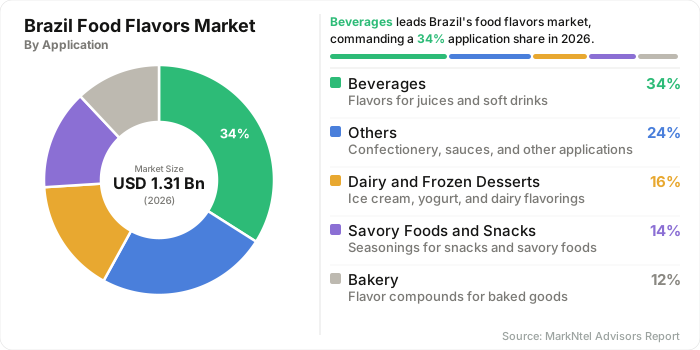
- Beverages lead by application, accounting for an estimated 34% share in 2026.
- Synthetic flavors lead by flavoring classification, with an estimated 63% market share in 2026.
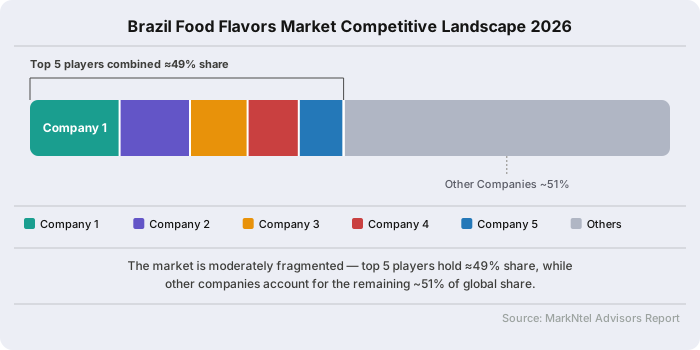
- The market is moderately concentrated, with the top five companies collectively accounting for an estimated 49% share in 2026.
Brazil Food Flavors Market Size and Outlook
The Brazil Food Flavors Market was valued at an estimated USD 1.24 billion in 2025 and is projected to reach approximately USD 1.31 billion in 2026. It is forecast to expand at a CAGR of around 5.44% during 2026–2032, reaching nearly USD 1.80 billion by 2032.
Market expansion is supported by Brazil’s large and diversified food-processing industry, which generates recurring flavor demand across beverages, dairy products, bakery, confectionery, savory foods and processed proteins. The country’s food and beverage industry generated approximately USD 270 billion in revenue in 2025, while physical production increased 1.9% to 288 million tons, strengthening the underlying production base for flavor consumption. Growth is also being reinforced by frequent product development, portfolio expansion and reformulation across the food and beverage industry. Brazilian manufacturers directed USD 5.19 billion toward innovation, plant modernization and new technologies in 2025, supporting new formulations, production-line upgrades and improved processing capabilities. This activity is expected to increase demand for customized flavors, application testing, taste modulation and processing-stable systems.
Over the forecast period, rising demand for natural profiles, regional tastes, reduced-sugar formulations, functional products and premium sensory experiences is expected to support higher-value flavor adoption. However, customer price sensitivity, exchange-rate exposure and variability in agricultural and imported inputs are likely to moderate growth. Consequently, market expansion is expected to reflect a combination of higher flavor volumes, moderate price realization and gradual value migration toward natural, encapsulated and customized formulations.
Brazil Food Flavors Market Key Indicators
- According to the Brazilian Association of the Food Industry (ABIA), Brazil had approximately 42,000 food and beverage companies in 2025, spanning multinational manufacturers, large domestic processors and smaller regional producers. This diverse customer base supports demand for standardized products, customized formulations, technical assistance and distributor-supplied flavor solutions.
- Brazil produces approximately 32 billion liters of non-alcoholic beverages annually, as per the Brazilian Association of Soft Drink and Non-Alcoholic Beverage Industries (ABIR), which represents more than 90% of the sector. This production scale creates recurring demand for beverage compounds, emulsions, extracts, water-soluble flavors, masking solutions and powdered systems.
- ABIA reported that Brazil’s domestic food and beverage distribution generated ~USD 198.25 billion in 2025, including USD 142.28 billion through retail and USD 55.97 billion through foodservice. Nominal sales increased by 8.4% and 10.1%, respectively, supporting product and formulation turnover across both channels.
- The Southeast and South regions generated a combined USD 181.38 billion, equivalent to 67.2% of Brazilian food-industry production value in 2025. Their concentration of processing facilities and product-development functions supports these regions’ importance in flavor procurement and application activity.
Brazil Food Flavors Market Scope
| Category | Segments |
|---|---|
| By Flavoring Classification | Natural Flavors, Synthetic Flavors (Nature-Identical Flavors, Artificial Flavors), Reaction or Transformation Flavors, Smoke Flavors |
| By Form | Liquid (Water-Soluble, Oil-Soluble, Emulsions), Dry (Powdered, Encapsulated/Spray-Dried), Other Forms |
| By Flavor Profile | Fruit Flavors (Citrus, Tropical Fruit, Berry, Other Fruit), Brown and Sweet Flavors (Vanilla, Chocolate and Cocoa, Coffee, Caramel, Nut), Dairy and Cream Flavors, Savory and Culinary Flavors (Meat and Seafood, Cheese, Vegetable, Umami and Grilled Profiles), Herbs, Spices and Botanical Flavors, Mint, Cooling and Refreshing Flavors, Other Flavor Profiles |
| By Application | Beverages (Carbonated Soft Drinks, Juice-Based and Fruit Drinks, Energy and Sports Drinks, Flavored Water, Tea and Coffee-Based Beverages, Alcoholic Beverages, Other Beverages), Dairy and Frozen Desserts (Flavored Milk and Dairy Drinks, Yogurt and Fermented Dairy Products, Ice Cream and Frozen Desserts, Cheese and Other Dairy Products), Bakery, Confectionery (Chocolate Confectionery, Sugar Confectionery and Chewing Gum), Savory Foods and Snacks (Savory Snacks, Soups and Ready Meals, Sauces, Dressings and Condiments, Seasonings and Culinary Preparations), Meat, Seafood and Alternative Proteins, Nutrition Products and Food Supplements, Other Food Applications |
Brazil Food Flavors Market Growth Drivers
Expanding Food Production and Premiumization Broaden Formulation Demand
Growth in Brazil’s food-processing industry is increasing the number and scale of commercial formulations requiring flavor systems. Manufacturers serving domestic and export markets must continuously adapt products to different taste preferences, price points, shelf-life requirements and nutritional specifications. Brazil’s processed food and beverage exports increased by 0.7% to USD 66.73 billion in 2025, reaching more than 190 countries and territories. The industry expects real sales to grow by another 2–2.5% in 2026, supporting higher utilization of flavor ingredients across beverages, dairy products, bakery, confectionery, snacks and processed proteins.
Investment by major food manufacturers reinforces this demand outlook. In June 2025, Nestle announced USD 1.27 billion in Brazilian investment through 2028, with priorities including productivity improvements, premiumization and acceleration of high-potential brands. Brazil generated approximately USD 4.90 billion for Nestle in 2024, making it the company’s third-largest market. Expanding production and moving product portfolios toward differentiated, higher-value offerings generate new formulation briefs, reformulation cycles and application-development requirements, thereby supporting both flavor volumes and demand for customized solutions.
Recent Trends
Familiar Brazilian Flavor Profiles Are Expanding Across Product Categories
Food and beverage manufacturers are increasingly combining flavors familiar to Brazilian consumers with new formats and more adventurous sensory experiences. Kerry’s 2025 research among Brazilian energy-drink consumers found that tropical-fruit flavors attracted interest from 60% of respondents, followed by guarana at 51%, while watermelon, green apple and citrus each reached 45%. These preferences are encouraging flavor suppliers to develop recognizable profiles with differentiated intensity, natural positioning and compatibility with functional or reduced-sugar formulations.
Manufacturers are extending this localization strategy beyond beverages. In July 2025, PepsiCo introduced Ruffles and Cheetos Crunchy in Mexican Pepper flavor across Brazil after its consumer research found that 20% of snack buyers preferred spicy profiles. The flavor was specifically calibrated to Brazilian taste preferences and added to both brands’ permanent portfolios. In the same month, Nestlé launched limited-edition KitKat Churros, combining cinnamon and dulce-de-leche notes associated with a popular Brazilian street dessert. These launches demonstrate how tropical, spicy and nostalgic profiles are moving across beverages, snacks and confectionery. Through 2032, this cross-category adaptation should influence market demand for customized fruit, spice, dairy and brown-flavor systems.
Brazil Food Flavors Market Opportunities and Challenges
Food-Cost Pressure Constrains Premium Products While Driving Demand for Cost-Optimized Taste Systems
Elevated food prices are increasing consumer sensitivity and limiting manufacturers’ ability to transfer formulation costs into retail prices. Brazil’s food and beverage prices rose by 1.17% in March 2025, while annual consumer inflation reached 5.48%. Affordability pressures were also evident in coffee, where 24% of surveyed Brazilians reported reducing consumption in 2025, compared with 3% in 2023, with price becoming substantially more important in purchasing decisions. These conditions can suppress sales volumes, delay premium launches, and encourage manufacturers to simplify recipes, reduce expensive ingredients, or introduce smaller and more affordable product formats. Such adjustments create a challenge for flavor suppliers when customers prioritize formulation cost over complexity and premium sensory attributes.
However, the same pressure expands opportunities for flavor systems that preserve sensory quality while lowering total production costs. In September 2025, Kerry introduced Smart Taste, combining flavor and food-science capabilities to address cost, supply, nutrition and regulatory pressures without compromising taste. Similar enhancement, masking and ingredient-replacement technologies can help Brazilian manufacturers reduce expensive cocoa, coffee, dairy, fruit or spice inputs while maintaining recognizable taste profiles. Suppliers providing reformulation support, rapid application testing and cost-efficient customized systems can consequently become formulation partners rather than conventional ingredient vendors, supporting higher-value flavor demand through 2032.
Segmentation Insights
Beverages Lead Through High Production Volumes and Continuous Portfolio Innovation, Accounting for an Estimated 34% Market Share in 2026
Beverages lead because flavor systems are essential across carbonated drinks, juices and nectars, energy and sports drinks, dairy beverages, plant-based alternatives, powdered beverages and other ready-to-drink products. Beverage formulations also require relatively precise flavor consistency because small sensory differences become noticeable in liquid products. Frequent launches, seasonal variants, sugar reduction and functional fortification further generate recurring reformulation demand for fruit, citrus, cola, botanical, dairy and masking profiles.
The breadth of Brazil’s beverage-manufacturing infrastructure reinforces this position. The Coca-Cola Brazil system operates 37 factories and markets approximately 260 products across nine beverage categories, including carbonated drinks, juices, dairy products, plant-based beverages, water, sports drinks and teas. The company also invested approximately USD 90 million to expand its beverage-concentrate plant in Amazonas in December 2024. Concentrate manufacturing and a broad multi-category portfolio require standardized flavor systems that can be produced consistently across bottling operations and package formats. Consequently, beverages should remain the largest application through 2032, supported by product rotation, functional innovation and localized taste development. Based on order application, the market is segmented into:
- Beverages
- Dairy and Frozen Desserts
- Bakery
- Confectionery
- Savory Foods and Snacks
- Meat, Seafood and Alternative Proteins
- Nutrition Products and Food Supplements
- Other Food Applications
Synthetic Flavors Maintain Leadership Through Cost Efficiency and Formulation Consistency, Accounting for an Estimated 63% Market Share in 2026
Synthetic flavors include nature-identical and artificial flavorings, which remain widely used because they provide consistent taste, processing stability, dependable availability and lower formulation costs. These characteristics are important in mass-produced beverages, confectionery, bakery products, snacks, dairy products and powdered mixes, where manufacturers must reproduce the same sensory profile across large batches and extended production periods. Synthetic systems also allow precise adjustment of flavor intensity and can replace taste characteristics weakened by heating, drying, storage or reduced-sugar reformulation.
Brazilian suppliers consequently maintain extensive portfolios within this classification, offering nature-identical flavors produced with the same molecules found in natural counterparts, and chemically synthesized artificial flavors. Synthetic flavors should therefore retain leadership through 2032, particularly in value-sensitive, high-volume applications. However, faster adoption of natural and clean-label alternatives should gradually moderate their share and encourage suppliers to develop hybrid systems balancing cost, stability and label appeal. Based on flavor classification, the market is segmented into:
- Natural Flavors
- Synthetic Flavors
- Reaction or Transformation Flavors
- Smoke Flavors
Brazil Food Flavors Market Competitive Landscape
Brazil Food Flavors Market is moderately concentrated, with the top five companies holding 49% market share in 2026. The top five companies in the market are DR Flavors & Ingredients, Givaudan, IFF, dsm-firmenich, and Symrise.
Key Companies in the Brazil Food Flavors Market
- DR Flavors & Ingredients
- Givaudan do Brasil Ltda.
- International Flavors & Fragrances Inc.
- dsm-firmenich
- Symrise Aromas e Fragrancias Ltda.
- Kerry do Brasil Ltda.
- Archer Daniels Midland Company
- Dohler America Latina Ltda.
- MANE do Brasil Industria e Comercio Ltda.
- Takasago Fragrancias e Aromas Ltda.
- Others
Brazil Food Flavors Industry News and Recent Developments
-
May 2026 | DR Flavors & Ingredients Launches More Than 20 Products at Fispal Sorvetes
DR Flavors & Ingredients presented more than 20 new products at Fispal Sorvetes 2026 in São Paulo. The portfolio included concentrated acai paste, pineapple-and-coconut Variegato, protein-enriched and zero-added-sugar solutions, and new passion-fruit and strawberry confectionery flavors.
Impact analysis: The launches strengthen DR’s position in frozen desserts and confectionery while extending its reach into health, wellness and sports-nutrition applications. It demonstrates convergence between flavor, protein enrichment and reduced-sugar formulation, and could intensify competition for higher-value foodservice and industrial customers.
-
May 2026 | Dohler Presents Functional Flavor and Taste-Modulation Concepts at NIS 2026
Dohler presented functional food and beverage concepts at Brazil’s Nutri Ingredients Summit 2026, including an energy drink combining banana, mango and cashew, a pineapple-and-lemon post-workout supplement, triple-zero star-fruit yogurt and a passion-fruit and lemongrass alcohol-free cocktail. The concepts used natural flavors and the company’s MultiSense taste-modulation platform.
Impact analysis: The applications demonstrate Dohler’s ability to manage bitterness, off-notes and mouthfeel in protein-, mineral- and vitamin-fortified products. This expands its addressable opportunities in functional beverages, sports nutrition, reduced-sugar dairy and alcohol-free drinks, where sensory performance materially influences repeat purchasing and commercial viability.
-
November 2025 | Kerry Introduces Better Biscuit Formulation Concept in Brazil
Kerry introduced its Better Biscuit concept to Brazil during the Biscuit People Conference 2025. The portfolio combined flavor, texture, nutrition and sustainability solutions, including Cocoa Booster technology supporting authentic cocoa taste amid climate-related availability and cost pressures. Other technologies addressed fat reduction, texture and functional fortification.
Impact analysis: Cocoa Booster gives biscuit manufacturers an alternative route to maintain indulgent taste while reducing exposure to volatile cocoa inputs. Integrating flavor optimization with processing and nutritional solutions strengthens Kerry’s position as a formulation partner and can increase demand for value-added flavor systems across bakery and confectionery application.
- Market Segmentation
- Introduction
- Product Definition
- Research Process
- Assumptions
- Executive Summary
- Brazil Food Flavors Market Supply Chain & Procurement Analysis
- Brazil Food Flavors Market Policies, Regulations, and Product Standards
- Brazil Food Flavors Market Trends & Developments
- Brazil Food Flavors Market Dynamics
- Growth Factors
- Challenges
- Brazil Food Flavors Market Hotspot & Opportunities
- Brazil Food Flavors Market Outlook, 2022-2032
- Market Size & Outlook
- By Revenues (USD Million)
- Market Segmentation & Outlook
- By Flavoring Classification- Market Size & Forecast 2022-2032, USD Million
- Natural Flavors
- Synthetic Flavors
- Nature-Identical Flavors
- Artificial Flavors
- Reaction or Transformation Flavors
- Smoke Flavors
- By Form- Market Size & Forecast 2022-2032, USD Million
- Liquid
- Water-Soluble
- Oil-Soluble
- Emulsions
- Dry
- Powdered
- Encapsulated/Spray-Dried
- Other Forms
- Liquid
- By Flavor Profile- Market Size & Forecast 2022-2032, USD Million
- Fruit Flavors
- Citrus
- Tropical Fruit
- Berry
- Other Fruit
- Brown and Sweet Flavors
- Vanilla
- Chocolate and Cocoa
- Coffee
- Caramel
- Nut
- Dairy and Cream Flavors
- Savory and Culinary Flavors
- Meat and Seafood
- Cheese
- Vegetable
- Umami and Grilled Profiles
- Herbs, Spices and Botanical Flavors
- Mint, Cooling and Refreshing Flavors
- Other Flavor Profiles
- Fruit Flavors
- By Application- Market Size & Forecast 2022-2032, USD Million
- Beverages
- Carbonated Soft Drinks
- Juice-Based and Fruit Drinks
- Energy and Sports Drinks
- Flavored Water
- Tea and Coffee-Based Beverages
- Alcoholic Beverages
- Other Beverages
- Dairy and Frozen Desserts
- Flavored Milk and Dairy Drinks
- Yogurt and Fermented Dairy Products
- Ice Cream and Frozen Desserts
- Cheese and Other Dairy Products
- Bakery
- Confectionery
- Chocolate Confectionery
- Sugar Confectionery and Chewing Gum
- Savory Foods and Snacks
- Savory Snacks
- Soups and Ready Meals
- Sauces, Dressings and Condiments
- Seasonings and Culinary Preparations
- Meat, Seafood and Alternative Proteins
- Nutrition Products and Food Supplements
- Other Food Applications
- Beverages
- By Region- Market Size & Forecast 2022-2032, USD Million
- Southeast
- South
- Central-West
- Northeast
- North
- By Company
- Competition Characteristics
- Market Share & Analysis
- By Flavoring Classification- Market Size & Forecast 2022-2032, USD Million
- Market Size & Outlook
- Brazil Liquid Food Flavors Market Outlook, 2022-2032
- Market Size & Outlook
- By Revenues (USD Million)
- Market Segmentation & Outlook
- By Flavoring Classification- Market Size & Forecast 2022-2032, USD Million
- By Flavor Profile- Market Size & Forecast 2022-2032, USD Million
- By Application- Market Size & Forecast 2022-2032, USD Million
- By Region- Market Size & Forecast 2022-2032, USD Million
- Market Size & Outlook
- Brazil Dry Food Flavors Market Outlook, 2022-2032
- Market Size & Outlook
- By Revenues (USD Million)
- Market Segmentation & Outlook
- By Flavoring Classification- Market Size & Forecast 2022-2032, USD Million
- By Flavor Profile- Market Size & Forecast 2022-2032, USD Million
- By Application- Market Size & Forecast 2022-2032, USD Million
- By Region- Market Size & Forecast 2022-2032, USD Million
- Market Size & Outlook
- Brazil Food Flavors Market Key Strategic Imperatives for Success & Growth
- Competitive Outlook
- Company Profiles
- DR Flavors & Ingredients
- Business Description
- Product Portfolio
- Collaborations & Alliances
- Recent Developments
- Financial Details
- Others
- Givaudan do Brasil Ltda.
- Business Description
- Product Portfolio
- Collaborations & Alliances
- Recent Developments
- Financial Details
- Others
- International Flavors & Fragrances Inc.
- Business Description
- Product Portfolio
- Collaborations & Alliances
- Recent Developments
- Financial Details
- Others
- dsm-firmenich
- Business Description
- Product Portfolio
- Collaborations & Alliances
- Recent Developments
- Financial Details
- Others
- Symrise Aromas e Fragrancias Ltda.
- Business Description
- Product Portfolio
- Collaborations & Alliances
- Recent Developments
- Financial Details
- Others
- Kerry do Brasil Ltda.
- Business Description
- Product Portfolio
- Collaborations & Alliances
- Recent Developments
- Financial Details
- Others
- Archer Daniels Midland Company
- Business Description
- Product Portfolio
- Collaborations & Alliances
- Recent Developments
- Financial Details
- Others
- Dohler America Latina Ltda.
- Business Description
- Product Portfolio
- Collaborations & Alliances
- Recent Developments
- Financial Details
- Others
- MANE do Brasil Industria e Comercio Ltda.
- Business Description
- Product Portfolio
- Collaborations & Alliances
- Recent Developments
- Financial Details
- Others
- Takasago Fragrancias e Aromas Ltda.
- Business Description
- Product Portfolio
- Collaborations & Alliances
- Recent Developments
- Financial Details
- Others
- Others
- DR Flavors & Ingredients
- Company Profiles
- Disclaimer

MarkNtel Advisors follows a robust and iterative research methodology designed to ensure maximum accuracy and minimize deviation in market estimates and forecasts. Our approach combines both bottom-up and top-down techniques to effectively segment and quantify various aspects of the market. A consistent feature across all our research reports is data triangulation, which examines the market from three distinct perspectives to validate findings. Key components of our research process include:
1. Scope & Research Design At the outset, MarkNtel Advisors define the research objectives and formulate pertinent questions. This phase involves determining the type of research—qualitative or quantitative—and designing a methodology that outlines data collection methods, target demographics, and analytical tools. They also establish timelines and budgets to ensure the research aligns with client goals.
2. Sample Selection and Data Collection In this stage, the firm identifies the target audience and determines the appropriate sample size to ensure representativeness. They employ various sampling methods, such as random or stratified sampling, based on the research objectives. Data collection is carried out using tools like surveys, interviews, and observations, ensuring the gathered data is reliable and relevant.
3. Data Analysis and Validation Once data is collected, MarkNtel Advisors undertake a rigorous analysis process. This includes cleaning the data to remove inconsistencies, employing statistical software for quantitative analysis, and thematic analysis for qualitative data. Validation steps are taken to ensure the accuracy and reliability of the findings, minimizing biases and errors.

4. Data Forecast and FinalizationThe final phase involves forecasting future market trends based on the analyzed data. MarkNtel Advisors utilize predictive modeling and time series analysis to anticipate market behaviors. The insights are then compiled into comprehensive reports, featuring visual aids like charts and graphs, and include strategic recommendations to inform client decision-making
We’d love to understand what matters most to you.