

By Product Type (Vegetable Oil-Based (HETG), Synthetic Ester-Based (HEES), Polyalkylene Glycol-Based (HEPG), Polyalphaolefin and Hydrocarbon-Based Hydraulic Fluids (HEPR), Other Biodegradable Hydrauli... ... odegradable Hydraulic Fluids), By Distribution Channel (OEM Fill, Aftermarket), By End User (Agriculture, Construction, Forestry, Marine, Mining, Industrial Manufacturing, Oil & Gas, Power Generation, Others), and others Read more
- Food & Beverages
- Jul 2026
- 310
- PDF, Excel, PPT
Biodegradable Hydraulic Fluids Market Key Takeaways
- The biodegradable hydraulic fluids market was valued at USD 0.81 billion in 2025 and is projected to reach USD 0.87 billion in 2026 and USD 1.32 billion by 2032, growing at a 7.20% CAGR during 2026–2032.
- Europe leads the global market with an estimated 38% share.
- By product type, synthetic ester-based (HEES) fluids account for approximately 48% share.
- By end user, the construction segment captured approximately 29% share in 2026.
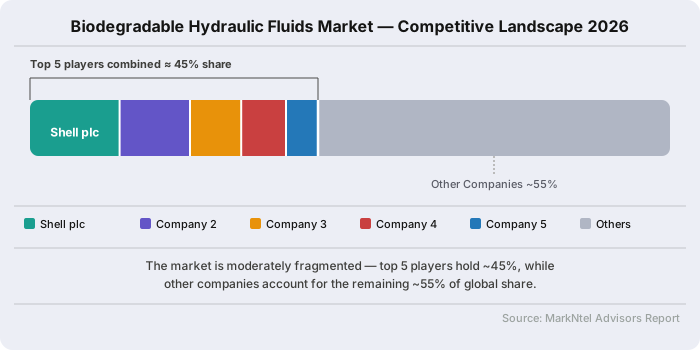
- The industry remains moderately fragmented, with the top five companies collectively accounting for nearly 45% of global market revenue.
Biodegradable Hydraulic Fluids Market Size and Outlook
The biodegradable hydraulic fluids market size was valued at USD 0.81 billion in 2025 and is projected to increase from USD 0.87 billion in 2026 to USD 1.32 billion by 2032, reflecting a CAGR of 7.20% during 2026–2032. Growth will be supported by expanding renewable energy installations, stronger environmental regulations, and increasing adoption of sustainable industrial hydraulic fluids across various applications, while benefiting from ongoing OEM approvals, stricter sustainability procurement initiatives, and broader environmental compliance requirements worldwide.
Expansion of offshore wind and renewable power infrastructure is expected to remain a key growth catalyst during the forecast period. Offshore turbines, hydropower facilities, and other renewable energy assets rely on hydraulic systems for reliable operation, increasing demand for environmentally responsible lubricants. Simultaneously, rising circular-economy investment in base oil regeneration is encouraging manufacturers to strengthen sustainability strategies while expanding portfolios of green hydraulic fluids to meet evolving customer and regulatory expectations.
Supportive government policies and sustained infrastructure investment are expected to reinforce long-term demand. The United States Department of Agriculture (USDA) implemented its consolidated Biobased Markets (BioPreferred) Program on January 8, 2025, encouraging federal procurement of qualifying biobased products that satisfy category-specific content requirements . Meanwhile, the International Energy Agency reported that global electricity-sector investment reached USD 1.5 trillion in 2024, an 8% increase over the previous year, creating additional opportunities for environmentally responsible hydraulic system fluids across renewable energy projects.
Strategic investments in renewable feedstock technologies are expected to enhance long-term supply security and product innovation. In May 2024, VERBIO began constructing the world's first large-scale ethenolysis plant at Bitterfeld, Germany, backed by an investment of approximately USD 87–109 million. Scheduled to commence production in 2026, the facility will manufacture renewable specialty chemicals for high-performance lubricants from sustainably produced rapeseed oil methyl ester, reducing reliance on fossil-derived feedstocks and supporting future innovation across the biodegradable hydraulic fluids industry.
Biodegradable Hydraulic Fluids Market Key Indicators
- The International Federation of Robotics reported that 542,000 industrial robots were installed worldwide in 2024, lifting the global operational stock to 4,664,000 units, a 9% annual increase . Each robotic work cell relies on compact hydraulic and pneumatic actuation for precision motion control, and manufacturers increasingly specify low-toxicity industrial lubricants to satisfy workplace-safety and wastewater-discharge standards inside automated production facilities worldwide, sustaining steady replacement-fluid demand.
- The International Energy Agency's Global Critical Minerals Outlook estimates that between USD 500 billion and USD 600 billion in new mining capital investment is required through 2040 to meet rising copper, lithium, and nickel demand . Hydraulic excavators, draglines, and haul trucks operating across expanding mine sites are driving parallel demand for readily biodegradable hydraulic oil that limits soil and groundwater contamination risk near active and reclaimed mining areas.
- The International Energy Agency projects that global upstream oil and gas investment will reach approximately USD 570 billion in 2025, with nearly 90% of that capital directed toward offsetting natural field decline rather than new capacity. Offshore platforms and drilling rigs running hydraulic power units near marine and coastal environments increasingly specify synthetic ester-based hydraulic fluids to limit spill-related ecological liability and regulatory exposure.
- The World Bank estimates that developing countries alone must invest approximately USD 1.5 trillion annually, equivalent to 4.5% of GDP, to close basic infrastructure gaps in roads, transport, and utility networks. This sustained deployment of excavators, loaders, and hydraulic cranes near waterways and sensitive soils is accelerating original equipment manufacturer adoption of factory-fill biodegradable hydraulic oil as a standard construction-equipment specification globally.
Biodegradable Hydraulic Fluids Market Scope
| Category | Segments |
|---|---|
| By Product Type | Vegetable Oil-Based (HETG), Synthetic Ester-Based (HEES), Polyalkylene Glycol-Based (HEPG), Polyalphaolefin and Hydrocarbon-Based Hydraulic Fluids (HEPR), Other Biodegradable Hydraulic Fluids |
| By Distribution Channel | OEM Fill, Aftermarket |
| By End User | Agriculture, Construction, Forestry, Marine, Mining, Industrial Manufacturing, Oil & Gas, Power Generation, Others |
Biodegradable Hydraulic Fluids Market Growth Drivers
Expansion of Offshore Wind and Renewable Power Infrastructure
Offshore wind capacity reached 92.5 gigawatts by the end of 2025, with more than 9 gigawatts of new capacity connected during the year, according to the Global Wind Energy Council. Offshore turbines rely on hydraulic pitch, yaw, blade-locking, and braking systems operating above marine environments, increasing demand for environmentally acceptable lubricants that minimize ecological risks from accidental leakage while supporting growth in the biodegradable hydraulic fluids industry.
The Global Wind Energy Council further projects that more than 327 gigawatts of additional offshore wind capacity will be installed worldwide between 2026 and 2035, substantially expanding hydraulic-dependent turbine infrastructure across fixed-bottom and floating platforms. Comparable hydraulic actuation systems are also used in onshore wind, hydropower, and tidal energy installations, broadening opportunities for advanced hydraulic fluid technology throughout renewable power generation.
This accelerating renewable energy deployment increasingly favors lubricant suppliers with proven marine-grade environmental certifications, validated low-temperature performance, and established OEM approvals. Offshore assets operating in regions including the North Sea, Taiwan Strait, and the U.S. Atlantic coast require reliable hydraulic systems across diverse climatic conditions, strengthening competitive positioning for qualified suppliers while reinforcing long-term expansion of the demand for biodegradable hydraulic fluids.
Recent Trends
Rising Circular-Economy Investment in Base Oil Regeneration
ExxonMobil is expanding circular base oil production by commissioning a re-refined base stocks project across its Esso Gravenchon and ExxonMobil Rotterdam refineries, with commercial start-up scheduled for the second half of 2025. Supported by a long-term feedstock agreement with Eco Huile, which processes 125,000 tonnes of used lubricating oil annually , around half of France's collected volume, the investment reflects growing emphasis on renewable lubricants across the biodegradable hydraulic fluids market.
The broader transition aligns with the EU Waste Framework Directive, which prioritizes regeneration of used oils ahead of energy recovery or disposal, encouraging greater investment in circular resource management. Similarly, TotalEnergies utilizes its Tecoil facility in Hamina, Finland, to regenerate collected lubricants into high-quality base oils for products including Quartz EV3R and Rubia EV3R, reinforcing sustainable practices throughout the industrial lubrication value chain.
Although biodegradable hydraulic fluids primarily rely on ester and vegetable oil chemistries, expanding re-refining infrastructure demonstrates that leading lubricant manufacturers are strengthening lifecycle sustainability across entire product portfolios. Integrating regenerated mineral base oils alongside bio-based technologies enables suppliers to deliver broader environmental value propositions, supporting long-term innovation and competitive differentiation within the biodegradable hydraulic fluids industry.
Biodegradable Hydraulic Fluids Market Opportunities and Challenges
EU Ecodesign Regulatory Uncertainty Driving Demand for an EU Ecolabel Certification Advantage
The European Commission's Ecodesign for Sustainable Products Regulation (ESPR) entered into force on 18 July 2024, yet its first 2025–2030 Working Plan, adopted on 16 April 2025, did not prioritize lubricants for mandatory ecodesign requirements. This uncertainty complicates long-term investment and product planning across the biodegradable hydraulic fluids market, particularly for manufacturers developing advanced specialty lubricants for European industrial applications.
While mandatory ecodesign requirements remain pending, the EU Ecolabel continues to serve as the European Union's recognized voluntary environmental certification for lubricants. Products seeking certification must satisfy stringent criteria covering biodegradability, bioaccumulation, renewable content, and restrictions on hazardous substances. This framework enables manufacturers of bio-based lubricants to strengthen environmental credentials and meet increasing sustainability expectations from industrial buyers operating in environmentally sensitive sectors.
The evolving regulatory landscape creates a competitive opportunity for suppliers with established environmental certifications. For instance, Shell PANOLIN offers EU Ecolabel-certified hydraulic fluid portfolios designed for construction, forestry, marine, and hydropower applications where environmental protection is a purchasing priority . Such certifications enhance product differentiation and customer confidence, positioning certified manufacturers favorably as sustainability requirements continue to influence procurement decisions across the biodegradable hydraulic fluids industry.
Segmentation Insights
Synthetic Ester-based (HEES) Fluids Lead Due to Superior Thermal Stability and Long-Service Performance
Synthetic ester-based (HEES) fluids account for approximately 48% share of the biodegradable hydraulic fluids industry, the largest among product types, owing to their superior thermal and oxidative stability compared with vegetable oil-based alternatives. Classified under ISO 15380, HEES formulations meet stringent biodegradability and performance requirements covering viscosity index, wear protection, and hydrolytic stability. These characteristics make them preferred ester-based lubricants for demanding industrial hydraulic applications requiring extended service intervals.
The technical advantages of HEES fluids support widespread adoption across mobile and stationary hydraulic equipment operating under sustained thermal loads. Steel mill servo systems, offshore wind turbine actuators, and marine stern tube applications rely on these formulations to minimize oxidation-driven varnish formation and reduce the risk of valve seizure experienced with mineral oils and lower-grade bio-based systems. Their durability and reliability continue strengthening demand for advanced hydraulic fluid technology across critical industrial operations.
Other biodegradable product categories continue serving specialized operating requirements despite holding comparatively smaller shares. Polyalkylene glycol-based (HEPG) fluids provide excellent water solubility for fire-resistant applications but face broader limitations in elastomer and paint compatibility. Polyalphaolefin and other biodegradable synthetic fluids (HEPR and related formulations) primarily address extreme low-temperature and high-pressure environments, supporting niche applications while OEMs increasingly standardize factory-fill HEES specifications across new hydraulic equipment platforms. Based on product type, the scope has been bifurcated into:
- Vegetable Oil-Based (HETG)
- Synthetic Ester-Based (HEES)
- Polyalkylene Glycol-Based (HEPG)
- Polyalphaolefin and Hydrocarbon-Based Hydraulic Fluids (HEPR)
- Other Biodegradable Hydraulic Fluids

Construction Dominates Due to Extensive Hydraulic Equipment Deployment and Environmental Compliance Requirements
The construction sector accounts for approximately 29% share of the biodegradable hydraulic fluids market, the largest among end-user categories, driven by extensive use of hydraulic cylinders and pumps in excavators, loaders, cranes, and compactors. These machines frequently operate near storm drains, groundwater tables, and municipal waterways, increasing demand for construction equipment lubricants that reduce environmental risks while maintaining reliable hydraulic system performance.
Construction contractors are increasingly adopting biodegradable hydraulic fluids to comply with stricter environmental regulations governing infrastructure development in environmentally sensitive areas. Projects involving bridges, tunnels, highways, waterways, and urban development require hydraulic equipment capable of minimizing ecological impacts from accidental leaks while maintaining operational efficiency. As sustainability requirements become more stringent, environmentally responsible lubricants are increasingly specified to reduce remediation costs, improve compliance, and support reliable equipment performance.
The sector's continued investment in modern heavy machinery and sustainable construction practices is expected to reinforce long-term demand. Equipment manufacturers are expanding approved biodegradable fluid options for new hydraulic platforms, while contractors prioritize lifecycle performance, regulatory compliance, and reduced remediation costs. These trends continue strengthening adoption of heavy equipment lubricants, supporting the construction segment's leading position throughout the forecast period. The key end users mapped in the study involve:
- Agriculture
- Construction
- Forestry
- Marine
- Mining
- Industrial Manufacturing
- Oil & Gas
- Power Generation
- Others
Biodegradable Hydraulic Fluids Market Geographical Outlook
Europe accounts for approximately 38% share of the biodegradable hydraulic fluids demand, the largest among all regions, supported by the EU Ecolabel certification framework and a mature industrial ecosystem emphasizing sustainability. The region's stringent environmental standards encourage adoption of environmentally friendly lubricants across construction, marine, forestry, and industrial applications where minimizing ecological impact and ensuring regulatory compliance remain key operational priorities.
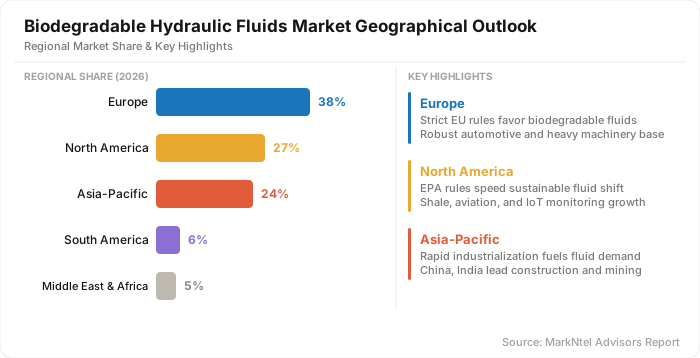
According to the Global Wind Energy Council, European offshore wind installations exceeded 38 gigawatts of cumulative capacity by the end of 2025, representing 42% of global offshore wind capacity. During the year, the United Kingdom added 1.0 gigawatt, Germany commissioned 0.5 gigawatt, and France installed 0.4 gigawatt of new offshore capacity . These developments continue strengthening regional demand for sustainable hydraulic solutions supporting renewable energy infrastructure.
Europe's established industrial manufacturing base and continuous investment in clean energy projects further reinforce regional leadership. Offshore wind farms, hydropower facilities, and advanced manufacturing industries increasingly require reliable hydraulic lubrication solutions capable of delivering high performance while reducing environmental risks. Supported by progressive regulatory policies and accelerating renewable energy deployment, Europe is expected to maintain its leading position throughout the forecast period.
Biodegradable Hydraulic Fluids Market Competitive Analysis
The biodegradable hydraulic fluids industry is moderately fragmented, with the top five players Exxon Mobil Corporation, Shell plc, TotalEnergies SE, FUCHS SE, and BP p.l.c. (Castrol) collectively accounting for an estimated 45% of total market revenue. These companies compete through extensive lubricant portfolios, advanced ester-based formulations, OEM approvals, global distribution networks, and continuous investment in sustainable product development. The remaining market comprises regional lubricant manufacturers and niche bio-based specialists which compete through application-specific innovations, environmental certifications, and customized solutions for marine, forestry, construction, and industrial hydraulic applications.
Key Players in the Biodegradable Hydraulic Fluids Market
- Shell plc
- Exxon Mobil Corporation
- TotalEnergies SE
- FUCHS SE
- Chevron Corporation
- BP p.l.c. (Castrol)
- Quaker Houghton
- PANOLIN AG
- Carl Bechem GmbH
- CONDAT SA
- Renewable Lubricants, Inc.
- Klüber Lubrication München SE & Co. KG
- Phillips 66 Company
- RSC Bio Solutions LLC
- Schaeffer Manufacturing Co.
- Others
Biodegradable Hydraulic Fluids Industry News and Recent Developments
June 2025: RSC Bio Solutions FUTERRA Hydraulic Fluid Earns Bosch Rexroth RDE 90235 Rating
RSC Bio Solutions announced that its FUTERRA Hydraulic Fluid ISO 36 and ISO 46 achieved the Bosch Rexroth RDE 90235 fluid rating, a widely recognized benchmark for high-performance industrial and mobile hydraulic systems. The approval validates the fluid's technical performance and compatibility with demanding hydraulic equipment while maintaining environmentally acceptable lubricant characteristics for sensitive operating environments.
Impact Analysis: The Bosch Rexroth qualification enhances customer confidence and strengthens FUTERRA's competitiveness in construction, industrial, forestry, and mobile hydraulic applications. OEM-recognized approvals reduce adoption barriers for biodegradable hydraulic fluids by demonstrating compliance with stringent performance requirements alongside environmental benefits. The certification also reflects the industry's growing focus on combining sustainability with equipment reliability, encouraging broader acceptance of environmentally acceptable hydraulic fluids in mission-critical hydraulic systems.
January 2025: TotalEnergies Expands Specialty Hydraulic Fluid Portfolio Through Fluid Competence Acquisition
TotalEnergies Lubrifiants acquired the fire-resistant hydraulic fluid product lines of Fluid Competence, adding the Corsave (HFA) and Lubesave (HFC-E) product families to its industrial lubricant portfolio. The acquisition expands TotalEnergies' range of mineral oil-free, low-VOC hydraulic fluids designed for demanding applications in steel, mining, tunneling, and geotechnical operations, reinforcing its commitment to safer and more sustainable hydraulic solutions.
Impact Analysis: The acquisition strengthens TotalEnergies' competitive position in specialty hydraulic fluids by broadening its portfolio for high-temperature and safety-critical industrial applications. Integrating HFA and HFC-E technologies enables the company to address growing customer demand for environmentally responsible and fire-resistant hydraulic solutions while enhancing its presence across industrial sectors. The transaction also reflects the increasing emphasis on sustainable product portfolios, innovation, and application-specific hydraulic fluids as manufacturers pursue higher operational safety and environmental performance.
- Market Segmentation
- Introduction
- Product Definition
- Research Process
- Assumptions
- Executive Summary
- Biodegradable Hydraulic Fluids Market Supply Chain Analysis
- Biodegradable Hydraulic Fluids Market Import & Export Analysis
- Biodegradable Hydraulic Fluids Market Policies, Regulations, and Product Standards
- Biodegradable Hydraulic Fluids Production Trend 2022-2032
- Biodegradable Hydraulic Fluids Trend by Type of Product Type
- Vegetable Oil-Based (HETG)
- Synthetic Ester-Based (HEES)
- Polyalkylene Glycol-Based (HEPG)
- Biodegradable Polyalphaolefin and Hydrocarbon-Based Hydraulic Fluids (HEPR)
- Other Biodegradable Hydraulic Fluids
- Company-Wise Production Plants and Statistics
- Installed Production Capacity
- Actual Production
- Planned Production Target
- Biodegradable Hydraulic Fluids Trend by Type of Product Type
- Biodegradable Hydraulic Fluids Pricing Analysis 2022-2032
- Biodegradable Hydraulic Fluids Pricing Trend 2022-2032
- Biodegradable Hydraulic Fluids Pricing Trend by Regions 2022-2032
- North America
- South America
- Europe
- Middle East & Africa
- Asia Pacific
- Biodegradable Hydraulic Fluids Pricing Trend by Product Type 2022-2032
- Vegetable Oil-Based (HETG)
- Synthetic Ester-Based (HEES)
- Polyalkylene Glycol-Based (HEPG)
- Polyalphaolefin and Hydrocarbon-Based Hydraulic Fluids (HEPR)
- Other Biodegradable Hydraulic Fluids
- Biodegradable Hydraulic Fluids Market Dynamics
- Growth Factors
- Challenges
- Biodegradable Hydraulic Fluids Market Hotspot & Opportunities
- Biodegradable Hydraulic Fluids Market Outlook, 2022-2032
- Market Size & Outlook
- By Revenues (USD Million)
- Market Share & Outlook
- By Product Type- Market Size & Forecast 2022-2032, USD Million
- Vegetable Oil-Based (HETG)
- Synthetic Ester-Based (HEES)
- Polyalkylene Glycol-Based (HEPG)
- Polyalphaolefin and Hydrocarbon-Based Hydraulic Fluids (HEPR)
- Other Biodegradable Hydraulic Fluids
- By Distribution Channel- Market Size & Forecast 2022-2032, USD Million
- OEM Fill
- Aftermarket
- By End User- Market Size & Forecast 2022-2032, USD Million
- Agriculture
- Construction
- Forestry
- Marine
- Mining
- Industrial Manufacturing
- Oil & Gas
- Power Generation
- Others
- By Region
- North America
- South America
- Europe
- The Middle East & Africa
- Asia-Pacific
- By Company
- Competition Characteristics
- Market Share & Analysis
- By Product Type- Market Size & Forecast 2022-2032, USD Million
- Market Size & Outlook
- North America Biodegradable Hydraulic Fluids Market Outlook, 2022-2032
- Market Size & Outlook
- By Revenues (USD Million)
- Market Segmentation & Outlook
- By Product Type- Market Size & Forecast 2022-2032, USD Million
- By Distribution Channel- Market Size & Forecast 2022-2032, USD Million
- By End User- Market Size & Forecast 2022-2032, USD Million
- By Country
- The US
- Canada
- Mexico
- The US Biodegradable Hydraulic Fluids Market Outlook, 2022-2032
- Market Size & Outlook
- By Revenues (USD Million)
- Market Segmentation & Outlook
- By Product Type- Market Size & Forecast 2022-2032, USD Million
- By Distribution Channel- Market Size & Forecast 2022-2032, USD Million
- By End User- Market Size & Forecast 2022-2032, USD Million
- Market Size & Outlook
- Canada Biodegradable Hydraulic Fluids Market Outlook, 2022-2032
- Market Size & Outlook
- By Revenues (USD Million)
- Market Segmentation & Outlook
- By Product Type- Market Size & Forecast 2022-2032, USD Million
- By Distribution Channel- Market Size & Forecast 2022-2032, USD Million
- By End User- Market Size & Forecast 2022-2032, USD Million
- Market Size & Outlook
- Mexico Biodegradable Hydraulic Fluids Market Outlook, 2022-2032
- Market Size & Outlook
- By Revenues (USD Million)
- Market Segmentation & Outlook
- By Product Type- Market Size & Forecast 2022-2032, USD Million
- By Distribution Channel- Market Size & Forecast 2022-2032, USD Million
- By End User- Market Size & Forecast 2022-2032, USD Million
- Market Size & Outlook
- Market Size & Outlook
- South America Biodegradable Hydraulic Fluids Market Outlook, 2022-2032
- Market Size & Outlook
- By Revenues (USD Million)
- Market Segmentation & Outlook
- By Product Type- Market Size & Forecast 2022-2032, USD Million
- By Distribution Channel- Market Size & Forecast 2022-2032, USD Million
- By End User- Market Size & Forecast 2022-2032, USD Million
- By Country
- Brazil
- Argentina
- Rest of South America
- Brazil Biodegradable Hydraulic Fluids Market Outlook, 2022-2032
- Market Size & Outlook
- By Revenues (USD Million)
- Market Segmentation & Outlook
- By Product Type- Market Size & Forecast 2022-2032, USD Million
- By Distribution Channel- Market Size & Forecast 2022-2032, USD Million
- By End User- Market Size & Forecast 2022-2032, USD Million
- Market Size & Outlook
- Argentina Biodegradable Hydraulic Fluids Market Outlook, 2022-2032
- Market Size & Outlook
- By Revenues (USD Million)
- Market Segmentation & Outlook
- By Product Type- Market Size & Forecast 2022-2032, USD Million
- By Distribution Channel- Market Size & Forecast 2022-2032, USD Million
- By End User- Market Size & Forecast 2022-2032, USD Million
- Market Size & Outlook
- Market Size & Outlook
- Europe Biodegradable Hydraulic Fluids Market Outlook, 2022-2032
- Market Size & Outlook
- By Revenues (USD Million)
- Market Segmentation & Outlook
- By Product Type- Market Size & Forecast 2022-2032, USD Million
- By Distribution Channel- Market Size & Forecast 2022-2032, USD Million
- By End User- Market Size & Forecast 2022-2032, USD Million
- By Country
- The UK
- Germany
- France
- Italy
- Spain
- The Benelux
- Rest of Europe
- The UK Biodegradable Hydraulic Fluids Market Outlook, 2022-2032
- Market Size & Outlook
- By Revenues (USD Million)
- Market Segmentation & Outlook
- By Product Type- Market Size & Forecast 2022-2032, USD Million
- By Distribution Channel- Market Size & Forecast 2022-2032, USD Million
- By End User- Market Size & Forecast 2022-2032, USD Million
- Market Size & Outlook
- Germany Biodegradable Hydraulic Fluids Market Outlook, 2022-2032
- Market Size & Outlook
- By Revenues (USD Million)
- Market Segmentation & Outlook
- By Product Type- Market Size & Forecast 2022-2032, USD Million
- By Distribution Channel- Market Size & Forecast 2022-2032, USD Million
- By End User- Market Size & Forecast 2022-2032, USD Million
- Market Size & Outlook
- France Biodegradable Hydraulic Fluids Market Outlook, 2022-2032
- Market Size & Outlook
- By Revenues (USD Million)
- Market Segmentation & Outlook
- By Product Type- Market Size & Forecast 2022-2032, USD Million
- By Distribution Channel- Market Size & Forecast 2022-2032, USD Million
- By End User- Market Size & Forecast 2022-2032, USD Million
- Market Size & Outlook
- Italy Biodegradable Hydraulic Fluids Market Outlook, 2022-2032
- Market Size & Outlook
- By Revenues (USD Million)
- Market Segmentation & Outlook
- By Product Type- Market Size & Forecast 2022-2032, USD Million
- By Distribution Channel- Market Size & Forecast 2022-2032, USD Million
- By End User- Market Size & Forecast 2022-2032, USD Million
- Market Size & Outlook
- Spain Biodegradable Hydraulic Fluids Market Outlook, 2022-2032
- Market Size & Outlook
- By Revenues (USD Million)
- Market Segmentation & Outlook
- By Product Type- Market Size & Forecast 2022-2032, USD Million
- By Distribution Channel- Market Size & Forecast 2022-2032, USD Million
- By End User- Market Size & Forecast 2022-2032, USD Million
- Market Size & Outlook
- The Benelux Biodegradable Hydraulic Fluids Market Outlook, 2022-2032
- Market Size & Outlook
- By Revenues (USD Million)
- Market Segmentation & Outlook
- By Product Type- Market Size & Forecast 2022-2032, USD Million
- By Distribution Channel- Market Size & Forecast 2022-2032, USD Million
- By End User- Market Size & Forecast 2022-2032, USD Million
- Market Size & Outlook
- Market Size & Outlook
- The Middle East & Africa Biodegradable Hydraulic Fluids Market Outlook, 2022-2032
- Market Size & Outlook
- By Revenues (USD Million)
- Market Segmentation & Outlook
- By Product Type- Market Size & Forecast 2022-2032, USD Million
- By Distribution Channel- Market Size & Forecast 2022-2032, USD Million
- By End User- Market Size & Forecast 2022-2032, USD Million
- By Country
- Saudi Arabia
- The UAE
- South Africa
- Egypt
- Rest of Middle East & Africa
- Saudi Arabia Biodegradable Hydraulic Fluids Market Outlook, 2022-2032
- Market Size & Outlook
- By Revenues (USD Million)
- Market Segmentation & Outlook
- By Product Type- Market Size & Forecast 2022-2032, USD Million
- By Distribution Channel- Market Size & Forecast 2022-2032, USD Million
- By End User- Market Size & Forecast 2022-2032, USD Million
- Market Size & Outlook
- The UAE Biodegradable Hydraulic Fluids Market Outlook, 2022-2032
- Market Size & Outlook
- By Revenues (USD Million)
- Market Segmentation & Outlook
- By Product Type- Market Size & Forecast 2022-2032, USD Million
- By Distribution Channel- Market Size & Forecast 2022-2032, USD Million
- By End User- Market Size & Forecast 2022-2032, USD Million
- Market Size & Outlook
- South Africa Biodegradable Hydraulic Fluids Market Outlook, 2022-2032
- Market Size & Outlook
- By Revenues (USD Million)
- Market Segmentation & Outlook
- By Product Type- Market Size & Forecast 2022-2032, USD Million
- By Distribution Channel- Market Size & Forecast 2022-2032, USD Million
- By End User- Market Size & Forecast 2022-2032, USD Million
- Market Size & Outlook
- Egypt Biodegradable Hydraulic Fluids Market Outlook, 2022-2032
- Market Size & Outlook
- By Revenues (USD Million)
- Market Segmentation & Outlook
- By Product Type- Market Size & Forecast 2022-2032, USD Million
- By Distribution Channel- Market Size & Forecast 2022-2032, USD Million
- By End User- Market Size & Forecast 2022-2032, USD Million
- Market Size & Outlook
- Market Size & Outlook
- Asia-Pacific Biodegradable Hydraulic Fluids Market Outlook, 2022-2032
- Market Size & Outlook
- By Revenues (USD Million)
- Market Segmentation & Outlook
- By Product Type- Market Size & Forecast 2022-2032, USD Million
- By Distribution Channel- Market Size & Forecast 2022-2032, USD Million
- By End User- Market Size & Forecast 2022-2032, USD Million
- By Country
- China
- Japan
- India
- South Korea
- Australia
- Rest of Asia-Pacific
- China Biodegradable Hydraulic Fluids Market Outlook, 2022-2032
- Market Size & Outlook
- By Revenues (USD Million)
- Market Segmentation & Outlook
- By Product Type- Market Size & Forecast 2022-2032, USD Million
- By Distribution Channel- Market Size & Forecast 2022-2032, USD Million
- By End User- Market Size & Forecast 2022-2032, USD Million
- Market Size & Outlook
- Japan Biodegradable Hydraulic Fluids Market Outlook, 2022-2032
- Market Size & Outlook
- By Revenues (USD Million)
- Market Segmentation & Outlook
- By Product Type- Market Size & Forecast 2022-2032, USD Million
- By Distribution Channel- Market Size & Forecast 2022-2032, USD Million
- By End User- Market Size & Forecast 2022-2032, USD Million
- Market Size & Outlook
- India Biodegradable Hydraulic Fluids Market Outlook, 2022-2032
- Market Size & Outlook
- By Revenues (USD Million)
- Market Segmentation & Outlook
- By Product Type- Market Size & Forecast 2022-2032, USD Million
- By Distribution Channel- Market Size & Forecast 2022-2032, USD Million
- By End User- Market Size & Forecast 2022-2032, USD Million
- Market Size & Outlook
- South Korea Biodegradable Hydraulic Fluids Market Outlook, 2022-2032
- Market Size & Outlook
- By Revenues (USD Million)
- Market Segmentation & Outlook
- By Product Type- Market Size & Forecast 2022-2032, USD Million
- By Distribution Channel- Market Size & Forecast 2022-2032, USD Million
- By End User- Market Size & Forecast 2022-2032, USD Million
- Market Size & Outlook
- Australia Biodegradable Hydraulic Fluids Market Outlook, 2022-2032
- Market Size & Outlook
- By Revenues (USD Million)
- Market Segmentation & Outlook
- By Product Type- Market Size & Forecast 2022-2032, USD Million
- By Distribution Channel- Market Size & Forecast 2022-2032, USD Million
- By End User- Market Size & Forecast 2022-2032, USD Million
- Market Size & Outlook
- Market Size & Outlook
- Biodegradable Hydraulic Fluids Market Key Strategic Imperatives for Success & Growth
- Competitive Outlook
- Company Profiles
- Shell plc
- Business Description
- Product Portfolio
- Collaborations & Alliances
- Recent Developments
- Financial Details
- Others
- Exxon Mobil Corporation
- Business Description
- Product Portfolio
- Collaborations & Alliances
- Recent Developments
- Financial Details
- Others
- TotalEnergies SE
- Business Description
- Product Portfolio
- Collaborations & Alliances
- Recent Developments
- Financial Details
- Others
- FUCHS SE
- Business Description
- Product Portfolio
- Collaborations & Alliances
- Recent Developments
- Financial Details
- Others
- Chevron Corporation
- Business Description
- Product Portfolio
- Collaborations & Alliances
- Recent Developments
- Financial Details
- Others
- BP p.l.c. (Castrol)
- Business Description
- Product Portfolio
- Collaborations & Alliances
- Recent Developments
- Financial Details
- Others
- Quaker Houghton
- Business Description
- Product Portfolio
- Collaborations & Alliances
- Recent Developments
- Financial Details
- Others
- Carl Bechem GmbH
- Business Description
- Product Portfolio
- Collaborations & Alliances
- Recent Developments
- Financial Details
- Others
- CONDAT SA
- Business Description
- Product Portfolio
- Collaborations & Alliances
- Recent Developments
- Financial Details
- Others
- Renewable Lubricants, Inc.
- Business Description
- Product Portfolio
- Collaborations & Alliances
- Recent Developments
- Financial Details
- Others
- Klüber Lubrication München SE & Co. KG
- Business Description
- Product Portfolio
- Collaborations & Alliances
- Recent Developments
- Financial Details
- Others
- Phillips 66 Company
- Business Description
- Product Portfolio
- Collaborations & Alliances
- Recent Developments
- Financial Details
- Others
- RSC Bio Solutions LLC
- Business Description
- Product Portfolio
- Collaborations & Alliances
- Recent Developments
- Financial Details
- Others
- Schaeffer Manufacturing Co.
- Business Description
- Product Portfolio
- Collaborations & Alliances
- Recent Developments
- Financial Details
- Others
- Others
- Shell plc
- Company Profiles
- Disclaimer

MarkNtel Advisors follows a robust and iterative research methodology designed to ensure maximum accuracy and minimize deviation in market estimates and forecasts. Our approach combines both bottom-up and top-down techniques to effectively segment and quantify various aspects of the market. A consistent feature across all our research reports is data triangulation, which examines the market from three distinct perspectives to validate findings. Key components of our research process include:
1. Scope & Research Design At the outset, MarkNtel Advisors define the research objectives and formulate pertinent questions. This phase involves determining the type of research—qualitative or quantitative—and designing a methodology that outlines data collection methods, target demographics, and analytical tools. They also establish timelines and budgets to ensure the research aligns with client goals.
2. Sample Selection and Data Collection In this stage, the firm identifies the target audience and determines the appropriate sample size to ensure representativeness. They employ various sampling methods, such as random or stratified sampling, based on the research objectives. Data collection is carried out using tools like surveys, interviews, and observations, ensuring the gathered data is reliable and relevant.
3. Data Analysis and Validation Once data is collected, MarkNtel Advisors undertake a rigorous analysis process. This includes cleaning the data to remove inconsistencies, employing statistical software for quantitative analysis, and thematic analysis for qualitative data. Validation steps are taken to ensure the accuracy and reliability of the findings, minimizing biases and errors.

4. Data Forecast and FinalizationThe final phase involves forecasting future market trends based on the analyzed data. MarkNtel Advisors utilize predictive modeling and time series analysis to anticipate market behaviors. The insights are then compiled into comprehensive reports, featuring visual aids like charts and graphs, and include strategic recommendations to inform client decision-making
We’d love to understand what matters most to you.