

By Product Type (Portable Water Quality Monitoring Systems, Online or Real-Time Water Quality Monitoring Systems, Benchtop / Laboratory Water Quality Analyzers), By Parameter (Phys......ical Parameters (Temperature, Turbidity, Conductivity), Chemical Parameters (pH, Dissolved Oxygen, ORP, Nutrients, Chlorine, Heavy Metals), Biological Parameters (Total Coliform, E. coli, Algae, Other Microorganisms)), By Application (Industrial Wastewater and Effluent Monitoring, Municipal Drinking Water Utilities, Environmental Monitoring of Rivers, Lakes, and Oceans, Aquaculture and Agriculture, Research and Laboratory Use), By End User (Government Agencies and Environmental Bodies, Water Treatment Plants and Utilities, Industrial Facilities (Food, Beverage, Chemical, Pharmaceutical), Academic and Research Institutes), By Technology / Instrument Type (Sensors & probes (pH sensors, DO sensors, conductivity sensors), Analytical instruments (Spectrometers, chromatography systems, TOC analyzers), Electrochemical methods, Microbiological testing systems, Rapid / portable testing kits, IoT-based real-time monitoring systems), and others Read more
- Environment
- Apr 2026
- 140
- PDF, Excel, PPT
US Water Quality Testing and Monitoring Market Key Report Takeaways
- The US water quality testing and monitoring market was valued at USD 1.44 billion in 2025 and is projected to grow from USD 1.87 billion in 2026 to USD 2.40 billion by 2032, exhibiting a CAGR of 4.91% during 2026–2032.
- The South region leads with approximately 38% of the US market, driven by a dense concentration of petrochemical, energy, and industrial facilities requiring continuous effluent and process water monitoring.
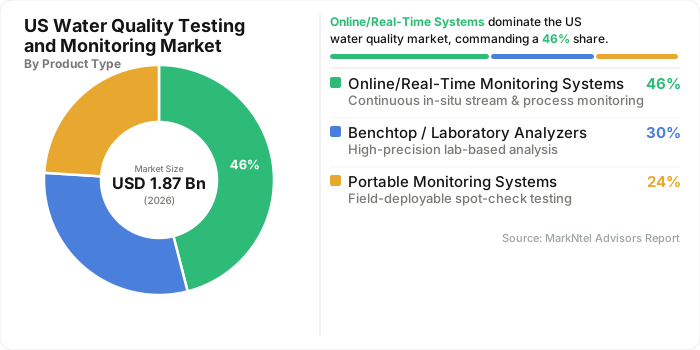
- Online or real-time water quality monitoring systems hold approximately 46% of the product type segment in 2026, reflecting mandatory continuous compliance monitoring requirements under federal National Pollutant Discharge Elimination System (NPDES) and state permitting frameworks.
- In 2026, sensors and probes account for approximately 80% of the technology and instrument type segment, anchored by near-universal deployment across municipal treatment plants, industrial discharge points, and environmental field monitoring networks.
- The market includes more than 20-25 companies; The top five players collectively account for a significant majority of the market share, estimated at around 65%.
US Water Quality Testing and Monitoring Market Size & Outlook
The US water quality testing and monitoring market was estimated at around USD 1.44 billion in 2025. It is anticipated to grow to USD 1.87 billion in 2026 and further reach approximately USD 2.40 billion by 2032, registering a CAGR of 4.91% over the forecast period (2026–2032).
The U.S. water quality testing market size continues to expand steadily, supported by increasing reliance on centralized and regulated water systems. According to the United States Census Bureau, more than 320 million Americans depend on public drinking water utilities, reinforcing sustained demand for drinking water testing solutions . Aging infrastructure and urban population growth have intensified the need for continuous monitoring and periodic testing. This structural dependency has historically driven consistent adoption of water testing and monitoring technologies in the United States across municipal systems.
Current US water quality analysis recent trends reflect strong adoption of real-time water quality monitoring systems and IoT water monitoring solutions across industrial and environmental applications. The National Oceanic and Atmospheric Administration reported in 2025 that nutrient pollution and harmful algal blooms are increasing in major U.S. water bodies , necessitating advanced monitoring. Industries such as food processing, pharmaceuticals, and power generation are deploying smart water-quality sensors and cloud-based monitoring platforms to maintain compliance. This has expanded demand beyond utilities into high-value segments of industrial and environmental monitoring.
Government-backed initiatives and compliance requirements continue to support the water quality monitoring systems industry. In 2025, the United States Department of Energy allocated approximately USD 9 million to advance desalination and water reuse projects across multiple states, supporting the deployment of advanced treatment technologies and strengthening the adoption of efficient water monitoring solutions in industrial and municipal applications.
Additionally, wastewater treatment modernization programs across states are increasing the deployment of online water quality monitoring equipment. For instance, the United States Environmental Protection Agency Sewer Overflow and Stormwater Reuse Municipal Grants Program (2025) is supporting wastewater infrastructure upgrades across U.S. cities , facilitating the integration of advanced treatment processes and promoting the adoption of online water quality monitoring systems. These initiatives directly influence the procurement of advanced analyzers and digital systems, strengthening overall market volume and technology penetration.
US Water Quality Testing and Monitoring Market Key Indicators
- The U.S. Environmental Protection Agency notes that the Safe Drinking Water Act sets enforceable limits for over 90 contaminants and contaminant categories in public drinking water. These include microbiological, chemical, and radiological parameters, thereby generating strong and continuous demand for advanced analytical instruments and sensor-based monitoring technologies.
- As reported by the U.S. Environmental Protection Agency, around 6,863 public water systems in the United States have recorded health-based violations, while many more have faced monitoring and reporting breaches. This highlights ongoing compliance challenges and supports sustained demand for water testing, validation, and monitoring solutions.
- According to the U.S. Geological Survey, the National Water Quality Network conducts long-term assessments across more than 102 stream and river sites and over 258 groundwater locations. In addition, broader datasets compile inputs from hundreds of thousands of monitoring points, reinforcing the need for field sensors, sampling tools, and data collection systems.
- The U.S. Environmental Protection Agency highlights that the Unregulated Contaminant Monitoring Rule 5 mandates testing for 29 PFAS compounds and lithium (2023–2025) across large public water systems and selected smaller ones. The findings contributed directly to the April 2024 National Primary Drinking Water Regulation, which introduced enforceable standards for PFAS, further accelerating demand for monitoring technologies.
US Water Quality Testing and Monitoring Market Scope
| Category | Segments |
|---|---|
| By Product Type | (Portable Water Quality Monitoring Systems, Online or Real-Time Water Quality Monitoring Systems, Benchtop / Laboratory Water Quality Analyzers), |
| By Parameter | (Physical Parameters (Temperature, Turbidity, Conductivity), Chemical Parameters (pH, Dissolved Oxygen, ORP, Nutrients, Chlorine, Heavy Metals), Biological Parameters (Total Coliform, E. coli, Algae, Other Microorganisms)), |
| By Application | (Industrial Wastewater and Effluent Monitoring, Municipal Drinking Water Utilities, Environmental Monitoring of Rivers, Lakes, and Oceans, Aquaculture and Agriculture, Research and Laboratory Use), |
| By End User | (Government Agencies and Environmental Bodies, Water Treatment Plants and Utilities, Industrial Facilities (Food, Beverage, Chemical, Pharmaceutical), Academic and Research Institutes), |
| By Technology / Instrument Type | (Sensors & probes (pH sensors, DO sensors, conductivity sensors), Analytical instruments (Spectrometers, chromatography systems, TOC analyzers), Electrochemical methods, Microbiological testing systems, Rapid / portable testing kits, IoT-based real-time monitoring systems), |
US Water Quality Testing and Monitoring Market Growth Drivers
Expansion of Industrial Discharge Permitting and Compliance Monitoring under the Clean Water Act
A primary driver of the U.S. water quality testing and monitoring market is the tightening of industrial discharge compliance under the Clean Water Act through the National Pollutant Discharge Elimination System (NPDES). The United States Environmental Protection Agency continues to update effluent limitation guidelines for sectors such as chemicals, power generation, and manufacturing during 2025–2026. These updates have emerged due to increasing industrial pollution loads and the need to control toxic discharges into surface water bodies. As a result, facilities are required to implement stricter and more frequent monitoring protocols.
This regulatory enforcement is directly increasing demand across industrial facilities nationwide, particularly in high-discharge sectors. More than 50 industrial categories are regulated under federal effluent guidelines, mandating systematic control and reporting of wastewater discharges. As a result, each regulated facility must implement continuous water quality monitoring systems, including sensors, chemical analyzers for parameters such as pH and metals, and compliance reporting mechanisms. This regulatory framework is generating recurring demand for monitoring equipment and testing solutions across thousands of industrial sites nationwide. Consequently, industries must deploy a wide range of analytical instruments, online monitoring systems, and laboratory testing solutions to meet compliance standards.
This driver expands market volume owing to compliance obligations require recurring testing rather than one-time investments. Facilities must conduct daily, weekly, or monthly sampling depending on permit conditions, creating sustained demand for consumables, sensors, and laboratory services. Additionally, any violation triggers corrective monitoring and re-testing cycles, further increasing testing frequency.
Since discharge permits are legally binding and continuously enforced, they ensure long-term, scalable demand, making regulatory compliance under the Clean Water Act a fundamental driver of monitoring systems.
US Water Quality Testing and Monitoring Market Recent Trend
Shift Toward Digital Sensors and IoT-Driven Real-Time Water Quality Monitoring
The water quality testing industry is undergoing a structural transformation driven by the rapid adoption of digital sensors and IoT-based monitoring systems. This shift has emerged due to the limitations of conventional laboratory testing, which relies on delayed and periodic sampling methods. Advances in connected sensor technologies now enable continuous measurement of key parameters such as pH, turbidity, and heavy metal concentration. Solution providers like KETOS are accelerating this transition by deploying integrated IoT platforms for real-time water intelligence.
Across utilities and industrial users, monitoring practices are shifting from manual testing to automated, cloud-connected surveillance systems. This change is enabling instant detection of contamination events and improving operational response times significantly across water networks. Data integration with analytics platforms further allows predictive insights, optimizing system performance, and compliance management. As a result, water management is increasingly becoming a data-driven, continuously monitored operational process rather than a periodic activity.
The trend is expected to persist due to rising demand for higher accuracy, regulatory compliance, and operational efficiency in water systems. Advancements in low-cost sensor technologies and edge computing are further enabling large-scale adoption across utilities and industries. For instance, Recent studies (2026) indicate that modern IoT-based water monitoring systems are increasingly integrating edge computing with cloud analytics, enabling highly accurate real-time data processing across distributed networks. These advanced frameworks have demonstrated strong measurement precision, with error margins as low as ±0.08 pH units and approximately ±1.9% for total dissolved solids (TDS), along with data transmission reliability exceeding 99%. Such improvements significantly enhance the consistency and responsiveness of water quality assessments in operational environments. Overall, IoT-enabled real-time monitoring is redefining the technological foundation of the water quality testing systems.
US Water Quality Testing and Monitoring Market Opportunities and Challenges
PFAS Regulatory Pressure Driving Laboratory Expansion
A critical challenge in the U.S. water quality testing market is the rapid tightening of regulatory standards for PFAS (per- and polyfluoroalkyl substances), with the U.S. Environmental Protection Agency introducing extremely strict drinking water limits of around 4 parts per trillion .
This ultra-low detection threshold has exposed significant limitations in municipal and regional laboratory infrastructure, as most facilities lack the advanced analytical capabilities required for such precise measurement. Conventional testing methods are no longer sufficient, creating operational gaps in compliance readiness and increasing reliance on highly specialized testing systems. This has intensified pressure on utilities and laboratories to rapidly improve testing accuracy and analytical precision.
However, this challenge is simultaneously creating a high-growth market opportunity in advanced laboratory testing services and technologies. Demand is surging for LC-MS/MS-based instrumentation, widely regarded as the gold standard for PFAS detection, driving significant investment in laboratory modernization across the United States. At the same time, the inability of many municipal labs to handle PFAS testing in-house is fueling strong growth in contract testing laboratories and outsourced analytical services. This outsourcing trend is expanding market scale while reducing the burden of infrastructure investment for local utilities.
Additionally, the complexity of PFAS testing is accelerating innovation in portable field-testing kits and mobile laboratories, enabling faster on-site detection and immediate remediation decisions. These solutions reduce dependency on centralized labs and shorten compliance reporting timelines significantly.
The U.S. Environmental Protection Agency invested in satellite-driven HAB detection systems integrated into national water safety programs. These systems are already used by state agencies to reduce field sampling costs and improve early warning capabilities. This represents direct government funding for scaling remote sensing for operational water management. Also, in 2025, the Arizona Department of Environmental Quality allocated around USD 5 million to expand PFAS testing, install monitoring infrastructure, and upgrade water sampling systems . Overall, PFAS regulatory pressure is simultaneously acting as a structural challenge and a major catalyst for market expansion in the U.S. water quality testing sector.
Segmentation Insights
Online or Real-Time Water Quality Monitoring Systems Dominate the Industry with Significant Market Growth
Online or real-time water quality monitoring systems lead the product segment with around 46% share, driven by the increasing need for uninterrupted water safety surveillance across urban and industrial networks. Their dominance is supported by stricter EPA enforcement timelines, which require faster reporting of contamination events and reduced response delays. Rising concerns over climate-driven water stress and contamination incidents have further reinforced the need for always-on monitoring infrastructure.
Moreover, these systems are widely deployed by municipal water authorities, industrial processing plants, and energy sector operators where regulatory compliance and process safety are critical. In California’s water infrastructure, this capability is especially important due to aging pipelines and contamination risks. The AI layer enhances real-time monitoring systems by triggering instant alerts when abnormal water quality trends are detected. Moreover, in Colorado, smart water technologies such as cloud-based platforms (e.g., eRAMS), GIS-enabled systems , and real-time monitoring tools are increasingly used for integrated water management.
The market impact is significant, enabling predictive maintenance, faster contamination response, and reduced dependency on manual lab testing workflows. Technological innovation includes AI-enabled anomaly detection systems in states like California and smart river basin monitoring projects in Colorado. Additionally, digital twin-based water management systems and edge-computing sensors are being piloted in several US cities, improving real-time decision-making and operational resilience, thereby accelerating the growth of the water quality testing and monitoring industry. Based on product type, the market is segmented into:
- Portable Water Quality Monitoring Systems
- Online or Real-Time Water Quality Monitoring Systems
- Benchtop / Laboratory Water Quality Analyzers
Sensors & Probes Emerge as the Leading Segment with Strong Market Penetration
Sensors and probes have emerged as the leading component in the US water quality testing market, accounting for nearly 80% of the total market share. Their dominance is primarily attributed to their ability to facilitate continuous, real-time monitoring across highly distributed water systems, enabling faster detection and response to potential contamination events. This advantage is becoming increasingly critical as regulatory oversight intensifies.
A key driver behind this leadership is the tightening regulatory framework enforced by the U.S. Environmental Protection Agency under the Safe Drinking Water Act. Growing scrutiny around contaminants such as PFAS, nitrates, and heavy metals has significantly increased the need for advanced monitoring solutions. In parallel, aging water infrastructure across major US cities is accelerating the adoption of early detection systems, as utilities shift from reactive remediation toward proactive risk prevention.
Technological advancements are further reinforcing the dominance of sensor-based solutions. For example, researchers at Massachusetts Institute of Technology have developed next-generation sensors capable of detecting trace levels of “forever chemicals” (PFAS) in drinking water with high sensitivity. These innovations offer a faster and more cost-effective alternative to conventional laboratory testing, marking a transition toward ultra-sensitive, field-deployable diagnostic tools that deliver real-time insights.
As a result, the market is witnessing a structural shift from periodic laboratory testing to continuous field-based intelligence. This transition enhances regulatory compliance efficiency while reducing operational risks associated with delayed detection. The trend is already visible in leading states such as California, where utilities like San Francisco Public Utilities Commission are deploying advanced sensor networks for watershed monitoring, and Texas, where smart water systems are being implemented to track drought conditions and contamination risks. Collectively, these developments are advancing predictive water quality management models across the United States. By technology type, the market is segmented into:
- Sensors & probes
- Analytical instruments
- Electrochemical methods
- Microbiological testing systems
- Rapid / portable testing kits
- IoT-based real-time monitoring systems
US Water Quality Testing & Monitoring Industry Geographical Analysis
The Southern United States represents the largest and most dominant region in the U.S. water quality testing and monitoring market, holding 38% of total shares. This leadership is driven by high population growth across Texas, Florida, Georgia, and North Carolina. Rapid urbanization and expanding metropolitan water demand have intensified the need for continuous monitoring and compliance testing. Additionally, regional water stress and infrastructure variability have increased reliance on advanced testing solutions.
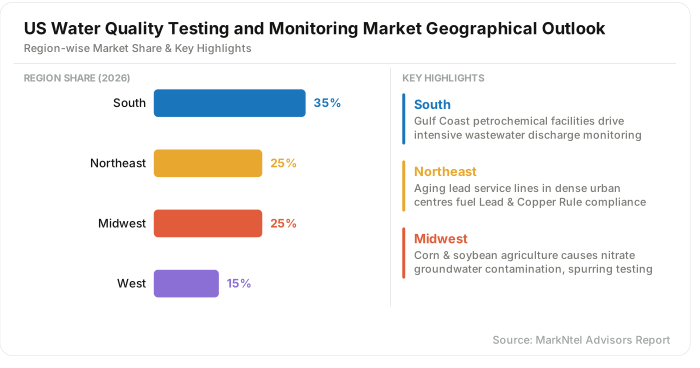
Economic and infrastructure conditions further strengthen the region’s leadership in market adoption. The Bipartisan Infrastructure Law continues to allocate USD 184 billion toward water system upgrades, with Texas and Florida receiving significant funding for modernization in 2024–2025 cycles. These investments prioritize treatment upgrades for aging pipelines and contamination control systems across municipalities. Frequent climate shocks, including hurricanes and flooding events, also accelerate infrastructure failure risks and monitoring demand.
Regulatory intensity is a key structural driver of regional dominance. The EPA’s first-ever national PFAS drinking water standards, implemented in 2024, require extensive testing across public water systems nationwide. Southern states face higher compliance pressure due to documented PFAS detections in major water utilities, particularly in Texas and Louisiana. This regulatory burden increases testing frequency and drives adoption of advanced real-time monitoring technologies.
Overall, the South’s dominance in the U.S. water quality testing and monitoring market is the result of a combined effect of rapid demographic expansion, sustained infrastructure investment, heightened climate vulnerability, and increasingly strict regulatory enforcement, all of which together create consistently higher testing intensity and long-term demand for advanced monitoring solutions.
US Water Quality Testing & Monitoring Industry Competitive Landscape
The US water quality testing and monitoring market is moderately consolidated, with around 20-25 key players operating across laboratory instrumentation, field monitoring solutions, and online real-time analytical systems. The market is strongly led by a few large multinational companies with advanced technological capabilities and broad product portfolios.
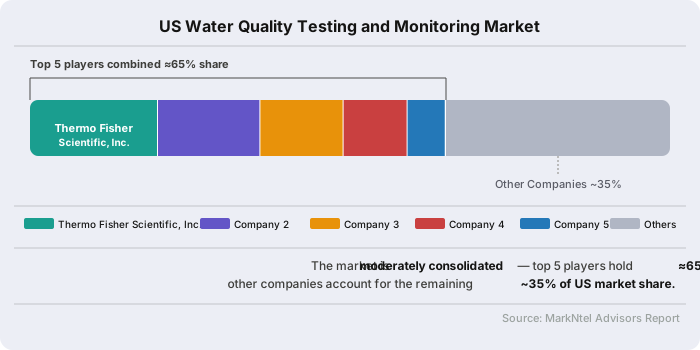
The top five players, Thermo Fisher Scientific Inc., Danaher Corporation, Xylem Inc., Agilent Technologies Inc., and Hach (Danaher subsidiary), collectively account for a significant majority of the market share, estimated at around 65%, driven by their strong presence in both analytical instrumentation and digital water monitoring solutions.
Major players in the US Water Quality Testing & Monitoring Market
- Thermo Fisher Scientific Inc.
- Agilent Technologies Inc.
- Danaher Corporation
- Waters Corporation
- Hach Company
- PerkinElmer Inc.
- Shimadzu Corporation
- Bio-Rad Laboratories Inc.
- Xylem Inc.
- Metrohm AG
- YSI is an Xylem Brand
- LaMotte Company
- IDEXX Laboratories Inc.
- Theranos Inc.
- Others
US Water Quality Testing and Monitoring Industry News and Recent Developments
2026: Arcadis Deploys Real-World AI Pilots for Water Utilities
Arcadis introduced AI-powered pilot projects with US water utilities to optimize stormwater and drinking water system management. These systems use machine learning models to analyze real-time water quality data and improve operational decision-making. The focus is on reducing risks, improving compliance, and enhancing infrastructure efficiency through digital intelligence.
Impact Analysis: This is driving the shift toward AI-enabled water quality monitoring systems in the US market. It improves predictive capabilities for contamination events and reduces reliance on manual sampling, increasing demand for integrated AI-IoT platforms across municipal and industrial water systems.
2024: Thermo Fisher Scientific launched the Dionex Inuvion Ion Chromatography (IC ) system
Thermo Fisher Scientific launched the Dionex Inuvion Ion Chromatography (IC) system in 2024, designed to improve the speed, flexibility, and accuracy of detecting ionic and inorganic contaminants in water. The system integrates streamlined workflows and advanced pump technology, enabling faster separation and higher reproducibility in water testing applications. Alongside this, the company expanded its IC-ICP-MS (Ion Chromatography–Inductively Coupled Plasma Mass Spectrometry) methods, which allow ultra-trace detection of heavy metals such as chromium in drinking water with very high sensitivity.
Impact Analysis: This innovation is accelerating the shift toward integrated, high-throughput laboratory systems in the US water testing industry. It is particularly important for municipal water utilities and environmental labs facing stricter EPA compliance requirements for trace-level contaminants. The ability to detect low-concentration metals more efficiently also supports faster regulatory reporting and risk mitigation.
2024: EPA Announces Funding to Reduce Lead in Drinking Water in Schools and Childcare Facilities
The US Environmental Protection Agency (EPA) announced funding support for states to identify and reduce lead contamination in drinking water systems, particularly in schools and childcare facilities. The initiative focuses on expanding water sampling, testing programs, and remediation efforts to ensure safe drinking water for children and vulnerable populations.
Impact Analysis: This development directly increases demand for water quality testing services, lead detection instruments, and compliance monitoring systems across the US. It strengthens the role of regulatory-driven testing programs, especially in public infrastructure such as schools. The funding also accelerates the adoption of advanced analytical tools and field testing kits, reinforcing growth in the municipal and public health monitoring segments of the water quality testing market.
2025: Stantec Launches Water Research & Innovation Programs
Stantec launched multiple water-focused innovation programs targeting PFAS treatment, nutrient management, and advanced monitoring technologies. These programs integrate data analytics and machine learning to improve water quality assessment and infrastructure resilience across US utilities. The initiative supports collaboration between engineers, utilities, and technology providers to develop next-generation monitoring solutions.
Impact Analysis: This development strengthens innovation-driven demand for advanced sensors and analytical systems in the US water testing market. It accelerates the adoption of predictive monitoring tools and improves contamination detection efficiency, particularly for emerging pollutants like PFAS, enhancing long-term utility performance and regulatory compliance.
- Market Segmentation
- Introduction
- Product Definition
- Research Process
- Assumptions
- Executive Summary
- US Water Quality Testing & Monitoring Market Policies, Regulations, and Product Standards
- US Water Quality Testing & Monitoring Market Trends & Developments
- US Water Quality Testing & Monitoring Market Dynamics
- Growth Factors
- Challenges
- US Water Quality Testing & Monitoring Market Hotspot & Opportunities
- US Water Quality Testing & Monitoring Market Outlook, 2022-2032F
- Market Size & Outlook
- By Revenues (USD Million)
- Market Share & Outlook
- By Product Type- Market Size & Forecast 2022-2032, USD Million
- Portable Water Quality Monitoring Systems
- Online or Real-Time Water Quality Monitoring Systems
- Benchtop / Laboratory Water Quality Analyzers
- By Parameter- Market Size & Forecast 2022-2032, USD Million
- Physical Parameters
- Temperature
- Turbidity
- Conductivity
- Chemical Parameters
- pH
- Dissolved Oxygen
- ORP, Nutrients
- Chlorine
- Heavy Metals
- Biological Parameters
- Total Coliform
- E. coli
- Algae
- Other Microorganisms
- Physical Parameters
- By Application- Market Size & Forecast 2022-2032, USD Million
- Industrial Wastewater and Effluent Monitoring
- Municipal Drinking Water Utilities
- Environmental Monitoring of Rivers, Lakes, and Oceans
- Aquaculture and Agriculture
- Research and Laboratory Use
- By End User- Market Size & Forecast 2022-2032, USD Million
- Government Agencies and Environmental Bodies
- Water Treatment Plants and Utilities
- Industrial Facilities (Food, Beverage, Chemical, Pharmaceutical)
- Academic and Research Institutes
- By Technology / Instrument Type- Market Size & Forecast 2022-2032, USD Million
- Sensors & probes
- pH sensors
- DO sensors
- conductivity sensors
- Analytical instruments
- Spectrometers
- chromatography systems
- TOC analyzers
- Electrochemical methods
- Microbiological testing systems
- Rapid / portable testing kits
- IoT-based real-time monitoring systems
- Sensors & probes
- By Region- Market Size & Forecast 2022-2032, USD Million
- Northeast
- South
- Midwest
- West
- By Company
- Competition Characteristics
- Market Share & Analysis
- By Product Type- Market Size & Forecast 2022-2032, USD Million
- Market Size & Outlook
- US Portable Water Quality Monitoring Systems Market Outlook, 2022-2032
- Market Size & Outlook
- By Revenues (USD Million)
- Market Share & Outlook
- By Parameter- Market Size & Forecast 2022-2032, USD Million
- By Application- Market Size & Forecast 2022-2032, USD Million
- By End User- Market Size & Forecast 2022-2032, USD Million
- By Technology / Instrument Type- Market Size & Forecast 2022-2032, USD Million
- By Region- Market Size & Forecast 2022-2032, USD Million
- Market Size & Outlook
- US Online or Real-Time Water Quality Monitoring Systems Market Outlook, 2022-2032
- Market Size & Outlook
- By Revenues (USD Million)
- Market Share & Outlook
- By Parameter- Market Size & Forecast 2022-2032, USD Million
- By Application- Market Size & Forecast 2022-2032, USD Million
- By End User- Market Size & Forecast 2022-2032, USD Million
- By Technology / Instrument Type- Market Size & Forecast 2022-2032, USD Million
- By Region- Market Size & Forecast 2022-2032, USD Million
- Market Size & Outlook
- US Benchtop / Laboratory Water Quality Monitoring Systems Market Outlook, 2022-2032
- Market Size & Outlook
- By Revenues (USD Million)
- Market Share & Outlook
- By Parameter- Market Size & Forecast 2022-2032, USD Million
- By Application- Market Size & Forecast 2022-2032, USD Million
- By End User- Market Size & Forecast 2022-2032, USD Million
- By Technology / Instrument Type- Market Size & Forecast 2022-2032, USD Million
- By Region- Market Size & Forecast 2022-2032, USD Million
- Market Size & Outlook
- US Water Quality Testing & Monitoring Market Key Strategic Imperatives for Success & Growth
- Competitive Outlook
- Company Profiles
- Benchtop / Laboratory Water Quality Analyzers
- Business Description
- Product Portfolio
- Collaborations & Alliances
- Recent Developments
- Financial Details
- Others
- Thermo Fisher Scientific Inc.
- Business Description
- Product Portfolio
- Collaborations & Alliances
- Recent Developments
- Financial Details
- Others
- Agilent Technologies Inc.
- Business Description
- Product Portfolio
- Collaborations & Alliances
- Recent Developments
- Financial Details
- Others
- Danaher Corporation
- Business Description
- Product Portfolio
- Collaborations & Alliances
- Recent Developments
- Financial Details
- Others
- Waters Corporation
- Business Description
- Product Portfolio
- Collaborations & Alliances
- Recent Developments
- Financial Details
- Others
- Hach Company
- Business Description
- Product Portfolio
- Collaborations & Alliances
- Recent Developments
- Financial Details
- Others
- PerkinElmer Inc.
- Business Description
- Product Portfolio
- Collaborations & Alliances
- Recent Developments
- Financial Details
- Others
- Shimadzu Corporation
- Business Description
- Product Portfolio
- Collaborations & Alliances
- Recent Developments
- Financial Details
- Others
- Bio-Rad Laboratories Inc.
- Business Description
- Product Portfolio
- Collaborations & Alliances
- Recent Developments
- Financial Details
- Others
- Xylem Inc.
- Business Description
- Product Portfolio
- Collaborations & Alliances
- Recent Developments
- Financial Details
- Others
- Metrohm AG
- Business Description
- Product Portfolio
- Collaborations & Alliances
- Recent Developments
- Financial Details
- Others
- YSI a Xylem Brand
- Business Description
- Product Portfolio
- Collaborations & Alliances
- Recent Developments
- Financial Details
- Others
- LaMotte Company
- Business Description
- Product Portfolio
- Collaborations & Alliances
- Recent Developments
- Financial Details
- Others
- IDEXX Laboratories Inc.
- Business Description
- Product Portfolio
- Collaborations & Alliances
- Recent Developments
- Financial Details
- Others
- Theranos Inc.
- Business Description
- Product Portfolio
- Collaborations & Alliances
- Recent Developments
- Financial Details
- Others
- Others
- Benchtop / Laboratory Water Quality Analyzers
- Company Profiles
- Disclaimer

MarkNtel Advisors follows a robust and iterative research methodology designed to ensure maximum accuracy and minimize deviation in market estimates and forecasts. Our approach combines both bottom-up and top-down techniques to effectively segment and quantify various aspects of the market. A consistent feature across all our research reports is data triangulation, which examines the market from three distinct perspectives to validate findings. Key components of our research process include:
1. Scope & Research Design At the outset, MarkNtel Advisors define the research objectives and formulate pertinent questions. This phase involves determining the type of research—qualitative or quantitative—and designing a methodology that outlines data collection methods, target demographics, and analytical tools. They also establish timelines and budgets to ensure the research aligns with client goals.
2. Sample Selection and Data Collection In this stage, the firm identifies the target audience and determines the appropriate sample size to ensure representativeness. They employ various sampling methods, such as random or stratified sampling, based on the research objectives. Data collection is carried out using tools like surveys, interviews, and observations, ensuring the gathered data is reliable and relevant.
3. Data Analysis and Validation Once data is collected, MarkNtel Advisors undertake a rigorous analysis process. This includes cleaning the data to remove inconsistencies, employing statistical software for quantitative analysis, and thematic analysis for qualitative data. Validation steps are taken to ensure the accuracy and reliability of the findings, minimizing biases and errors.

4. Data Forecast and FinalizationThe final phase involves forecasting future market trends based on the analyzed data. MarkNtel Advisors utilize predictive modeling and time series analysis to anticipate market behaviors. The insights are then compiled into comprehensive reports, featuring visual aids like charts and graphs, and include strategic recommendations to inform client decision-making
FILL THE FORM TO INQUIRE BEFORE BUYING THIS REPORT
We offer flexible licensing options to cater to varying organizational needs. Choose the pricing pack that best suits your requirements:
Buy Now Talk to our Consultant
 Request Customization