

By Type (Water Treatment Equipment (Membrane Systems, Filtration & Separation, Disinfection, Evaporation & ZLD, Sludge Handling, Other Equipment), Water Treatment Chemicals (Coagul......ants & Flocculants, Scale & Corrosion Inhibitors, Biocides & Disinfectants, pH Adjusters & Neutralizers, Membrane Chemicals), Water Treatment Services (Engineering, Procurement & Construction (EPC), Operations & Maintenance (O&M), Managed Services, Water Testing, Monitoring & Consulting)), By End-Use Industry (Power Generation, Oil & Gas, Petrochemicals, Chemicals, Food & Beverage, Pharmaceuticals, Pulp & Paper, Textile, Electronics & Semiconductors, & Metals), and others Read more
- Environment
- Jul 2026
- 144
- PDF, Excel, PPT
India Industrial Water Treatment Market Key Takeaways
- The India industrial water treatment market was valued at USD 3.53 billion in 2025 and is projected to grow from USD 3.78 billion in 2026 to USD 5.67 billion by 2032.
- The industry is projected to witness steady growth at a CAGR of 7.0% during 2026–2032.
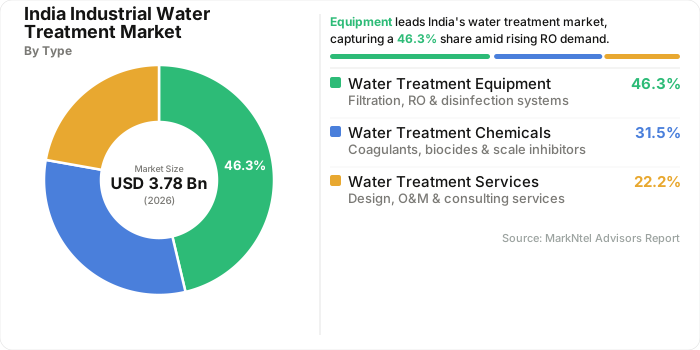
- By type, water treatment equipment remains the dominant segment, accounting for 46.3% of the market in 2026.
- By end-use industry, the chemical industry leads the market with an estimated 28.4% share in 2026.
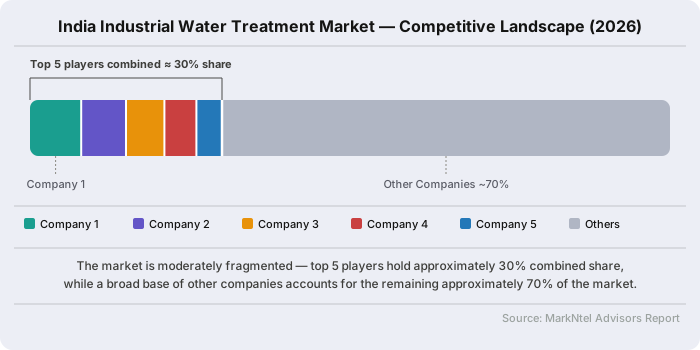
- The market is moderately fragmented, with the top five companies collectively accounting for approximately 30% of the market in 2026.
India Industrial Water Treatment Market Size & Outlook
The industrial water treatment market in India is valued at USD 3.53 billion in 2025 and is projected to reach USD 3.78 billion in 2026 and USD 5.67 billion by 2032, expanding at a CAGR of 7.0% during the forecast period.
Market growth is primarily supported by rising investments in water-intensive manufacturing industries, increasing regulatory scrutiny over industrial effluent discharge, and growing adoption of advanced treatment technologies. These factors continue to strengthen demand for industrial water treatment solutions and process water optimization systems that improve operational efficiency while supporting sustainable industrial production.
The long-term outlook is reinforced by India's continued industrial infrastructure expansion. According to the Department for Promotion of Industry and Internal Trade (DPIIT), the National Industrial Corridor Development Programme (NICDP) is developing industrial smart cities across six major industrial corridors as of 2025. The establishment of these manufacturing hubs is increasing the installation of dedicated process water, wastewater recycling, and high-capacity effluent treatment systems, thereby supporting sustained demand for industrial water infrastructure across chemicals, engineering, electronics, and advanced manufacturing industries.
Regulatory initiatives are also reshaping investment priorities across industrial facilities. In 2024, the Ministry of Jal Shakti introduced the National Framework for Safe Reuse of Treated Water, promoting treated wastewater reuse as a strategic resource for industrial applications. In parallel, the Central Ground Water Authority (CGWA) continues to strengthen groundwater abstraction compliance through mandatory No Objection Certificate (NOC) conditions for industries operating in notified areas. These policy measures are accelerating investments in closed-loop recycling systems, membrane technologies, and high-recovery treatment infrastructure to reduce freshwater dependence and enhance long-term water security.
Additional growth momentum is supported by increasing industrial investment in environmental compliance and resource-efficient manufacturing. According to the India Brand Equity Foundation (IBEF), India's chemicals and petrochemicals industry is expected to reach approximately USD 300 billion by 2025, creating substantial demand for advanced water treatment infrastructure across one of the country's most water-intensive industrial sectors. The expansion of large-scale chemical manufacturing continues to accelerate the deployment of industrial water recycling, advanced effluent management, and digital process monitoring solutions, supporting steady market expansion throughout the forecast period.
India Industrial Water Treatment Market Key Indicators
- According to the Department for Promotion of Industry and Internal Trade, 149 industrial projects with proposed investments exceeding approximately USD 22.2 billion had been approved under the National Industrial Corridor Development Programme as of 2025. The continued development of industrial smart cities and manufacturing corridors is accelerating demand for process water treatment, industrial wastewater recycling, high-capacity effluent treatment plants, and advanced water management infrastructure across newly established industrial facilities.
- According to the Ministry of Environment, Forest and Climate Change (MoEFCC), approximately 6,700 highly polluting industries and common treatment facilities have installed Online Continuous Effluent/Emission Monitoring Systems (OCEMS), transmitting real-time environmental data through nearly 44,000 monitoring devices to CPCB, SPCBs, and PCCs at 15-minute intervals. The widespread deployment of digital compliance infrastructure is driving demand for industrial water treatment system upgrades, online analyzers, process automation, advanced control systems, and turnkey operation & maintenance (O&M) services across India's industrial facilities.
- According to the Ministry of Heavy Industries, the Production Linked Incentive (PLI) Scheme for the Automobile and Auto Component Industry attracted committed investments of over approximately USD 3.5 billion as of 2025. The expansion of automotive and component manufacturing facilities is increasing demand for process water treatment, paint shop wastewater recycling, cooling water management, and advanced industrial effluent treatment systems to support sustainable production and regulatory compliance.
- According to the Ministry of Electronics and Information Technology (MeitY), India's electronics production reached approximately around USD 135 billion during FY 2023–24. The rapid expansion of semiconductor, electronics, and component manufacturing is accelerating demand for ultrapure water (UPW) systems, high-performance membrane technologies, and advanced wastewater recycling infrastructure to maintain stringent production quality and improve water-use efficiency.
India Industrial Water Treatment Market Scope
| Category | Segments |
|---|---|
| By Type | Water Treatment Equipment (Membrane Systems, Filtration & Separation, Disinfection, Evaporation & ZLD, Sludge Handling, Other Equipment), Water Treatment Chemicals (Coagulants & Flocculants, Scale & Corrosion Inhibitors, Biocides & Disinfectants, pH Adjusters & Neutralizers, Membrane Chemicals), Water Treatment Services (Engineering, Procurement & Construction (EPC), Operations & Maintenance (O&M), Managed Services, Water Testing, Monitoring & Consulting |
| By End-Use Industry | Power Generation, Oil & Gas, Petrochemicals, Chemicals, Food & Beverage, Pharmaceuticals, Pulp & Paper, Textile, Electronics & Semiconductors, & Metals |
India Industrial Water Treatment Market Growth Drivers
Rising Industrial Manufacturing and Water-Intensive Capacity Expansion
India's expanding manufacturing base continues to accelerate demand for industrial water treatment solutions across high water-consuming sectors, including pharmaceuticals, specialty chemicals, electronics, and food processing. According to the Department for Promotion of Industry and Internal Trade (DPIIT), Foreign Direct Investment (FDI) equity inflows into the manufacturing sector reached USD 19.04 billion during FY 2024–25, reflecting sustained industrial capacity additions that increase requirements for process water purification, cooling water treatment, and advanced wastewater management systems. This investment momentum strengthens demand for process water treatment technologies that enhance operational efficiency and regulatory compliance.
Simultaneously, India's manufacturing expansion under the Production Linked Incentive (PLI) Programme continues to stimulate investments in new industrial facilities requiring reliable water infrastructure. As reported by the Ministry of Commerce & Industry, PLI schemes have attracted investments exceeding approximately USD 21 billion as of 2025 across multiple manufacturing sectors. The commissioning of these facilities increases the adoption of industrial wastewater recycling systems, membrane-based treatment technologies, and high-purity water solutions to improve water efficiency, reduce freshwater dependency, and support sustainable industrial production.
Recent Trends
High-Purity Water Infrastructure Expands with Electronics and Semiconductor Manufacturing
The rapid expansion of electronics and semiconductor manufacturing is emerging as a significant trend in the India industrial water treatment industry, driving demand for high-purity water systems capable of meeting stringent production quality standards. According to the India Semiconductor Mission (ISM) under the Ministry of Electronics & Information Technology (MeitY), five semiconductor manufacturing projects with a cumulative investment of around USD 18.2 billion had been approved as of 2025. These facilities require ultra-pure process water and advanced wastewater recovery systems, accelerating the deployment of continuous electrodeionization (CEDI), reverse osmosis, ultrafiltration, and polishing technologies.
Simultaneously, industrial manufacturers are increasingly adopting water-efficient manufacturing practices to improve resource productivity and support long-term operational resilience. The growing establishment of semiconductor, electronics, and precision manufacturing clusters is boosting investments in closed-loop water recycling, high-recovery membrane systems, and automated process control solutions that maximize water reuse while minimizing discharge volumes. This trend continues to strengthen demand for ultra-pure water treatment infrastructure and integrated lifecycle operation & maintenance (O&M) services across India's advanced manufacturing ecosystem.
India Industrial Water Treatment Market Opportunities and Challenges
High Cost of Industrial Resource Recovery Creates Opportunities for Cost-Effective Water Treatment Solutions
The increasing emphasis on industrial resource recovery is encouraging manufacturers to recover reusable water and valuable by-products while complying with stricter environmental regulations. However, the adoption of advanced wastewater recovery technologies, including brine concentration, thermal evaporation, and zero liquid discharge (ZLD) systems, remains constrained by their high capital investment, operating costs, and energy requirements. According to the Department for Promotion of Industry and Internal Trade (DPIIT), the National Industrial Corridor Development Programme is developing 12 industrial smart cities across six industrial corridors as of 2025. As these manufacturing hubs expand, industrial wastewater volumes are expected to rise, creating a pressing need for efficient and economically viable water treatment solutions.
At the same time, these cost challenges are accelerating innovation in affordable and resource-efficient treatment technologies. The growing transition toward a circular water economy is creating significant opportunities for solution providers offering advanced water recycling and resource recovery systems. Reflecting this trend, VA Tech Wabag Limited secured a contract in October 2024 to develop a Common Effluent Treatment Plant (CETP) with advanced water recycling and resource recovery capabilities at the Ankleshwar Industrial Estate in Gujarat. Such investments demonstrate the industry's increasing focus on wastewater valorization, enabling manufacturers to recover reusable water, reduce freshwater consumption, and achieve long-term regulatory compliance while improving operational sustainability.
Segmentations Insights
Capital Investments in Advanced Treatment Equipment Anchor Market Leadership
Water Treatment Equipment is the leading segment, estimated to account for 46.3% of the India industrial water treatment industry in 2026, making it the largest revenue-generating segment. The dominance is driven by increasing installation of membrane systems, filtration equipment, evaporation units, and automated treatment infrastructure across newly commissioned industrial facilities requiring dedicated process water and wastewater treatment systems. According to the Department of Heavy Industry, 15 manufacturing projects under the Advanced Chemistry Cell (ACC) PLI Scheme had achieved commercial production by December 2024, increasing demand for industrial water infrastructure that supports high-purity process water and regulatory-compliant wastewater management.
The expansion of advanced manufacturing facilities continues to strengthen investments in integrated water treatment equipment that ensures uninterrupted production and efficient water utilization. Water-intensive industries increasingly deploy reverse osmosis systems, ultrafiltration units, evaporation technologies, and digital process controls as core utility infrastructure to improve operational reliability and environmental compliance. Consequently, demand for membrane treatment systems and industrial water purification equipment continues to outpace other revenue streams as manufacturers prioritize long-term production efficiency. By type, the industry has been segmented into:
- Water Treatment Equipment
- Water Treatment Chemicals
- Water Treatment Services
Expanding Chemical Manufacturing Strengthens End-User Leadership
The chemical industry dominates the industry, estimated to account for 28.4% of India's industrial water treatment industry in 2026, making it the largest end-use segment. According to the Department of Chemicals & Petrochemicals, Ministry of Chemicals & Fertilizers, India's chemical and petrochemical sector comprises more than 80,000 commercial products, making it one of the country's largest manufacturing industries. The sector's extensive production base generates complex wastewater streams that require advanced treatment and recycling, significantly increasing demand for industrial wastewater treatment, high-recovery membrane systems, and integrated effluent management infrastructure.
The continued modernization of chemical manufacturing is accelerating investments in advanced treatment technologies to improve water efficiency and regulatory compliance. In June 2024, Kurita Water Industries Ltd. established Kurita AquaChemie India Private Limited (KAIL) in Chennai to expand its industrial water treatment chemicals business in India, strengthening its portfolio for chemical and process industries. Such strategic expansion highlights growing confidence in the sector and reinforces demand for chemical industry water treatment solutions and industrial effluent management technologies as manufacturers increasingly prioritize sustainable water management. The key end users mapped in the study include:
- Power Generation
- Oil & Gas
- Petrochemicals
- Chemicals
- Food & Beverage
- Pharmaceuticals
- Pulp & Paper
- Textile
- Electronics & Semiconductors
- Automotive
- Mining & Metals
- Others
India Industrial Water Treatment Market Competitive Analysis
The India industrial water treatment market remains moderately fragmented, with the top five players accounting for 30% of the market in 2026, driven by strong EPC capabilities, proprietary membrane technologies, specialty treatment chemicals, and long-term industrial O&M contracts. Competition increasingly focuses on water reuse, Zero Liquid Discharge (ZLD), digital monitoring, and lifecycle service offerings across pharmaceutical, chemical, semiconductor, and food processing industries.
Leading Companies in India Industrial Water Treatment Industry
- VA Tech Wabag Limited
- Thermax Limited
- Ion Exchange (India) Limited
- Larsen & Toubro Limited
- Ecolab Inc. (Nalco Water)
- Veolia Water Technologies India Private Limited
- SUEZ India Private Limited
- Xylem Water Solutions India Private Limited
- Aquatech International LLC
- Praj Industries Limited
- Concord Enviro Systems Limited
- Doshion Veolia Water Solutions Private Limited
India Industrial Water Treatment Industry News and Recent Developments
June 2024: Kurita Water Industries Establishes Kurita AquaChemie India to Expand Industrial Water Treatment Business
Kurita Water Industries Ltd. announced the establishment of Kurita AquaChemie India Private Limited (KAIL) in Chennai in June 2024 to strengthen its industrial water treatment chemicals business in India. The new subsidiary focuses on providing specialty water treatment chemicals and integrated technical services for industrial customers across sectors including chemicals, pharmaceuticals, electronics, power generation, and food & beverage manufacturing.
Impact Analysis: The expansion strengthens Kurita's local manufacturing and technical support capabilities, enabling faster deployment of advanced chemical treatment programs and process optimization services. The development is expected to accelerate the adoption of high-performance industrial water treatment chemicals and improve lifecycle water management solutions across India's rapidly expanding manufacturing sector.
May 2025: Ion Exchange Secures Major Industrial Water & Wastewater Treatment Order
Ion Exchange (India) Limited announced in May 2025 that it had secured a major industrial water and wastewater treatment order from a leading manufacturing customer, covering advanced process water treatment, wastewater recycling, and Zero Liquid Discharge (ZLD) systems. The project reinforces the company's position as one of India's leading providers of integrated industrial water solutions.
Impact Analysis: The order highlights increasing capital expenditure by Indian manufacturers on advanced water reuse and regulatory compliance infrastructure. It is expected to support wider deployment of membrane-based treatment systems, ZLD technologies, and digital plant automation, strengthening demand for integrated industrial water treatment solutions across high water-consuming industries.
- Market Segmentation
- Introduction
- Product Definition
- Research Process
- Assumptions
- Executive Summary
- India Industrial Water Treatment Market Policies, Regulations, and Product Standards
- India Industrial Water Treatment Market Trends & Developments
- India Industrial Water Treatment Market Dynamics
- Growth Factors
- Challenges
- India Industrial Water Treatment Market Hotspot & Opportunities
- India Industrial Water Treatment Market Outlook, 2022-2032
- Market Size & Outlook
- By Revenues (USD Million)
- Market Share & Outlook
- By Type- Market Size & Forecast 2022-2032, USD Million
- Water Treatment Equipment
- Membrane Systems
- Filtration & Separation
- Disinfection
- Evaporation & ZLD
- Sludge Handling
- Other Equipment
- Water Treatment Chemicals
- Coagulants & Flocculants
- Scale & Corrosion Inhibitors
- Biocides & Disinfectants
- pH Adjusters & Neutralizers
- Membrane Chemicals
- Water Treatment Services
- Engineering, Procurement & Construction (EPC)
- Operations & Maintenance (O&M)
- Managed Services
- Water Testing, Monitoring & Consulting
- Water Treatment Equipment
- By End-Use Industry- Market Size & Forecast 2022-2032, USD Million
- Power Generation
- Oil & Gas
- Petrochemicals
- Chemicals
- Food & Beverage
- Pharmaceuticals
- Pulp & Paper
- Textile
- Electronics & Semiconductors
- Automotive
- Mining & Metals
- Others
- By Region- Market Size & Forecast 2022-2032, USD Million
- North
- West
- South
- East
- By Company
- Competition Characteristics
- Market Share & Analysis
- By Type- Market Size & Forecast 2022-2032, USD Million
- Market Size & Outlook
- India Industrial Water Treatment Equipment Market Outlook, 2022-2032
- Market Size & Outlook
- By Revenues (USD Million)
- Market Segmentation & Outlook
- By Type- Market Size & Forecast 2022-2032, USD Million
- By End-Use Industry- Market Size & Forecast 2022-2032, USD Million
- By Region- Market Size & Forecast 2022-2032, USD Million
- Market Size & Outlook
- India Industrial Water Treatment Chemicals Market Outlook, 2022-2032
- Market Size & Outlook
- By Revenues (USD Million)
- Market Segmentation & Outlook
- By Type- Market Size & Forecast 2022-2032, USD Million
- By End-Use Industry- Market Size & Forecast 2022-2032, USD Million
- By Region- Market Size & Forecast 2022-2032, USD Million
- Market Size & Outlook
- India Industrial Water Treatment Services Market Outlook, 2022-2032
- Market Size & Outlook
- By Revenues (USD Million)
- Market Segmentation & Outlook
- By Type- Market Size & Forecast 2022-2032, USD Million
- By End-Use Industry- Market Size & Forecast 2022-2032, USD Million
- By Region- Market Size & Forecast 2022-2032, USD Million
- Market Size & Outlook
- India Industrial Water Treatment Market Key Strategic Imperatives for Success & Growth
- Competitive Outlook
- Company Profiles
- VA Tech Wabag Limited
- Business Description
- Product Portfolio
- Collaborations & Alliances
- Recent Developments
- Financial Details
- Others
- Thermax Limited
- Business Description
- Product Portfolio
- Collaborations & Alliances
- Recent Developments
- Financial Details
- Others
- Ion Exchange (India) Limited
- Business Description
- Product Portfolio
- Collaborations & Alliances
- Recent Developments
- Financial Details
- Others
- Larsen & Toubro Limited
- Business Description
- Product Portfolio
- Collaborations & Alliances
- Recent Developments
- Financial Details
- Others
- Ecolab Inc. (Nalco Water)
- Business Description
- Product Portfolio
- Collaborations & Alliances
- Recent Developments
- Financial Details
- Others
- Veolia Water Technologies India Private Limited
- Business Description
- Product Portfolio
- Collaborations & Alliances
- Recent Developments
- Financial Details
- Others
- SUEZ India Private Limited
- Business Description
- Product Portfolio
- Collaborations & Alliances
- Recent Developments
- Financial Details
- Others
- Xylem Water Solutions India Private Limited
- Business Description
- Product Portfolio
- Collaborations & Alliances
- Recent Developments
- Financial Details
- Others
- Aquatech International LLC
- Business Description
- Product Portfolio
- Collaborations & Alliances
- Recent Developments
- Financial Details
- Others
- Praj Industries Limited
- Business Description
- Product Portfolio
- Collaborations & Alliances
- Recent Developments
- Financial Details
- Others
- Concord Enviro Systems Limited
- Business Description
- Product Portfolio
- Collaborations & Alliances
- Recent Developments
- Financial Details
- Others
- Doshion Veolia Water Solutions Private Limited
- Business Description
- Product Portfolio
- Collaborations & Alliances
- Recent Developments
- Financial Details
- Others
- VA Tech Wabag Limited
- Company Profiles
- Disclaimer

MarkNtel Advisors follows a robust and iterative research methodology designed to ensure maximum accuracy and minimize deviation in market estimates and forecasts. Our approach combines both bottom-up and top-down techniques to effectively segment and quantify various aspects of the market. A consistent feature across all our research reports is data triangulation, which examines the market from three distinct perspectives to validate findings. Key components of our research process include:
1. Scope & Research Design At the outset, MarkNtel Advisors define the research objectives and formulate pertinent questions. This phase involves determining the type of research—qualitative or quantitative—and designing a methodology that outlines data collection methods, target demographics, and analytical tools. They also establish timelines and budgets to ensure the research aligns with client goals.
2. Sample Selection and Data Collection In this stage, the firm identifies the target audience and determines the appropriate sample size to ensure representativeness. They employ various sampling methods, such as random or stratified sampling, based on the research objectives. Data collection is carried out using tools like surveys, interviews, and observations, ensuring the gathered data is reliable and relevant.
3. Data Analysis and Validation Once data is collected, MarkNtel Advisors undertake a rigorous analysis process. This includes cleaning the data to remove inconsistencies, employing statistical software for quantitative analysis, and thematic analysis for qualitative data. Validation steps are taken to ensure the accuracy and reliability of the findings, minimizing biases and errors.

4. Data Forecast and FinalizationThe final phase involves forecasting future market trends based on the analyzed data. MarkNtel Advisors utilize predictive modeling and time series analysis to anticipate market behaviors. The insights are then compiled into comprehensive reports, featuring visual aids like charts and graphs, and include strategic recommendations to inform client decision-making
FILL THE FORM TO INQUIRE BEFORE BUYING THIS REPORT
We offer flexible licensing options to cater to varying organizational needs. Choose the pricing pack that best suits your requirements:
Buy Now Talk to our Consultant
 Request Customization