

By Product Type (Bridal Lehenga Choli, Bridal Saree, Bridal Gown / Indo-Western Wear, Salwar Suit / Anarkali Sets, Others), By Fabric/Material Type (Silk, Velvet, Georgette & Chiff......on, Net & Tulle, Others), By Price (Premium / Designer-Label, Mid-Range / Branded Retail, Economy / Mass-Market), By Occasion (Wedding Ceremony, Engagement, Reception, Pre-Wedding Ceremonies, Other Wedding-Related Occasions), By Distribution Channel (Offline, Online), and others Read more
- FMCG
- Sep 2026
- 175
- PDF, Excel, PPT
India Bridal Wear Market Key Takeaways
- The India bridal wear market was valued at USD 14 billion in 2025 and is projected to grow from USD 15.5 billion in 2026 to USD 29 billion by 2032.
- The industry is projected to witness steady growth at an 11% CAGR during 2026–2032.
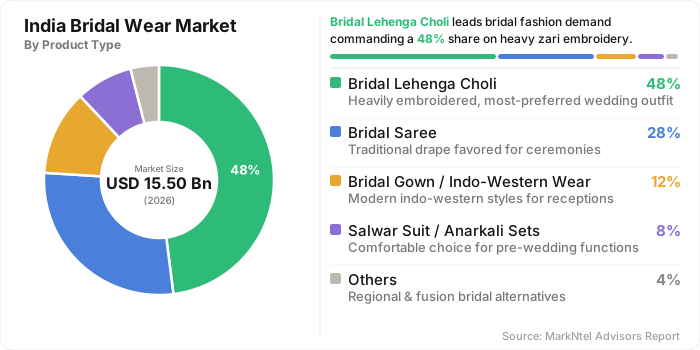
- Bridal Lehenga Choli remains the dominant product-type segment, accounting for approximately 48% of market revenue in 2026.
- Silk leads by fabric/material type, accounting for an estimated 42% share in 2025, supported by its heritage value and premium positioning.
- North India leads the market, representing around 30% of the total market share in 2026
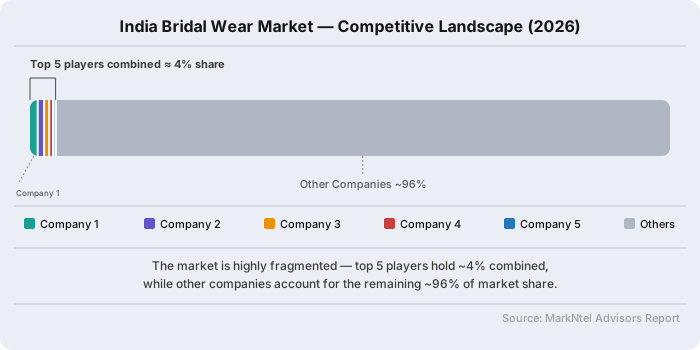
- The market is highly fragmented, with the top five companies collectively accounting for 4% of market revenue in 2026.
India Bridal Wear Market Size and Outlook
The India bridal wear market is estimated at USD 14 billion in 2025, rising to USD 15.5 billion in 2026 and projected to reach USD 29 billion by 2032, registering an 11% CAGR during 2026–2032.
The market represents the bride-specific component of India's broader wedding apparel economy and is derived through an analyst-led allocation methodology based on the country's wedding expenditure and apparel demand rather than directly adopting commercial market-research estimates.
Structural growth is anchored by the government's rationalization of apparel taxation: as per the Ministry of Finance's reply to the Lok Sabha following the 56th GST Council meeting, the threshold for the concessional 5% GST rate on apparel was raised from USD 10.50–26.26 per piece effective 22 September 2025, directly improving affordability across the mid-market bridal-adjacent price band and stimulating consumption in the labour-intensive garmenting sector.
The broader textile environment reinforces the market's growth potential. India's 2024 total textile market is estimated at approximately USD 176.8 billion, while household textile demand represents around USD 103.7 billion; women account for 55.5% of textile purchases. Strong demand for sarees, salwar-kameez and other women's apparel supports the underlying bridal wear ecosystem. Rising wedding expenditure, premiumization, designer adoption, organized retail, and digital bridal shopping are expected to support the market growth through 2032.
India Bridal Wear Market Key Indicators
- According to the Ministry of Textiles’ National Household Survey 2024, India’s textile market reached USD 176.8 billion in 2024, while domestic market demand stood at approximately USD 142.2 billion, highlighting the substantial consumption base supporting India’s apparel and textile ecosystem.
- By the Ministry of Textiles’ export data released through PIB, ready-made garments generated USD 8.73 billion during April–October FY2024–25, representing a 41% share of India's USD 21.36 billion textile and apparel exports, supporting the country's expanding apparel-production and international demand ecosystem.
- As documented in the Household Consumption Expenditure Survey 2023–24, India's official clothing consumption basket explicitly includes sherwani, lehnga and gowns, confirming these apparel formats within nationally measured household consumption and strengthening their relevance to India's wedding and bridal wear ecosystem.
India Bridal Wear Market: Bridal Consumer Buying Behavior Analysis
Consumer spending is increasingly shifting toward personalized, premium, and multi-event bridal wear, creating measurable differences in average order value, outfit quantity and price tolerance. According to Wedding Wire India’s 2024–25 survey of more than 1,500 couples, the average wedding cost increased to USD 34,800, from approximately USD 23,500 in 2022, while 61% of couples opted for customized outfits. In addition, 35% of weddings lasted at least three days, increasing the requirement for multiple ceremony-specific bridal outfits rather than a single wedding ensemble.
Consumer purchasing is also becoming more reference-led, digitally influenced and individualized. A 2024 India Today assessment found that Gen Z brides increasingly make bridal wear decisions around personal style and comfort, while a 2025 Financial Express report found that approximately 60–70% of brides in a major bridal-shopping market arrived with reference images, demonstrating the influence of celebrity and social-media fashion. Price dispersion remains substantial, ranging from mass-market purchases to designer lehengas priced around USD 73,500–93,500, while made-to-order purchasing commonly requires 1.5–2 months, highlighting customization, lead time and price as measurable purchasing factors.
Overall, bridal purchasing in India is becoming more personalized, premium, and experience-oriented, with customization, multiple wedding functions, digital inspiration, and comfort increasingly influencing purchase decisions. These behavioral shifts are expanding opportunities for brands across premium price tiers while increasing demand for differentiated designs, shorter customization cycles and digitally integrated bridal shopping experiences.
India Bridal Wear Market Scope
| Category | Segments |
|---|---|
| By Product Type | Bridal Lehenga Choli, Bridal Saree, Bridal Gown / Indo-Western Wear, Salwar Suit / Anarkali Sets, Others |
| By Fabric/Material Type | Silk, Velvet, Georgette & Chiffon, Net & Tulle, Others |
| By Price | Premium / Designer-Label, Mid-Range / Branded Retail, Economy / Mass-Market |
| By Occasion | Wedding Ceremony, Engagement, Reception, Pre-Wedding Ceremonies, Other Wedding-Related Occasions |
| By Distribution Channel | Offline, Online |
India Bridal Wear Market Growth Driver
Higher Wedding Spending Accelerates Bridal-Apparel Premiumization
According to CAIT, India’s 2025 wedding season is projected to generate USD 76.9 billion from approximately 4.6 million weddings, compared with USD 69.8 billion from 4.8 million weddings in 2024. The increase in total expenditure despite fewer weddings indicates higher spending per ceremony, while apparel and sarees account for 10% of the 2025 wedding expenditure, creating a direct demand pool for bridal lehengas, sarees, gowns and other ceremonial apparel.
As per the Ministry of Textiles’ National Household Survey 2024, household textile demand reached approximately USD 103.7 billion, while per-capita textile demand stood at approximately USD 72. Women accounted for 55.5% of textile purchases, with sarees and salwar-kameez among the major women's textile categories. This strong female apparel consumption base supports premiumization across designer bridal wear, silk sarees, embellished lehengas and other high-value ceremonial clothing.
Recent Trend
Lightweight Bridal wear Gains Traction as Brides Prioritize Comfort and Mobility
According to Manyavar & Mohey, heavy bridal lehengas typically weigh around 3–5 kg, with dense zari, sequins, stonework and multiple fabric layers contributing to garment weight. The brand recommends lighter fabrics such as organza, georgette and crepe for improved mobility during extended wedding ceremonies. This shift is encouraging bridal wear brands to reduce fabric and embellishment density while retaining traditional detailing, supporting greater adoption of lightweight silhouettes among brides seeking comfort without compromising the visual richness of ceremonial apparel.
As demonstrated by Styles by MM, lightweight bridal wear is also being enabled through micro-zari techniques that can reduce garment weight by up to 35% while retaining detailed craftsmanship. The innovation reduces physical fatigue for brides during long ceremonies while maintaining intricate bridal detailing. This product development reflects a broader movement toward combining traditional embellishment with lightweight construction, enabling contemporary bridal collections to deliver greater comfort and mobility without moving away from India's established heritage-wear aesthetics.
India Bridal Wear Market Opportunities and Challenges
Raw Material Volatility Drives Supply Chain Integration
The Indian bridal wear sector faces operational challenges from raw-material price volatility and fragmented artisan supply networks. According to the Central Silk Board data cited in the market assessment, raw silk import and domestic market prices recorded a 14.5% volatility band, increasing cost uncertainty for fabricators. The fragmented nature of embroidery and weaving networks also creates production-scheduling risks during peak wedding seasons, particularly for customized bridal garments requiring intensive craftsmanship and coordinated multi-stage production.
This supply-chain pressure creates an opportunity for vertically integrated fashion companies to establish standardized sourcing and contract-based artisan networks. For example, Vedant Fashions Limited operates a large network of exclusive brand outlets and centralized brand operations across India, providing a model for scaling wedding wear through organized sourcing and distribution. Similar integration can help bridal wear companies improve raw-material procurement, artisan coordination, quality consistency, and delivery reliability while enabling organized brands to capture demand from fragmented regional retailers.
Segmentation Insights
Bridal Lehenga Choli Emerges as India’s Primary High-Value Bridal Wear Segment
Bridal Lehenga Choli leads product-type revenue and is estimated to account for 48% of India’s bridal-wear revenue in 2026, reflecting its high-value positioning and strong bridal relevance. As JJ Valaya reports lehengas at approximately 60% of womenswear bridal revenue, while Shantnu & Nikhil reports around 30%. These benchmarks indicate that lehengas consistently represent a major revenue pool within designer bridal wear, supported by premium pricing, intensive embroidery, and their role as the principal bridal ensemble.
The category also benefits from higher craftsmanship and embellishment intensity, which increases revenue per garment compared with simpler ready-to-wear formats. Brides increasingly purchase multiple lehengas for ceremonies such as the wedding, sangeet and reception, expanding per-customer revenue opportunities. The growing availability of size-run collections, made-to-order services and organized bridal retail is shifting lehenga purchasing beyond bespoke tailoring toward branded retail, supporting wider geographic penetration and strengthening the category's position as the leading product-type revenue segment. Based on product type, the industry is segmented into:
- Bridal Lehenga Choli
- Bridal Saree
- Bridal Gown / Indo-Western Wear
- Salwar Suit / Anarkali Sets
- Others
Silk Leads Bridal Wear Revenue Through Heritage Value and Premium Positioning
Silk is estimated to account for approximately 42.0% of India’s bridal wear revenue in 2026. The category is supported by the established role of Kanchipuram, Banarasi, Tussar, Mulberry, and other traditional silks in Indian ceremonial apparel. The Ministry of Textiles identifies India as the world’s second-largest silk producer and consumer, while raw-silk production increased from 31,906 MT in 2017–18 to 38,913 MT in 2023–24, reinforcing domestic supply depth.
According to the Central Silk Board, silk is deeply integrated with Indian culture, with silk sarees representing an important traditional women's garment across regions. Silk's luster, drape and strength support its suitability for premium bridal apparel, while the Silk Mark provides an authenticity mechanism for consumers purchasing high-value silk products. The Central Silk Board's quality-certification framework targets 29 lakh Silk Mark labels, strengthening traceability and buyer confidence in genuine silk. These factors support premium pricing and sustained demand for silk-led bridal collections. Based on Fabric/Material Type, the industry is segmented into:
- Silk
- Velvet
- Georgette & Chiffon
- Net & Tulle
- Others
India Bridal Wear Market Geographical Outlook
North India accounted for 30% of India’s festive and wedding-wear market in FY2026, making it the largest regional market. The region's leadership is supported by a strong preference for large, multi-event weddings, which increases the number of bridal and occasion outfits purchased per wedding.
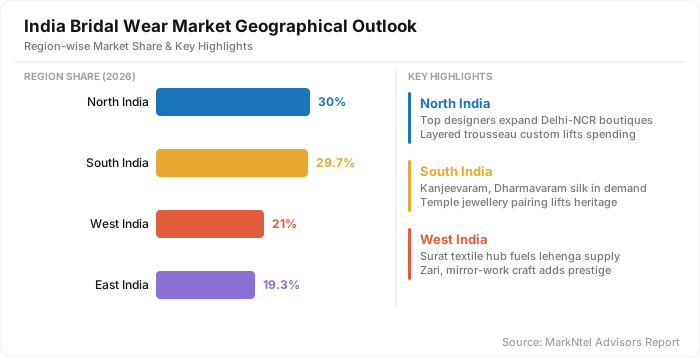
Delhi NCR is the region's largest urban demand center, generating approximately USD 1.13 billion in wedding and occasion-wear sales in FY2025 and representing 6% of India's overall wedding and occasion-wear market. Delhi NCR's scale is complemented by Jaipur, Lucknow and Chandigarh, where established bridal-shopping ecosystems support demand for designer lehengas, sarees and customized wedding apparel.
The region's product mix is particularly favorable for premium bridal wear, with North Indian weddings typically involving multiple ceremonies and higher outfit requirements. Delhi's established bridal retail clusters, including Chandni Chowk, South Extension and Shahpur Jat, span mass-market through couture price points, while organized and designer retailers increasingly expand their presence across the region.
India Bridal Wear Market Competitive Analysis
The India bridal wear market is highly fragmented, with the top five companies estimated to account for approximately 4% of 2026 market revenue. The competitive structure combines large organized wedding wear platforms with luxury and designer-led couture houses. Vedant Fashions Limited, Sabyasachi Couture Private Limited, House of Anita Dongre Limited, Indivinity Clothing Retail Private Limited, and MM Styles Private Limited represent the leading organized and designer-focused players.
Top Companies in the India Bridal Wear Industry:
- Vedant Fashions Limited (Manyavar, Mohey)
- Sabyasachi Couture Private Limited
- House of Anita Dongre Limited — Anita Dongre
- Indivinity Clothing Retail Private Limited (Tasva)
- MM Styles Private Limited (Manish Malhotra)
- Reliance Ritu Kumar Private Limited
- Reliance Abu Sandeep Private Limited (Abu Jani Sandeep Khosla)
- Anamika Fashionwears and Exports Private Limited
- Nalli Silk Sarees Private Limited
- Kalki Fashion Private Limited
India Bridal Wear Industry News and Recent Developments
August 2025: KALKI Fashion Expands Bridal Couture Platform
KALKI Fashion identifies Bridal Couture as an August 2025 milestone in its company development timeline. Its current bridal platform contains more than 500 bridal products, including made-to-order lehengas with customization and delivery periods generally extending several weeks.
Impact Analysis: The development reinforces the shift toward organized, digitally discoverable bridal wear with customized premium products. It also demonstrates how contemporary bridal retailers are combining physical stores with digital commerce to broaden access to high-value wedding apparel.
May 2024: Ministry of Tourism Launches "Wed in India" Campaign with FICCI
The Ministry of Tourism organized the "Wed in India" expo alongside the Great India Travel Bazaar in Jaipur, in collaboration with the Department of Tourism, Government of Rajasthan, and FICCI, bringing together Indian and international wedding planners, tour operators, and event-management companies under the broader "India says I do" campaign to position India as a global wedding destination.
Impact Analysis: By actively redirecting high-net-worth destination-wedding spend toward domestic venues, this policy initiative structurally expands the multi-day, multi-outfit apparel demand base (welcome functions, sangeet, main ceremony, reception) that underpins premium and luxury bridal-wear revenue, particularly for couture houses with destination-wedding styling capabilities.
- Market Segmentation
- Introduction
- Product Definition
- Research Process
- Assumptions
- Executive Summary
- India Bridal Wear Market Production Trend 2022-2032
- India Bridal Wear Market Production Trend by Type of Product
- Bridal Lehenga Choli
- Bridal Saree
- Bridal Gown / Indo-Western Wear
- Salwar Suit / Anarkali Sets
- Others
- Company-Wise Production Plants and Statistics
- Installed Production Capacity
- Actual Production
- Planned Production Target
- India Bridal Wear Market Production Trend by Type of Product
- India Bridal Wear Market Pricing Analysis 2022-2032
- India Bridal Wear Market Pricing Trend (USD) 2022-2032
- India Bridal Wear Market Pricing Trend (USD) By Product type 2022-2032
- Bridal Lehenga Choli
- Bridal Saree
- Bridal Gown / Indo-Western Wear
- Salwar Suit / Anarkali Sets
- Others
- India Bridal Wear Market Policies, Regulations, and Product Standards
- India Bridal Wear Market Trends & Developments
- India Bridal Wear Market Dynamics
- Growth Factors
- Challenges
- India Bridal Wear Market Hotspot & Opportunities
- India Bridal Wear Market Outlook, 2022-2032F
- Market Size & Outlook
- By Revenues (USD Million)
- Market Share & Analysis
- By Product Type- Market Size & Forecast 2022-2032, USD Million
- Bridal Lehenga Choli
- Bridal Saree
- Bridal Gown / Indo-Western Wear
- Salwar Suit / Anarkali Sets
- Others
- By Fabric/Material Type- Market Size & Forecast 2022-2032, USD Million
- Silk
- Velvet
- Georgette & Chiffon
- Net & Tulle
- Others
- By Price - Market Size & Forecast 2022-2032, USD Million
- Premium / Designer-Label
- Mid-Range / Branded Retail
- Economy / Mass-Market
- By Occasion- Market Size & Forecast 2022-2032, USD Million
- Wedding Ceremony
- Engagement
- Reception
- Pre-Wedding Ceremonies
- Other Wedding-Related Occasions
- By Distribution Channel- Market Size & Forecast 2022-2032, USD Million
- Offline
- Online
- By Region- Market Size & Forecast 2022-2032, USD Million
- North India
- South India
- West India
- East India
- By Company
- Competition Characteristics
- Market Share & Analysis
- By Product Type- Market Size & Forecast 2022-2032, USD Million
- Market Size & Outlook
- India Bridal Lehenga Choli Market Outlook, 2022-2032
- Market Size & Outlook
- By Revenues (USD Million)
- By Thousand Units
- Market Segmentation & Analysis
- By Fabric/Material Type- Market Size & Forecast 2022-2032, USD Million
- By Price - Market Size & Forecast 2022-2032, USD Million
- By Occasion- Market Size & Forecast 2022-2032, USD Million
- By Distribution Channel- Market Size & Forecast 2022-2032, USD Million
- By Region- Market Size & Forecast 2022-2032, USD Million
- Market Size & Outlook
- India Bridal Saree Market Outlook, 2022-2032
- Market Size & Outlook
- By Revenues (USD Million)
- By Thousand Units
- Market Segmentation & Analysis
- By Fabric/Material Type- Market Size & Forecast 2022-2032, USD Million
- By Price - Market Size & Forecast 2022-2032, USD Million
- By Occasion- Market Size & Forecast 2022-2032, USD Million
- By Distribution Channel- Market Size & Forecast 2022-2032, USD Million
- By Region- Market Size & Forecast 2022-2032, USD Million
- Market Size & Outlook
- India Bridal Gown / Indo-Western Wear Market Outlook, 2022-2032
- Market Size & Outlook
- By Revenues (USD Million)
- By Thousand Units
- Market Segmentation & Analysis
- By Fabric/Material Type- Market Size & Forecast 2022-2032, USD Million
- By Price - Market Size & Forecast 2022-2032, USD Million
- By Occasion- Market Size & Forecast 2022-2032, USD Million
- By Distribution Channel- Market Size & Forecast 2022-2032, USD Million
- By Region- Market Size & Forecast 2022-2032, USD Million
- Market Size & Outlook
- India Salwar Suit / Anarkali Sets Market Outlook, 2022-2032
- Market Size & Outlook
- By Revenues (USD Million)
- By Thousand Units
- Market Segmentation & Analysis
- By Fabric/Material Type- Market Size & Forecast 2022-2032, USD Million
- By Price - Market Size & Forecast 2022-2032, USD Million
- By Occasion- Market Size & Forecast 2022-2032, USD Million
- By Distribution Channel- Market Size & Forecast 2022-2032, USD Million
- By Region- Market Size & Forecast 2022-2032, USD Million
- Market Size & Outlook
- India Bridal Wear Market Key Strategic Imperatives for Success & Growth
- Competitive Outlook
- Company Profiles
- Vedant Fashions Limited
- Business Description
- Product Portfolio
- Collaborations & Alliances
- Recent Developments
- Financial Details
- Others
- Sabyasachi Couture Private Limited
- Business Description
- Product Portfolio
- Collaborations & Alliances
- Recent Developments
- Financial Details
- Others
- House of Anita Dongre Limited — Anita Dongre
- Business Description
- Product Portfolio
- Collaborations & Alliances
- Recent Developments
- Financial Details
- Others
- Indivinity Clothing Retail Private Limited
- Business Description
- Product Portfolio
- Collaborations & Alliances
- Recent Developments
- Financial Details
- Others
- MM Styles Private Limited
- Business Description
- Product Portfolio
- Collaborations & Alliances
- Recent Developments
- Financial Details
- Others
- Reliance Ritu Kumar Private Limited
- Business Description
- Product Portfolio
- Collaborations & Alliances
- Recent Developments
- Financial Details
- Others
- Reliance Abu Sandeep Private Limited
- Business Description
- Product Portfolio
- Collaborations & Alliances
- Recent Developments
- Financial Details
- Others
- Anamika Fashionwears and Exports Private Limited
- Business Description
- Product Portfolio
- Collaborations & Alliances
- Recent Developments
- Financial Details
- Others
- Nalli Silk Sarees Private Limited
- Business Description
- Product Portfolio
- Collaborations & Alliances
- Recent Developments
- Financial Details
- Others
- Kalki Fashion Private Limited
- Business Description
- Product Portfolio
- Collaborations & Alliances
- Recent Developments
- Financial Details
- Others
- Vedant Fashions Limited
- Company Profiles
- Disclaimer

MarkNtel Advisors follows a robust and iterative research methodology designed to ensure maximum accuracy and minimize deviation in market estimates and forecasts. Our approach combines both bottom-up and top-down techniques to effectively segment and quantify various aspects of the market. A consistent feature across all our research reports is data triangulation, which examines the market from three distinct perspectives to validate findings. Key components of our research process include:
1. Scope & Research Design At the outset, MarkNtel Advisors define the research objectives and formulate pertinent questions. This phase involves determining the type of research—qualitative or quantitative—and designing a methodology that outlines data collection methods, target demographics, and analytical tools. They also establish timelines and budgets to ensure the research aligns with client goals.
2. Sample Selection and Data Collection In this stage, the firm identifies the target audience and determines the appropriate sample size to ensure representativeness. They employ various sampling methods, such as random or stratified sampling, based on the research objectives. Data collection is carried out using tools like surveys, interviews, and observations, ensuring the gathered data is reliable and relevant.
3. Data Analysis and Validation Once data is collected, MarkNtel Advisors undertake a rigorous analysis process. This includes cleaning the data to remove inconsistencies, employing statistical software for quantitative analysis, and thematic analysis for qualitative data. Validation steps are taken to ensure the accuracy and reliability of the findings, minimizing biases and errors.

4. Data Forecast and FinalizationThe final phase involves forecasting future market trends based on the analyzed data. MarkNtel Advisors utilize predictive modeling and time series analysis to anticipate market behaviors. The insights are then compiled into comprehensive reports, featuring visual aids like charts and graphs, and include strategic recommendations to inform client decision-making
FILL THE FORM TO INQUIRE BEFORE BUYING THIS REPORT
We offer flexible licensing options to cater to varying organizational needs. Choose the pricing pack that best suits your requirements:
Buy Now Talk to our Consultant
 Request Customization