

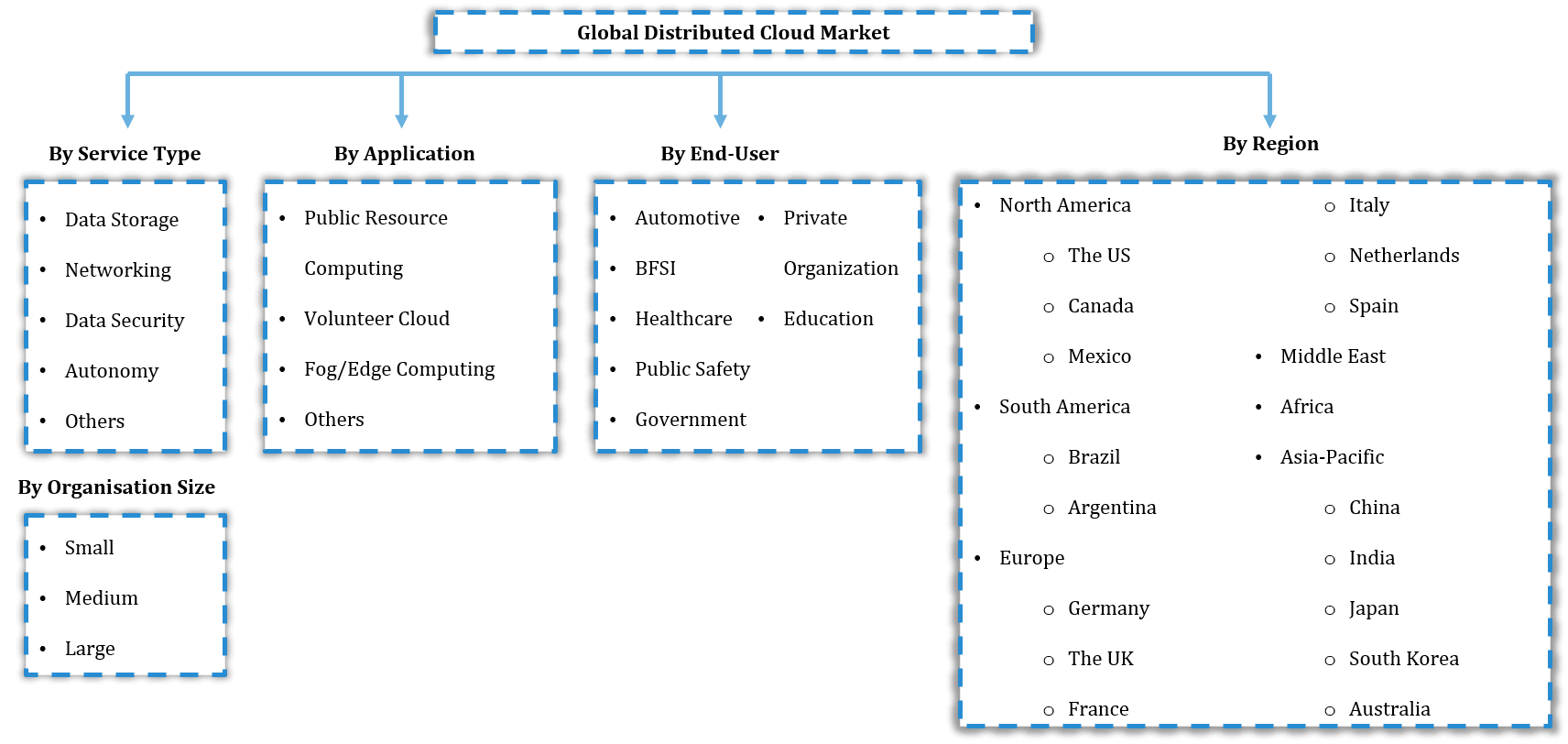
By Service Type (Data Storage, Networking, Data Security, Autonomy, Others), By Application (Public Resource Computing, Volunteer Cloud, Fog/Edge Computing, Others), By Organisatio......n Size (Small, Medium, Large), By End-User (Automotive, BFSI, Healthcare, Public Safety, Government, Private organization, Education), By Region (North America, South America, Europe, Asia-Pacific, Middle East & Africa), By Country (US, Canada, Mexico, Brazil, Argentina UK, Germany, France, Italy, Spain, The Netherlands, Middle East, Africa, China, Japan, India, South Korea, Australia), By Company (Amazon Web Services, Digital-Ocean, Rackspace, Alibaba Cloud, Liquid Web, Microsoft Azure, Google Cloud Platform, VMware,Oracle Cloud, VeriZon Cloud, Navisite, IBM Cloud, Open Nebula, Cloud Sigma, Dell Cloud etc.) Read more
- ICT & Electronics
- Jan 2021
- 211
- PDF, Excel, PPT
Market Definition
Rapid digital transformation is facilitating organizations to offer better products and enhance customer experiences. The ability to analyze critical data is a crucial part of this digital transformation. With technological advancements, cloud computing has now become essential for everyone & everywhere.
Distributed cloud is a public cloud computing service that allows public cloud infrastructure to run in different locations and not just on the cloud provider's infrastructure but on-premises, or third-party data centers, or in other data centers of cloud providers. The originating public cloud provider controls the operation, governance, maintenance, & updates of the distributed infrastructure.
With distributed cloud services, businesses can run different applications in various cloud locations that best meet their requirements for performance & regulatory compliance. The adoption of distributed cloud solves the management & operational inconsistencies that might happen in hybrid cloud.
Market insights
The Global Distributed Cloud Market is anticipated to grow at a CAGR of around 25% during the forecast period, i.e., 2021-26. The growth of the market is driven primarily by the rapid adoption of the Internet of Things (IoT), edge computing, Artificial Intelligence (AI), & telecommunications, among others, to analyze a large volume of data in real-time. These applications that move the massive amount of data from edge locations to the cloud require cloud services to be as near as possible to edge locations. Hence, shifting cloud resources to edge locations will help increase the application’s performance, owing to which the adoption of distributed cloud would increase astronomically among businesses in the coming years.
Moreover, with the surging amount of data generated by various sources, the need for low-cost data backup and data security & safety options are increasing among organizations, thereby augmenting the market growth. In addition, increasing penetration of internet services and the snowballing usage of smart devices are other crucial factors driving the market.
Furthermore, the increasing prevalence of cyberattacks and mounting concerns over data privacy & security are escalating the need for high-end security measures with easy data sharing. It, in turn, is propelling the demand for distributed cloud technology among organizations. Besides, various digitalization initiatives by organizations across different industry verticals to improve operational transparency & efficiency entwined with business performance are also fueling the deployment of distributed cloud technology.
| Report Coverage | Details |
|---|---|
| Study Period | Historical Data: 2016-19 |
| Base Year: 2020 | |
| Forecast Period: 2021-26 | |
| CAGR (2021-2026) | 25% |
| Regions Covered | North America: USA, Canada, Mexico |
| Europe: Germany, UK, France, Italy, Spain, Netherlands | |
| Asia-Pacific: China, India, Japan, South Korea, Australia | |
| South America: Brazil, and Argentina | |
| Middle East & Africa: Middle East, Africa | |
| Key Companies Profiled | Amazon Web Services, Digital-Ocean, Rackspace, Alibaba Cloud, Liquid Web, Microsoft Azure, Google Cloud Platform, VMware,Oracle Cloud, VeriZon Cloud, Navisite, IBM Cloud, Open Nebula, Cloud Sigma, Dell Cloud, etc. |
| Unit Denominations | USD Million/Billion |
Impact of Covid-19 on the Global Distributed Cloud Market
In 2020, the Covid-19 pandemic dramatically changed the way businesses function. The imposition of lockdown to curb the spread of the virus pushed organizations to adopt work-from-home policies, the increasing adoption of which fueled the need for better cloud communication & collaboration services worldwide. Although the pandemic has been a propellant for a global economic crisis, it has also augmented the demand for the digital economy. The usage of online platforms like Microsoft Teams & Zoom has witnessed enormous upticks. Moreover, the distributed nature of cloud services is a perfect fit to manage virtual work.
In addition, the adoption of digital platforms & tools has been a saving element during the pandemic. By ensuring secure remote work, cloud technology played a major role in underwriting a new era of corporate enterprise. It is going to take time to return to normal work cultures. However, travel restrictions due to the increasing dangers posed by disease transmission are changing the world economic system.
Given this economic reorientation, cloud computing is gaining immense popularity across modern businesses. Where traditional cloud services help to cut costs & focus on core business competencies, distributed cloud technology complements an additional geographical layer, shifting computing & data closer to users while reducing latency and enhancing security.
- Introduction
- Product Definition
- Research Process
- Assumptions
- Market Segmentation
- Preface
- Executive Summary
- Impact of COVID-19 on Global Distributed Cloud Market
- Global Distributed Cloud Market Landscape
- Global Distributed Cloud Market Outlook, 2016-2026F
- Market Size & Analysis
- Market Revenues
- Market Share & Analysis
- By Service Type
- Data Storage
- Networking
- Data Security
- Autonomy
- Others
- By Application
- Public Resource Computing
- Volunteer Cloud
- Fog/Edge Computing
- Others
- By Organization Size
- Small
- Medium
- Large
- By End User
- Automotive
- BFSI
- Healthcare
- Public Safety
- Government
- Private Organization
- Education
- By Region
- North America
- South America
- Europe
- Middle East & Africa
- Asia-Pacific
- By Competitors
- Competition Characteristics
- Market Share & Analysis
- Competitive Metrix
- By Service Type
- Market Size & Analysis
- North America Distributed Cloud Market Outlook, 2016-2026F
- Market Size & Analysis
- Market Revenues
- Market Share & Analysis
- By Service Type
- By Application
- By Organization Size
- By End User
- By Country
- The US
- Canada
- Mexico
- The US Distributed Cloud Market Outlook, 2016-2026F
- Market Size & Analysis
- Market Revenues
- Market Share & Analysis
- By Service Type
- By Application
- By Organization Size
- By End User
- Market Size & Analysis
- Canada Distributed Cloud Market Outlook, 2016-2026F
- Market Size & Analysis
- Market Revenues
- Market Share & Analysis
- By Service Type
- By Application
- By Organization Size
- By End User
- Market Size & Analysis
- Mexico Distributed Cloud Market Outlook, 2016-2026F
- Market Size & Analysis
- Market Revenues
- Market Share & Analysis
- By Service Type
- By Application
- By Organization Size
- By End User
- Market Size & Analysis
- Market Size & Analysis
- South America Distributed Cloud Market Outlook, 2016-2026F
- Market Size & Analysis
- Market Revenues
- Market Share & Analysis
- By Service Type
- By Application
- By Organization Size
- By End User
- By Country
- Brazil
- Argentina
- Others
- Brazil Distributed Cloud Market Outlook, 2016-2026F
- Market Size & Analysis
- Market Revenues
- Market Share & Analysis
- By Service Type
- By Application
- By Organization Size
- By End User
- Market Size & Analysis
- Argentina Distributed Cloud Market Outlook, 2016-2026F
- Market Size & Analysis
- Market Revenues
- Market Share & Analysis
- By Service Type
- By Application
- By Organization Size
- By End User
- Market Size & Analysis
- Market Size & Analysis
- Europe Distributed Cloud Market Outlook, 2016-2026F
- Market Size & Analysis
- Market Revenues
- Market Share & Analysis
- By Service Type
- By Application
- By Organization Size
- By End User
- By Country
- Germany
- The UK
- France
- Italy
- Netherlands
- Spain
- Others
- Germany Distributed Cloud Market Outlook, 2016-2026F
- Market Size & Analysis
- Market Revenues
- Market Share & Analysis
- By Service Type
- By Application
- By Organization Size
- By End User
- Market Size & Analysis
- The UK Distributed Cloud Market Outlook, 2016-2026F
- Market Size & Analysis
- Market Revenues
- Market Share & Analysis
- By Service Type
- By Application
- By Organization Size
- By End User
- Market Size & Analysis
- France Distributed Cloud Market Outlook, 2016-2026F
- Market Size & Analysis
- Market Revenues
- Market Share & Analysis
- By Service Type
- By Application
- By Organization Size
- By End User
- Market Size & Analysis
- Italy Distributed Cloud Market Outlook, 2016-2026F
- Market Size & Analysis
- Market Revenues
- Market Share & Analysis
- By Service Type
- By Application
- By Organization Size
- By End User
- Market Size & Analysis
- Netherlands Distributed Cloud Market Outlook, 2016-2026F
- Market Size & Analysis
- Market Revenues
- Market Share & Analysis
- By Service Type
- By Application
- By Organization Size
- By End User
- Market Size & Analysis
- Spain Distributed Cloud Market Outlook, 2016-2026F
- Market Size & Analysis
- Market Revenues
- Market Share & Analysis
- By Service Type
- By Application
- By Organization Size
- By End User
- Market Size & Analysis
- Market Size & Analysis
- Middle East & Africa Distributed Cloud Market Outlook, 2016-2026F
- Market Size & Analysis
- Market Revenues
- Market Share & Analysis
- By Service Type
- By Application
- By Organization Size
- By End User
- By Country
- Middle East
- Africa
- Middle East Distributed Cloud Market Outlook, 2016-2026F
- Market Size & Analysis
- Market Revenues
- Market Share & Analysis
- By Service Type
- By Application
- By Organization Size
- By End User
- Market Size & Analysis
- Africa Distributed Cloud Market Outlook, 2016-2026F
- Market Size & Analysis
- Market Revenues
- Market Share & Analysis
- By Service Type
- By Application
- By Organization Size
- By End User
- Market Size & Analysis
- Market Size & Analysis
- Asia-Pacific Distributed Cloud Market Outlook, 2016-2026F
- Market Size & Analysis
- Market Revenues
- Market Share & Analysis
- By Service Type
- By Application
- By Organization Size
- By End User
- By Country
- China
- India
- Japan
- South Korea
- Australia
- Others
- China Distributed Cloud Market Outlook, 2016-2026F
- Market Size & Analysis
- Market Revenues
- Market Share & Analysis
- By Service Type
- By Application
- By Organization Size
- By End User
- Market Size & Analysis
- India Distributed Cloud Market Outlook, 2016-2026F
- Market Size & Analysis
- Market Revenues
- Market Share & Analysis
- By Service Type
- By Application
- By Organization Size
- By End User
- Market Size & Analysis
- Japan Distributed Cloud Market Outlook, 2016-2026F
- Market Size & Analysis
- Market Revenues
- Market Share & Analysis
- By Service Type
- By Application
- By Organization Size
- By End User
- Market Size & Analysis
- South Korea Distributed Cloud Market Outlook, 2016-2026F
- Market Size & Analysis
- Market Revenues
- Market Share & Analysis
- By Service Type
- By Application
- By Organization Size
- By End User
- Market Size & Analysis
- Australia Distributed Cloud Market Outlook, 2016-2026F
- Market Size & Analysis
- Market Revenues
- Market Share & Analysis
- By Service Type
- By Application
- By Organization Size
- By End User
- Market Size & Analysis
- Market Size & Analysis
- Global Distributed Cloud Market Government Regulations and Policies
- Global Distributed Cloud Market Trends & Insights
- Global Distributed Cloud Market Dynamics
- Growth Drivers
- Challenges
- Impact Analysis
- Global Distributed Cloud Market Hotspot & Opportunities
- Global Distributed Cloud Market Key Strategic Imperatives for Success & Growth
- Competition Outlook
- Competition Matrix
- Target Markets
- Research & Development
- Collaborations & Strategic Alliances
- Key Business Expansion Initiatives
- Business Restructuring- Mergers, Acquisitions, JVs
- Strategic Initiatives
- Company Profiles (Business Description, Product Segments, Business Segments, Financials, Strategic Alliances/ Partnerships, Future Plans)
- Amazon Web Services
- Digital-Ocean
- Rackspace
- Alibaba Cloud
- Liquid Web
- Microsoft Azure
- Google Cloud Platform
- VMware
- Oracle Cloud
- VeriZon Cloud
- Navisite
- IBM Cloud
- Open Nebula
- Cloud Sigma
- Dell Cloud
- Competition Matrix
- Disclaimer
MarkNtel Advisors follows a robust and iterative research methodology designed to ensure maximum accuracy and minimize deviation in market estimates and forecasts. Our approach combines both bottom-up and top-down techniques to effectively segment and quantify various aspects of the market. A consistent feature across all our research reports is data triangulation, which examines the market from three distinct perspectives to validate findings. Key components of our research process include:
1. Scope & Research Design At the outset, MarkNtel Advisors define the research objectives and formulate pertinent questions. This phase involves determining the type of research—qualitative or quantitative—and designing a methodology that outlines data collection methods, target demographics, and analytical tools. They also establish timelines and budgets to ensure the research aligns with client goals.
2. Sample Selection and Data Collection In this stage, the firm identifies the target audience and determines the appropriate sample size to ensure representativeness. They employ various sampling methods, such as random or stratified sampling, based on the research objectives. Data collection is carried out using tools like surveys, interviews, and observations, ensuring the gathered data is reliable and relevant.
3. Data Analysis and Validation Once data is collected, MarkNtel Advisors undertake a rigorous analysis process. This includes cleaning the data to remove inconsistencies, employing statistical software for quantitative analysis, and thematic analysis for qualitative data. Validation steps are taken to ensure the accuracy and reliability of the findings, minimizing biases and errors.

4. Data Forecast and FinalizationThe final phase involves forecasting future market trends based on the analyzed data. MarkNtel Advisors utilize predictive modeling and time series analysis to anticipate market behaviors. The insights are then compiled into comprehensive reports, featuring visual aids like charts and graphs, and include strategic recommendations to inform client decision-making
FILL THE FORM TO INQUIRE BEFORE BUYING THIS REPORT
We offer flexible licensing options to cater to varying organizational needs. Choose the pricing pack that best suits your requirements:
Buy Now Talk to our Consultant
 Request Customization