

Singapore Online Grocery Market Research Report Forecast: (2026-2032)
By Product Type (Ready-to-Eat (Fresh Foods), Snacks & Beverages, Bakery & Confectionery, Dairy, Chilled Products & Eggs, Staples & Cooking Essentials, Household Needs, Others (Meat ... & Seafood, Baby Food & Care, Personal Care, Health & Wellness, Frozen Foods, Pet Care, etc.)), By Platform (App-based, Web-based), By Delivery Type (Instant Delivery (Quick Commerce/10–60 Minutes), Scheduled Delivery), By Business Model (Pure Marketplace, Hybrid Model, Others), By Mode of Payment (Online Payment, Cash on Delivery), and others Read more
- FMCG
- Jul 2026
- Pages 140
- Report Format: PDF, Excel, PPT
Singapore Online Grocery Market
Projected 5.03% CAGR from 2026 to 2032
Study Period
2026-2032
Market Size (2026)
USD 2.22 Billion
Market Size (2032)
USD 2.98 Billion
Base Year
2025
Projected CAGR
5.03%
Leading Segments
By Platform: App-based
Singapore Online Grocery Market Key Takeaways
- Singapore online grocery market size was valued at USD 2.01 billion in 2025 and is projected to grow from USD 2.22 billion in 2026 to USD 2.98 billion by 2032.
- The industry is projected to reflect sustain growth at a steady CAGR of 5.03% during 2026-2032.
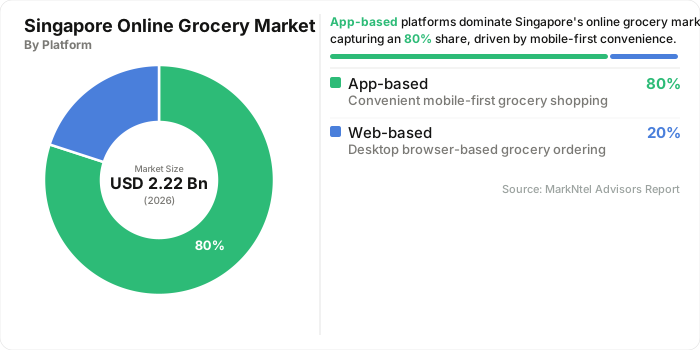
- By platform, app-based platforms hold a significant share of about 80% in 2026.
- By mode of payment, online payments seized a significant share of about 39% in 2026.
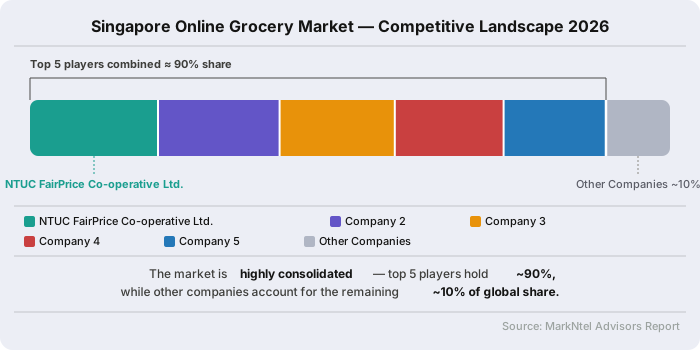
- The industry is highly consolidated. However, the top five players collectively account for nearly 90% share.
Singapore Online Grocery Market Size and Outlook
The Singapore Online Grocery market size was valued at USD 2.01 billion in 2025 and is projected to grow from USD 2.22 billion in 2026 to USD 2.98 billion by 2032. Along with this, the market is estimated to grow at a CAGR of around 5.03% during the forecast period, i.e., 2026-32, supported by strong digital infrastructure, evolving consumer lifestyles, and continuous advancements in logistics and fulfilment systems. According to the Infocomm Media Development Authority (IMDA), 96.5% of residents aged 18 and above owned a smartphone in 2024, while 97% of households had internet access in 2025, reflecting near-universal digital connectivity.
Singapore also recorded 9.96 million mobile subscriptions in December 2024, equivalent to a 165% mobile penetration rate, driven by multi-device ownership. This highly connected ecosystem enables seamless mobile-based grocery ordering, secure digital payments, real-time order tracking, and personalized promotions, significantly increasing consumer reliance on online grocery platforms and encouraging higher purchase frequency.
Retailers are actively strengthening omnichannel and quick-commerce capabilities to meet rising expectations for speed, convenience, and product availability. For instance, in 2025, foodpanda expanded its pandamart operations across Singapore, strengthening its dark-store network and enhancing access to on-demand grocery essentials such as fresh produce, packaged foods, beverages, and household items through rapid delivery services.
Similarly, established players including FairPrice Online, RedMart (Lazada), Amazon Fresh, Sheng Siong, and GrabMart are investing heavily in hybrid retail models that integrate physical stores with online fulfilment systems to improve efficiency and reduce delivery turnaround times.
At the same time, the market is witnessing accelerated investment in automation technologies, temperature-controlled logistics, and micro-fulfilment centres to enhance scalability and operational efficiency. These developments are enabling retailers to manage inventory more effectively and support faster delivery models, including same-day and sub-hour grocery fulfilment services. However, the sector continues to face structural challenges, particularly high last-mile delivery costs, rising labour expenses, and margin pressures, which are prompting retailers to prioritize cost optimization and supply chain efficiency.
Overall, Singapore’s online grocery industry is expected to maintain a strong growth trajectory through 2032, driven by a highly digital population, increasing demand for convenience, and continuous innovation in quick-commerce, automation, and logistics infrastructure.
Singapore Online Grocery Market Key Indicators
- Singapore's exceptionally high internet penetration provides a strong foundation for online grocery adoption. According to Digital 2025, the country had 5.61 million internet users in January 2025, representing an internet penetration rate of 95.8% of the total population. Near-universal internet access enables consumers to browse grocery platforms, compare prices, and place orders conveniently, supporting consistent growth in online grocery transactions and digital retail services.
- Food import dependency directly influences product availability, pricing, and supply chain resilience for online grocery retailers. According to the Singapore Government, Singapore imports more than 90% of its food and sources these products from 187 countries and regions as of 2024. Diversifying import sources helps reduce the impact of global supply disruptions while ensuring stable inventory for digital grocery platforms. Strong sourcing networks enable retailers to maintain consistent product availability, minimize supply shortages, and enhance customer confidence in online grocery services.
- Digital payment adoption continues to support the growth of Singapore's online grocery market by enabling faster, secure, and seamless online transactions. According to Worldpay's Global Payments Report 2025, as cited by Fintech News Singapore, digital wallets accounted for 39% of Singapore's e-commerce transaction value in 2024, overtaking credit cards, which accounted for 37%. The growing preference for digital wallets reflects changing consumer payment behaviour and supports smoother checkout experiences, secure transactions, and greater convenience for online grocery shoppers. As digital payment usage continues to expand, it is expected to encourage more frequent online grocery purchases and strengthen the country's digital retail ecosystem.
Singapore Online Grocery Market Scope
| Category | Segments |
|---|---|
| By Product Type | Ready-to-Eat (Fresh Foods), Snacks & Beverages, Bakery & Confectionery, Dairy, Chilled Products & Eggs, Staples & Cooking Essentials, Household Needs, Others (Meat & Seafood, Baby Food & Care, Personal Care, Health & Wellness, Frozen Foods, Pet Care, etc. |
| By Platform | App-based, Web-based |
| By Delivery Type | Instant Delivery (Quick Commerce/10–60 Minutes), Scheduled Delivery |
| By Business Model | Pure Marketplace, Hybrid Model, Others |
| By Mode of Payment | Online Payment, Cash on Delivery |
Singapore Online Grocery Market Growth Drivers
Busy Urban Living and Digital Convenience Fueling Online Grocery Adoption
Singapore's busy urban lifestyle and high workforce participation are accelerating the shift toward online grocery shopping as consumers increasingly prioritize convenience and time savings. According to the Ministry of Manpower, total employment increased by 44,500 workers in 2024, while resident employment grew by 8,800, reflecting a larger working population with less time available for routine shopping. Employment gains were particularly strong in higher-skilled sectors such as financial services, professional services, healthcare, and information & communications, where demanding work schedules encourage greater reliance on digital grocery purchases.
Furthermore, Singapore continues to maintain one of the world's highest labour force participation rates despite an ageing population, indicating sustained workforce engagement and continued demand for convenient retail solutions. Looking ahead, the government's Smart Nation 2.0 and Digital Enterprise Blueprint initiatives will continue investing in digital infrastructure, AI-enabled services, and business digitalisation, enabling retailers to further enhance app-based ordering, automated fulfilment, and seamless last-mile grocery delivery experiences.
As Singapore's workforce continues expanding and digital transformation deepens, convenience-driven grocery purchasing is expected to become increasingly embedded in daily consumer behaviour. This structural shift will drive higher-order frequency, strengthen customer retention, and support sustained growth of the Singapore online grocery sector.
Recent Trends
Rising Penetration of Quick Commerce in Online Grocery Retail
Quick commerce has emerged as a defining trend in Singapore's online grocery industry, driven by consumers' growing preference for immediate access to daily essentials. In February 2025, Deliveroo partnered with Sheng Siong to offer more than 5,000 grocery products from 21 supermarkets, expanding to 31 stores within the same month, with deliveries completed in as little as 30 minutes and available 24 hours a day. This marked Sheng Siong's first collaboration with a delivery platform and significantly broadened access to fresh produce and household necessities across the island.
To support this shift, Sheng Siong's 2024 Annual Report confirmed continued investments in automation and digitalisation while integrating 31 stores into Deliveroo's quick-commerce network to enhance customer convenience and extend coverage beyond areas served by physical outlets.
The continued expansion of rapid-delivery infrastructure and automated fulfilment networks is making online grocery shopping more convenient and reliable. As retailers increase logistics capacity and delivery speed, quick commerce is expected to boost purchase frequency, improve customer retention, and accelerate long-term growth of Singapore's online grocery shopping.
Singapore Online Grocery Market Opportunities and Challenges
High Last-Mile Delivery Costs Accelerating Logistics and Fulfilment Innovation
High last-mile delivery and fulfilment costs remain a major challenge for Singapore's online grocery landscape, as consumers increasingly expect same-day or even 30-minute delivery for fresh groceries while maintaining low or free delivery charges. Grocery retailers must invest heavily in temperature-controlled logistics, order-picking operations, digital fulfilment systems, and delivery fleets, all of which increase operating costs and pressure already thin retail margins.
The challenge is further intensified by rising labour and operating expenses. Reflecting these pressures, Sheng Siong reported in its FY2024 results that profitability continued to face higher business costs despite revenue growth, prompting greater investments in operational efficiency. To overcome these cost pressures, retailers are accelerating investments in automation and advanced logistics infrastructure.
For instance, Sheng Siong plans to invest approximately USD 390 million (around SGD 520 million) in a 1.6 million sq. ft. high-tech distribution centre, scheduled for completion by 2029, capable of supporting at least 120 supermarkets. The facility will incorporate automated warehousing, multiple temperature-controlled storage zones, and integrated food processing to improve fulfilment efficiency and reduce long-term operating costs. Additionally, the project includes a mandatory investment of at least USD 90 million (around SGD 120 million) in advanced plant and machinery, reinforcing automation-led productivity improvements.
Although high fulfilment costs constrain short-term profitability, they are accelerating investments in automation, smart warehousing, and logistics modernisation. These advancements will improve delivery efficiency, enable scalable online grocery operations, and strengthen long-term growth prospects for Singapore's online grocery industry.
Segmentation Insights
Mobile Applications Account for Approximately 80% of Singapore's Online Grocery Market, Driven by Convenience and Digital-First Shopping
App-based platforms account for an estimated 80% of the Singapore online grocery sector, making them the leading platform segment. This dominance is driven by Singapore's high smartphone adoption, widespread digital payment usage, and consumers' preference for convenient, app-based shopping. Leading grocery retailers and quick-commerce platforms, including FairPrice Online, RedMart, Amazon Fresh, Sheng Siong, GrabMart, and foodpanda shops, prioritize their mobile applications by offering personalized recommendations, real-time order tracking, digital wallet integration, loyalty rewards, and exclusive in-app promotions.
The growing popularity of rapid grocery delivery services has further accelerated app usage, as consumers increasingly rely on smartphones to place time-sensitive orders and receive live delivery updates. Mobile applications also simplify repeat purchases through saved shopping lists and one-click reordering, encouraging higher purchase frequency. Continuous investments by retailers in mobile app functionality, AI-driven personalization, and seamless checkout experiences are expected to further strengthen the dominance of the mobile application segment in Singapore's online grocery platforms over the forecast period. Based on platform, the scope has been segmented into
- App-based
- Web-based
Digital Wallets Capture Around 39% of Singapore's E-Commerce Transactions, Reinforcing Their Dominance in Online Grocery Payments
Online payments are the leading payment method in Singapore's online grocery industry, supported by the country's highly digital and cashless payment ecosystem. According to Worldpay's Global Payments Report 2025, digital wallets accounted for 39% of Singapore's total e-commerce transaction value in 2024. The widespread adoption of platforms such as Apple Pay, Google Pay, GrabPay, PayNow, and other mobile wallets enables consumers to complete grocery purchases quickly and securely through smartphones.
Online grocery retailers including FairPrice Online, RedMart, Amazon Fresh, Sheng Siong, and GrabMart integrate multiple digital payment options, offering seamless checkout, instant payment confirmation, and enhanced transaction security. The growing preference for contactless payments, combined with increasing smartphone usage and digital banking adoption, continues to strengthen digital wallet usage for grocery purchases. As retailers further integrate loyalty rewards, personalized offers, and one-click payment capabilities, digital wallets are expected to remain the preferred payment method, supporting continued growth in Singapore's online grocery market. By mode of payment, the scope has been classified into
- Online Payments
- Cash on Delivery
Singapore Online Grocery Market Competitive Analysis
Top Five Players Collectively Account for Approximately 90% of Singapore's Organized Online Grocery Market
The Singapore online grocery market is highly consolidated, with the top five players NTUC FairPrice Co-operative Ltd., Sheng Siong Group Ltd., Macrovalue (Singapore) Pte. Ltd., Amazon Asia-Pacific Holdings Private Limited, and Lazada Singapore Pte. Ltd. collectively accounting for an estimated 90% of the organized online grocery industry.
Key Players in Singapore Online Grocery Market
- NTUC FairPrice Co-operative Ltd.
- Sheng Siong Group Ltd.
- Macrovalue (Singapore) Pte. Ltd.
- Amazon Asia-Pacific Holdings Private Limited
- Lazada Singapore Pte. Ltd.
- GrabTaxi Holdings Pte. Ltd.
- Foodpanda Pte. Ltd.
- Deliveroo Singapore Pte. Ltd.
- Little Farms Pte. Ltd.
- Sasha's Fine Foods Pte. Ltd.
- Others
Singapore Online Grocery Industry News and Recent Developments
March 2025: Singapore Introduces Unit Pricing Pilot Across Major Supermarkets
The Competition and Consumer Commission of Singapore (CCCS) and the Consumers Association of Singapore (CASE) announced a unit pricing pilot across NTUC FairPrice, Sheng Siong, Cold Storage, Giant, and Prime Supermarket. The initiative enables shoppers to compare grocery prices per kilogram or litre, improving price transparency for both in-store and online grocery purchases while encouraging more informed buying decisions.
Impact Analysis: The unit pricing pilot enhances price transparency by allowing consumers to compare grocery products based on cost per kilogram or litre, encouraging value-based purchasing. For online grocery retailers, standardized pricing information strengthens customer trust, improves shopping convenience, and increases price competitiveness. The initiative is expected to accelerate digital grocery adoption by making product comparisons easier across online platforms while encouraging retailers to optimize pricing strategies and promotional offerings.
-
RedMart Launches "RedMart Now" 30-Minute Grocery Delivery
Lazada's RedMart launched RedMart Now, a rapid grocery delivery service providing deliveries within 30 minutes for selected products. The service complements RedMart's existing same-day and scheduled delivery options, enabling consumers to receive urgent grocery orders much faster and strengthening competition in Singapore's growing quick-commerce segment.
Impact Analysis: The launch of RedMart Now intensifies competition in Singapore's quick-commerce segment by raising consumer expectations for ultra-fast grocery deliveries. The service encourages other retailers to invest in localized fulfilment, automated inventory management, and efficient last-mile logistics. As delivery speed becomes a key differentiator, higher order frequency, improved customer retention, and increased online grocery penetration are expected to support long-term market growth.
Frequently Asked Questions
- Market Segmentation
- Introduction
- Product Definition
- Research Process
- Assumptions
- Executive Summary
- Singapore Online Grocery Market Policies, Regulations, and Product Standards
- Singapore Online Grocery Market Trends & Developments
- Singapore Online Grocery Market Dynamics
- Growth Factors
- Challenges
- Singapore Online Grocery Market Hotspot & Opportunities
- Singapore Online Grocery Market Outlook, 2022-2032F
- Market Size & Outlook
- By Revenues (USD Million)
- Market Segmentation & Outlook
- By Product Type- Market Size & Forecast 2022-2032, USD Million
- Ready-to-Eat (Fresh Foods)
- Snacks & Beverages
- Bakery & Confectionery
- Dairy, Chilled Products & Eggs
- Staples & Cooking Essentials
- Household Needs
- Others (Meat & Seafood, Baby Food & Care, Personal Care, Health & Wellness, Frozen Foods, Pet Care, etc.)- Market Size & Forecast 2022-2032, USD Million
- By Platform
- App-based
- Web-based
- By Delivery Type- Market Size & Forecast 2022-2032, USD Million
- Instant Delivery (Quick Commerce/10–60 Minutes)
- Scheduled Delivery
- By Business Model- Market Size & Forecast 2022-2032, USD Million
- Pure Marketplace
- Hybrid Model
- Others
- By Mode of Payment- Market Size & Forecast 2022-2032, USD Million
- Online Payment
- Cash on Delivery
- By Region - Market Size & Forecast 2022-2032, USD Million
- Central Region
- North Region
- East Region
- West Region
- North-East Region
- By Company
- Competition Characteristics
- Market Segmentation & Analysis
- By Product Type- Market Size & Forecast 2022-2032, USD Million
- Market Size & Outlook
- Singapore Ready-to-Eat (Fresh Foods) Online Grocery Market Outlook, 2022-2032
- Market Size & Outlook
- By Revenues (USD Million)
- Market Segmentation & Outlook
- Others (Meat & Seafood, Baby Food & Care, Personal Care, Health & Wellness, Frozen Foods, Pet Care, etc.)- Market Size & Forecast 2022-2032, USD Million
- By Delivery Type- Market Size & Forecast 2022-2032, USD Million
- By Business Model- Market Size & Forecast 2022-2032, USD Million
- By Payment Method- Market Size & Forecast 2022-2032, USD Million
- By End User- Market Size & Forecast 2022-2032, USD Million
- By Region - Market Size & Forecast 2022-2032, USD Million
- Market Size & Outlook
- Singapore Snacks & Beverages Online Grocery Market Outlook, 2022-2032
- Market Size & Outlook
- By Revenues (USD Million)
- Market Segmentation & Outlook
- Others (Meat & Seafood, Baby Food & Care, Personal Care, Health & Wellness, Frozen Foods, Pet Care, etc.)- Market Size & Forecast 2022-2032, USD Million
- By Delivery Type- Market Size & Forecast 2022-2032, USD Million
- By Business Model- Market Size & Forecast 2022-2032, USD Million
- By Payment Method- Market Size & Forecast 2022-2032, USD Million
- By End User- Market Size & Forecast 2022-2032, USD Million
- By Region - Market Size & Forecast 2022-2032, USD Million
- Market Size & Outlook
- Singapore Bakery & Confectionery Online Grocery Market Outlook, 2022-2032
- Market Size & Outlook
- By Revenues (USD Million)
- Market Segmentation & Outlook
- Others (Meat & Seafood, Baby Food & Care, Personal Care, Health & Wellness, Frozen Foods, Pet Care, etc.)- Market Size & Forecast 2022-2032, USD Million
- By Delivery Type- Market Size & Forecast 2022-2032, USD Million
- By Business Model- Market Size & Forecast 2022-2032, USD Million
- By Payment Method- Market Size & Forecast 2022-2032, USD Million
- By End User- Market Size & Forecast 2022-2032, USD Million
- By Region - Market Size & Forecast 2022-2032, USD Million
- Market Size & Outlook
- Singapore Dairy, Chilled Products & Eggs Online Grocery Market Outlook, 2022-2032
- Market Size & Outlook
- By Revenues (USD Million)
- Market Segmentation & Outlook
- Others (Meat & Seafood, Baby Food & Care, Personal Care, Health & Wellness, Frozen Foods, Pet Care, etc.)- Market Size & Forecast 2022-2032, USD Million
- By Delivery Type- Market Size & Forecast 2022-2032, USD Million
- By Business Model- Market Size & Forecast 2022-2032, USD Million
- By Payment Method- Market Size & Forecast 2022-2032, USD Million
- By End User- Market Size & Forecast 2022-2032, USD Million
- By Region - Market Size & Forecast 2022-2032, USD Million
- Market Size & Outlook
- Singapore Staples & Cooking Essentials Online Grocery Market Outlook, 2022-2032
- Market Size & Outlook
- By Revenues (USD Million)
- Market Segmentation & Outlook
- Others (Meat & Seafood, Baby Food & Care, Personal Care, Health & Wellness, Frozen Foods, Pet Care, etc.)- Market Size & Forecast 2022-2032, USD Million
- By Delivery Type- Market Size & Forecast 2022-2032, USD Million
- By Business Model- Market Size & Forecast 2022-2032, USD Million
- By Payment Method- Market Size & Forecast 2022-2032, USD Million
- By End User- Market Size & Forecast 2022-2032, USD Million
- By Region - Market Size & Forecast 2022-2032, USD Million
- Market Size & Outlook
- Singapore Household Needs Online Grocery Market Outlook, 2022-2032
- Market Size & Outlook
- By Revenues (USD Million)
- Market Segmentation & Outlook
- Others (Meat & Seafood, Baby Food & Care, Personal Care, Health & Wellness, Frozen Foods, Pet Care, etc.)- Market Size & Forecast 2022-2032, USD Million
- By Delivery Type- Market Size & Forecast 2022-2032, USD Million
- By Business Model- Market Size & Forecast 2022-2032, USD Million
- By Payment Method- Market Size & Forecast 2022-2032, USD Million
- By End User- Market Size & Forecast 2022-2032, USD Million
- By Region - Market Size & Forecast 2022-2032, USD Million
- Market Size & Outlook
- Singapore Online Grocery Market Key Strategic Imperatives for Success & Growth
- Competitive Outlook
- Company Profiles
- NTUC FairPrice Co-operative Ltd.
- Business Description
- Product Portfolio
- Collaborations & Alliances
- Recent Developments
- Financial Details
- Others
- Sheng Siong Group Ltd.
- Business Description
- Product Portfolio
- Collaborations & Alliances
- Recent Developments
- Financial Details
- Others
- Macrovalue (Singapore) Pte. Ltd.
- Business Description
- Product Portfolio
- Collaborations & Alliances
- Recent Developments
- Financial Details
- Others
- Amazon Asia-Pacific Holdings Private Limited
- Business Description
- Product Portfolio
- Collaborations & Alliances
- Recent Developments
- Financial Details
- Others
- Lazada Singapore Pte. Ltd.
- Business Description
- Product Portfolio
- Collaborations & Alliances
- Recent Developments
- Financial Details
- Others
- GrabTaxi Holdings Pte. Ltd.
- Business Description
- Product Portfolio
- Collaborations & Alliances
- Recent Developments
- Financial Details
- Others
- Foodpanda Pte. Ltd.
- Business Description
- Product Portfolio
- Collaborations & Alliances
- Recent Developments
- Financial Details
- Others
- Deliveroo Singapore Pte. Ltd.
- Business Description
- Product Portfolio
- Collaborations & Alliances
- Recent Developments
- Financial Details
- Others
- Little Farms Pte. Ltd.
- Business Description
- Product Portfolio
- Collaborations & Alliances
- Recent Developments
- Financial Details
- Others
- Sasha's Fine Foods Pte. Ltd.
- Business Description
- Product Portfolio
- Collaborations & Alliances
- Recent Developments
- Financial Details
- Others
- NTUC FairPrice Co-operative Ltd.
- Company Profiles
- Disclaimer
MarkNtel Advisors follows a robust and iterative research methodology designed to ensure maximum accuracy and minimize deviation in market estimates and forecasts. Our approach combines both bottom-up and top-down techniques to effectively segment and quantify various aspects of the market. A consistent feature across all our research reports is data triangulation, which examines the market from three distinct perspectives to validate findings. Key components of our research process include:
1. Scope & Research Design At the outset, MarkNtel Advisors define the research objectives and formulate pertinent questions. This phase involves determining the type of research—qualitative or quantitative—and designing a methodology that outlines data collection methods, target demographics, and analytical tools. They also establish timelines and budgets to ensure the research aligns with client goals.
2. Sample Selection and Data Collection In this stage, the firm identifies the target audience and determines the appropriate sample size to ensure representativeness. They employ various sampling methods, such as random or stratified sampling, based on the research objectives. Data collection is carried out using tools like surveys, interviews, and observations, ensuring the gathered data is reliable and relevant.
3. Data Analysis and Validation Once data is collected, MarkNtel Advisors undertake a rigorous analysis process. This includes cleaning the data to remove inconsistencies, employing statistical software for quantitative analysis, and thematic analysis for qualitative data. Validation steps are taken to ensure the accuracy and reliability of the findings, minimizing biases and errors.

4. Data Forecast and FinalizationThe final phase involves forecasting future market trends based on the analyzed data. MarkNtel Advisors utilize predictive modeling and time series analysis to anticipate market behaviors. The insights are then compiled into comprehensive reports, featuring visual aids like charts and graphs, and include strategic recommendations to inform client decision-making
We offer flexible licensing options to cater to varying organizational needs. Choose the pricing pack that best suits your requirements:
Buy Now Inquire Before Buying
 Request Customization
 Talk to our Consultant







