

Saudi Arabia Baby Food Market Research Report: Forecast (2026-2032)
By Category (Milk Formula, Prepared Baby Food, Dried Baby Food, Baby Snacks & Finger Foods), By Age Group (0–6 Months, 6–12 Months, 12–24 Months, 24–36 Months), By Nature (Conventi ... onal, Organic), By Distribution Channel (Retail Offline, Retail Online), and others Read more
- Food & Beverages
- Jul 2026
- Pages 140
- Report Format: PDF, Excel, PPT
Saudi Arabia Baby Food Market
Projected 6.21% CAGR from 2026 to 2032
Study Period
2026-2032
Market Size (2026)
USD 0.96 Billion
Market Size (2032)
USD 1.23 Billion
Base Year
2025
Projected CAGR
6.21%
Leading Segments
By Category: Milk Formula
Saudi Arabia Baby Food Market Key Takeaways
- The Saudi Arabia Baby Food Market was valued at USD 0.92 billion in 2025 and is projected to grow from USD 0.96 billion in 2026 to USD 1.23 billion by 2032.
- The industry is projected to witness steady growth at a CAGR of 6.21% during 2026–2032.
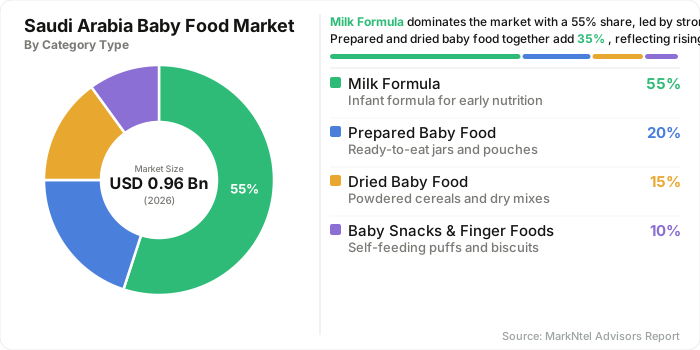
- By category, milk formula dominates the industry with a 55% market share in 2026.
- By distribution channel, Retail Offline leads the market with an estimated 78% share.
- Riyadh dominates the market with an estimated 38% market share in 2026.
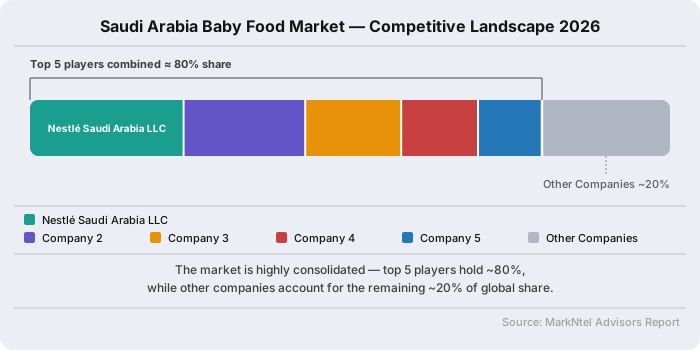
- The market exhibits a moderately concentrated competitive landscape, with the top five companies accounting for approximately 80% of total market revenue.
Saudi Arabia Baby Food Market Size and Outlook
The baby food market in Saudi Arabia was valued at USD 0.92 billion in 2025 and is projected to grow from USD 0.96 billion in 2026 to USD 1.23 billion by 2032. Along with this, the market is anticipated to expand at a CAGR of approximately 6.21% during 2026–2032, supported by rising workforce participation among women, evolving family lifestyles, increasing awareness of infant nutrition, and growing demand for convenient feeding solutions. As parents place greater emphasis on balanced early-life nutrition, demand for milk formula, prepared baby food, dried baby food, and developmental snacks continues to strengthen across the Kingdom. The market is also benefiting from increasing consumer willingness to invest in premium and specialized nutrition products that support infant growth and development.
One of the strongest foundations for future growth is Saudi Arabia’s expanding food retail ecosystem. According to the USDA Foreign Agricultural Service (FAS), the Kingdom’s food retail market exceeds USD 51 billion in 2024 and continues to expand at more than 5% annually, supported by urbanization, population growth, and changing consumer purchasing behavior. The continued development of supermarkets, hypermarkets, pharmacies, and digital retail platforms is enhancing accessibility to infant nutrition products and strengthening distribution channels for both domestic and international baby food brands.
Market expansion is also supported by the Kingdom’s growing commercial infrastructure. According to the Saudi Ministry of Commerce, Saudi Arabia records 1.61 million active commercial registrations by the end of 2024, with wholesale and retail trade remaining among the largest business sectors. The expansion of organized retail networks is improving product penetration across major cities and secondary markets while increasing consumer access to premium baby food and specialized feeding solutions. This trend is encouraging manufacturers to broaden their product portfolios and strengthen their market presence through wider distribution partnerships.
Looking ahead, rising adoption of organic baby food, premium infant nutrition products, and clean-label formulations is expected to create new growth opportunities across the market. Continued product innovation, retail expansion, and increasing consumer focus on quality and ingredient transparency are anticipated to support sustained market growth and reinforce the long-term outlook for the Saudi Arabia Baby Food industry during the forecast period.
Saudi Arabia Baby Food Market Key Indicators
- According to General Authority for Statistics (GASTAT) 2024 demographic estimates, the fertility rate among Saudi women reaches 2.7 births per woman, significantly higher than the 0.8 births recorded among non-Saudi women. The relatively healthy fertility profile of the Kingdom continues to support a stable pipeline of newborn and infant consumers, reinforcing long-term demand for infant nutrition and early-life feeding products.
- As per the GASTAT, Saudi Arabia records a 4.7% annual population growth rate in 2024, adding approximately 1.6 million people compared with the previous year. This demographic expansion strengthens household formation and increases the number of infants and young children entering the nutrition ecosystem, creating favorable conditions for baby food manufacturers and distributors.
- According to UNICEF and the World Health Organization (WHO), infants should begin nutritionally adequate complementary feeding at six months of age, with feeding frequency increasing progressively through 23 months. These internationally recognized infant feeding recommendations support the consumption of baby cereals, purees, prepared baby food, and toddler nutrition products, creating a structurally favorable demand environment for complementary feeding categories in Saudi Arabia.
- According to GASTAT’s Food Security Statistics 2024, Saudi Arabia achieves a dairy products self-sufficiency ratio of 131%, while annual per-capita milk availability reaches 70.3 liters. This strong domestic dairy ecosystem provides a stable supply foundation for milk-based infant formula and growing-up nutrition products, supporting product availability, supply-chain resilience, and long-term expansion of the baby food industry in KSA.
Saudi Arabia Baby Food Market Scope
| Category | Segments |
|---|---|
| By Category | Milk Formula, Prepared Baby Food, Dried Baby Food, Baby Snacks & Finger Foods |
| By Age Group | 0–6 Months, 6–12 Months, 12–24 Months, 24–36 Months |
| By Nature | Conventional, Organic |
| By Distribution Channel | Retail Offline, Retail Online |
Saudi Arabia Baby Food Market Drivers
Women’s Workforce Participation and Evolving Family Lifestyles Driving Demand for Baby Food Products
Saudi Arabia’s labor market reforms continue to expand the role of working mothers. According to the World Bank, these reforms are already benefiting around 6 million Saudi women aged above 21. It further states that in 2024, 34.4% or more of women are actively participating in the labor force, and constitute around 19.7% of the total labor force in Saudi Arabia. This participation supports stronger demand for infant nutrition products, as employed parents increasingly prioritize convenient baby food and formula solutions that fit busy urban routines and early-childhood feeding needs in retail and online channels.
The same trend is reinforced by improving women’s employment quality: GASTAT shows the unemployment rate among Saudi women stands at 13% in 2024 and 11.9% in Q4 2024, indicating stronger household income stability and more consistent spending on premium baby food. That combination supports steady pull-through for prepared baby food, and toddler nutrition, especially as families seek practical, time-saving options across modern retail formats in major urban centers.
Recent Trend
Premium Infant Nutrition and Organic Product Adoption Reshaping Consumer Preferences
Saudi consumers are increasingly gravitating toward high-quality nutrition products that offer clean-label ingredients, enhanced nutritional value, and greater transparency in sourcing. Growing awareness of child wellness, digestive health, and ingredient safety is encouraging parents to prioritize premium infant formula and specialized nutrition solutions over conventional alternatives. As a result, manufacturers are expanding their portfolios with value-added formulations, while premium positioning is becoming an important differentiator across the Kingdom’s evolving baby nutrition products landscape.
The organic segment is emerging as a particularly strong trend as health-conscious parents increasingly seek natural and minimally processed options for infant feeding. According to GASTAT, Saudi Arabia’s organic agriculture production reached 98.3 thousand tons in 2024, supported by expanding certified cultivation areas. This development is improving the availability of organic raw materials and encouraging greater adoption of organic baby food categories.
Simultaneously, international and regional brands continue introducing organic cereals, porridges, snacks, and goat milk-based formulas, reflecting rising consumer preference for clean-label nutrition and reinforcing premiumization trends across the Saudi baby food market.
Saudi Arabia Baby Food Market Opportunities and Challenges
Growing Consumer Concerns Over Conventional Ingredients Creating Opportunities for Organic Baby Nutrition
Saudi parents are becoming increasingly cautious about conventional infant nutrition products as awareness of ingredient quality, additives, preservatives, and product safety continues to rise. This heightened scrutiny is reinforced by the Kingdom’s stringent food safety oversight. According to the SFDA, more than 10,238 inspection visits conducted across food establishments during 2024 identified 1,808 violations, while separate enforcement campaigns detected hundreds of non-compliant facilities and products across the food sector. Such developments are encouraging consumers to evaluate ingredient lists more carefully and prioritize products perceived as safer, more natural, and nutritionally transparent, creating challenges for conventional infant nutrition products that rely on highly processed formulations.
At the same time, this shift is generating significant opportunities for the organic baby food market and clean-label nutrition categories. According to GASTAT, Saudi Arabia’s organic cultivation expands to 20.7 thousand hectares, reflecting a strengthening supply base for certified organic ingredients. Major brands are responding by expanding organic product portfolios, including organic cereals, porridges, snacks, and goat milk-based infant nutrition offerings. Such as Gerber Cereals, Arla Porridge, Holle Organic goat milk formula, and Gerber Organic snacks with no added salt. Hence, the rising inclination of consumers toward feeding organic products to their babies, owing to their growing awareness of the various health benefits, would continue to boost the baby food industry in KSA during the forecast period.
Saudi Arabia Baby Food Market Segmentation
Milk Formula Maintaining Leadership Through Its Central Role in Early-Life Nutrition
The milk formula segment dominates the Saudi Arabia baby food market with a 55% market share, driven by its critical role in supporting infant feeding and complementary nutrition practices. The segment benefits from strong demand for age-specific and specialized formulations, including follow-on, growing-up, and hypoallergenic products. Rising adoption of infant formula products is further supported by changing lifestyles and increasing preference for convenient, nutritionally balanced feeding solutions among parents across the Kingdom.
The segment’s leadership is reinforced by growing demand for scientifically formulated nutrition and continuous product innovation. According to GASTAT, 53.2% of infants were breastfed during the day preceding the survey in 2024, indicating the widespread presence of mixed-feeding practices. This trend continues to support demand for specialized baby nutrition and premium formula offerings. As manufacturers expand portfolios with advanced formulations, early childhood nutrition products are expected to remain a key growth contributor to the market. Based on Category, the industry is segmented into:
- Milk Formula
- Prepared Baby Food
- Dried Baby Food
- Baby Snacks & Finger Foods
Extensive Retail Store Networks Sustaining Offline Leadership in Baby Food Sales
The Retail Offline segment holds a dominant position in the Saudi Arabia baby food industry with an estimated 78% market share, supported by the extensive presence of supermarkets, hypermarkets, pharmacies, and specialty baby stores across the Kingdom. Parents continue to prefer physical stores for baby food purchases due to the ability to verify product authenticity, inspect packaging, and access professional recommendations. The segment also benefits from strong visibility of baby nutrition products and frequent promotional activities offered by organized retail chains.
The segment's leadership is further reinforced by Saudi Arabia's expanding retail infrastructure and consumer preference for immediate product availability. According to GASTAT, the Kingdom recorded more than 418,000 wholesale and retail trade establishments in 2024, highlighting the widespread accessibility of consumer goods through offline channels. At the same time, pharmacies remain a trusted destination for purchasing infant formula and specialized nutrition products. While online sales are growing steadily, offline baby food retail continues to dominate due to established consumer trust and broad geographic reach across major cities and secondary markets. Based on the distribution channel, the industry is segmented into:
- Retail Offline
- Retail E-Commerce
Saudi Arabia Baby Food Market Geographical Outlook
Riyadh holds the leading position in the Saudi Arabia baby food market with an estimated 38% market share, supported by its strong demographic base, higher income concentration, and advanced retail ecosystem. According to GASTAT's 2024 population distribution insights, Riyadh remains the most populous region in the Kingdom, accounting for over 20% of Saudi Arabia’s total population, creating a large, structurally significant consumer base for baby nutrition products. The region also benefits from the highest concentration of modern retail infrastructure, including supermarkets, hypermarkets, and pharmacy chains that drive consistent product availability.
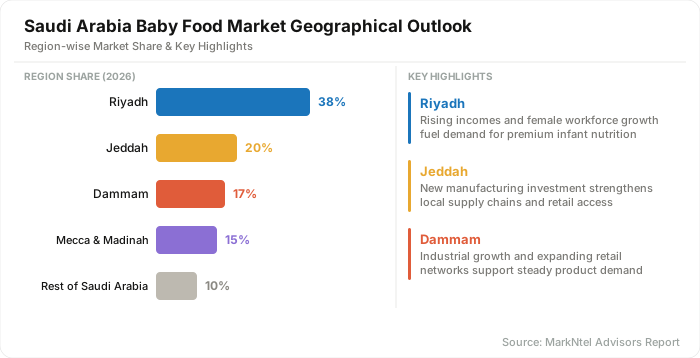
Riyadh’s dominance is further strengthened by its strong economic activity and household spending power. The city contributes a significant share to national retail and wholesale trade activity, supported by rising employment levels and a growing expatriate population. This has led to higher adoption of premium baby food and infant formula products, particularly in urban households where dual-income families are more common. Additionally, increasing digital penetration has accelerated e-commerce-based baby food purchases, reinforcing Riyadh’s leadership in both offline and online distribution channels.
The region continues to outperform others due to early adoption of organic baby food and specialized infant nutrition offerings, supported by higher health awareness and stronger brand penetration. Meanwhile, secondary regions such as Jeddah, Dammam, and Makkah & Madinah collectively account for the remaining market share, driven by gradual retail expansion and improving access to organized baby nutrition products. Overall, Riyadh remains the central growth hub shaping demand patterns across the Saudi Arabia Baby Food Market.
Saudi Arabia Baby Food Market Competitive Analysis
The Saudi Arabia baby food market exhibits a moderately concentrated structure, with the top five companies accounting for approximately 80% of total industry revenue. Established brand equity, extensive distribution networks, specialized infant nutrition portfolios, and long-standing relationships with pharmacies, supermarkets, and modern retail chains support their strong position. Global brands continue to dominate premium and formula-based categories, while regional players leverage local industry knowledge and retail partnerships to strengthen their presence.
Leading Participants in the Saudi Arabia Baby Food Industry
- Nestlé Saudi Arabia LLC
- Almarai Company
- Nutricia Middle East FZCO
- Laboratorios Ordesa, S.L.
- Bel Middle East FZE
- Binzagr Company
- Cigalah Group
- United Pharmaceuticals Company
- Abbott Laboratories
- Reckitt Benckiser Group plc
- HiPP GmbH & Co. Vertrieb KG
Saudi Arabia Baby Food Industry News and Recent Developments
September 2024 Nestlé Expands Local Manufacturing Footprint to Strengthen Supply Chain Resilience
Nestlé Saudi Arabia signed an agreement with MODON to establish its first food manufacturing facility in the Kingdom with an investment of approximately USD 72 million. The facility is expected to enhance local production capabilities, improve supply chain efficiency, and support Saudi Arabia’s broader food security and industrial localization objectives. The development is particularly significant for the infant nutrition industry, as local manufacturing can reduce import dependency and improve product availability across the Kingdom.
Impact Analysis: The investment is expected to strengthen domestic production capacity and accelerate localization within the Saudi baby food industry. Increased local manufacturing may help companies optimize costs, improve inventory management, and respond more effectively to evolving consumer demand for baby nutrition products. The development also aligns with Vision 2030 initiatives aimed at expanding local food production and reducing reliance on imported nutrition products.
February 2026 SFDA’s Enhanced Quality Oversight Reinforces Focus on Product Safety and Compliance
The Saudi Food and Drug Authority (SFDA) issued a precautionary warning and coordinated recall of specific Aptamil and Bebelac infant formula batches manufactured by Nutricia-Danone following potential contamination concerns. The authority confirmed that the action formed part of a voluntary recall process and highlighted its continued commitment to monitoring infant nutrition products and enforcing compliance with approved safety standards.
Impact Analysis: The incident is expected to increase emphasis on quality assurance, ingredient traceability, and regulatory compliance across the infant formula market. Manufacturers may accelerate investments in testing protocols, supply chain monitoring, and transparent labeling practices to strengthen consumer trust. The development also supports long-term demand for clean-label baby food and premium nutrition products that demonstrate high safety and quality standards.
Frequently Asked Questions
- Market Segmentation
- Introduction
- Product Definition
- Research Process
- Assumptions
- Executive Summary
- Saudi Arabia Baby Food Market Import & Export Statistics, 2022-2032
- Saudi Arabia Baby Food Market Supply Chain Analysis
- Saudi Arabia Baby Food Market Policies, Regulations, and Product Standards
- Saudi Arabia Baby Food Market Production Trend, 2022-2032
- Saudi Arabia Baby Food Production Trend (Thousand Tons), By Category Type
- Milk Formula
- Prepared Baby Food
- Dried Baby Food
- Baby Snacks & Finger Foods
- Company-Wise Production Plants and Statistics
- Installed Production Capacity
- Actual Production
- Planned Production Target
- Saudi Arabia Baby Food Production Trend (Thousand Tons), By Category Type
- Saudi Arabia Baby Food Market Pricing Analysis, By Type of Category, 2022-2032
- Saudi Arabia Baby Food Pricing Trend (USD Million & Thousand Units) 2022-2032
- Saudi Arabia Baby Food Pricing Trend (USD Million & Thousand Units) By Category
- Milk Formula
- Prepared Baby Food
- Dried Baby Food
- Baby Snacks & Finger Foods
- Saudi Arabia Baby Food Market Trends & Developments
- Saudi Arabia Baby Food Market Dynamics
- Growth Drivers
- Challenges
- Saudi Arabia Baby Food Market Hotspot & Opportunities
- Saudi Arabia Baby Food Market Outlook, 2022-2032
- Market Size & Outlook
- By Revenues (USD Million)
- By Quantity Sold (Thousand Tons)
- Market Segmentation & Outlook
- By Category- Market Size & Forecast 2022-2032, USD Million & Thousand Tons
- Milk Formula
- Standard Infant Formula
- Follow-on Formula
- Growing-Up Formula
- Specialty Formula
- Prepared Baby Food
- Dried Baby Food
- Baby Snacks & Finger Foods
- Milk Formula
- By Age Group- Market Size & Forecast 2022-2032, USD Million & Thousand Tons
- 0–6 Months
- 6–12 Months
- 12–24 Months
- 24–36 Months
- By Nature- Market Size & Forecast 2022-2032, USD Million & Thousand Tons
- Conventional
- Organic
- By Distribution Channel- Market Size & Forecast 2022-2032, USD Million & Thousand Tons
- Retail Offline
- Supermarkets & Hypermarkets
- Pharmacies & Drug Stores
- Convenience Stores
- Specialty Baby Stores
- Retail Online
- E-Commerce
- Q-Commerce
- Official Website
- Retail Offline
- By Region- Market Size & Forecast 2022-2032, USD Million & Thousand Tons
- Riyadh
- Jeddah
- Dammam
- Mecca & Madinah
- Others
- By Company
- Competition Characteristics
- Market Share & Analysis
- By Category- Market Size & Forecast 2022-2032, USD Million & Thousand Tons
- Market Size & Outlook
- Saudi Arabia Baby Milk Formula Market Outlook, 2022-2032
- Market Size & Outlook
- By Revenues (USD Million)
- By Quantity Sold (Thousand Tons)
- Market Segmentation & Outlook
- By Age Group- Market Size & Forecast 2022-2032, USD Million & Thousand Tons
- By Nature- Market Size & Forecast 2022-2032, USD Million & Thousand Tons
- By Distribution Channel- Market Size & Forecast 2022-2032, USD Million & Thousand Tons
- By Region- Market Size & Forecast 2022-2032, USD Million & Thousand Tons
- Market Size & Outlook
- Saudi Arabia Prepared Baby Food Market Outlook, 2022-2032
- Market Size & Outlook
- By Revenues (USD Million)
- By Quantity Sold (Thousand Tons)
- Market Segmentation & Outlook
- By Age Group- Market Size & Forecast 2022-2032, USD Million & Thousand Tons
- By Nature- Market Size & Forecast 2022-2032, USD Million & Thousand Tons
- By Distribution Channel- Market Size & Forecast 2022-2032, USD Million & Thousand Tons
- By Price Tier- Market Size & Forecast 2022-2032, USD Million & Thousand Tons
- By Region- Market Size & Forecast 2022-2032, USD Million & Thousand Tons
- Market Size & Outlook
- Saudi Arabia Dried Baby Food Market Outlook, 2022-2032
- Market Size & Outlook
- By Revenues (USD Million)
- By Quantity Sold (Thousand Tons)
- Market Segmentation & Outlook
- By Age Group- Market Size & Forecast 2022-2032, USD Million & Thousand Tons
- By Nature- Market Size & Forecast 2022-2032, USD Million & Thousand Tons
- By Distribution Channel- Market Size & Forecast 2022-2032, USD Million & Thousand Tons
- By Region- Market Size & Forecast 2022-2032, USD Million & Thousand Tons
- Market Size & Outlook
- Saudi Arabia Baby Snacks & Finger Foods Market Outlook, 2022-2032
- Market Size & Outlook
- By Revenues (USD Million)
- By Quantity Sold (Thousand Tons)
- Market Segmentation & Outlook
- By Age Group- Market Size & Forecast 2022-2032, USD Million & Thousand Tons
- By Nature- Market Size & Forecast 2022-2032, USD Million & Thousand Tons
- By Distribution Channel- Market Size & Forecast 2022-2032, USD Million & Thousand Tons
- By Region- Market Size & Forecast 2022-2032, USD Million & Thousand Tons
- Market Size & Outlook
- Saudi Arabia Baby Food Market Key Strategic Imperatives for Success & Growth
- Competition Outlook
- Company Profiles
- Nestlé Saudi Arabia LLC
- Business Description
- Product Portfolio
- Strategic Alliances or Partnerships
- Recent Developments
- Financial Details
- Others
- Almarai Company
- Business Description
- Product Portfolio
- Strategic Alliances or Partnerships
- Recent Developments
- Financial Details
- Others
- Nutricia Middle East FZCO
- Business Description
- Product Portfolio
- Strategic Alliances or Partnerships
- Recent Developments
- Financial Details
- Others
- Laboratorios Ordesa, S.L.
- Business Description
- Product Portfolio
- Strategic Alliances or Partnerships
- Recent Developments
- Financial Details
- Others
- Bel Middle East FZE
- Business Description
- Product Portfolio
- Strategic Alliances or Partnerships
- Recent Developments
- Financial Details
- Others
- United Pharmaceuticals Company
- Business Description
- Product Portfolio
- Strategic Alliances or Partnerships
- Recent Developments
- Financial Details
- Others
- Abbott Laboratories
- Business Description
- Product Portfolio
- Strategic Alliances or Partnerships
- Recent Developments
- Financial Details
- Others
- Reckitt Benckiser Group plc
- Business Description
- Product Portfolio
- Strategic Alliances or Partnerships
- Recent Developments
- Financial Details
- Others
- HiPP GmbH & Co. Vertrieb KG
- Business Description
- Product Portfolio
- Strategic Alliances or Partnerships
- Recent Developments
- Financial Details
- Others
- Others
- Nestlé Saudi Arabia LLC
- Company Profiles
- Disclaimer
MarkNtel Advisors follows a robust and iterative research methodology designed to ensure maximum accuracy and minimize deviation in market estimates and forecasts. Our approach combines both bottom-up and top-down techniques to effectively segment and quantify various aspects of the market. A consistent feature across all our research reports is data triangulation, which examines the market from three distinct perspectives to validate findings. Key components of our research process include:
1. Scope & Research Design At the outset, MarkNtel Advisors define the research objectives and formulate pertinent questions. This phase involves determining the type of research—qualitative or quantitative—and designing a methodology that outlines data collection methods, target demographics, and analytical tools. They also establish timelines and budgets to ensure the research aligns with client goals.
2. Sample Selection and Data Collection In this stage, the firm identifies the target audience and determines the appropriate sample size to ensure representativeness. They employ various sampling methods, such as random or stratified sampling, based on the research objectives. Data collection is carried out using tools like surveys, interviews, and observations, ensuring the gathered data is reliable and relevant.
3. Data Analysis and Validation Once data is collected, MarkNtel Advisors undertake a rigorous analysis process. This includes cleaning the data to remove inconsistencies, employing statistical software for quantitative analysis, and thematic analysis for qualitative data. Validation steps are taken to ensure the accuracy and reliability of the findings, minimizing biases and errors.

4. Data Forecast and FinalizationThe final phase involves forecasting future market trends based on the analyzed data. MarkNtel Advisors utilize predictive modeling and time series analysis to anticipate market behaviors. The insights are then compiled into comprehensive reports, featuring visual aids like charts and graphs, and include strategic recommendations to inform client decision-making
We offer flexible licensing options to cater to varying organizational needs. Choose the pricing pack that best suits your requirements:
Buy Now Inquire Before Buying
 Request Customization
 Talk to our Consultant







