

India Body Wash Market Research Report: Forecast (2026-2032)
By Product Type (Medicated, Non-Medicated), By Nature (Chemical Based, Organic), By Skin Type (Dry Skin, Oily Skin, Sensitive Skin, Combination Skin, All Skin Types), By Price Cate ... gory (Economy, Mid-Range, Premium), By Distribution Channel (Convenience Stores, Supermarkets/Hypermarkets, Online Stores, Others), By End-User (Men, Women, Kids), and others Read more
- FMCG
- Jun 2026
- Pages 112
- Report Format: PDF, Excel, PPT
India Body Wash Market
Projected 8.85% CAGR from 2025 to 2030
Study Period
2025-2030
Market Size (2024)
USD 87.45 Million
Market Size (2030)
USD 145.45 Million
Base Year
2025
Projected CAGR
8.85%
Leading Segments
By Distribution Channel: Supermarkets/Hypermarkets
India Body Wash Market Key Takeaways
- India Body Wash Market size was valued at USD 81.34 million in 2025 and is projected to grow from USD 87.45 million in 2026 to USD 145.45 million by 2032.
- The market is projected to register a CAGR of 8.85% during 2026-2032.
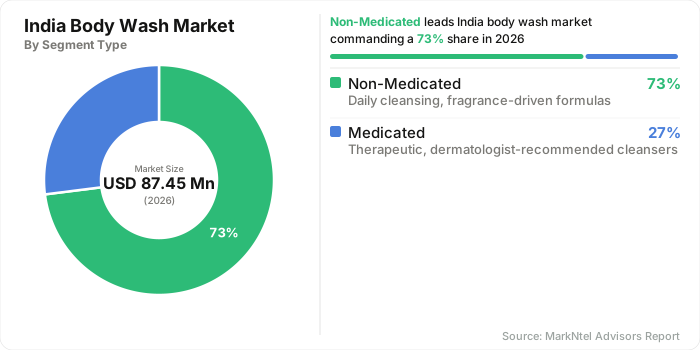
- By product type, the non-medicated holds a significant share of about 73% in 2026.
- By distribution channel, the Supermarkets/Hypermarkets segment seized a significant share of about 36% in 2026.
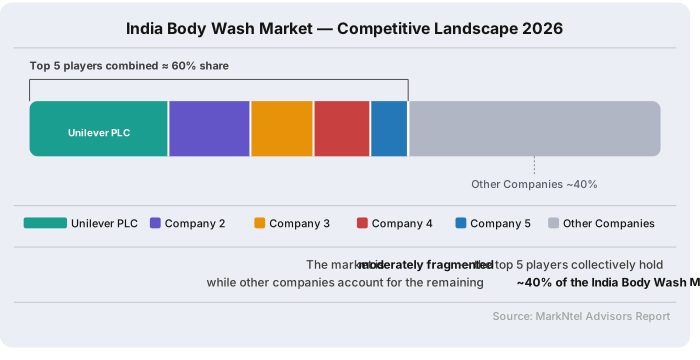
- The industry is moderately concentrated. However, the top five players collectively account for nearly 55% share.
India Body Wash Market Size and Outlook
The India Body Wash Market size was valued at USD 81.34 million in 2025 and is projected to grow from USD 87.45 million in 2026 to USD 145.45 million by 2032. Along with this, the market is estimated to grow at a CAGR of around 8.85% during the forecast period, i.e., 2026-32.
The industry is expected to witness sustained expansion, supported by strong hygiene penetration and rapid e-commerce adoption. According to the Government of India’s SDG 6 dataset, nearly 86% of households already have access to handwashing facilities with soap and water, reflecting a strong foundational shift toward hygiene awareness across both urban and rural regions. This widespread hygiene infrastructure is gradually translating into higher acceptance of advanced cleansing formats such as liquid body washes, especially among younger and urban consumers.
Future demand is expected to accelerate further due to rapid digital retail expansion. L’Oréal India estimates that the number of consumers purchasing beauty products online may rise from 50 million to 150 million within the next 3–4 years, driven by deeper penetration into Tier-2 and Tier-3 cities and increased investment by e-commerce platforms. This shift is likely to significantly enhance accessibility and trial of body wash products beyond metropolitan areas, strengthening category growth beyond 2025.
Product innovation is also reshaping market dynamics. For instance, Be Bodywise’s 1% Salicylic + Ceramide Body Wash highlights the increasing adoption of “skinification of body wash,” combining acne treatment with barrier-repair benefits through dermatologist-inspired formulations. At the same time, sustainability trends are gaining traction, with brands such as Palmolive introducing refillable body wash packaging systems that reduce plastic usage and promote circular consumption models.
Overall, the body wash market is transitioning from a hygiene-driven category to a skincare-oriented segment supported by digital expansion, dermatological innovation, and sustainability initiatives. Rising awareness, improved accessibility, and premium product development are expected to collectively drive strong long-term growth.
India Body Wash Market Key Indicators
- India is emerging as the fastest-growing online beauty market globally, driven by rapid e-commerce expansion and shifting consumer behavior. According to NielsenIQ, beauty e-commerce and quick commerce sales in India surged by 39% in value, significantly outpacing offline retail growth. Increasing digital adoption, Gen Z spending, and influencer-driven discovery are accelerating online penetration in personal care categories, including body wash and skincare products.
- Keratosis pilaris, commonly known as strawberry skin, affects nearly 40% of adults and up to 80% of adolescents globally, indicating a widespread skin texture concern. This rising prevalence is increasing demand for exfoliating and hydrating body washes containing actives like salicylic acid, ceramides, and hyaluronic acid. It serves as a key indicator of growing consumer shift toward dermatology-led and skin-smoothing cleansing products in India.
- According to RBI data, India disposable personal income increased from INR 273.4 trillion in 2022 to INR 296.4 trillion in 2023, while Trading Economics projects it will reach INR 317.4 trillion by 2026. Rising household purchasing power is enabling consumers to shift toward premium personal care products, including body washes, thereby supporting market value growth and product premiumization.
India Body Wash Market Scope
| Category | Segments |
|---|---|
| By Product Type | Medicated, Non-Medicated |
| By Nature | Chemical Based, Organic |
| By Skin Type | Dry Skin, Oily Skin, Sensitive Skin, Combination Skin, All Skin Types |
| By Price Category | Economy, Mid-Range, Premium |
| By Distribution Channel | Convenience Stores, Supermarkets/Hypermarkets, Online Stores, Others |
| By End-User | Men, Women, Kids |
India Body Wash Market Growth Drivers
Ever-Increasing Consumer Focus on Personal Hygiene & Grooming
Rising awareness of personal hygiene and skin health is emerging as a key driver of the India body wash industry. As urban consumers adopt increasingly fast-paced lifestyles, demand is growing for convenient and premium cleansing products that support both hygiene and skincare needs. This trend is further reinforced by concerns regarding skin infections and dermatological conditions that are common in India warm and humid climate. Studies conducted in North India have identified fungal skin infections, particularly tinea infections, among the most frequently reported dermatological conditions, with humidity, perspiration, and inadequate hygiene practices acting as major contributing factors.
Growing consumer awareness of such skin-related issues is encouraging more frequent bathing and the use of advanced cleansing products. Compared with traditional soap bars, body washes offer easier application, better hygiene during use, and formulations containing moisturizers, antibacterial agents, and skin-friendly ingredients. Reflecting this shift, leading FMCG companies including Hindustan Unilever Limited, Procter & Gamble, and Beiersdorf AG have expanded their body wash portfolios with dermatologically tested and skin-nourishing variants to cater to evolving consumer preferences.
The continued investments in premium personal care products, expanding e-commerce penetration, and growing consumer spending on wellness-oriented grooming solutions are expected to accelerate the transition from basic cleansing products to specialized body washes across both metropolitan and tier-II cities.
At the same time, the increasing focus on hygiene, skin protection, and personal grooming is transforming bathing habits across India. As consumers seek more effective and skin-friendly cleansing solutions, body wash adoption is expected to rise steadily, supporting long-term market growth.
Recent Trends
Rising Preference for Natural and Dermatologist-Approved Formulations
Indian consumers are increasingly prioritizing skin health and ingredient transparency when selecting personal care products, driving demand for body washes formulated with clinically supported and skin-friendly ingredients. This shift is reflected in the growing adoption of products designed to support hydration, barrier repair, and long-term skin wellness rather than basic cleansing. This aligns with the broader skinification of body wash, where consumers evaluate cleansing products using the same standards applied to facial skincare, including efficacy, safety, and ingredient quality.
A notable example is the September 2025 launch of SEREKO's Hydra-Repair Body Wash, formulated with urea and skin-barrier-support ingredients to address hydration and skin repair concerns. The product was positioned as a therapeutic body-care solution rather than a conventional cleanser, highlighting the industry move toward scientifically formulated products. Growing consumer awareness of skin sensitivity is also accelerating demand for sulfate-free cleansing products and supporting the broader clean label personal care trend, where formulations emphasize transparency and gentleness. As brands continue introducing dermatologist-oriented innovations, natural and clinically validated body washes are expected to gain a larger share of India personal cleansing market in the coming years.
Furthermore, the convergence of skincare science and natural ingredient preferences is reshaping consumer purchasing decisions. As demand grows for gentle, effective, and dermatologist-approved formulations, this trend is expected to drive premiumization, product innovation, and sustained growth in the market.
India Body Wash Industry Opportunities and Challenges
Increasing Consumer Concerns About Skin Sensitivity Creating Opportunities for pH-Balanced, Sulfate-Free, and Therapeutic Body Wash Products
Growing awareness of skin health, allergies, and irritation is increasing consumer scrutiny of personal cleansing products across India. Consumers are becoming more cautious about harsh surfactants, artificial additives, and products that may disrupt the skin barrier, creating a challenge for manufacturers relying on conventional formulations. This shift is accelerating demand for gentler alternatives and strengthening the market for sulfate-free cleansing products designed to support hydration, barrier protection, and long-term skin wellness. As skincare awareness expands, brands are under pressure to deliver safer and more specialized cleansing solutions.
At the same time, this challenge is creating significant opportunities for the development of pH-balanced, sulfate-free, and therapeutic body washes tailored to specific skin needs. A notable example is the September 2025 launch of Avee Kids' pH-balanced body wash, formulated for children above five years with dermatologist-tested and hypoallergenic ingredients to help protect sensitive skin. The launch reflects the growing demand for specialized cleansing products that prioritize safety and efficacy. Rising consumer preference for scientifically formulated and skin-friendly solutions is expected to encourage further innovation in therapeutic body care, enabling manufacturers to capture premium segments and expand the reach of the India Body Wash Market.
Segmentation Insights
Non-Medicated Body Washes Lead the Market
The Non-Medicated segment accounted for the largest share of the India body wash market, capturing approximately 73% of total revenue in 2026. Its dominance is primarily attributed to the growing preference for everyday cleansing products that combine convenience, fragrance, and skincare benefits without requiring medical prescriptions or targeting specific skin conditions. As consumers increasingly adopt premium skincare bathing products, body wash is evolving from a basic hygiene product into a lifestyle-oriented personal care category. Manufacturers have responded by expanding portfolios featuring moisturizing, exfoliating, aromatic, and herbal variants that appeal to a broad consumer base.
The segment leadership is further supported by rising urbanization, increasing disposable incomes, and the ongoing shift from soap to liquid cleansers among middle-income households. Non-medicated body washes are widely available across retail channels and cater to diverse consumer preferences, including hydration, fragrance enhancement, and wellness-focused bathing experiences.
In addition, the growing hygiene awareness trend in India has encouraged consumers to incorporate specialized cleansing products into daily routines. As brands continue introducing innovative formulations featuring natural extracts, skin-conditioning ingredients, and sensory benefits, the non-medicated segment is expected to maintain its strong market position and remain the primary revenue contributor to the India Body Wash Market. Based on product type, the scope has been segmented into
- Medicated
- Non-Medicated
Supermarkets/Hypermarkets Lead Due to Strong Product Visibility
Supermarkets/Hypermarkets emerged as the leading distribution channel in the India body wash industry, accounting for approximately 36% of total sales in 2026. The segment benefits from extensive product visibility, organized retail infrastructure, and the ability to offer consumers a wide range of brands, formulations, and price points under one roof. These stores enable consumers to compare products directly, evaluate packaging, and access promotional discounts, which significantly influences purchasing decisions. The growth of organized retail has therefore strengthened the position of physical stores in the personal care category.
The channel dominance is further supported by increasing consumer demand for premium bath products demand India, as shoppers often prefer purchasing personal care items after physically assessing product attributes. Supermarkets also provide strategic shelf placement for emerging brands, helping expand awareness of clean label personal care trend products and specialized body washes.
Furthermore, the continued expansion of modern retail networks across metropolitan and Tier-2 cities has improved accessibility to a diverse range of body cleansing products. Supported by evolving consumer lifestyles and increasing interest in urban skincare adoption trends, supermarkets and hypermarkets are expected to remain a key sales channel for body wash products in India. The key distribution channel identified in the study includes
- Convenience Stores
- Supermarkets/Hypermarkets
- Online Stores
- Others
India Body Wash Industry Competitive Analysis
The India Body Wash Market is moderately concentrated, with the presence of both multinational and domestic personal care companies. The top five companies, including Unilever PLC, Beiersdorf AG, Procter & Gamble Co., Johnson & Johnson, and L'Oréal SA, collectively account for approximately 55% of the market share. Their strong brand portfolios, extensive distribution networks, and continuous product innovation contribute to their market leadership, while the remaining share is held by regional, herbal, and emerging D2C brands.
Key Body Wash Companies in India
- Johnson & Johnson
- L'Oréal SA
- Unilever PLC
- Biotique
- Colgate-Palmolive Company
- Procter & Gamble Co.
- Avon Products
- Kao Corporation
- Beiersdorf AG
- Natura & Co Holding S.A.
- L'Occitane s S.A.
- Himalaya Wellness Company
- Honasa Consumer Limited
- The Estée Lauder Companies Inc.
- Others
India Body Wash Industry News and Recent Developments
December 2025: Foxtale Expands into Bodycare with the Launch of Hula Hoop and Adopts a House-of-Brands Strategy
Indian beauty brand Foxtale launched Hula Hoop, a science-led bodycare range featuring products such as Brightening Body Wash and Exfoliating Body Wash. The expansion marks Foxtale’s transition into a multi-brand business model. The company reported approximately USD 82 million in GMV and 250% annual growth, supported by strong demand for targeted skincare and bodycare solutions in India.
Impact Analysis: The launch strengthens premiumization trends in the India Body Wash Market by increasing competition in the science-backed and dermatological bodycare segment. Hula Hoop’s focus on concerns such as pigmentation, body acne, and dryness reflects growing consumer preference for problem-solving personal care products. The expansion is expected to accelerate product innovation, encourage premium category adoption, and support the shift from traditional soap formats toward specialized liquid body cleansing solutions across urban Indian consumers.
September 2025: Palmolive Launches ‘Moments Body Wash’ Range with Signature Fragrances for Wellness-Focused Bathing Experience
Palmolive India introduced its new Moments Body Wash collection featuring Mindful Awake, Workout Fresh, and Restful Sleep variants. The range incorporates patented fragrance technologies, natural extracts, and long-lasting sensory formulations designed for different daily routines. Products were launched in 750 ml packs priced at approximately USD 7.9 and made available across major e-commerce platforms.
Impact Analysis: The launch highlights the growing shift toward premium, experience-driven body wash products in India. By combining wellness positioning, aromatherapy-inspired fragrances, and lifestyle-focused benefits, Palmolive is strengthening competition within the premium personal care segment. The development is expected to support higher consumer spending on liquid cleansing products, accelerate product differentiation strategies among FMCG brands, and encourage wider adoption of body washes over conventional soap bars among urban consumers.
Frequently Asked Questions
- Market Segmentation
- Introduction
- Product Definition
- Research Process
- Assumptions
- Executive Summary
- India Body Wash Market Regulations, Policies & Product Standard
- India Body Wash Market Trends & Developments
- India Body Wash Market Dynamics
- Growth Drivers
- Challenges
- India Body Wash Market Supply Chain Analysis
- India Body Wash Market Pricing Analysis
- India Body Wash Market Hotspot & Opportunities
- India Body Wash Market Outlook, 2022-2032F
- Market Size & Analysis
- By Revenues (USD Million)
- Market Share & Analysis
- By Product Type- (USD Million)
- Medicated
- Non-Medicated
- By Nature- (USD Million)
- Chemical Based
- Organic
- By Skin Type- (USD Million)
- Dry Skin
- Oily Skin
- Sensitive Skin
- Combination Skin
- All Skin Types
- By Price Category- (USD Million)
- Economy
- Mid-Range
- Premium
- By Distribution Channel- (USD Million)
- Convenience Stores
- Supermarkets/Hypermarkets
- Online Stores
- Others
- By End-User- (USD Million)
- Men
- Women
- Kids
- By Region
- North
- South
- East
- West
- By Company
- By Product Type- (USD Million)
- Market Size & Analysis
- India Men Body Wash Market Outlook, 2022-2032F
- Market Size & Analysis
- By Revenues (USD Million)
- Market Share & Analysis
- By Product Type- (USD Million)
- By Nature- (USD Million)
- By Skin Type- (USD Million)
- By Price Category- (USD Million)
- By Distribution Channel- (USD Million)
- Market Size & Analysis
- India Women Body Wash Market Outlook, 2022-2032F
- Market Size & Analysis
- By Revenues (USD Million)
- Market Share & Analysis
- By Product Type- (USD Million)
- By Nature- (USD Million)
- By Skin Type- (USD Million)
- By Price Category- (USD Million)
- By Distribution Channel- (USD Million)
- Market Size & Analysis
- India Kids Body Wash Market Outlook, 2022-2032F
- Market Size & Analysis
- By Revenues (USD Million)
- Market Share & Analysis
- By Product Type- (USD Million)
- By Nature- (USD Million)
- By Skin Type- (USD Million)
- By Price Category- (USD Million)
- By Distribution Channel- (USD Million)
- Market Size & Analysis
- Competitive Outlook
- Company Profiles
- Johnson & Johnson
- Business Description
- Product Portfolio
- Strategic Alliances or Partnerships
- Recent Developments
- Financial Details
- Others
- L'Oreal SA
- Business Description
- Product Portfolio
- Strategic Alliances or Partnerships
- Recent Developments
- Financial Details
- Others
- Unilever PLC
- Business Description
- Product Portfolio
- Strategic Alliances or Partnerships
- Recent Developments
- Financial Details
- Others
- Biotique
- Business Description
- Product Portfolio
- Strategic Alliances or Partnerships
- Recent Developments
- Financial Details
- Others
- Colgate-Palmolive Company
- Business Description
- Product Portfolio
- Strategic Alliances or Partnerships
- Recent Developments
- Financial Details
- Others
- Procter & Gamble Co. (olay)
- Business Description
- Product Portfolio
- Strategic Alliances or Partnerships
- Recent Developments
- Financial Details
- Others
- Avon Products
- Business Description
- Product Portfolio
- Strategic Alliances or Partnerships
- Recent Developments
- Financial Details
- Others
- Kao Corporation
- Business Description
- Product Portfolio
- Strategic Alliances or Partnerships
- Recent Developments
- Financial Details
- Others
- Beiersdorf AG (Nevia)
- Business Description
- Product Portfolio
- Strategic Alliances or Partnerships
- Recent Developments
- Financial Details
- Others
- Lion Corporation. (Bryan and Candy)
- Business Description
- Product Portfolio
- Strategic Alliances or Partnerships
- Recent Developments
- Financial Details
- Others
- Natura and Co Holding SA (The Body Shop)
- Business Description
- Product Portfolio
- Strategic Alliances or Partnerships
- Recent Developments
- Financial Details
- Others
- Chanel Limited
- Business Description
- Product Portfolio
- Strategic Alliances or Partnerships
- Recent Developments
- Financial Details
- Others
- L'Occitane
- Business Description
- Product Portfolio
- Strategic Alliances or Partnerships
- Recent Developments
- Financial Details
- Others
- Others
- Johnson & Johnson
- Company Profiles
- Disclaimer
MarkNtel Advisors follows a robust and iterative research methodology designed to ensure maximum accuracy and minimize deviation in market estimates and forecasts. Our approach combines both bottom-up and top-down techniques to effectively segment and quantify various aspects of the market. A consistent feature across all our research reports is data triangulation, which examines the market from three distinct perspectives to validate findings. Key components of our research process include:
1. Scope & Research Design At the outset, MarkNtel Advisors define the research objectives and formulate pertinent questions. This phase involves determining the type of research—qualitative or quantitative—and designing a methodology that outlines data collection methods, target demographics, and analytical tools. They also establish timelines and budgets to ensure the research aligns with client goals.
2. Sample Selection and Data Collection In this stage, the firm identifies the target audience and determines the appropriate sample size to ensure representativeness. They employ various sampling methods, such as random or stratified sampling, based on the research objectives. Data collection is carried out using tools like surveys, interviews, and observations, ensuring the gathered data is reliable and relevant.
3. Data Analysis and Validation Once data is collected, MarkNtel Advisors undertake a rigorous analysis process. This includes cleaning the data to remove inconsistencies, employing statistical software for quantitative analysis, and thematic analysis for qualitative data. Validation steps are taken to ensure the accuracy and reliability of the findings, minimizing biases and errors.

4. Data Forecast and FinalizationThe final phase involves forecasting future market trends based on the analyzed data. MarkNtel Advisors utilize predictive modeling and time series analysis to anticipate market behaviors. The insights are then compiled into comprehensive reports, featuring visual aids like charts and graphs, and include strategic recommendations to inform client decision-making
We offer flexible licensing options to cater to varying organizational needs. Choose the pricing pack that best suits your requirements:
Buy Now Inquire Before Buying
 Request Customization
 Talk to our Consultant







