

India Automotive Lubricants Market Research Report: Forecast (2026-2032)
By Vehicle Type (Passenger Car, Light Commercial Vehicle, Medium & Heavy Commercial Vehicle, Two Wheeler, Three Wheeler, Off-the-Road (OTR) Vehicle), By Type (Engine Oil, Gear & Br ... ake Oil, Transmission Fluid, Grease, Others), By Base Oil (Mineral, Synthetic, Semi-Synthetic, Bio-Based), By Demand Category (OEM, OES, Independent Aftermarket (IA)), By Sales Channel (Authorized Dealers, Retailers, Workshops & Garages, Online), and others Read more
- Automotive
- Jun 2026
- Pages 140
- Report Format: PDF, Excel, PPT
India Automotive Lubricants Market
Projected 9% CAGR from 2026 to 2032
Study Period
2026-2032
Market Size (2026)
USD 6.88 Billion
Market Size (2032)
USD 11.54 Billion
Base Year
2025
Projected CAGR
9%
Leading Segments
By Type: Engine Oil
India Automotive Lubricants Market Key Takeaways
- The India Automotive Lubricants Market was valued at USD 6.45 billion in 2025 and is projected to reach USD 6.88 billion in 2026 and USD 11.54 billion by 2032.
- The industry is projected to witness steady growth at a 9% CAGR during 2026–2032.
- Engine Oil dominates the market with 55% of market share in 2026.
- Passenger Cars remain the leading vehicle-type segment, accounting for approximately 51.78% market share.
- The market is moderately consolidated, with the top five companies collectively accounting for nearly 30% of the total market share.
India Automotive Lubricants Market Size and Outlook
The India Automotive Lubricants Market is estimated at USD 6.45 billion and in 2025 is expected to increase to USD 6.88 billion by 2026, reaching USD 11.54 billion by 2032, growing at a CAGR of 9.00% during the forecast period of 2026–2032.
This significant growth is supported by rising vehicle ownership, expanding road transportation activity, increasing penetration of premium lubricants, and continuous growth in the country’s automotive parc. The market continues to benefit from strong demand across passenger vehicles, commercial vehicles, two-wheelers, and off-highway equipment, as vehicle maintenance remains critical for engine efficiency, fuel economy, and component durability. Growing disposable incomes and improving consumer awareness regarding preventive vehicle maintenance are further encouraging the adoption of higher-quality lubricant products across both urban and semi-urban markets.
According to the United Nations Population Fund (UNFPA), India's population reached approximately 1.46 billion in 2025, creating a vast and expanding consumer base for personal mobility. Simultaneously, according to the World Bank, the country's urban population exceeded 37% of the total population in 2024, supported by ongoing urbanization and economic development. Rising urban migration, increasing household incomes, and changing transportation preferences continue to boost vehicle ownership, thereby strengthening demand for automotive lubricants across both OEM and aftermarket channels.
Government investments in transport infrastructure, logistics modernization, and freight connectivity continue to increase vehicle utilization across India. According to the Ministry of Road Transport and Highways, India awarded over 8,500 km of National Highway projects during FY2024-25, supporting freight movement and commercial vehicle activity. In addition, the expansion of organized service networks, multi-brand workshops, and digital aftermarket platforms is improving lubricant accessibility across Tier-II and Tier-III cities. Leading manufacturers are also investing in advanced formulations and wider distribution networks to strengthen market penetration and customer engagement.
Going forward, rising vehicle density, increasing commercial transportation activity, premiumization of lubricant consumption, and continuous expansion of the automotive service ecosystem are expected to support sustained growth opportunities for lubricant manufacturers, distributors, and aftermarket service providers across India.
India Lubricants Market Scope
| Category | Segments |
|---|---|
| By Vehicle Type | Passenger Car, Light Commercial Vehicle, Medium & Heavy Commercial Vehicle, Two Wheeler, Three Wheeler, Off-the-Road (OTR) Vehicle |
| By Type | Engine Oil, Gear & Brake Oil, Transmission Fluid, Grease, Others |
| By Base Oil | Mineral, Synthetic, Semi-Synthetic, Bio-Based |
| By Demand Category | OEM, OES, Independent Aftermarket (IA |
| By Sales Channel | Authorized Dealers, Retailers, Workshops & Garages, Online |
India Lubricants Market Key Indicators
- According to the Press Information Bureau, India’s registered vehicle fleet exceeded 385 million vehicles in 2024, equivalent to approximately 265 vehicles per 1,000 individuals. The continuously expanding vehicle parc is creating sustained demand for engine oils, transmission fluids, greases, and other automotive lubricants through recurring maintenance and replacement cycles.
- The Society of India Automobile Manufactures reported that, India recorded domestic sales of 21.7 million two-wheelers, 4.64 million passenger vehicles, and 1.08 million commercial vehicles in FY2025-26. The large and growing vehicle population entering operation each year continues to strengthen lubricant consumption across both OEM-fill and aftermarket channels.
- Rising rural incomes and improved road connectivity under the Pradhan Mantri Gram Sadak Yojana (PMGSY) continue to boost two-wheeler ownership across India. Frequent engine oil replacement intervals of 3,000–4,000 km generate recurring lubricant demand, while the highly popular 100–125 cc motorcycle segment remains a key consumption driver in rural and semi-urban markets.
- Average lubricant consumption varies significantly across vehicle categories, creating a diverse demand base for the industry. Two-wheelers typically consume 2–3 liters annually, passenger cars 4–6 liters, while commercial vehicles require 20–35 liters per year due to higher operating hours and heavier usage. This wide consumption gap makes commercial fleets and high-mileage vehicles key contributors to overall lubricant demand.
- According to the Petroleum Planning & Analysis Cell (PPAC), domestic consumption of Lubricants & Greases exceeded 2.8 million metric tonnes during FY2025-26, highlighting the country's large and expanding lubricant demand base. Rising vehicle ownership, increasing freight transportation activity, expanding industrial operations, and higher vehicle utilization rates continue to support lubricant consumption across automotive and industrial applications
India Automotive Lubricants Market Drivers
Rising Incomes and Expanding Vehicle Parc Fuel Surge in Automotive Sales
India’s improving economic conditions and rising household incomes continue to support vehicle ownership across both urban and rural markets. According to the Reserve Bank of India, private final consumption expenditure increased by 7.2% in FY2024-25, reflecting stronger consumer spending capabilities. Growing affordability, expanding vehicle financing availability, and improving road infrastructure are encouraging first-time vehicle purchases and upgrades. This trend continues to strengthen lubricant demand as every new vehicle generates recurring maintenance and fluid replacement requirements throughout its operating lifecycle.
The expanding vehicle parc further reinforces long-term lubricant consumption across the country. According to the Ministry of Road Transport and Highways (MoRTH), India recorded more than 26 million new vehicle registrations during 2024, highlighting sustained growth in the active vehicle population. Rising utilization of passenger vehicles, two-wheelers, and commercial fleets increases engine wear, service frequency, and oil replacement cycles. Consequently, higher vehicle ownership and usage intensity continue to support steady demand for engine oils, transmission fluids, greases, and other automotive lubricant products.
Recent Trends
Advancements in Lubricant Technology
Technological innovation is increasingly reshaping India's lubricant industry as manufacturers focus on high-performance, fuel-efficient, and environmentally sustainable formulations. The growing adoption of synthetic and semi-synthetic lubricants is supporting longer drain intervals, enhanced engine protection, and improved vehicle efficiency. Consumers are increasingly shifting toward premium lubricant products that reduce maintenance requirements and improve engine durability, encouraging manufacturers to expand advanced product portfolios across passenger and commercial vehicle segments.
Strategic investments and premium product launches continue to accelerate technology adoption across the industry. In 2025, Castrol India expanded its Castrol ON EV portfolio, introducing advanced transmission and thermal management fluids designed to improve battery performance, drivetrain efficiency, and vehicle range. Additionally, BPCL's partnership with Chevron strengthened the availability of premium lubricant brands, including Havoline and Delo products, within the domestic market. These developments highlight the industry's growing focus on advanced formulations, EV-specific fluid technologies, and higher-value lubricant solutions.
India Automotive Lubricant Market Opportunities and Challenges
Base Oil Import Dependency is Accelerating Bio-Based Lubricant Innovation Opportunities
India's lubricant industry continues to face supply-chain and cost challenges due to its dependence on imported base oils and lubricant feedstocks. According to PPAC, LPG and Lubes/Lube Oil Base Stocks (LOBS) accounted for 46.5% of total petroleum product imports during April–December FY2024-25, compared with 42.7% during the corresponding period of FY2023-24, highlighting the country's continued reliance on imported lubricant feedstocks. Exposure to global crude oil prices, freight costs, currency fluctuations, and supply-chain disruptions can directly impact procurement costs and profitability across the lubricant value chain.
The dependence is creating opportunities for bio-based lubricant innovation and sustainable product development. In 2025, Castrol India introduced ON EV Bio-Synthetic Thermal Management Fluid, incorporating renewable-content technology for electric vehicle applications. The launch reflects the industry's increasing focus on bio-based and advanced lubricant formulations that can reduce dependence on conventional petroleum-derived base oils while supporting sustainability goals, product differentiation, and long-term supply-chain resilience across the automotive lubricant ecosystem.
India Automotive Lubricants Market Segmentation
Engine Oil Holds the Largest Product-Type Market Share
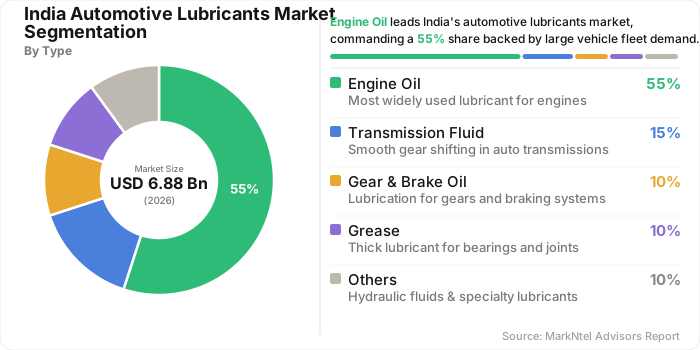
The Engine Oil segment has the highest share segment under the type of engine oil, accounting for an 55% market share. Its leadership is primarily driven by the large volume of vehicles requiring regular engine lubrication to maintain performance, fuel efficiency, and component durability. According to the Ministry of Road Transport and Highways (MoRTH), India's vehicle fleet continues to expand rapidly, creating a substantial replacement market for engine oils. Unlike transmission fluids and greases, engine oil requires more frequent replacement, making it the largest revenue-generating product category within the industry.
The segment's dominance is further supported by the increasing adoption of synthetic and semi-synthetic formulations across passenger and commercial vehicles. Higher engine temperatures, stricter emission norms, and consumer preference for longer drain intervals are encouraging the use of premium engine oils with enhanced protection characteristics. As a result, engine oil continues to account for the largest share of lubricant consumption compared to gear & brake oil, transmission fluid, grease, and other specialty automotive fluids. Based on Type, the market is segmented into:
- Engine Oil
- Gear & Brake Oil
- Transmission Fluid
- Grease
- Others
Passenger Cars Hold the Largest Vehicle-Type Market Share
The Passenger Cars segment has the highest share under the Vehicle Type, accounting for approximately 51.78% of the India automotive lubricants market. The segment is supported by rising urbanization, growing disposable incomes, and increasing ownership of hatchbacks, sedans, and utility vehicles across the country. In addition, OEM-authorized service networks and warranty-linked maintenance programs encourage the use of premium and OEM-recommended lubricants, supporting consistent lubricant consumption throughout the vehicle lifecycle.
The segment’s leadership is further strengthened by the growing adoption of synthetic and semi-synthetic lubricants, which offer enhanced engine protection, longer drain intervals, and improved fuel efficiency. However, Medium & Heavy Commercial Vehicles (M&HCVs) are emerging as the fastest-growing category, driven by expanding freight transportation and infrastructure development activities. Higher annual mileage, larger oil sump capacities, and increasing deployment of multi-axle trucks continue to generate substantial lubricant demand, making commercial vehicles a key contributor to future industry growth. Based on Vehicle Type, the industry has been segmented into:
- Passenger Car
- Light Commercial Vehicle
- Medium & Heavy Commercial Vehicles
- Two-Wheelers
- Three-Wheelers
- Off-the-Road (OTR)
India Automotive Lubricants Market Competitive Analysis
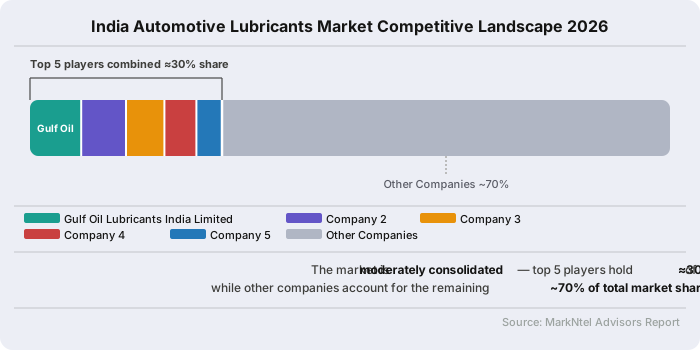
The India Automotive Lubricants Market is moderately consolidated, with the top five companies collectively accounting for nearly 30% of the total market share. Key participants include Indian Oil Corporation Limited, Bharat Petroleum Corporation Limited, Hindustan Petroleum Corporation Limited, Castrol India Limited, and Shell Lubricants India. The competitive landscape is characterized by extensive distribution networks, strong OEM relationships, premium product portfolios.
Major Automotive Lubricants Companies in India
- Gulf Oil Lubricants
- Indian Oil
- Castrol
- Hindustan Petroleum
- Bharat Petroleum
- Tide Water Oil
- Shell India
- Valvoline Cummins
- ExxonMobil
- Others
India Automotive Lubricants Industry News and Recent Developments
June 2025: Shell Advances EV-Plus Thermal Fluid Technology
Shell successfully demonstrated its EV-Plus Thermal Fluid technology, a next-generation single-fluid thermal management solution capable of cooling batteries, electric motors, and power electronics within battery electric vehicles. The innovation is designed to enhance thermal efficiency, optimize battery performance, and support the evolving requirements of advanced electric mobility platforms.
Impact Analysis: The development highlights the increasing shift toward specialized EV fluid technologies within India's automotive lubricant industry. As electric vehicle adoption accelerates, demand for advanced thermal management and EV-specific lubricant solutions is expected to increase significantly. The trend supports lubricant manufacturers' efforts to diversify beyond conventional engine oils and capitalize on emerging opportunities in the electric mobility ecosystem.
January 2025: Indian Oil Commences Trial Operations at Chennai Lubricant Complex
Indian Oil Corporation Limited initiated trial operations at its new integrated lubricant manufacturing complex in Manali, Chennai. Developed with an investment of INR 1,400 crore, the facility is designed to produce 672,000 metric tonnes per annum of lubricants and specialty products, including grease, brake oil, transformer oil, and coolant. The project is among the largest lubricant manufacturing investments undertaken in India in recent years.
Impact Analysis: The development strengthens India's domestic lubricant manufacturing ecosystem and supports efforts to reduce dependence on imported lubricant products. The addition of large-scale production capacity is expected to improve supply-chain resilience, expand availability of eco-friendly lubricant formulations, and enhance the industry's ability to meet growing demand from automotive, industrial, and infrastructure sectors. The investment also reflects increasing focus on localized production and sustainable lubricant technologies across the country.
Frequently Asked Questions
1. Market Segmentation
1.1. Product Definition
1.2. Research Process
1.3. Assumptions
2. Executive Summary
3. India Automotive Lubricants Market Policies, Regulations, and Product Standards
4. India Automotive Lubricants Market Trends & Developments
5. India Automotive Lubricants Market Dynamics
5.1. Growth Drivers
5.2. Challenges
6. India Automotive Lubricants Market Hotspot & Opportunities
7. India Automotive Lubricants Market Outlook, 2022-2032F
7.1. Market Size & Outlook
7.1.1. By Revenue (USD Million)
7.1.2. Quantity Sold in Million Tons
7.2. Market Share & Outlook
7.2.1. By Vehicle Type- Market Size & Forecast 2022-2032, USD Million & Million Tons
7.2.1.1. Passenger Car
7.2.1.2. Light Commercial Vehicle
7.2.1.3. Medium & Heavy Commercial Vehicle
7.2.1.4. Two Wheeler
7.2.1.5. Three Wheeler
7.2.1.6. Off-the-Road (OTR) Vehicle
7.2.2. By Type- Market Size & Forecast 2022-2032, USD Million & Million Tons
7.2.2.1. Engine Oil
7.2.2.2. Gear & Brake Oil
7.2.2.3. Transmission Fluid
7.2.2.4. Grease
7.2.2.5. Others
7.2.3. By Base Oil- Market Size & Forecast 2022-2032, USD Million & Million Tons
7.2.3.1. Mineral
7.2.3.2. Synthetic
7.2.3.3. Semi-Synthetic
7.2.3.4. Bio-Based
7.2.4. By Demand Category- Market Size & Forecast 2022-2032, USD Million & Million Tons
7.2.4.1. OEM
7.2.4.2. OES
7.2.4.3. Independent Aftermarket (IA)
7.2.5. By Sales Channel- Market Size & Forecast 2022-2032, USD Million & Million Tons
7.2.5.1. Authorized Dealers
7.2.5.2. Retailers
7.2.5.3. Workshops & Garages
7.2.5.4. Online
7.2.6. By Region
7.2.6.1. North
7.2.6.2. South
7.2.6.3. East
7.2.6.4. West
7.2.7. By Company
7.2.7.1. Competition Characteristics
7.2.7.2. Market Share & Analysis
8. India Passenger Car Lubricants Market Outlook, 2022-2032F
8.1. Market Size & Outlook
8.1.1. By Revenue (USD Million)
8.1.2. Quantity Sold in Million Tons
8.2. Market Share & Outlook
8.2.1. By Type- Market Size & Forecast 2022-2032, USD Million & Million Tons
8.2.2. By Base Oil- Market Size & Forecast 2022-2032, USD Million & Million Tons
8.2.3. By Demand Category- Market Size & Forecast 2022-2032, USD Million & Million Tons
8.2.4. By Sales Channel- Market Size & Forecast 2022-2032, USD Million & Million Tons
8.2.5. By Region- Market Size & Forecast 2022-2032, USD Million & Million Tons
9. India Two-Wheeler Lubricants Market Outlook, 2022-2032F
9.1. Market Size & Outlook
9.1.1. By Revenue (USD Million)
9.1.2. Quantity Sold in Million Tons
9.2. Market Share & Outlook
9.2.1. By Type- Market Size & Forecast 2022-2032, USD Million & Million Tons
9.2.2. By Base Oil- Market Size & Forecast 2022-2032, USD Million & Million Tons
9.2.3. By Demand Category- Market Size & Forecast 2022-2032, USD Million & Million Tons
9.2.4. By Sales Channel- Market Size & Forecast 2022-2032, USD Million & Million Tons
9.2.5. By Region- Market Size & Forecast 2022-2032, USD Million & Million Tons
10. India Light Commercial Vehicle Lubricants Market Outlook, 2022-2032F
10.1. Market Size & Outlook
10.1.1. By Revenue (USD Million)
10.1.2. Quantity Sold in Million Tons
10.2. Market Share & Outlook
10.2.1. By Type- Market Size & Forecast 2022-2032, USD Million & Million Tons
10.2.2. By Base Oil- Market Size & Forecast 2022-2032, USD Million & Million Tons
10.2.3. By Demand Category- Market Size & Forecast 2022-2032, USD Million & Million Tons
10.2.4. By Sales Channel- Market Size & Forecast 2022-2032, USD Million & Million Tons
10.2.5. By Region- Market Size & Forecast 2022-2032, USD Million & Million Tons
11. India Medium & Heavy Commercial Vehicle Lubricants Market Outlook, 2022-2032F
11.1. Market Size & Outlook
11.1.1. By Revenue (USD Million)
11.1.2. Quantity Sold in Million Tons
11.2. Market Share & Outlook
11.2.1. By Type- Market Size & Forecast 2022-2032, USD Million & Million Tons
11.2.2. By Base Oil- Market Size & Forecast 2022-2032, USD Million & Million Tons
11.2.3. By Demand Category- Market Size & Forecast 2022-2032, USD Million & Million Tons
11.2.4. By Sales Channel- Market Size & Forecast 2022-2032, USD Million & Million Tons
11.2.5. By Region- Market Size & Forecast 2022-2032, USD Million & Million Tons
12. India Off-the-Road (OTR) Equipment Lubricants Market Outlook, 2022-2032F
12.1. Market Size & Outlook
12.1.1. By Revenue (USD Million)
12.1.2. Quantity Sold in Million Tons
12.2. Market Share & Outlook
12.2.1. By Type- Market Size & Forecast 2022-2032, USD Million & Million Tons
12.2.2. By Base Oil- Market Size & Forecast 2022-2032, USD Million & Million Tons
12.2.3. By Demand Category- Market Size & Forecast 2022-2032, USD Million & Million Tons
12.2.4. By Sales Channel- Market Size & Forecast 2022-2032, USD Million & Million Tons
12.2.5. By Region- Market Size & Forecast 2022-2032, USD Million & Million Tons
13. India Three-Wheeler Automotive Lubricants Market Outlook, 2022-2032F
13.1. Market Size & Outlook
13.1.1. By Revenue (USD Million)
13.1.2. Quantity Sold in Million Tons
13.2. Market Share & Outlook
13.2.1. By Type- Market Size & Forecast 2022-2032, USD Million & Million Tons
13.2.2. By Base Oil- Market Size & Forecast 2022-2032, USD Million & Million Tons
13.2.3. By Demand Category- Market Size & Forecast 2022-2032, USD Million & Million Tons
13.2.4. By Sales Channel- Market Size & Forecast 2022-2032, USD Million & Million Tons
13.2.5. By Region- Market Size & Forecast 2022-2032, USD Million & Million Tons
14. India Automotive Lubricants Market Key Strategic Imperatives for Success & Growth
15. Competitive Outlook
15.1. Company Profiles
15.1.1. Gulf Oil Lubricants
15.1.1.1. Product Portfolio
15.1.1.2. Target Markets
15.1.1.3. Target End Users
15.1.1.4. Research & Development
15.1.1.5. Strategic Alliances
15.1.1.6. Others
15.1.2. Indian Oil
15.1.2.1. Product Portfolio
15.1.2.2. Target Markets
15.1.2.3. Target End Users
15.1.2.4. Research & Development
15.1.2.5. Strategic Alliances
15.1.2.6. Others
15.1.3. Castrol
15.1.3.1. Product Portfolio
15.1.3.2. Target Markets
15.1.3.3. Target End Users
15.1.3.4. Research & Development
15.1.3.5. Strategic Alliances
15.1.3.6. Others
15.1.4. Hindustan Petroleum
15.1.4.1. Product Portfolio
15.1.4.2. Target Markets
15.1.4.3. Target End Users
15.1.4.4. Research & Development
15.1.4.5. Strategic Alliances
15.1.4.6. Others
15.1.5. Bharat Petroleum
15.1.5.1. Product Portfolio
15.1.5.2. Target Markets
15.1.5.3. Target End Users
15.1.5.4. Research & Development
15.1.5.5. Strategic Alliances
15.1.5.6. Others
15.1.6. Tide Water Oil
15.1.6.1. Product Portfolio
15.1.6.2. Target Markets
15.1.6.3. Target End Users
15.1.6.4. Research & Development
15.1.6.5. Strategic Alliances
15.1.6.6. Others
15.1.7. Shell India
15.1.7.1. Product Portfolio
15.1.7.2. Target Markets
15.1.7.3. Target End Users
15.1.7.4. Research & Development
15.1.7.5. Strategic Alliances
15.1.7.6. Others
15.1.8. Valvoline Cummins
15.1.8.1. Product Portfolio
15.1.8.2. Target Markets
15.1.8.3. Target End Users
15.1.8.4. Research & Development
15.1.8.5. Strategic Alliances
15.1.8.6. Others
15.1.9. ExxonMobil
15.1.9.1. Product Portfolio
15.1.9.2. Target Markets
15.1.9.3. Target End Users
15.1.9.4. Research & Development
15.1.9.5. Strategic Alliances
15.1.9.6. Others
15.1.10. Others
16. Disclaimer
MarkNtel Advisors follows a robust and iterative research methodology designed to ensure maximum accuracy and minimize deviation in market estimates and forecasts. Our approach combines both bottom-up and top-down techniques to effectively segment and quantify various aspects of the market. A consistent feature across all our research reports is data triangulation, which examines the market from three distinct perspectives to validate findings. Key components of our research process include:
1. Scope & Research Design At the outset, MarkNtel Advisors define the research objectives and formulate pertinent questions. This phase involves determining the type of research—qualitative or quantitative—and designing a methodology that outlines data collection methods, target demographics, and analytical tools. They also establish timelines and budgets to ensure the research aligns with client goals.
2. Sample Selection and Data Collection In this stage, the firm identifies the target audience and determines the appropriate sample size to ensure representativeness. They employ various sampling methods, such as random or stratified sampling, based on the research objectives. Data collection is carried out using tools like surveys, interviews, and observations, ensuring the gathered data is reliable and relevant.
3. Data Analysis and Validation Once data is collected, MarkNtel Advisors undertake a rigorous analysis process. This includes cleaning the data to remove inconsistencies, employing statistical software for quantitative analysis, and thematic analysis for qualitative data. Validation steps are taken to ensure the accuracy and reliability of the findings, minimizing biases and errors.

4. Data Forecast and FinalizationThe final phase involves forecasting future market trends based on the analyzed data. MarkNtel Advisors utilize predictive modeling and time series analysis to anticipate market behaviors. The insights are then compiled into comprehensive reports, featuring visual aids like charts and graphs, and include strategic recommendations to inform client decision-making
We offer flexible licensing options to cater to varying organizational needs. Choose the pricing pack that best suits your requirements:
Buy Now Inquire Before Buying
 Request Customization
 Talk to our Consultant







