Brazil Sanitary Protection Market Research Report: Forecast (2026-32)
By Type (Sanitary Pads, Panty Liners, Tampons, Menstrual Cups), By Nature (Disposable, Reusable), By Sales Channel (Online Stores, Offline Stores (Hypermarket/ Supermarket, Pharmac ... y, Retail Stores, Specialty Stores)), By End User (Households, Commercial (Hospitals, Educational Institutes, etc.)), and others Read more
- FMCG
- Apr 2026
- Pages 97
- Report Format: PDF, Excel, PPT
Brazil Sanitary Protection Market
Projected 1.72% CAGR from 2026 to 2032
Study Period
2026-2032
Market Size (2026)
USD 732 Million
Market Size (2032)
USD 811 Million
Base Year
2025
Projected CAGR
1.72%
Leading Segments
By End Users: Household
Brazil Sanitary Protection Market Key Takeaways
- The Brazil sanitary protection market stood at approximately USD 716 million in 2025 and is forecast to grow to USD 732 million in 2026, eventually reaching around USD 811 million by 2032. This reflects a steady growth rate of 1.72% CAGR throughout the 2026–2032 period.
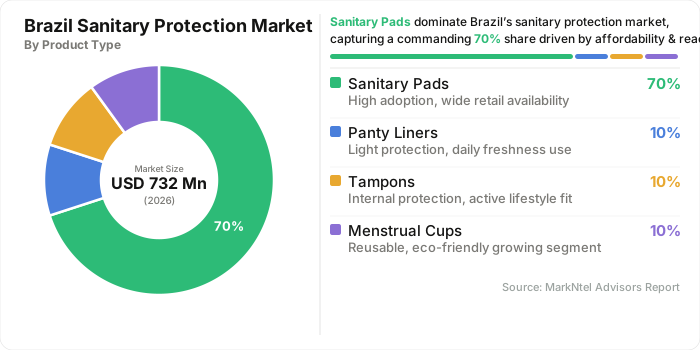
- By type, sanitary pads dominate the market, accounting for approximately 70% of the total share.
- Based on end users, the household segment led the market, capturing around 85% share in 2026.
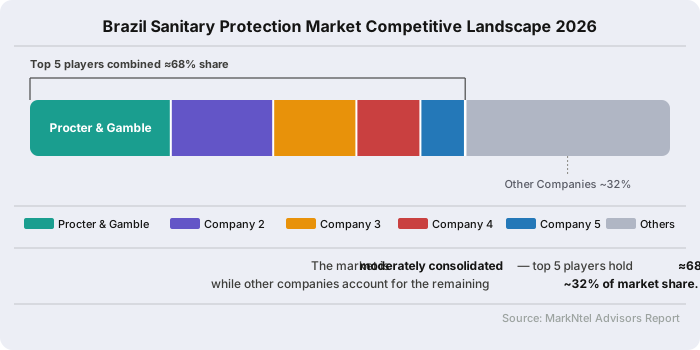
- The market structure remains moderately consolidated, with the top five companies collectively holding about 68% of the overall market share.
Brazil Sanitary Protection Market Size and Outlook
The Brazil Sanitary Protection market size was valued at USD 716 million in 2025 and is projected to grow from USD 732 million in 2026 to USD 811 million by 2032. Along with this, the market is estimated to grow at a CAGR of around 1.72% during the forecast period, i.e., 2026-32.
The sanitary protection industry in Brazil is expected to witness steady growth, supported by increasing female workforce participation and ongoing advancements in product innovation and customization, which are collectively enhancing product accessibility, consumer awareness, and demand for differentiated hygiene solutions.
The sanitary protection industry is set to witness steady expansion, supported by improving socio-economic conditions and evolving consumer behavior. A key growth driver is the rising participation of women in the workforce, which is strengthening purchasing power and increasing awareness of personal hygiene. According to World Bank data, women accounted for over 43% of Brazil’s total labor force in 2024, highlighting their growing contribution to economic activity and consumption patterns.
Furthermore, the country recorded a historic decline in unemployment to 6.6% in 2024, which further dropped to 5.2% in 2025, reflecting improved job stability and income levels. This is particularly significant for women, as increased employment enables consistent spending on hygiene essentials and encourages a shift toward higher-quality and specialized sanitary products. As female workforce participation rises, demand for convenient, reliable, and premium hygiene solutions is expected to increase across urban and semi-urban areas.
In parallel, innovation in feminine hygiene in Brazil is transforming product offerings. Manufacturers are focusing on customization, eco-friendly materials, and skin-safe formulations, catering to changing consumer preferences. The growing demand for personalized hygiene solutions is encouraging companies to diversify portfolios and introduce premium and value-added products. Additionally, advancements in product design and sustainability are supporting higher adoption rates and repeat purchases.
At the same time, menstrual health awareness in Brazil is gaining traction through strong policy support and public investment. For instances, the Ministry’s 2024 budget was increased to approximately USD 96 million, while the Plano Plurianual (PPA) 2024–2027 allocated nearly USD 2.82 billion toward gender-focused programs across 21 ministries. These initiatives are improving access to menstrual hygiene products, particularly for low-income populations, while also promoting awareness, education, and stigma reduction at a national level.
The market is supported by a strong combination of economic inclusion, policy-driven awareness, and product innovation. These factors are expected to enhance penetration, increase consumption frequency, and sustain long-term growth of the sanitary protection market in Brazil.
Brazil Sanitary Protection Market Key Indicators
- Brazil’s Menstrual Dignity Protection and Promotion Program (Law 14,214) is creating a structured institutional demand channel by targeting nearly 4 million women and girls across 3,500 municipalities through the public health system (SUS). This policy-driven procurement mechanism ensures consistent product offtake, strengthening the Brazil sanitary napkins demand forecast by reducing reliance on fluctuating household purchasing behavior.
- A significant social indicator shaping the market is that 62% of Brazilian girl report missing school due to menstrual-related challenges, reflecting gaps in access and awareness. This has accelerated NGO interventions and public funding, reinforcing women hygiene awareness in Brazil while expanding institutional procurement and driving demand for affordable, large-scale sanitary product distribution.
- With nearly 60 million menstruating women, Brazil represents a vast and recurring consumer base for hygiene products . This demographic scale directly supports long-term volume consumption and highlights evolving female population hygiene trends in Brazil, where increasing awareness and accessibility are expected to drive sustained product adoption across both urban and underserved regions.
- Urbanization plays a critical role, with 88.02% of Brazil’s population living in urban areas in 2024, equivalent to around 186.6 million people. This concentration enhances access to pharmacies, supermarkets, and e-commerce platforms, significantly boosting the demand for menstrual hygiene products in Brazil through improved distribution efficiency and consumer reach.
Brazil Sanitary Protection Market Scope:
| Category | Segments |
|---|---|
| By Type | (Sanitary Pads, Panty Liners, Tampons, Menstrual Cups), |
| By Nature | (Disposable, Reusable), |
| By Sales Channel | (Online Stores, Offline Stores (Hypermarket/ Supermarket, Pharmacy, Retail Stores, Specialty Stores)), |
| By End User | (Households, Commercial (Hospitals, Educational Institutes, etc.)), |
Brazil Sanitary Protection Market Growth Drivers
Rising Female Workforce Participation
Rising female workforce participation is emerging as a key driver of Brazil’s sanitary protection industry, supported by improving employment trends and economic inclusion. The employed population surpassed 103 million in 2024, reflecting sustained job creation and a strengthening labor market. This expansion is contributing to higher disposable incomes and greater financial independence, particularly among women, enabling consistent spending on essential personal care products.
According to the Brazilian Institute of Geography and Statistics, female labor force participation has reached 53.3% in recent estimates, indicating a steady post-pandemic recovery and a growing base of economically active women. This shift is significantly influencing consumption patterns, as working women increasingly prioritize convenience, quality, and hygiene. As a result, there is a notable rise in the demand for menstrual hygiene products in Brazil, especially across urban and semi-urban regions where workforce participation is higher.
Additionally, stable employment supports regular purchasing behavior, reducing reliance on low-cost or irregular product usage. It also encourages the adoption of premium and specialized sanitary products, including skin-friendly and high-absorbency variants. The combination of higher income stability and increased awareness is fostering a more structured and predictable demand environment for manufacturers and retailers.
The expanding female workforce is strengthening purchasing power and driving consistent consumption of hygiene products. This trend is expected to significantly boost market penetration and sustain long-term growth in Brazil’s sanitary protection market.
Recent Trends
Rising Product Innovation and Customization
Product innovation and customization are increasingly shaping the trends in feminine hygiene products Brazil in 2026, as manufacturers respond to evolving consumer expectations and policy-driven demand. Government hygiene initiatives in Brazil, particularly nationwide menstrual health programs implemented during 2024–2025, have expanded product access through public distribution channels. However, standardized supply formats such as fixed-quantity pad kits (e.g., 40 pads per two months) have highlighted the need for more adaptable solutions, encouraging companies to introduce differentiated products with multiple absorbency options, improved fit, and skin-friendly materials tailored to diverse user needs.
At the same time, heightened awareness around personal health and hygiene is accelerating the transition toward safer and more sustainable products. Consumers are increasingly opting for organic, chemical-free, and hypoallergenic sanitary solutions, reflecting a shift toward quality and long-term well-being. This transformation is supported by Brazil’s robust healthcare sector, which exceeded USD 130 billion in 2025, creating a favorable environment for innovation and product development across hygiene-related categories.
Moreover, global advancements in feminine hygiene, such as smart and multi-functional products with potential health-tracking capabilities, are beginning to influence Brazil’s premium segments. These innovations are encouraging brands to invest in R&D and bring technologically enhanced solutions to market.
As customization and innovation gain momentum, the market is moving toward higher-value offerings. This shift will enhance product adoption, support premiumization, and sustain long-term growth in Brazil’s sanitary protection industry.
Brazil Sanitary Protection Market Opportunities and Challenges
Affordability Constraints Unlocking Growth Potential with Affordable Offerings
Affordability limitations and uneven access to menstrual hygiene products continue to pose structural challenges in Brazil, particularly among low-income and rural populations. Despite progress under evolving menstrual hygiene policies in Brazil, period poverty remains widespread, with many women still unable to consistently afford sanitary products.
However, these constraints are simultaneously unlocking significant growth opportunities. The Brazilian government has expanded its Menstrual Health and Dignity Program from 2024 onward, with nearly 2 million individuals receiving free sanitary products in 2024 alone. The initiative aims to reach approximately 24 million women aged 10–49 , supported by a large-scale distribution network integrated with over 31,000 pharmacies across nearly 4,600 municipalities. This expansion is strengthening pharmacy sales sanitary products in Brazil while improving both accessibility and awareness.
As distribution channels deepen and awareness increases, private players are gaining opportunities to penetrate underserved markets with affordable and entry-level product offerings. The rise in first-time users and growing acceptance of menstrual hygiene products are driving volume growth, particularly in price-sensitive segments.
Overall, addressing affordability and accessibility gaps is transforming a key constraint into a growth catalyst. As government programs scale and private sector participation increases, the market is poised for higher penetration and sustained expansion.
Segmentation Insights
Sanitary Pads Are Widely Used in Brazil Sanitary Protection Industry
Sanitary pads account for nearly 70% of the total revenue in the menstrual care industry, driven by their strong accessibility, cost-effectiveness, and user-friendly nature. Compared to alternatives such as tampons and menstrual cups, pads are externally used, making them more widely accepted across different age groups, particularly among adolescents and first-time users. This convenience has supported their extensive adoption across both urban and rural regions.
Public sector initiatives have further strengthened this segment’s leadership. Government programs focused on menstrual health continue to prioritize the procurement and distribution of disposable pads through schools, healthcare facilities, and public channels. This has created a stable demand base while also increasing familiarity and trust among new users, reinforcing long-term consumption patterns.
Moreover, sanitary pads are offered in a broad pricing spectrum, ranging from economical options to premium variants with enhanced features such as ultra-thin layers, superior absorbency, and skin-friendly materials. This diversity allows brands to address the needs of multiple income groups, thereby expanding their consumer base. The growth of retail distribution sanitary products across supermarkets, pharmacies, and online platforms has further improved product reach and visibility.
Overall, strong institutional support, widespread availability, and consumer preference continue to solidify sanitary pads as the leading segment in Brazil’s sanitary protection industry. By type, the scope has been classified into:
- Sanitary Pads
- Panty Liners
- Tampons
- Menstrual Cups
Households Lead the End-Use Vertical
The household segment holds a dominant position in Brazil’s sanitary protection market, contributing nearly 85% of total revenue, driven by the consistent and recurring nature of product usage.
Menstrual hygiene products are largely purchased for individual consumption, positioning households as the primary end users. A substantial base of menstruating women, along with rising hygiene awareness, continues to fuel the demand for menstrual hygiene products in Brazil, ensuring stable and repetitive purchasing patterns.
Increasing female employment and improving income levels have further strengthened household spending capacity. This has enabled consumers to shift toward better-quality products, including premium sanitary options offering enhanced comfort, higher absorbency, and skin-friendly features. In addition, awareness campaigns and educational initiatives are positively influencing consumer behavior, leading to higher adoption rates and more frequent usage.
The expansion of retail channels has also reinforced this segment’s leadership. Improved access through supermarkets, pharmacies, and online platforms has made products more widely available across urban and semi-urban areas. Bulk buying and subscription-based purchasing are further supporting household consumption trends.
On the other hand, commercial demand from hospitals and institutions remains relatively limited and situational. Consequently, the steady and high-volume consumption at the household level continues to drive the growth of the sanitary protection market in Brazil, ensuring its leading position. The key end users mapped in the study include:
- Households
- Commercial (Hospitals, Educational Institutes, etc.)
Brazil Sanitary Protection Market Competitive Analysis
The Brazil sanitary protection industry is moderately consolidated, with a mix of global and regional players operating across key product categories, including sanitary pads, panty liners, tampons, and menstrual cups. The market is characterized by strong brand-driven competition, supported by extensive retail and pharmacy distribution networks across urban and semi-urban areas. The top five companies, including Procter & Gamble, Kimberly-Clark, Essity AB, Unicharm Corporation, and Johnson & Johnson, collectively account for approximately 68% of the total market share.
Major Companies in Brazil Sanitary Protection Industry
- Procter & Gamble
- Unicharm Corp.
- Essity AB
- Kimberly Clark
- Ontex
- Uniliver Plc
- Johnson & Johnson
- Kao Corporation
- Natracare
- Sirona Hygiene Pvt. Ltd.
- Others
Brazil Sanitary Protection Industry News and Recent Developments:
February 2026: Essity Expands Libresse Retail Presence in Brazil
Essity AB expanded its Libresse feminine hygiene brand across Brazil, increasing retail presence in Rio de Janeiro and Espírito Santo. The number of stores grew from 2,000 to over 6,000 within two years, significantly improving access to menstrual care products and strengthening omnichannel visibility.
Impact Analysis: The rapid expansion of Brazil retail distribution sanitary products is significantly improving product accessibility and shelf visibility across urban and semi-urban areas. By substantially increasing store penetration, companies like Essity are strengthening brand outreach and helping normalize menstrual health discussions. This wider availability is expected to boost product adoption, increase usage frequency, support premiumization trends, and broaden the consumer base, thereby accelerating overall market growth.
Frequently Asked Questions
- Market Segmentation
- Introduction
- Product Definition
- Research Process
- Assumptions
- Executive Summary
- Brazil Sanitary Protection Market Regulations, Standards & Certifications
- Brazil Sanitary Protection Market Trends & Developments
- Brazil Sanitary Protection Market Dynamics
- Growth Drivers
- Challenges
- Brazil Sanitary Protection Market Hotspots & Opportunities
- Brazil Sanitary Protection Market Outlook, 2022-2032F
- Market Size & Analysis
- By Revenues (USD Million)
- Market Share & Analysis
- By Type- (USD Million)
- Sanitary Pads
- Panty Liners
- Tampons
- Menstrual Cups
- By Nature- (USD Million)
- Disposable
- Reusable
- By Sales Channel- (USD Million)
- Online Stores
- Offline Stores
- Hypermarket/ Supermarket
- Pharmacy
- Retail Stores
- Specialty Stores
- By End User- (USD Million)
- Households
- Commercial (Hospitals, Educational Institutes, etc.)
- By Region
- North
- North East
- Central West
- South East
- South
- By Competitors
- Market Share & Analysis
- Competition Characteristics
- By Type- (USD Million)
- Market Size & Analysis
- Brazil Sanitary Pads Market Outlook, 2022-2032F
- Market Size & Analysis
- By Revenues (USD Million)
- Market Share & Analysis
- By Nature- (USD Million)
- By Sales Channel- (USD Million)
- By End User- (USD Million)
- Market Size & Analysis
- Brazil Panty Liners Market Outlook, 2022-2032F
- Market Size & Analysis
- By Revenues (USD Million)
- Market Share & Analysis
- By Nature- (USD Million)
- By Sales Channel- (USD Million)
- By End User- (USD Million)
- Market Size & Analysis
- Brazil Tampons Market Outlook, 2022-2032F
- Market Size & Analysis
- By Revenues (USD Million)
- Market Share & Analysis
- By Nature- (USD Million)
- By Sales Channel- (USD Million)
- By End User- (USD Million)
- Market Size & Analysis
- Brazil Menstrual Cups Market Outlook, 2022-2032F
- Market Size & Analysis
- By Revenues (USD Million)
- Market Share & Analysis
- By Nature- (USD Million)
- By Sales Channel- (USD Million)
- By End User- (USD Million)
- Market Size & Analysis
- Brazil Sanitary Protection Market Key Strategic Imperatives for Success & Growth
- Competition Outlook
- Company Profiles
- Procter & Gamble
- Business Description
- Product Portfolio
- Collaborations & Alliances
- Recent Developments
- Financial Details
- Others
- Unicharm Corp.
- Business Description
- Product Portfolio
- Collaborations & Alliances
- Recent Developments
- Financial Details
- Others
- Essity AB
- Business Description
- Product Portfolio
- Collaborations & Alliances
- Recent Developments
- Financial Details
- Others
- Kimberly Clark
- Business Description
- Product Portfolio
- Collaborations & Alliances
- Recent Developments
- Financial Details
- Others
- Ontex
- Business Description
- Product Portfolio
- Collaborations & Alliances
- Recent Developments
- Financial Details
- Others
- Uniliver Plc
- Business Description
- Product Portfolio
- Collaborations & Alliances
- Recent Developments
- Financial Details
- Others
- Johnson & Johnson
- Business Description
- Product Portfolio
- Collaborations & Alliances
- Recent Developments
- Financial Details
- Others
- Kao Corporation
- Business Description
- Product Portfolio
- Collaborations & Alliances
- Recent Developments
- Financial Details
- Others
- Natracare
- Business Description
- Product Portfolio
- Collaborations & Alliances
- Recent Developments
- Financial Details
- Others
- Sirona Hygiene Pvt. Ltd.
- Business Description
- Product Portfolio
- Collaborations & Alliances
- Recent Developments
- Financial Details
- Others
- Others
- Procter & Gamble
- Company Profiles
- Disclaimer
MarkNtel Advisors follows a robust and iterative research methodology designed to ensure maximum accuracy and minimize deviation in market estimates and forecasts. Our approach combines both bottom-up and top-down techniques to effectively segment and quantify various aspects of the market. A consistent feature across all our research reports is data triangulation, which examines the market from three distinct perspectives to validate findings. Key components of our research process include:
1. Scope & Research Design At the outset, MarkNtel Advisors define the research objectives and formulate pertinent questions. This phase involves determining the type of research—qualitative or quantitative—and designing a methodology that outlines data collection methods, target demographics, and analytical tools. They also establish timelines and budgets to ensure the research aligns with client goals.
2. Sample Selection and Data Collection In this stage, the firm identifies the target audience and determines the appropriate sample size to ensure representativeness. They employ various sampling methods, such as random or stratified sampling, based on the research objectives. Data collection is carried out using tools like surveys, interviews, and observations, ensuring the gathered data is reliable and relevant.
3. Data Analysis and Validation Once data is collected, MarkNtel Advisors undertake a rigorous analysis process. This includes cleaning the data to remove inconsistencies, employing statistical software for quantitative analysis, and thematic analysis for qualitative data. Validation steps are taken to ensure the accuracy and reliability of the findings, minimizing biases and errors.

4. Data Forecast and FinalizationThe final phase involves forecasting future market trends based on the analyzed data. MarkNtel Advisors utilize predictive modeling and time series analysis to anticipate market behaviors. The insights are then compiled into comprehensive reports, featuring visual aids like charts and graphs, and include strategic recommendations to inform client decision-making
We offer flexible licensing options to cater to varying organizational needs. Choose the pricing pack that best suits your requirements:
Buy Now Inquire Before Buying
 Request Customization
 Talk to our Consultant